Where a Trail Meets a Paved Road
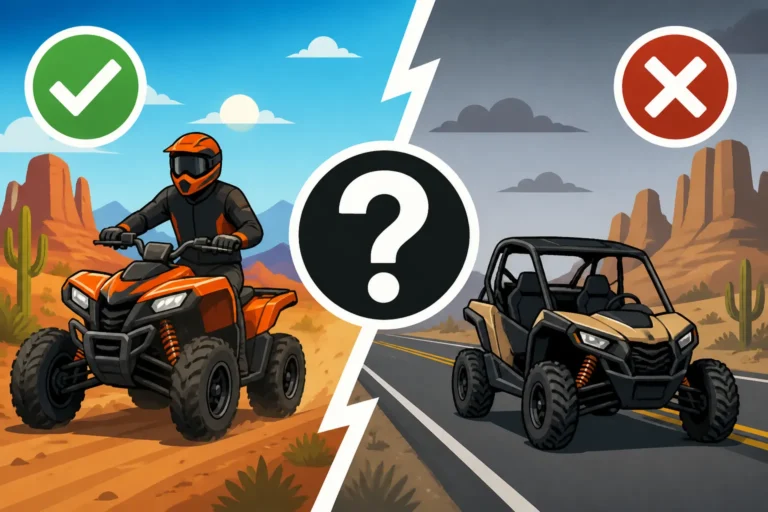
There's nothing quite like the freedom of tearing across the Arizona desert, the dust flying, the engine roaring, feeling completely at one with your off-highway vehicle. But that exhilarating rush can come to a screeching halt the moment your trail dead-ends into a paved road. Suddenly, you're faced with a moment of uncertainty: "Can I even be here? What are the rules? Am I about to get a ticket?" That sudden shift from wide-open trail to regulated roadway can be confusing and frankly, a bit stressful. This guide is here to untangle the rules, explain what you need to know, and help you confidently navigate those tricky junctions where the trail meets the blacktop in Arizona.
Understanding Arizona's Street-Legal Requirements
Before you even think about putting a tire on pavement, it's absolutely crucial to understand the difference between simply having an Arizona OHV decal for off-road use and having a truly "street-legal" machine. Many riders mistakenly believe that their OHV decal grants them permission to ride on public roads. Unfortunately, that's not the case. The OHV decal primarily designates your machine for off-highway use and helps fund Arizona's incredible trail system, but it doesn't automatically make your quad or side-by-side legal for the street.
To legally operate your ATV or UTV on Arizona's paved roads, it needs to meet a specific set of requirements to be considered "street legal." Think of it like this: your dirt bike is awesome on the trails, but you wouldn't expect to ride it down Main Street without modifications and proper registration. The same principle applies here. [Making a UTV Street Legal in Arizona] involves a good deal more than just having a license plate. It means adding specific safety equipment and ensuring your machine is registered and titled for on-road use.
Essential Equipment for Street Legality
Converting your off-road warrior into a street-legal cruiser requires more than a simple flick of a switch. Arizona has clear stipulations on what equipment must be present and functional. This isn't just about avoiding a ticket; it's about your safety and the safety of others sharing the road. A ranger or sheriff isn't just checking a box; they're ensuring your machine can safely interact with cars, trucks, and other vehicles traveling at higher speeds.
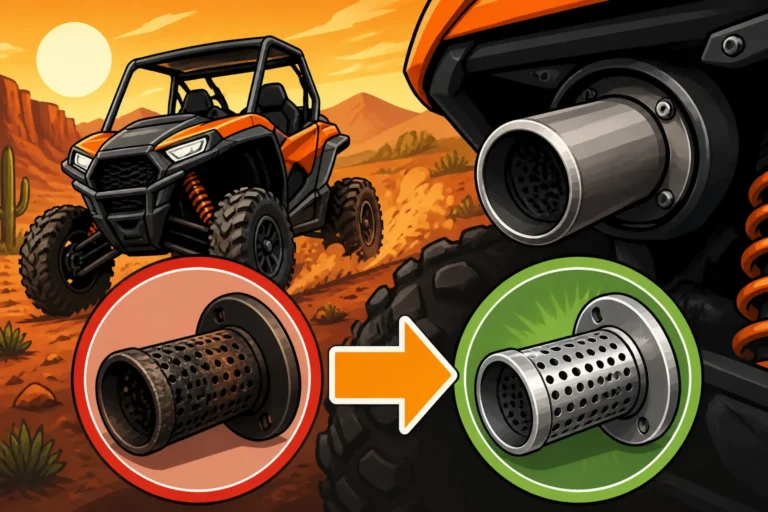
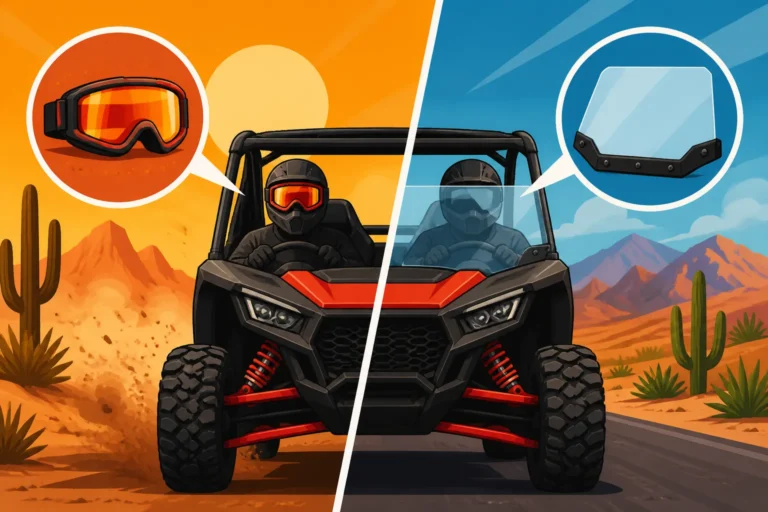
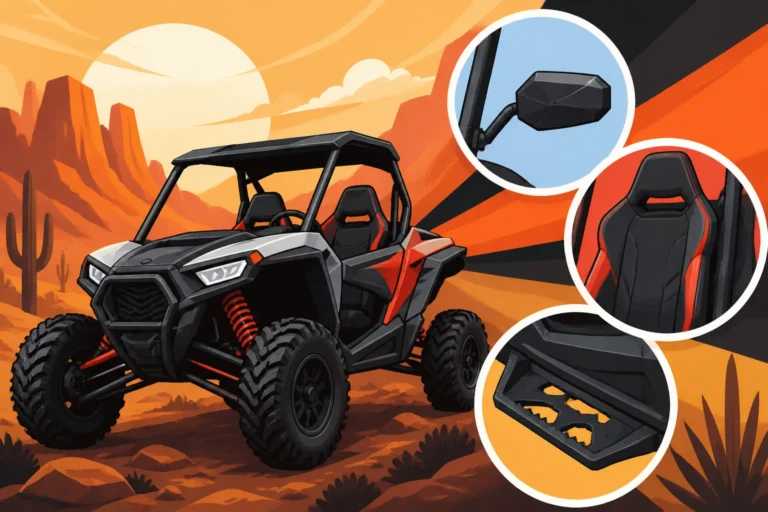
For starters, you'll need proper headlights and taillights. Your headlights must be capable of illuminating objects at a distance of at least 500 feet, which means the dim factory lights on some machines just won't cut it for road use, especially at night. For the rear, your taillights need to be visible from 500 feet away, and you'll need red rear reflectors as well. And don't forget the license plate light, ensuring your plate is visible after dark. Beyond lighting, a functional horn is a must—one that's audible from at least 200 feet away. You'll also need at least one mirror that provides a clear view of the highway to the rear for at least 200 feet. Many riders opt for aftermarket options from companies like SuperATV to ensure they meet these requirements and often add a second mirror for better visibility. Depending on your machine, proper seating and footrests for all passengers are also crucial. Lastly, a USDA-approved spark arrestor is always required on public lands, and while it's not strictly a "street-legal" item, it's a critical safety component to prevent wildfires, especially when transitioning from dusty trails to paved areas.
Registration, Title, and Insurance for Road Use
Once your machine is equipped, the next step is the paperwork. Your ATV or UTV needs to be titled and registered specifically for street use, which means you'll likely receive an "MC" (motorcycle) or "RV" (recreational vehicle) plate, depending on your machine's classification. This is distinct from just the OHV decal. You'll also need to carry proof of financial responsibility, which means having adequate insurance coverage. Arizona's minimum liability limits for street-legal machines are typically 25/50/15, meaning $25,000 for bodily injury per person, $50,000 for bodily injury per accident, and $15,000 for property damage. [Arizona Insurance Minimums for Road Riding] is not something you want to skimp on, especially with the potential for serious accidents involving larger vehicles. Make sure your insurance provider is aware you'll be using your machine on public roads and that your policy covers this type of use. Without this trifecta of equipment, proper registration, and insurance, that paved road junction remains strictly off-limits.
Navigating the Paved Road Junction: What to Do
So, you've done your homework, upgraded your machine, and secured all the necessary paperwork. Now, as you approach that line where the dirt ends and the asphalt begins, what's the protocol? It’s not just about being legal; it’s about being safe and predictable for other drivers who aren't expecting a UTV to suddenly appear on the road.
Stopping, Looking, and Yielding
The moment you see that paved road coming up, slow down significantly. Treat every trail-to-paved-road junction like a stop sign, even if one isn't explicitly there. Come to a complete stop before you enter the paved surface. This gives you time to assess the traffic flow, check for oncoming vehicles, and ensure you have a clear path. Just as you would at an intersection in a car, look left, right, and then left again. Many trail junctions are in rural areas where cars might be traveling at highway speeds, and they might not be expecting an OHV to emerge. [Crossing an Arizona Highway on a Machine] requires extreme caution and patience; never assume you have the right of way. Yield to all traffic already on the paved road. This moment of caution can prevent a serious accident.
Speed Limits and Road Etiquette
Once you've safely entered the paved road, you're no longer in the wild west of the desert trail. You are now a motor vehicle operating under the same traffic laws as everyone else. This means adhering to posted speed limits. While your side-by-side might be capable of impressive speeds off-road, it might not be designed for sustained high-speed pavement travel, and certainly, the speed limits will apply. [Arizona Speed Limits for Street-Legal Machines] are typically the same as for cars, unless otherwise posted for specific areas or vehicle types.
Maintain a safe following distance, use your turn signals (if equipped and required, which they often are for street-legal machines), and be aware of your surroundings. Other drivers might not be accustomed to seeing an OHV on their road, so being extra visible and predictable is key. If you're riding in a group, ride single file on narrower roads and be mindful of creating dust or obstructing traffic. The goal is to blend in as much as possible with regular traffic, demonstrating responsible and safe operation.
Specific Road Types and Their Rules
Arizona has a diverse network of roads, and the rules for OHV access can vary depending on whether you're on a city street, a county road, or a major highway. Knowing [Which Arizona Roads Allow OHVs] is critical, as not all paved roads are created equal when it comes to off-highway vehicle access.
City Streets and Town Ordinances
Many of Arizona's smaller towns and trail communities are becoming increasingly OHV-friendly, understanding the economic benefit riders bring. However, each city or town has the authority to set its own ordinances regarding OHV use on its streets. Some communities, like Quartzsite or some smaller towns around Lake Havasu City, have embraced OHV use on certain streets, allowing riders to get from their hotel to a trailhead or a local restaurant. Others might have stricter rules, limiting OHV access to specific routes or prohibiting it entirely on certain main thoroughfares.
Always look for posted signs or consult the local municipality's website if you plan to ride your street-legal machine within city limits. A general rule of thumb: if it's a major arterial road or a high-traffic area, OHV access is less likely. For example, [Riding a Machine Into Sedona] might be restricted to specific access points or roads due to traffic and local ordinances. Don't assume that just because your machine is street legal statewide, it's allowed on every street in every town.
County Roads and State Highways
County roads, especially those in rural areas connecting trail systems, are often more permissive for street-legal OHVs. These are the roads where you'll most commonly transition from dirt to pavement to connect different sections of a ride. Many rural county roads are perfectly legal for properly equipped and registered OHVs. However, speed limits and safety remain paramount. You'll be sharing these roads with trucks, farm equipment, and passenger vehicles.
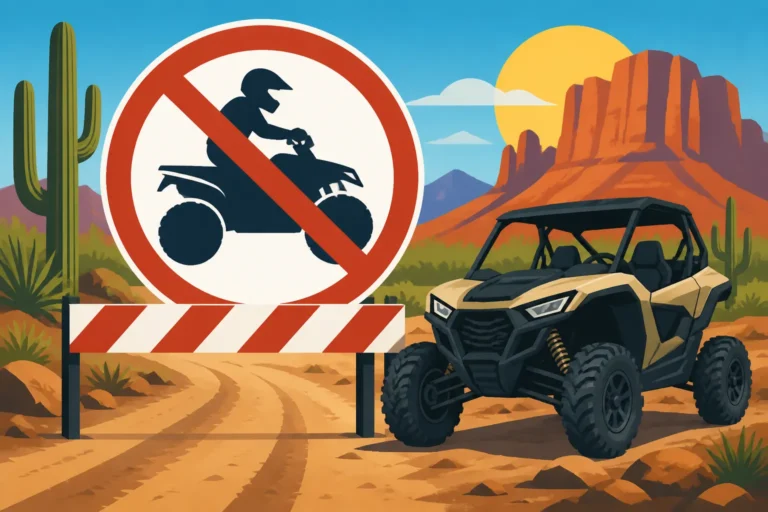
Major state highways (like US-60 or I-17) and interstates are generally off-limits to OHVs, even if they are street legal. These are high-speed thoroughfares not designed for slower-moving OHVs, and the safety risks are simply too high. [Crossing an Arizona Interstate on a Quad] is almost universally prohibited and extremely dangerous. Always plan your route to avoid these major roadways. If your GPS tries to route you onto an interstate, know that it's probably not accounting for your OHV, and you'll need to find an alternative.
| Road Type | General OHV Access (Street Legal) | Key Considerations |
|---|---|---|
| City Streets | Varies widely by local ordinance | Check local signs/rules; often restricted on main roads |
| County Roads | Generally permitted | Adhere to speed limits; share with varied traffic |
| State Highways | Generally prohibited | High speeds, heavy traffic; significant safety risks |
| Interstates | Strictly Prohibited | Extremely dangerous and illegal; plan alternate routes |
Penalties for Getting it Wrong
The desert might feel remote, but Arizona game and fish officers, county sheriffs, and local police departments are out there, and they are very knowledgeable about OHV laws. Ignorance of the law is never a valid defense, and the penalties for illegal road riding can range from inconvenient to financially painful, and even dangerous.
Citations and Fines
If you're caught operating an OHV on a paved road without meeting the street-legal requirements, you're likely to receive a citation. [Arizona Fines for Illegal Road Riding] can vary, but expect to pay a substantial amount. Depending on the specific violation (e.g., no headlights, no insurance, unregistered for street use), you could face multiple citations. These aren't just minor slaps on the wrist; they can quickly add up, easily costing you hundreds of dollars. Beyond the financial hit, a citation can also mean valuable time lost dealing with court dates or administrative processes.
Moreover, if you are cited for operating an uninsured vehicle, that's a serious offense that could impact your driving record for years. [What an Arizona Ranger Asks a Rider For] usually includes proof of registration, insurance, and compliance with all equipment laws. If you can't produce these, you're looking at more than just a warning.
Safety Risks and Liability
Beyond the legal and financial repercussions, the biggest penalty for getting it wrong is the risk to your safety and the safety of others. OHVs are designed for off-road conditions, not necessarily for interaction with cars traveling at 55 mph. The lack of proper signaling, lighting, and even the difference in how an OHV handles compared to a car can lead to dangerous situations. A collision between an OHV and a passenger vehicle often results in severe injuries to the OHV operator and passengers.
If you are involved in an accident while illegally operating your OHV on a paved road, your insurance company may deny coverage, leaving you personally liable for potentially massive medical bills, property damage, and legal fees. This is where the importance of proper insurance and registration really comes into play. Without it, a fun day on the trails could turn into a life-altering financial disaster. Even something as simple as [Arizona Rules for a Child Passenger] becomes critically important on paved roads, as inadequate safety restraints can have devastating consequences in a collision. It's a risk simply not worth taking.
Disclaimer
This article is for general informational purposes only and does not constitute professional advice. Laws, prices and regulations vary by location and change over time. Consult a qualified professional for guidance on your specific situation.