Riding a County Road After Sundown
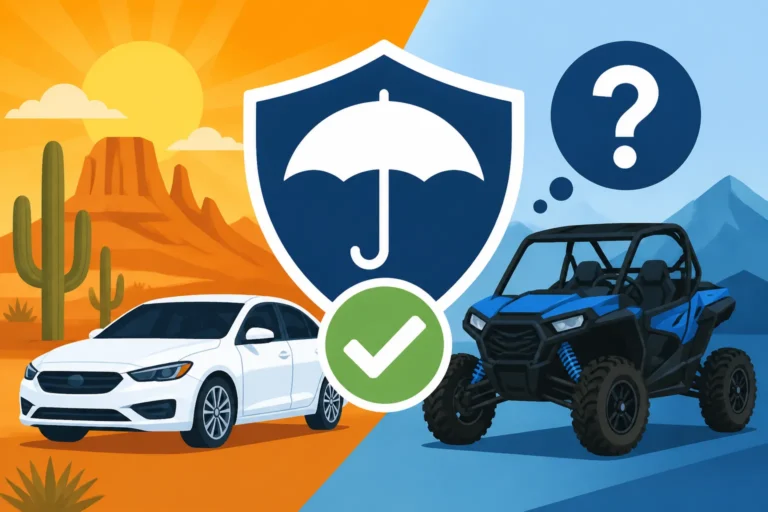
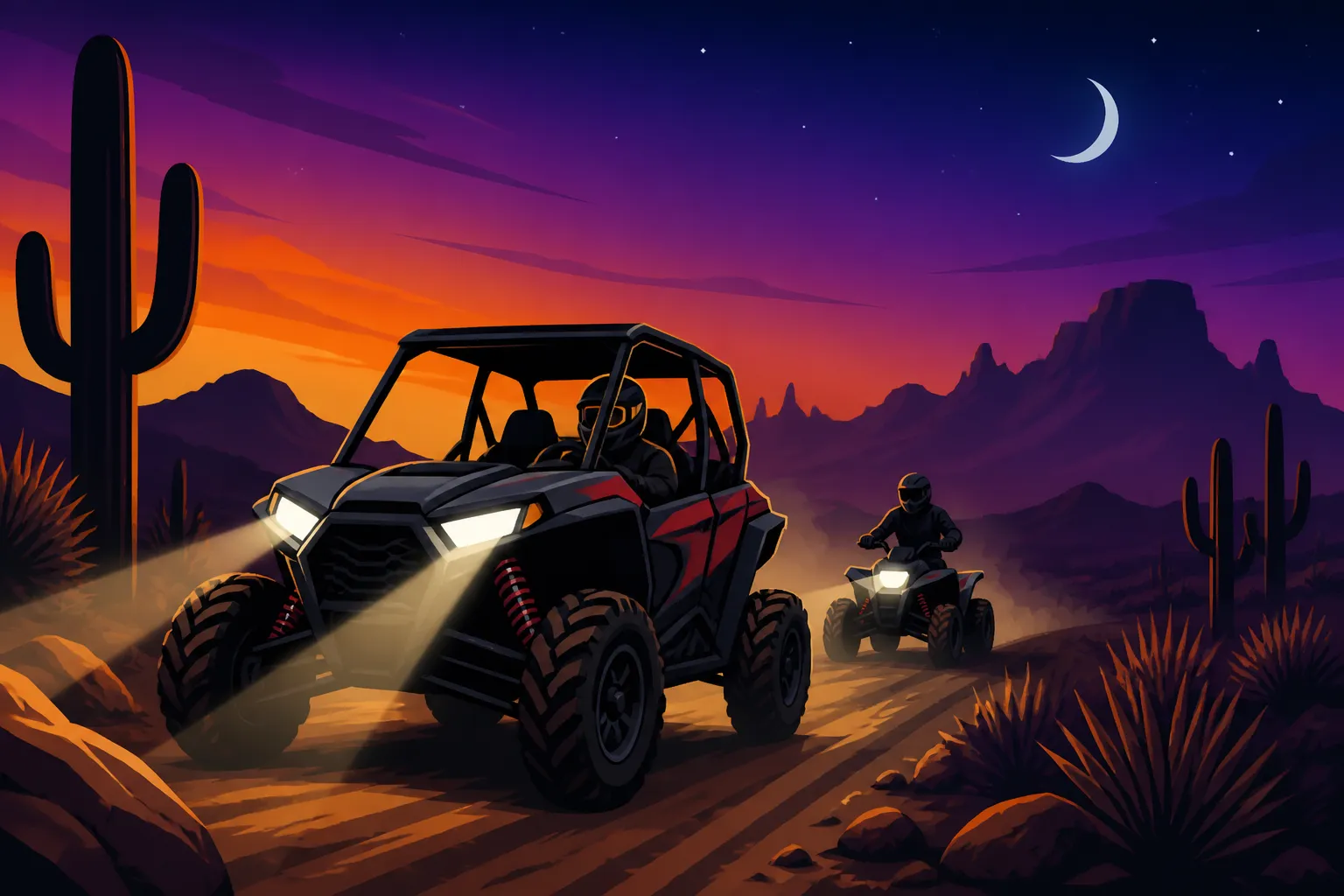
A county road can look harmless after dark—until dust, an unlit driveway, livestock, or an oncoming pickup suddenly appears in your headlights. In Arizona, riding an ATV or UTV after sundown means solving two problems at once: confirming the road is open to your machine and making sure you and your vehicle are legal and visible in low light.
Confirm the county road is open to your machine
County roads are not automatically OHV roads
A road’s county-maintained status does not, by itself, tell you whether an ATV or UTV may use it. Access can depend on the road’s designation, local restrictions, the type of vehicle, and whether the machine has the registration and equipment required for road use. An unpaved road near a trail system may seem like an obvious connector, but appearance is not permission.
Before heading out, identify the exact road and check with the county or other agency responsible for it. Look for posted restrictions at entrances and junctions, and check any relevant land-management rules where the route crosses or borders public land. A route can pass through more than one jurisdiction, so permission on one section does not necessarily carry over to the next.
This matters in places where rural roads connect neighborhoods, desert routes, and public-land access points. A road outside a developed area near Florence or Queen Creek may look much like an OHV route, but the rules can differ from those on a signed trail. Do not rely on a friend’s route file or an old online comment as proof that a road is currently open.
For a broader overview of road access, see [Which Arizona Roads Allow OHVs]. If your question is whether a particular paved stretch is open, [Can You Ride an OHV on an Arizona Highway?] covers the separate issue of highway use.
Check your registration and road equipment before dark
A machine that is legal to ride off-road is not automatically legal on a county road. If you plan to travel on a public road, confirm whether your ATV or UTV needs street-legal registration, a plate, insurance, and required equipment. The exact requirements depend on the type of machine and intended use. An OHV decal should not be treated as a substitute for road registration where street-legal status is required.
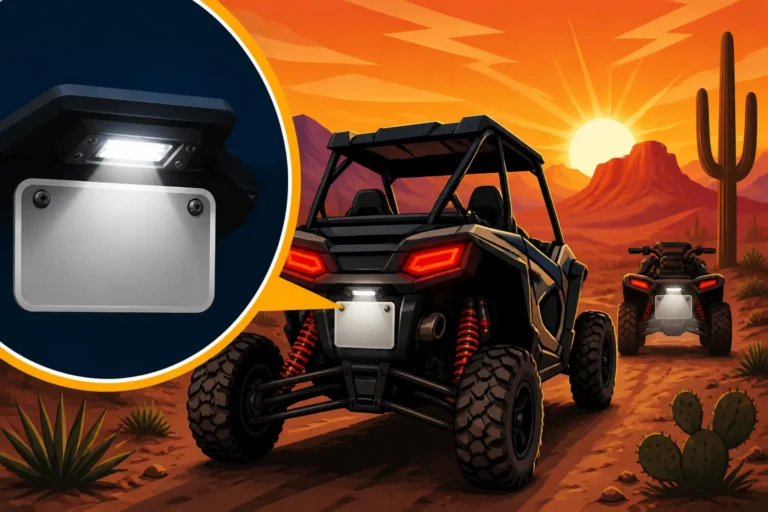
If a county road permits OHV use only under specific conditions, learn those conditions before setting out. Check whether the road requires a registered, street-legal machine, whether certain sections are restricted, and whether local rules apply after dark. Keep your registration and insurance information accessible, and make sure the plate is mounted and visible as required.
For a useful checklist of road-use equipment, review [What Arizona Requires on a Street-Legal Machine]. If your machine has a road-legal plate, [Getting an MC Plate for a Side-by-Side] explains a related registration question. Requirements can differ from one vehicle to another, so check the rules that apply to your own machine rather than assuming a friend’s setup is the same.
Make sure lights and visibility work after sundown
Inspect the headlights, taillights, and reflectors
At night, the question is not just whether your lights turn on. They need to work reliably, remain visible, and be suitable for the road conditions. Before leaving, switch on the headlights and taillights and walk around the machine to check that each is operating. If your setup includes brake lights or turn signals, test those too. Look for cracked lenses, loose connectors, damaged wiring, and lights obscured by mud or cargo.
Do not wait until you are already on the road to discover that a bulb has failed. A quick inspection in daylight is easier and safer, especially if you are loading the machine at a trailhead or leaving a rural property where there may not be a well-lit place to troubleshoot. Carry basic tools and any small repair items appropriate to your machine, but do not assume a roadside fix will make an otherwise noncompliant vehicle legal to continue driving.
Headlamp requirements matter on public roads, including when lights must be used and how far ahead they must illuminate. Review [Arizona's 500 Foot Headlight Rule] and [Taillight Visibility From 500 Feet] when checking your setup. Reflectors also help other drivers recognize the machine when its lamps are difficult to see through dust or glare; [Red Rear Reflectors on a Machine] covers that part of visibility.
Add visibility without assuming an accessory makes the machine compliant
A bright accessory light can help you see a rough surface, but extra brightness is not a substitute for required road lighting. Poorly aimed lights can bother oncoming drivers, and a light bar does not necessarily meet the legal requirements for headlamps. Follow the vehicle manufacturer’s instructions and check the rules for your machine before relying on aftermarket equipment for public-road use.
A sensible setup balances seeing and being seen. Keep headlights aimed so they illuminate the road without shining directly into another driver’s eyes. Make sure rear lighting is visible from behind, and keep reflectors and the plate unobstructed. If you add a windshield, rack, spare tire, or other accessory, check that it does not block lights or the plate from the angles other road users need to see them.
Riders comparing accessories may encounter brands such as SuperATV when looking for lighting, mirrors, or other UTV equipment. Treat any accessory as a component to evaluate—not proof that your vehicle is street legal. Check fitment, installation instructions, and whether the particular item meets the requirements for your machine and intended road use. For mirror requirements, see [Mirror Placement on a Street-Legal UTV].
| Before the ride | What to check | Why it matters after dark |
|---|---|---|
| Route | Confirm the exact road is open to your vehicle | A county road is not automatically an OHV route |
| Registration | Verify that your machine is approved for the road use planned | Off-road permission and street-legal status are different |
| Headlights | Test operation and aim | You need to see the road without blinding others |
| Taillights and reflectors | Check that they work and remain unobstructed | Following drivers need to spot your machine in darkness and dust |
| Mirrors and plate | Confirm they are secure and visible | Other drivers and enforcement may need to see them |
| Gear and supplies | Carry water, a charged phone, and basic repair items | A breakdown or delay is harder to manage at night |
Ride for dust, wildlife, and limited visibility
Slow down before you need to
Darkness shortens the distance you can see and react within. On a washboard road, a dip or loose rock can be difficult to spot until it is close. Dust from a vehicle ahead can make that problem worse by swallowing the beam of your headlights. The safest response is to reduce speed before visibility drops, leave a larger following distance, and avoid trying to keep pace with a faster vehicle.
Rural Arizona roads can also bring unexpected hazards: livestock, wildlife, gates, parked trailers, pedestrians, and vehicles turning onto the road without much warning. A blind rise or bend is not a good place to pass. If dust becomes thick enough that you cannot see the road edge or the vehicle ahead, slow down and pull off only where it is safe and permitted. Do not stop in a travel lane or just beyond a curve where another driver may not see you in time.
Give extra thought to where you will turn around. A narrow shoulder, soft sand, or steep drainage edge can make a simple maneuver risky in low light. If you are unsure whether the road remains open or passable, turning back while conditions are clear is usually easier than trying to solve the problem later.
Plan for the ride home, not only the ride out
A ride that begins in daylight can still become a night ride after a delayed departure, a flat tire, or a longer-than-expected route. Check the forecast and sunset timing before leaving, then decide how much daylight you want as a buffer. Share your route and expected return time with someone who is not riding with you, particularly if the road is remote or phone coverage is uncertain.
Carry enough water and warm or protective layers for the conditions. Desert temperatures can change after sunset, and a minor mechanical issue can turn a short trip into a long wait. Keep your phone charged, but do not assume you will have service on the entire route. A map or navigation tool that works offline can help you avoid making a last-minute turn onto a road you have not checked.
If a passenger is riding with you, make sure they understand the plan and have appropriate protective gear. Avoid overloading the machine or carrying loose items that could block lights, mirrors, or the driver’s view. SuperATV and other equipment brands may offer accessories intended to support visibility or protection, but accessories cannot replace a legal vehicle setup, a checked route, or conservative riding. For more on the road rules themselves, see [Arizona Road Rules Riders Get Wrong].
Use a simple pre-ride decision check
Decide whether to ride or wait
When the route, legal status, or lighting is uncertain, take a few minutes to resolve it before leaving. That pause can prevent a frustrating situation in which you reach a closed road, discover a failed taillight, or realize your machine is not equipped for the public-road section you planned to use.
Use these questions as a final check:
- Have I confirmed that this specific county road is open to my type of machine?
- Does my vehicle meet the registration, insurance, and equipment requirements for the road?
- Do the headlights, taillights, reflectors, and other required equipment work?
- Can I see far enough to travel at a speed that lets me stop safely?
- Do I have a plan if dust, weather, a breakdown, or a closure changes the route?
If you cannot answer one of these questions confidently, choose a route you have verified or wait until daylight. A late start is inconvenient; discovering an access restriction or equipment problem on a dark road can be much worse.
Keep your paperwork and route information together
Store essential vehicle documents in a protected place and make sure you know where they are before riding. Keep route notes, offline navigation, emergency contacts, and your return plan easy to reach. Avoid burying them under cargo or relying on a single phone that may lose power or reception.
It also helps to note the road’s junctions and possible turnarounds before you leave. A written route plan can be simpler than trying to interpret a map while stopped on a dark shoulder. If conditions change, tell your contact person when you alter your plan or expect to return later than expected.
Riding a county road after sundown can be manageable when the route is authorized, the machine is properly equipped, and the pace matches the visibility. The key is not to treat darkness as a small detail added to an ordinary ride. It changes how far ahead you can see, how quickly you can respond, and how easily other drivers can recognize you.
Disclaimer
This article is for general informational purposes only and does not constitute professional advice. Laws, prices and regulations vary by location and change over time. Consult a qualified professional for guidance on your specific situation.