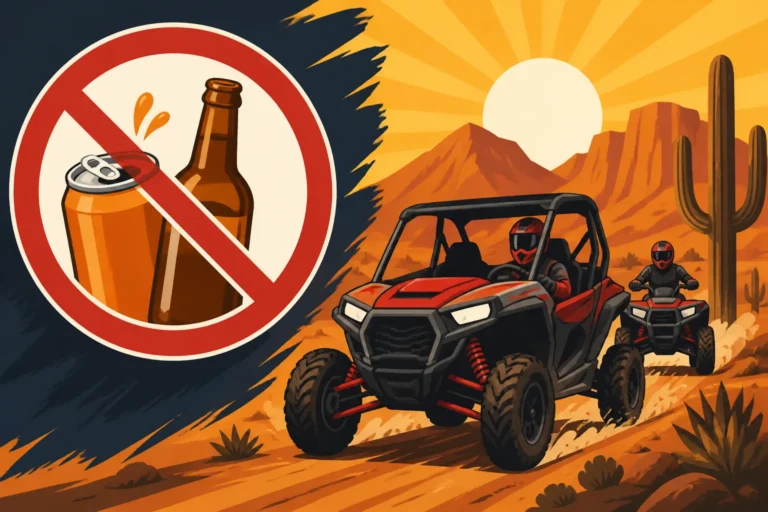
Arizona Alcohol Limits for OHV Operators
It's incredibly tempting to kick back with a cold one after a long, dusty day exploring Arizona's breathtaking off-highway vehicle (OHV) trails, or maybe even to enjoy a celebratory drink while camping out in the desert. Many riders don't realize that the same strict DUI laws that apply to cars on paved roads also apply to operating an ATV or UTV off-road. This guide is here to break down Arizona's alcohol limits for OHV operators, outline the serious penalties you could face, and help you understand how to stay safe and legal while enjoying our incredible landscapes.
Understanding Arizona's DUI Laws for OHVs
The desert sun and wide-open spaces can sometimes give people a false sense of security, making them think that rules are more relaxed out on the trails. Unfortunately, when it comes to alcohol and OHVs, Arizona is very clear: the same laws apply as if you were driving your truck on the highway. This means that if you're operating an OHV with a blood alcohol concentration (BAC) of 0.08% or higher, you are considered legally impaired. For commercial OHV operators, that limit drops even lower to 0.04%.
The 0.08% BAC Limit and Impairment
Arizona's law, specifically ARS 28-1381, doesn't distinguish between a street vehicle and an OHV when it comes to impaired driving. If you're "in actual physical control" of an OHV and your BAC is 0.08% or greater, you can be charged with a DUI. What does "actual physical control" mean in the backcountry? It doesn't necessarily mean the engine has to be running or that you're actively moving. If you're sitting in the driver's seat with the keys, even if you're pulled over and taking a break, an officer could argue you were in control. The intent of the law is to prevent anyone who is impaired from having the immediate ability to operate the vehicle.
It's also crucial to understand that even if your BAC is below 0.08%, you can still be charged with an OHV DUI if the officer determines you are "impaired to the slightest degree." This means that if alcohol has affected your ability to safely operate your machine, even a single drink could lead to a charge. This "slightest degree" clause gives law enforcement a lot of discretion, and it's why many experienced riders choose to abstain from alcohol entirely when they're planning to ride, especially on public lands where enforcement is common.
Open Container Laws in the Desert
Just like in a car, Arizona's open container laws apply to OHVs. This means you cannot have any open container of alcohol in the passenger compartment of your side-by-side or ATV while it's being operated on public land. An "open container" is defined as any container that has been opened or has a broken seal, or from which the contents have been partially removed. So, cracking open a beer for a passenger while you're driving down a dirt road could lead to a citation, even if the driver isn't drinking.
This law is often misunderstood, especially in the context of camping or staging areas. While you might be able to have an open container around your campfire once your OHV is parked and you're done riding for the day, having one in the cupholder or within easy reach while you're still driving can cause serious problems. Even if your machine is outfitted with the latest SuperATV accessories for improved ride comfort and capability, it won't make you exempt from this rule. Always make sure any alcohol is stored securely and unopened until your riding is completely finished for the day.
Consequences of an OHV DUI in Arizona
Getting an OHV DUI in Arizona isn't just a slap on the wrist; the penalties can be severe and far-reaching, impacting your driving privileges, your wallet, and even your freedom. Many people assume that because it's "just an OHV," the consequences will be less harsh than a regular car DUI, but that's simply not true. Arizona takes impaired driving very seriously, regardless of the vehicle type.
Fines, Jail Time, and License Suspension
A first-time OHV DUI conviction in Arizona carries mandatory minimum penalties that are quite substantial. You're looking at a minimum of 10 days in jail, though this can sometimes be reduced to 24 hours if you complete an alcohol screening and educational classes. The fines can easily climb into the thousands of dollars once you factor in surcharges, court costs, and fees. Beyond that, your Arizona driver's license will be suspended for a minimum of 90 days, even if you were operating an OHV and not a street-legal vehicle. This suspension can have a huge impact on your daily life, affecting your commute to work or your ability to run errands.
Repeat offenses carry even harsher penalties. A second OHV DUI within seven years can result in a mandatory minimum of 90 days in jail, much higher fines, and a one-year driver's license revocation. If you're facing a third DUI within seven years, it becomes a felony, leading to state prison time, significant fines, and a lengthy license revocation. These consequences highlight just how seriously Arizona enforces its impaired driving laws. For more information on what to expect, you might look into resources like [A DUI on an OHV in Arizona].
Vehicle Impoundment and Ignition Interlock Devices
Beyond the immediate penalties, an OHV DUI can also lead to your vehicle being impounded. This means your prized side-by-side or ATV could be towed away and held, racking up impoundment and storage fees that you'll be responsible for. This adds another layer of financial burden and logistical headache to an already difficult situation. The impoundment period can vary, but it's another harsh reminder of the state's tough stance on impaired driving.
Furthermore, a DUI conviction often requires the installation of an ignition interlock device on any vehicle you operate once your license is reinstated. This device prevents your car from starting if it detects alcohol on your breath. While it might seem like this only applies to your regular car, the broad nature of Arizona's DUI laws can sometimes extend these requirements. The cost of installation, monthly rental fees, and calibration for these devices can easily add up to hundreds or even thousands of dollars over the course of a year or more. It's an inconvenient and expensive consequence that can persist long after your court case is resolved.
Increased Insurance Rates and SR22 Requirements
An OHV DUI conviction will almost certainly cause your vehicle insurance rates to skyrocket. Insurers view DUI convictions as a significant risk factor, and you can expect to pay much higher premiums for years to come. In addition, Arizona often requires individuals convicted of a DUI to obtain an SR22 certificate. This is not an insurance policy itself, but rather a document filed by your insurance company with the state, certifying that you have the minimum liability coverage required by law.
Obtaining SR22 coverage can be more challenging and expensive, as not all insurance companies offer it, and those that do typically charge higher rates. This requirement usually lasts for several years, adding another financial strain and administrative hurdle to overcome. It's a clear signal that the state wants assurances you'll maintain adequate coverage after a serious driving infraction. When considering your overall insurance needs, you might want to review details on [Arizona Insurance Minimums for Street-Legal Machines].
Factors Affecting Your OHV DUI Case
Not all OHV DUI cases are created equal. Several factors can influence the severity of the charges, the penalties you face, and the overall outcome of your case. Understanding these elements can help you comprehend the complexities involved and underscore why responsible riding is always the best choice.
Aggravating Factors and Enhanced Penalties
Certain circumstances can turn a standard OHV DUI into an "extreme" or even "super extreme" DUI, carrying significantly harsher penalties. For instance, if your BAC is 0.15% or higher, you're facing an extreme DUI, which comes with a minimum of 30 days in jail (or 60 days for a second offense). If your BAC hits 0.20% or higher, it's a super extreme DUI, with mandatory minimums of 45 days in jail (or 120 days for a second offense). These elevated BAC levels dramatically increase the mandatory jail time and fines.
Other aggravating factors can include having a minor in the OHV as a passenger, driving with a suspended license, or if the DUI offense results in an accident causing serious injury or death. Any of these elements can escalate the charges, potentially leading to felony convictions and even more severe sentences. These enhanced penalties demonstrate Arizona's unwavering commitment to cracking down on impaired driving, especially when it poses a greater risk to public safety. Riders should also be aware of [Arizona Penalties for Reckless Riding] which can often accompany DUI charges.
Prior Offenses and Your Driving Record
Your past driving record plays a significant role in how an OHV DUI is prosecuted. As mentioned, prior DUI convictions within a seven-year lookback period will result in significantly increased penalties. This "lookback" period means that any previous DUI, whether in an OHV or a regular vehicle, will count against you. The court and prosecutors will review your entire driving history, looking for patterns of reckless or impaired driving.
Even if you don't have a prior DUI, other infractions like speeding tickets, reckless driving citations, or even previous OHV violations can be brought up by the prosecution. A history of disregard for traffic laws or safety regulations can make it harder to negotiate a favorable outcome and may result in a judge imposing a stricter sentence. It's a reminder that a clean driving record, both on and off-road, is always beneficial.
Field Sobriety Tests and Blood/Breath Tests
When an officer suspects you've been drinking, they'll likely ask you to perform field sobriety tests (FSTs) on the spot. These tests, such as the walk-and-turn or one-leg stand, are designed to assess your physical coordination and ability to follow instructions. While you have the right to refuse FSTs, be aware that refusal can sometimes be seen as an indicator of impairment by the officer. Following FSTs, if probable cause for arrest exists, you'll be asked to submit to a breath or blood test to determine your BAC.
Under Arizona's implied consent law, by operating an OHV on public land, you're considered to have given consent to these chemical tests if you're arrested for DUI. Refusing a breath or blood test can lead to an automatic suspension of your driver's license for 12 months (or longer for repeat refusals), even if you are ultimately found not guilty of the DUI. It's a tough decision in the moment, but understanding the implications of refusal is critical.
Preventing an OHV DUI: Best Practices
The best way to avoid the serious consequences of an OHV DUI is, of course, to prevent it from happening in the first place. This requires conscious planning and a commitment to responsible decision-making before you even head out to the trails. The joy of off-roading comes from the adventure and the freedom, not from risking your safety or legal standing.
Designate a Sober Driver or Abstain
The simplest and most effective prevention strategy is to either designate a sober driver or abstain from alcohol entirely when you plan to operate an OHV. If you're going out with a group, decide beforehand who will be the designated driver for the day. That person commits to not drinking any alcohol and being responsible for operating the OHV. This takes the guesswork out of the equation and ensures someone is always clear-headed and legal behind the controls.
If you know you want to enjoy some adult beverages, make the firm decision to leave your OHV parked for the entire day once you start drinking. Don't rationalize "just one more ride" or assume you'll be fine. Once the drinks start flowing, the keys should be put away, out of reach, and not pulled out again until the next sober day. This straightforward approach eliminates any potential for impaired judgment on the trails.
Plan Your Post-Ride Activities Carefully
Many OHV trips involve camping, bonfires, and socializing at the trailhead or campsite. These are often the times when alcohol consumption happens. If you intend to drink, plan your post-ride activities carefully. Make sure your OHV is parked and secured for the night, well before you begin drinking. Physically separate yourself from the machine's controls once you've made the decision to drink.
Consider alternative transportation if you need to move between campsites or to a nearby town for supplies after you've been drinking. Maybe it's a walk, a bicycle, or a ride with a truly sober friend in a street-legal vehicle. The key is to avoid any situation where you might be tempted to get back behind the wheel or handlebars of your OHV once alcohol has been consumed. Some riders even make sure their machine is equipped with robust aftermarket safety accessories, perhaps from SuperATV, and stored securely overnight, giving them peace of mind that it's ready for a sober ride the next morning.
Stay Hydrated and Eat Well
Operating an OHV, especially in Arizona's heat, is physically demanding. Dehydration and an empty stomach can exacerbate the effects of alcohol, making you feel impaired more quickly and intensely than you might otherwise. Even a small amount of alcohol can have a greater impact if you're not properly hydrated or haven't eaten.
Before and during your ride, make sure you're drinking plenty of water and eating regular, nutritious meals. This will help maintain your energy levels and keep your mind sharp. If you do choose to drink after your ride, being well-hydrated and fed can help your body process the alcohol more effectively, though it doesn't change the legal limits. Good preparation is part of being a responsible rider, similar to how you'd check your tire pressure and pack your [Water Planning for an Arizona Trail Day].
Common Misconceptions About OHV Alcohol Rules
Despite Arizona's clear laws, there are still several common misconceptions circulating among OHV enthusiasts regarding alcohol consumption and riding. Clearing up these misunderstandings is vital for your safety and for staying out of legal trouble.
"It's Just a Dirt Road, Not a Highway"
This is perhaps the most prevalent and dangerous misconception. Many riders believe that because they are on a remote dirt road, a desert wash, or an unpaved trail, the rules of the road don't fully apply. Nothing could be further from the truth in Arizona. As soon as you are on any public land, whether it's a Forest Service road, BLM land, State Trust Land, or even many county-maintained dirt roads, you are subject to the same DUI laws as if you were on a paved city street or highway.
Law enforcement, including county sheriffs, Forest Service rangers, and Arizona Game and Fish Department officers, routinely patrol popular OHV areas and enforce these laws. They are specifically looking for impaired operators, and they are well-versed in the nuances of OHV regulations. Thinking you're "hidden" or "off the grid" from enforcement is a perilous gamble. Even if you're on a less traveled route, the law is still there, and the penalties are just as real.
"I'm Only on Private Land, So It Doesn't Count"
While laws generally allow more freedom on deeded private property you own or have explicit permission to ride on, even this comes with caveats. If your private land connects to public trails or roads, and you operate your OHV under the influence to get to or from that public access, you are still subject to DUI laws. Furthermore, some private land, especially large ranches or leases, might still have agreements or easements that subject certain roads to public access laws.
Even if you are strictly on private, deeded land, operating an OHV while impaired still carries significant risks. Accidents are far more likely, and injuries can be severe. While you might not face a state DUI charge, you could still be liable for damages, injuries, or even face charges if your actions lead to harm to others. The safest approach is to always avoid operating any vehicle, OHV or otherwise, while impaired, regardless of the land ownership. You can learn more about specific land access rules in guides like [Arizona Rules on Private Land].
"A Few Beers Won't Affect My Riding"
This is a dangerous personal assessment that often leads to accidents and DUIs. Alcohol impairs judgment, slows reaction time, and diminishes coordination – all critical skills for safely operating an OHV on varied and often challenging terrain. What might feel like "just a few beers" to you can put you over the legal limit, or at the very least, impair you to a "slightest degree" that is still illegal in Arizona.
The unpredictable nature of off-road riding, with hidden rocks, sudden washouts, other riders, and wildlife, demands your full attention and quick reflexes. Even a small amount of alcohol can dull these senses, making you a danger to yourself and others. It's simply not worth the risk. When you want to ensure your machine is performing at its peak, you might choose reliable components. If you're serious about performance and safety, you might even consider aftermarket parts from a company like SuperATV that can enhance your machine's handling – but even the best parts can't compensate for impaired driving.
What to Do If Stopped for Suspicion
It's a moment no OHV rider wants to experience: seeing those flashing lights behind you in the desert. Knowing how to react if you are pulled over for suspicion of an OHV DUI can make a significant difference in the outcome of your situation.
Cooperate Calmly, But Know Your Rights
If a law enforcement officer pulls you over, the first and most important thing to do is to remain calm and cooperate respectfully. Pull over to a safe area as quickly as possible, turn off your engine, and keep your hands visible. Be polite and provide your identification and OHV registration if requested. You have the right to remain silent, which means you don't have to answer questions about whether you've been drinking, where you're coming from, or where you're going. Politely state that you wish to exercise your right to remain silent.
You also have the right to refuse field sobriety tests. While refusing FSTs might lead an officer to believe you're impaired and proceed with an arrest, it can also limit the evidence they gather against you. If you refuse FSTs, be polite but firm. Remember, the officer is trying to gather evidence to prove impairment. If you're unclear about what an officer is asking, you can always ask for clarification. Knowledge of your rights can be very empowering in a stressful situation.
The Implied Consent Law and Chemical Tests
As discussed, Arizona has an implied consent law. This means that by choosing to operate an OHV on public land in Arizona, you've implicitly agreed to submit to a breath or blood test if you are lawfully arrested for a DUI. If an officer has probable cause to arrest you for an OHV DUI, they will request a chemical test to determine your BAC.
Refusing this chemical test will result in an automatic suspension of your driver's license for a minimum of 12 months, regardless of whether you are ultimately convicted of the DUI. This is a separate administrative penalty. While you can refuse the chemical test, be aware of this significant consequence. There are complexities to implied consent and its application, so if you find yourself in this situation, seeking legal counsel as soon as possible is highly advisable.
Seek Legal Counsel Immediately
If you are arrested for an OHV DUI, the very next step after being released should be to contact an attorney specializing in DUI cases. An experienced attorney can review the specifics of your stop, arrest, and the evidence collected, looking for any procedural errors or violations of your rights. They can explain the charges against you, clarify the potential penalties, and guide you through the complex legal process.
Attempting to navigate an OHV DUI case alone is extremely difficult and often leads to less favorable outcomes. A good attorney can help you understand your options, whether it's challenging the evidence, negotiating a plea bargain, or representing you in court. They can also advise you on the administrative process for your driver's license suspension. The legal system can be intimidating, but with qualified representation, you'll have the best chance to protect your rights and mitigate the consequences.
| BAC Level (Approximate) | General Effects on OHV Operation | Legal Status in Arizona | Potential Consequences |
|---|---|---|---|
| 0.02% – 0.05% | Reduced judgment, altered mood, some loss of visual function, decline in ability to multi-task. | Impaired to the slightest degree (illegal), or approaching legal limit. | Can lead to DUI charge if "impaired to slightest degree." |
| 0.05% – 0.07% | Exaggerated behavior, impaired judgment, reduced coordination, difficulty steering, slower reaction time. | Impaired to the slightest degree (illegal), or approaching legal limit. | Increased likelihood of DUI charge; potential for extreme DUI if other factors. |
| 0.08% | Significant impairment in muscle coordination, judgment, self-control, reasoning, and memory. Difficulty with speed control, braking, and lane positioning. | Legally Intoxicated (DUI per se). | Mandatory minimum jail, fines, license suspension, interlock. |
| 0.15% | Gross impairment of all motor skills and mental faculties. Severe balance issues, loss of peripheral vision. | Extreme DUI. | Increased mandatory jail (e.g., 30 days minimum), higher fines. |
| 0.20% | Major loss of motor control, memory blackouts possible, severe difficulty operating any vehicle. | Super Extreme DUI. | Further increased mandatory jail (e.g., 45 days minimum), even higher fines. |
Remember, these are general guidelines. Individual reactions to alcohol vary greatly based on factors like body weight, metabolism, food consumption, and tolerance. Always prioritize safety and sobriety when operating an OHV. For further clarification on specific regulations, consider reviewing topics like [Arizona Alcohol Limit on an OHV] and [Open Containers on an Old Arizona Ride].
Disclaimer
This article is for general informational purposes only and does not constitute professional advice. Laws, prices and regulations vary by location and change over time. Consult a qualified professional for guidance on your specific situation.