Arizona Helmet Standards on Public and State Land
Navigating the rules for riding off-highway vehicles in Arizona can sometimes feel like trying to read a dusty, faded map – especially when it comes to safety gear like helmets. Many riders, both residents and visitors, are genuinely confused about when and where a helmet is legally required, particularly on the vast stretches of public and state land that make Arizona such an incredible place to ride. This guide is here to cut through the confusion and give you a clear, comprehensive breakdown of Arizona's helmet standards, helping you stay safe and compliant on your next adventure.
Understanding Arizona's Helmet Laws for OHVs
It's easy to assume "a helmet is always a good idea," and truthfully, it is. But when it comes to legal mandates, Arizona's rules for off-highway vehicles (OHVs) get a little more nuanced than just a blanket statement. It really boils down to two main factors: the age of the rider and where you're actually riding. Understanding these distinctions isn't just about avoiding a ticket; it's about making informed choices for your safety and the safety of your passengers.
Why Helmet Laws Exist
Let's be real, strapping on a helmet, especially in the Arizona heat, isn't always the most comfortable part of a ride. Many of us might have memories of riding dirt bikes or quads as kids, feeling the wind in our hair (or whatever hair we had back then!), and these laws can feel like they're cramping our style. But the truth is, these regulations are in place for a very sobering reason: to minimize serious injury and save lives. The desert, as beautiful and exhilarating as it is, can be unpredictable. Falls from an ATV, rollovers in a UTV, or collisions with another machine or obstacle are unfortunate realities of off-road riding. When you're out there, even at slower speeds, a sudden impact can have devastating consequences for your head. A good, properly fitted helmet acts as the first line of defense, absorbing impact forces and dramatically reducing the risk of traumatic brain injury. It’s not just about protecting yourself from a direct hit; it’s about safeguarding your future.
Think about the sheer variety of terrains we tackle in Arizona – rocky trails, sandy washes, steep climbs, and fast, open flats. Each brings its own set of potential hazards. One moment you're cruising, the next you hit an unexpected rut or loose gravel, and you're off-balance. Even with seatbelts and roll cages in a side-by-side, your head can still strike internal components during a sudden jolt or rollover. This is why even when the law might not require it for an adult in certain scenarios, the physics of an accident still make a helmet an overwhelmingly smart choice.
Key Distinctions: Age and Machine Type
Arizona's helmet laws primarily focus on the vulnerability of younger riders, but they also pivot significantly when an OHV moves from an off-road environment onto a public street. This distinction is crucial because it often catches riders off guard. You might be legally helmet-free on a dirt trail, only to find yourself in violation as soon as your tires hit a paved road or a specific county route.
The primary differentiator for off-highway riding is age. For anyone under 18 years old, the rules are quite clear and strictly enforced. The state recognizes that younger riders, often with less experience or developed judgment, are at a higher risk and require more protection. This isn't just about dirt bikes; it applies to ATVs, UTVs, and any other OHV. The law doesn't care if it's a small youth ATV or a powerful side-by-side; if the operator or passenger is a minor, a helmet is generally required when riding on public lands.
Then there's the "machine type" distinction, which usually refers to whether your OHV is considered "street-legal" or "off-highway only." While the physical type of machine (ATV vs. UTV) doesn't inherently change the off-road helmet law for adults, its classification for road use absolutely does. An ATV rider who gets an MC plate for street legality faces different helmet requirements than one who only has an RV plate for off-highway use. This is where many riders get tripped up, thinking "I'm on my UTV, I don't need a helmet." That might be true on a remote desert trail, but completely false if you're driving down a county road with a street-legal registration. It's about where you are and how your machine is registered, more than just what kind of machine it is.
Helmet Requirements on Arizona Public and State Land
When you're out exploring Arizona's vast and beautiful public and state lands—think BLM land, Forest Service roads, or State Trust Land—the rules around helmets come into sharp focus, especially for our younger riders. These are the places where many families enjoy their off-road adventures, and understanding the mandates here is paramount for both safety and legal compliance.
Rules for Riders Under 18
This is probably the clearest part of Arizona's helmet law: if you're under 18 years old, and you're riding or are a passenger on an OHV on public or state land, you must wear a helmet. No ifs, ands, or buts. This isn't a suggestion; it's a legal requirement. This rule applies to everyone under 18, whether they're operating a dirt bike, an ATV, or riding as a passenger in a side-by-side. The state's stance is unequivocal: young people are more vulnerable to head injuries, and this law is a critical safeguard.
The helmet itself isn't just any old lid; it must meet specific safety standards. Specifically, it needs to be a safety helmet that complies with the standards established by the U.S. Department of Transportation (DOT). This means looking for that DOT sticker on the back of the helmet, which signifies it has passed rigorous testing for impact protection. A cheap novelty helmet that doesn't carry this certification simply won't cut it, legally or for real protection. Parents or legal guardians are responsible for ensuring that any minor operating or riding on an OHV wears an approved helmet. Failure to comply can result in citations, and believe me, law enforcement officers, especially those patrolling our popular riding areas, are vigilant about this. Nobody wants to see their fun day in the desert end with a ticket for their child not wearing proper safety gear. For a detailed breakdown, check out [Arizona Helmet Rules for Riders Under 18].
Consider a family trip to the Bulldog Canyon OHV area near Phoenix. You've got your permits, the side-by-side is loaded, and everyone is excited. Your 14-year-old is riding shotgun. Even though they're inside the roll cage, the law still requires them to wear a DOT-approved helmet. If a Forest Ranger or County Deputy stops you, and your child isn't wearing a helmet, you as the parent or guardian will be held responsible. It's a simple rule, but one that carries significant weight for safety and legal peace of mind.
Rules for Adult Riders 18 and Over
Now, for adults aged 18 and older, the helmet laws on off-highway public and state land are generally less stringent than for minors. This is where some of the confusion often arises. On most designated OHV trails, Forest Service roads, BLM lands, or State Trust Land, an adult operator or passenger of an OHV is typically not legally required to wear a helmet, provided the machine is not street-legal and operating on public roads.
However, "not legally required" is not the same as "not recommended." In fact, it's a massive difference. While you might not get a ticket for riding helmet-free on a desert trail if you're an adult, the risks don't suddenly disappear because you've hit 18. Many seasoned riders, even in side-by-sides with impressive roll cages from companies like SuperATV, still opt for helmets because they understand the inherent dangers of off-roading. A branch flying into your face, an unexpected rollover, or a rock kicked up by another vehicle can all cause severe injury even in a supposedly protected cab. It's always best to err on the side of caution.
Think about riding the challenging Charouleau Gap between Oracle and Tucson. This trail is notoriously rocky and technical. Even if you're an experienced adult driver, a sudden lurch or tip can easily cause your head to come into contact with the roll bar. Without a helmet, that contact could mean a concussion or worse. Many riders choose a lightweight, well-ventilated helmet, perhaps even an open-face design, to provide protection without feeling overly cumbersome in the heat. While the law grants adults more autonomy off-road, personal safety dictates that a helmet is still your best friend.
When Helmets Are Mandated: Street-Legal OHVs and Specific Roads
This is where the rubber meets the road, quite literally. While off-highway riding for adults might allow for personal choice regarding helmets, once your OHV ventures onto a public street, paved road, or certain designated county routes, the rules shift dramatically. Making your machine street-legal opens up a whole new world of access, but it also comes with increased responsibilities and stricter safety regulations, including mandatory helmet use in many scenarios.
Street-Legal OHVs and DOT Standards
When you go through the process of [Making a UTV Street Legal in Arizona] and get those coveted MC plates for your ATV or side-by-side, you're essentially telling the state that your machine is now capable of sharing the road with cars, trucks, and motorcycles. And with that capability comes the expectation that you'll adhere to the same safety standards as other road users. This is where the helmet rule becomes universal: if you are operating or riding as a passenger on a street-legal OHV on any public street or highway, everyone onboard, regardless of age, must wear a DOT-approved safety helmet.
This is a critical distinction that many riders overlook. You might be accustomed to riding your side-by-side without a helmet on the trails, but the moment you drive out of the trailhead parking lot and onto a paved county road—even for just a short distance to get to another trail or grab gas—that helmet becomes mandatory for all occupants. The reason is simple: you are now exposed to higher speeds, more traffic, and different types of impact forces than you would typically encounter on a dirt trail. A proper DOT-certified helmet is designed to withstand these types of impacts, offering crucial protection. For more on what these certifications mean, check out [DOT Helmet Ratings Arizona Accepts].
Imagine you're taking your street-legal Polaris RZR from your camp near Lake Havasu City down to the gas station in town. Your spouse and two teenage kids are with you. Even though you're all adults or nearly adults, because the machine is street-legal and you're on a public road, every single person in that RZR needs to be wearing a DOT-approved helmet. A local law enforcement officer could pull you over and issue citations not just for the lack of helmets, but potentially for other infractions if your machine isn't fully compliant with street-legal requirements. It's a sudden shift in legal responsibility that can be costly if ignored.
Specific Road Types and Exceptions
It's not just explicitly "street-legal" machines that might trigger helmet requirements. Some specific roads, even if they aren't major highways, can fall under regulations that mandate helmet use. This typically includes paved county roads, state routes, or even some well-maintained dirt roads that are designated as public access routes rather than strictly off-highway trails. The key is to understand the legal classification of the road you're on. [Which Arizona Roads Allow OHVs] is a great resource for this.
While the general rule is "off-highway = adults not required, street-legal = all required," there can be gray areas. For instance, if you're riding on a Forest Service road that is essentially a maintained dirt road open to all vehicle traffic, it might be considered a "public road" for the purpose of helmet laws. Always assume the stricter rule applies if you're unsure. Furthermore, while the law might not require an adult to wear a helmet on a specific unpaved public access road, many experienced riders still do, especially if their UTV or ATV doesn't have a full windshield or if they're traveling at higher speeds. Windshields and roofs, while offering some protection, are no substitute for a helmet in a serious impact.
For example, when driving an OHV, even if it's off-road plated, on a maintained dirt road like the Backway to Oatman, which sees a fair amount of street traffic, it's wise to consider a helmet. The speeds can be higher, and there's a greater chance of encountering other vehicles. While adults aged 18 and over may not be legally obligated to wear a helmet when operating an OHV on off-highway lands, if that OHV transitions onto any public roadway, the game changes. Always check local ordinances and, more importantly, prioritize your safety. If you're pondering [Arizona Helmet Law for Riders Over 18], just remember that "street-legal" status is the main trigger for mandatory adult helmet use.
| Riding Scenario | Rider Age | Helmet Legally Required | Notes |
|---|---|---|---|
| Designated OHV Trail (Public/State) | Under 18 | Yes | Must be DOT-approved. Parents/guardians responsible. |
| Designated OHV Trail (Public/State) | 18 and Over | No | Highly recommended for safety, but not legally mandated. |
| Street-Legal OHV on Public Road | Under 18 | Yes | Applies to operators and passengers. Must be DOT-approved. |
| Street-Legal OHV on Public Road | 18 and Over | Yes | Applies to operators and passengers. Must be DOT-approved. |
| County Road (designated public route) | Any Age | Generally Yes | If road is classified as a public street/highway, helmet rules for street-legal machines usually apply. Confirm local ordinances. |
Choosing the Right Helmet for Arizona Riding
Selecting the right helmet isn't just about meeting legal requirements; it's about investing in your personal safety and comfort on the trail. With Arizona's diverse terrain and often extreme temperatures, finding a helmet that offers both superior protection and suitable features for the environment is key.
Understanding DOT Certification
The most important aspect of any helmet you choose for OHV riding in Arizona, especially where helmets are legally mandated, is its certification. The U.S. Department of Transportation (DOT) sets rigorous safety standards for helmets sold in the United States. When you see that "DOT" sticker on the back of a helmet, it means it has passed a series of tests designed to ensure it can effectively protect your head in an impact. This isn't just a marketing gimmick; it's a verification of the helmet's structural integrity, impact attenuation, and resistance to penetration.
Beware of novelty helmets that might look cool but lack the DOT certification. These helmets are often thinner, offer minimal padding, and are not designed to absorb the kind of impact forces that occur in an accident. They might feel lighter and more comfortable on a hot day, but they provide virtually no real protection. When you’re choosing a helmet for yourself or a minor, always prioritize DOT certification. Beyond DOT, some riders also look for Snell or ECE certifications, which often indicate even higher safety standards, but DOT is the minimum legal requirement in Arizona where helmets are mandated. These certifications confirm that the helmet's design and materials are capable of dissipating energy from a crash, potentially saving you from life-altering injuries.
Fit, Comfort, and Features
Once you've narrowed down your choices to DOT-certified helmets, the next crucial step is ensuring a proper fit. A helmet that's too loose will shift around during a ride and won't stay in place during an impact, rendering it less effective. One that's too tight will cause discomfort, headaches, and distract you from the trail. You want a helmet that fits snugly all around your head, without any pressure points. It shouldn't move side-to-side or up-and-down when you shake your head, and if you try to roll it forward, it shouldn't expose your forehead. [Fitting and Fastening a Helmet Properly] isn't just a recommendation; it's essential for maximum protection.
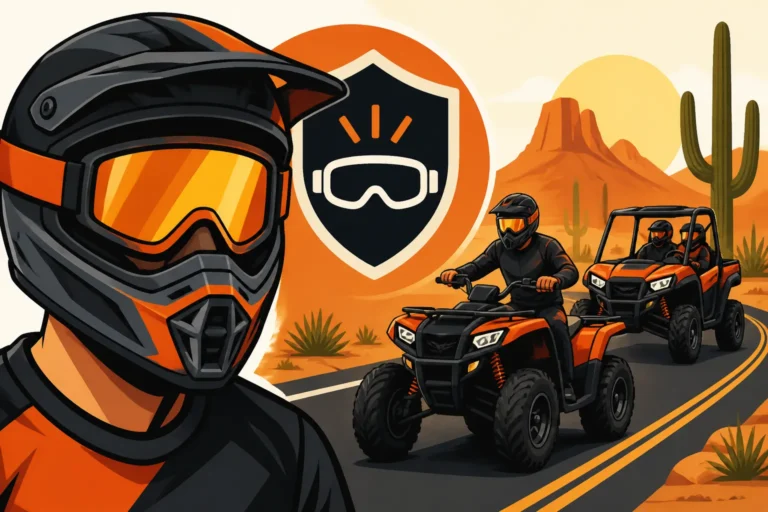
For Arizona riding, comfort features are incredibly important, especially with our intense summer heat. Look for helmets with excellent ventilation to help manage sweat and heat buildup. Many off-road specific helmets have multiple vents and channels designed to promote airflow. Moisture-wicking liners are also a godsend, helping to keep sweat out of your eyes and making the helmet more pleasant to wear on long rides. Consider the type of helmet too:
- Full-face helmets: Offer the most comprehensive protection, especially for your chin and jaw. Many motocross-style full-face helmets are designed for excellent airflow.
- Open-face helmets: Provide more airflow and a wider field of view, but sacrifice protection for the face. These might be suitable for slower, less aggressive riding, but should be combined with good [Goggles or a Windshield on the Street] for eye protection.
- Modular helmets: Offer the versatility of a full-face with a flip-up chin bar. They can be a good compromise for those who want both protection and convenience, though they tend to be heavier.
Beyond the helmet itself, don't forget eye protection. Whether it's a full-face helmet with an integrated visor or goggles worn with an open-face helmet, protecting your eyes from dust, debris, and branches is non-negotiable. Many riders find that a well-ventilated helmet, perhaps paired with a quality set of goggles (available from accessory manufacturers like SuperATV), offers the best balance of safety, comfort, and visibility for Arizona's dusty trails.
Consequences of Non-Compliance and Best Practices
Ignoring Arizona's helmet laws can have both immediate legal ramifications and far more serious, long-term personal consequences. While it might seem like a minor detail, the state takes these safety regulations seriously, particularly when it comes to protecting younger riders.
Fines and Legal Ramifications
The most immediate consequence of not complying with Arizona's helmet laws is the risk of a citation. If a law enforcement officer, such as a Game and Fish Ranger or a County Deputy, observes a minor operating or riding on an OHV without a DOT-approved helmet on public or state land, they can issue a ticket. And it's important to remember that it's typically the parent or legal guardian who will be held responsible for [Citations That Reach an Arizona Parent]. These fines can be significant, adding an unexpected and unwelcome cost to your recreational outing. Furthermore, if you're operating a street-legal OHV on public roads and anyone in your machine (including adults) isn't wearing a helmet, you're also looking at potential fines.
Beyond the monetary cost, there can be other legal headaches. In the unfortunate event of an accident, if a rider was not wearing a legally required helmet, it could potentially impact insurance claims or liability in civil cases. While a helmet might not prevent an accident, demonstrating a blatant disregard for safety regulations could complicate matters. Imagine a scenario where a minor passenger sustains a head injury in an OHV accident, and they weren't wearing a helmet as required by law. The legal and financial implications for the responsible party could be substantial. It's a risk simply not worth taking. Even in cases where adults are not legally mandated to wear a helmet off-road, if a serious injury occurs and there's clear evidence of negligence (e.g., reckless riding), the absence of a helmet could be viewed unfavorably.
Prioritizing Safety Over Legality
While understanding the legal requirements is crucial for compliance, true safety on the trails means going beyond the letter of the law. As a veteran lifestyle blogger for Arizona ATV & UTV, I've seen firsthand the devastating impact of head injuries, and I can tell you unequivocally that wearing a helmet, regardless of age or legal mandate, is the single most effective way to protect yourself. It's easy to think "it won't happen to me" or "I'm just going on a short, slow ride," but accidents are, by definition, unexpected.
Think of your helmet as essential as your seatbelt in a car. It's a non-negotiable piece of gear that should always be put on before the engine starts. This isn't just about avoiding a ticket; it's about safeguarding your brain, your future, and your ability to continue enjoying the sport you love. Reputable brands that provide robust off-road accessories understand the importance of comprehensive safety. Many of them, like SuperATV, also promote responsible riding and gear use, even if they're known for other components like lift kits or upgraded roll cages. Those cages protect the cabin, but a helmet protects the occupant's head inside the cabin.
Consider these best practices:
- Always wear a DOT-approved helmet: For yourself, your children, and any passengers. It's the simplest, most effective form of protection.
- Ensure proper fit: A helmet that doesn't fit correctly won't protect you properly. Follow guidelines for [Fitting and Fastening a Helmet Properly].
- Replace damaged helmets: Helmets are designed to absorb one major impact. If your helmet has been in a crash, or shows signs of cracking or deep gouges, it needs to be replaced immediately, even if it looks okay from the outside.
- Lead by example: If you're an adult riding with children, wear your helmet, even if it's not legally required for you in that specific off-road scenario. This sets a strong example and reinforces the importance of safety for younger riders.
Ultimately, the goal is to have an amazing, memorable, and safe experience on Arizona's trails. Part of that means understanding and respecting the rules, and part of that means making smart choices for your well-being. Don't let a moment of discomfort or a false sense of security overshadow the critical importance of head protection. When an OHV accident occurs, and Arizona has its share of them, the [Arizona OHV Crash Reporting] process highlights how crucial safety equipment can be. Make your helmet a non-negotiable part of every ride.
Disclaimer
This article is for general informational purposes only and does not constitute professional advice. Laws, prices and regulations vary by location and change over time. Consult a qualified professional for guidance on your specific situation.