Eye Protection Rules on Arizona Streets
Riding an ATV or UTV on Arizona's public roads and city streets is an incredible freedom, offering that unique blend of trail access and small-town exploration. But let's be real, the moment you transition from the dirt to the asphalt, the rules of the game change significantly, and one of the most overlooked — and easily forgotten — aspects is proper eye protection. It’s not just about what feels comfortable; it’s about meeting Arizona’s legal requirements and, more importantly, keeping your vision safe from the often-unseen hazards of the road. This guide is going to peel back all the layers of confusion and lay out exactly what you need to know about eye protection when you're street-legal in Arizona.
Why Eye Protection Matters on Arizona Streets
You might think that once you're on a paved road, the biggest dangers are other vehicles. And while that's certainly true, the specific environment of an open-air OHV on the street presents a whole new set of threats to your eyes. It’s a completely different ballgame than riding the open desert trails, even if some of the hazards are similar.
The Unexpected Road Hazards for OHV Riders
Out on the trail, you expect dust, rocks, and branches. You gear up for it, often with heavy-duty goggles designed for extreme conditions. But when you hit the pavement, those assumptions can shift, and that's where riders often get caught off guard. You're now sharing the road with cars, trucks, and all the debris they kick up – tiny pebbles, tire fragments, bits of trash, and even construction materials. At higher road speeds, these seemingly innocuous items can become high-velocity projectiles, capable of causing serious eye injury. Think about that piece of gravel that just bounces off a car's tire and heads straight for your face at highway speeds. Without proper protection, that's a direct hit to the retina waiting to happen.
Then there's the wind, which, even without debris, can cause your eyes to dry out rapidly, leading to discomfort, blurred vision, and a loss of focus. And let's not forget the sun. Arizona's notorious for its bright, intense sunshine, and without UV-protected eyewear, you're not just squinting; you're exposing your eyes to harmful rays that can lead to long-term damage. Even bugs become more of a nuisance, splattering across your line of sight or, worse, flying directly into your eye. It's a combination of speed, wind, and general road crud that makes specific eye protection crucial, even if your machine has a small wind deflector.
Legal Requirements vs. Common Sense Safety
Arizona Revised Statutes (ARS) aren't just a bunch of dusty old books; they're there to keep us safe, especially when we're combining the raw power of an OHV with the demands of public roadways. When you've gone through the effort of [Making a UTV Street Legal in Arizona], you've already committed to following a certain set of rules. Eye protection falls squarely into this. The law often sets a minimum standard, a baseline for safety that everyone must meet. But common sense, as any seasoned rider will tell you, often dictates going above and beyond that minimum.
Imagine trying to navigate a busy intersection with tears streaming from your eyes due to wind, or squinting against the glare of a setting sun because your shades aren't up to par. It’s not just uncomfortable; it’s incredibly dangerous. You lose precious milliseconds of reaction time, your depth perception is off, and your ability to spot a hazard, like a pedestrian or another vehicle, is severely compromised. So while the law provides the framework, your personal safety and the safety of those around you should always be the driving force behind your gear choices. It’s about being responsible, not just compliant.
Different Machine Types, Different Needs
The type of OHV you ride often dictates the level and kind of eye protection you'll need, both legally and practically. A rider on an open-cockpit ATV, for instance, is far more exposed to the elements than someone in a side-by-side with a full windshield.
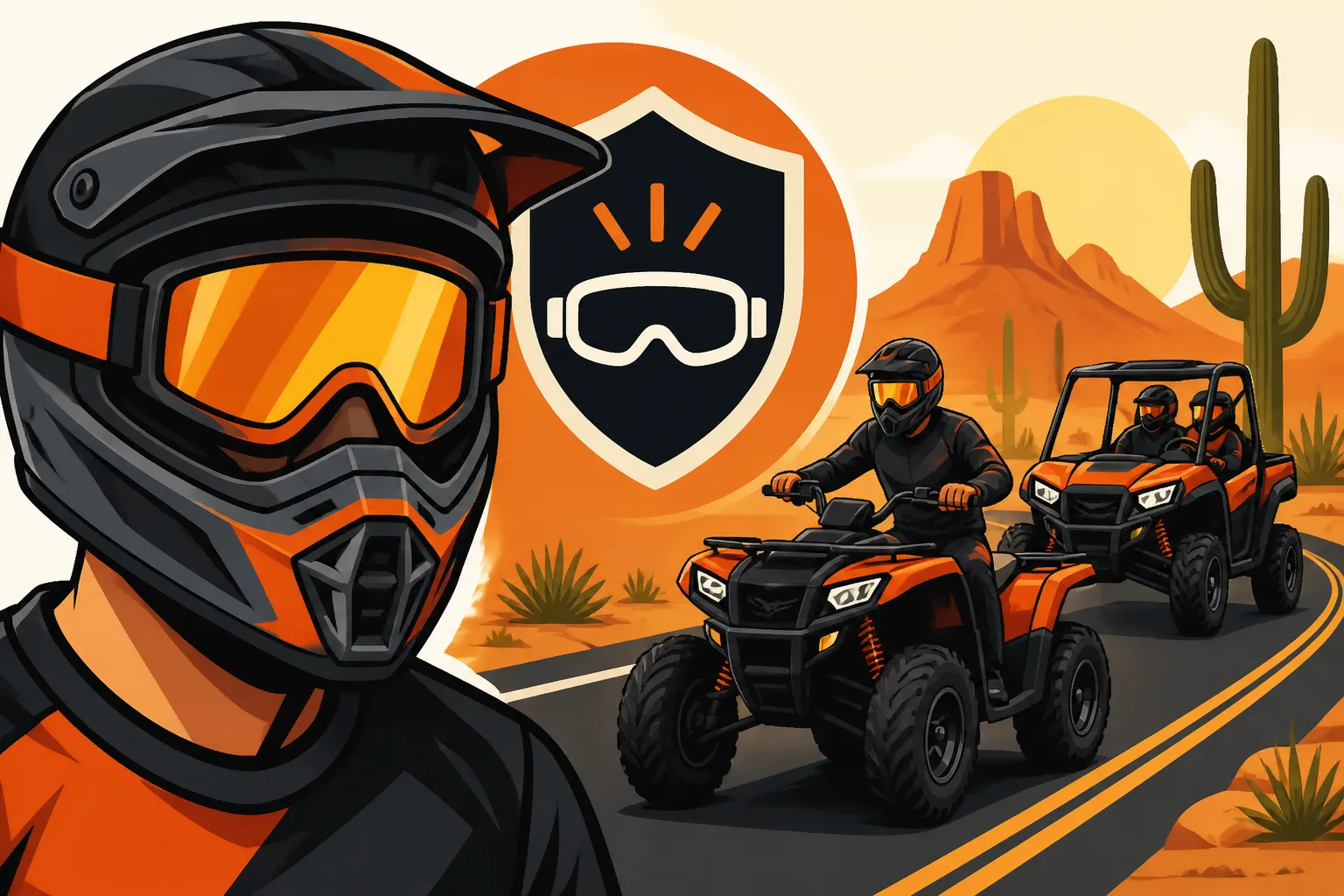
For traditional ATVs, which are completely open, robust goggles or a full-face helmet with a shield are absolutely essential. There's nothing between your face and the road, meaning every piece of debris, every gust of wind, and every bug is heading straight for you. The same goes for many smaller side-by-sides or sand rails that might have a minimalist front fairing but no actual windshield. Here, the legal requirement for eye protection is unequivocally clear and non-negotiable.
Now, consider a larger UTV with a full, automotive-style windshield. Does this mean you can ditch the eye protection? Not necessarily. While a proper windshield offers significant protection from wind and larger debris, smaller particles can still make their way into the cab, especially if you're riding with windows open or if the windshield isn't perfectly sealed. Plus, the sun's glare, even through a windshield, can still be a major issue. Many riders in enclosed cabs still opt for sunglasses or even clear safety glasses to protect against these residual hazards and UV rays. Even a small chip in the windshield or a rogue bee can be a distraction you don't need at 45 mph. Understanding these nuances helps you make the smartest choices for your specific ride.
Arizona's Specific Eye Protection Laws for Street-Legal OHVs
So, what exactly does Arizona law say about keeping your eyes safe when you're cruising your side-by-side down Main Street? It's easy to get lost in the legal jargon, but let's break it down in a way that makes sense for us riders.
Deciphering the Arizona Revised Statutes
Arizona law is pretty clear for anyone operating a street-legal OHV, which often requires an "MC" plate. The Arizona Revised Statutes, specifically ARS 28-964, address this directly for motorcycles and, by extension, other open-air vehicles that are legally operating on public roads. It states that an operator and passenger of a motorcycle or motor-driven cycle, if not equipped with a windshield, must wear protective glasses, goggles, or a transparent face shield.
Now, here's where it gets interesting for our ATVs and UTVs. Many OHVs are considered "motor-driven cycles" or even "motorcycles" in the eyes of the MVD when they become street legal, particularly if they meet the criteria for an MC plate. This means that if your machine lacks a full, legitimate windshield (one that's designed to protect from flying objects and deflect wind adequately), then you and any passenger must have your eyes protected. It’s not an option; it’s a requirement. This rule aims to provide a baseline of safety for all riders exposed to the open air, recognizing the inherent risks of road travel on these machines.
This statute serves as a catch-all for a lot of street-legal OHVs that don't quite fit the traditional car mold. If you've been through the process of getting your street-legal machine squared away, including meeting all the [What Arizona Requires on a Street-Legal Machine], then adding proper eye protection is just another step in ensuring you're fully compliant and safe.
When a Windshield is Not Enough
Okay, so your UTV has a windshield. Great! You're thinking you're all set, right? Maybe, but maybe not entirely. The law often references a "windshield" without defining it to the nth degree, but the intent is clear: it should offer adequate protection. Many aftermarket UTV windshields, while fantastic for keeping some wind off, might not fully enclose the cabin, or they might be half-windshields, or even highly vented designs.
If there are still significant gaps that allow wind and debris to reach your eyes, or if it's a very short windshield that doesn't extend high enough to offer protection when seated, then you're likely still required to wear additional eye protection. Think about side-by-sides that have a full front windshield but no side doors or rear window. While the front is covered, debris can still swirl in from the sides or over the top, particularly at speed. In these cases, even with a windshield, the "spirit of the law" (and certainly common sense) suggests you should still be wearing goggles or glasses. This also extends to passengers, who are often just as exposed as the driver. [Arizona Helmet Rules for Riders Under 18] already points to the stricter rules for youth, but eye protection applies to all.
The key is to ask yourself: "Am I truly protected from flying debris and wind, or is this windshield merely deflecting some of it?" If the answer isn't a resounding "yes, completely protected," then it's always safer and wiser to wear additional eye protection. Some riders even go so far as to add lower door inserts or full cab enclosures to fully mitigate these issues, but short of that, supplemental eyewear is your friend.
Exemptions and Gray Areas
While the Arizona law is fairly straightforward for most street-legal OHVs, there are always those unique situations that make you scratch your head. For instance, if you’re operating your OHV strictly on private land, such as a ranch or your own large property, then state street-legal requirements generally don't apply. You're still responsible for your own safety, of course, but the specific ARS statute on eye protection for public roads wouldn't be enforced. However, the moment you leave that private property and touch a public road, even for a short distance to get to another section of land, those rules kick in immediately.
Another common "gray area" might be low-speed vehicles (LSVs) or golf carts that are street-legal within certain communities or for specific purposes. These vehicles often have different classifications and may not fall under the "motorcycle" or "motor-driven cycle" definition for all aspects of the law. However, if they do have a windshield, it usually must meet specific safety standards. If they don't, then the general rule of eye protection almost always applies for safety's sake, if not always by direct statute for that specific vehicle type. It's crucial to check the specific ordinances for [Arizona Rules for a Golf Cart in a Community] to ensure you're compliant.
Ultimately, when in doubt, wear the eye protection. It’s a minimal inconvenience for maximum safety, and it keeps you in good standing with any deputy or ranger you might encounter. Nobody wants to get a ticket for something so easily avoided, especially when you're trying to enjoy a pleasant ride [Riding Town to Trailhead in Arizona].
Choosing the Right Eye Protection for Arizona Road Riding
Alright, so we've established why you need eye protection and when the law requires it. Now, let's talk about the fun part: picking out the gear that works best for you and your riding style. There's a lot more to it than just grabbing the first pair of sunglasses you see.
Goggles: Your Best Bet for Open-Air Riding
For anyone on an ATV or a side-by-side without a full, enclosed cab and windshield, goggles are often your best friend. They offer superior protection compared to sunglasses because they seal around your eyes, preventing dust, wind, and debris from sneaking in from the sides, top, or bottom. This is especially critical when you're riding through a dusty Arizona town or hitting higher speeds on a county road.
When you're shopping for goggles, don't just grab any old pair. Look for features like anti-fog coatings, which are a lifesaver when you're working up a sweat or the humidity changes. UV protection is non-negotiable in Arizona – make sure the lenses block 99-100% of UVA and UVB rays. Ventilation is also key to prevent fogging and keep you comfortable. Consider interchangeable lenses: clear for night riding or overcast days, tinted for bright sunshine, and maybe even a yellow or amber for enhanced contrast in specific conditions. Brands like SuperATV offer a range of goggles designed for off-road use, which translate perfectly to the street for robust protection. Their designs often prioritize durability and a secure fit, which is exactly what you want when dealing with road vibration and wind.
Fit is paramount. Goggles should sit snugly against your face without being uncomfortably tight, and they should integrate well with your helmet if you're wearing one (which you absolutely should be, especially if you're under 18 or riding a machine with an MC plate). A wide field of vision is also important for road awareness.
Face Shields and Helmets: Integrated Protection
If you're already wearing a helmet (and remember, [Arizona Helmet Rules for Riders Under 18] make it mandatory for young riders, and it's always a good idea for adults), a full-face helmet with an integrated face shield offers excellent, comprehensive protection. This combines head and eye safety into one convenient package.
Full-face helmets offer the most protection for your face, jaw, and eyes. The face shield flips down, creating a barrier against wind, dust, bugs, and debris. Look for shields that are scratch-resistant and offer good optical clarity. Many modern face shields also come with anti-fog coatings or can accommodate Pinlock inserts for superior fog prevention. Modular helmets offer a compromise, allowing you to flip up the entire chin bar and shield when stopped or riding slowly, giving you an open-face feel, then securing it for full protection at speed.
Open-face helmets (often called 3/4 helmets) are another option, but if you go this route, you must pair them with goggles or a snap-on face shield to meet the eye protection requirements. Just wearing an open-face helmet without a separate eye covering is not enough. The key here is ensuring that whatever shield or goggle system you choose with your helmet provides that full, sealed barrier from the elements. Comfort, ventilation, and a secure fit are just as important here as with standalone goggles, ensuring your focus remains on the road.
Eyewear for Enclosed Cabs and Windshields
"But I have a full windshield and even doors on my UTV!" you might say. That's fantastic, and it definitely reduces your direct exposure. However, even in a mostly enclosed cab, eye protection is still a very smart idea, and often implicitly required for full safety. Smaller debris can still find its way into the cabin, especially if windows are open or if there are gaps in the enclosure. And glare? That's a universal problem, windshield or not.
For these situations, a good pair of shatter-resistant sunglasses with UV protection is usually sufficient. Look for polycarbonate lenses, which are incredibly impact-resistant, making them ideal for any vehicle, even with a windshield, as an extra layer of defense. Polarized lenses can significantly reduce glare, which is a huge benefit on sunny Arizona roads, especially around dawn or dusk, or when driving into the sun. If you wear prescription glasses, consider photochromic (transition) lenses that adjust to light conditions, or prescription sunglasses. It's a small detail that makes a big difference in comfort and safety, preventing eye fatigue on longer rides. Don't underestimate how much even a small piece of dust or bug can irritate your eyes and distract you, leading to potentially dangerous situations.
What to Look for in Quality Eye Protection
Beyond the type of eye protection, there are specific quality indicators that can help you make an informed choice and ensure your gear actually does its job.
First, impact resistance is critical. You're trying to protect your eyes from flying objects, so the lenses should be made from materials like polycarbonate, which is known for its incredible strength. Cheap plastic lenses might scratch easily and shatter on impact, making them useless for protection.
Second, UV protection is non-negotiable in Arizona. Look for lenses that block 99-100% of both UVA and UVB rays. This is usually indicated by "UV400" or similar ratings. Prolonged exposure to UV radiation can lead to serious eye problems over time, so this isn't just about comfort; it's about long-term eye health.
Third, optical clarity is paramount. Distorted vision from poorly made lenses is almost as dangerous as no protection at all. Look through them carefully – everything should be clear and sharp, without any haziness or warping. Anti-fog coatings and good ventilation systems are also major pluses, especially on goggles and helmet shields, to maintain clear vision in varying conditions.
Finally, consider durability and comfort. Straps should be adjustable and robust, padding should be comfortable against your face, and the overall construction should feel solid. If it's uncomfortable, you're less likely to wear it, defeating the purpose. Investing in quality eye protection is like investing in any other critical safety gear – it pays off in the long run.
Passenger and Youth Rider Eye Protection Rules
It's easy to focus on the driver, but anyone riding in a street-legal OHV is subject to the same (or sometimes even stricter) rules when it comes to eye protection. We're talking about friends, family, and especially our kids – whose safety is always paramount.
Protecting Your Co-Pilot
If you're operating a street-legal side-by-side or ATV, remember that the eye protection rule often applies equally to all occupants, not just the driver. This means your passenger, whether they're sitting right next to you or in the back seats of a multi-person UTV, needs to have their eyes protected according to the same standards as the driver. If your machine doesn't have a proper windshield that fully protects all passengers, then each person needs their own pair of goggles or suitable glasses.
This is a point often missed by riders, and it can lead to unnecessary citations. Just because your buddy is "just riding along" doesn't exempt them from the safety requirements. Before you even pull out onto the road, make it a habit to check that everyone in your machine is geared up appropriately. A good pre-ride checklist should always include eye protection for every passenger, just like ensuring everyone is buckled up. You're responsible for the safety of everyone in your vehicle, and that extends to their vision.
Special Considerations for Riders Under 18
When it comes to our younger riders, Arizona's laws tend to be more stringent, and for good reason. Their developing bodies and less experience mean they need maximum protection. While adults over 18 can choose to ride without a helmet on street-legal OHVs (if the machine is not an "MC plate" or specific motorcycle type), [Arizona Helmet Rules for Riders Under 18] makes it clear that anyone under 18 must wear an approved helmet. And with that helmet, eye protection is almost always an integrated part of the safety system.
For a child riding as a passenger in an open-cab side-by-side, they'll need either proper-fitting goggles or a full-face helmet with a face shield. Just handing them a pair of adult sunglasses isn't going to cut it from a protection standpoint, and it likely won't satisfy the intent of the law. Make sure their eye protection fits snugly, doesn't obscure their vision, and is comfortable enough that they'll actually keep it on. Trying to wrestle goggles onto a squirming child when you're already trying to get ready for a ride is no fun, so get them used to it from the start. This also loops into other youth safety concerns, such as [Arizona Rules for a Child Passenger] to ensure they are properly secured and fit the machine.
Car Seats and Enclosed Cabs for Kids
Even if you have your little one secured in a car seat within a side-by-side that has a full cab enclosure and a windshield, thinking they're totally safe, it's still a good idea to consider some form of eye protection. As discussed, small debris, dust, or even just strong air currents can still get into the cab.
For children in car seats, a small, well-fitting pair of child-sized safety glasses or sunglasses (with proper UV and impact protection) can be a wise addition. They might not be legally mandated in a fully enclosed environment, but it's an extra layer of protection that could prevent discomfort or injury. Moreover, it teaches them good safety habits from a young age. Think of it as an extension of the broader safety mindset we cultivate for our off-road adventures. Protecting our youngest riders' eyes from the sun, wind, and unexpected road hazards is just another way we ensure they have a safe and enjoyable experience on Arizona's streets and trails.
Beyond the Law: Practical Tips for Clear Vision on Arizona Roads
Meeting the legal requirements is one thing, but maintaining clear vision and comfortable eyes throughout your ride on Arizona's diverse roads requires a bit more proactive effort. The desert environment, combined with road conditions, throws unique challenges at your eyewear.
Keeping Your Goggles and Shields Clean
Arizona dust is notorious. It's fine, it's pervasive, and it loves to cling to everything, especially your eye protection. Whether it’s dust from a dirt shoulder, road grime kicked up by a passing truck, or even splattered bugs, dirty lenses severely impact your visibility, which is a major safety concern.
Always carry a microfiber cloth specifically for cleaning your lenses. Never use a dry cloth or your shirt to wipe dust off your goggles or face shield, especially if it's coated with dust. That fine grit will act like sandpaper and scratch your lenses, ruining their clarity and effectiveness. The best method is to gently rinse the dust off with water first, if possible, then use a lens cleaner spray and a clean microfiber cloth. Many riders carry a small spray bottle with water or a specialized lens cleaner in their UTV's glove box or gear bag. For face shields, a quick squirt and wipe at a gas station stop can make a world of difference. Being proactive about cleaning ensures your vision remains unobstructed and your expensive gear lasts longer.
Dealing with Sun Glare and Changing Light
Arizona's sun is no joke, and glare can be a serious issue, particularly at sunrise, sunset, or when riding directly into the sun's path. Clear lenses are essential for night riding, but they offer no help against blinding daytime glare.
One effective strategy is to carry multiple sets of lenses or even multiple pairs of goggles. A tinted or mirrored lens is fantastic for bright, sunny days, while a clear lens is necessary for low light or night riding. Some riders opt for photochromic (transition) lenses, which darken and lighten based on UV exposure, offering a good all-in-one solution, though they may not get as dark as dedicated sunglasses or as clear as dedicated clear lenses. Polarized lenses are also excellent for reducing glare, especially off wet pavement or shiny surfaces. Planning your route and knowing the direction of the sun can also help you anticipate glare and adjust your eye protection accordingly. If you have a passenger, they can often help spot glare issues ahead of time, adding an extra layer of safety.
Maintenance and Replacement of Eye Protection Gear
Your eye protection gear isn't a "set it and forget it" item; it requires regular inspection and occasional replacement to ensure it's offering optimal protection. Over time, lenses can become scratched, reducing clarity and effectiveness. Scratches, even small ones, can cause distortion and glare, making them dangerous. If your lenses are heavily scratched, it's time to replace them. Many goggles and helmets allow you to replace just the lens or shield, which is more cost-effective than buying a whole new unit.
Check the straps on your goggles regularly. They can stretch out, lose elasticity, or become frayed, leading to a loose fit. A loose fit means dust and debris can easily get in, and in the event of a crash, the goggles might not stay on. The foam padding around goggles can also degrade, losing its ability to seal comfortably against your face. If you notice any of these signs of wear and tear, it's time to invest in new parts or a new pair. Regularly cleaning and storing your eye protection in a protective bag or case when not in use can significantly extend its lifespan. For durable options that stand up to the desert, brands like SuperATV often have replacement parts available, making maintenance easier.
Penalties and Enforcement for Eye Protection Violations
Nobody wants to see flashing lights in their rearview mirror, especially when you're just out enjoying a ride. Understanding the potential consequences of not adhering to Arizona's eye protection laws can be a powerful motivator to always gear up correctly. It's not just about a minor inconvenience; it can hit your wallet and affect your riding privileges.
What an Officer Looks For
When an Arizona law enforcement officer, be it an MVD agent, a county sheriff's deputy, or even a city police officer, spots you on your street-legal OHV, they're often conducting a quick visual scan for several key compliance points. Your license plate (is it an "MC" plate and properly displayed? [Where the Arizona OHV Decal Goes on the Plate]), your headlights and taillights ([Arizona's 500 Foot Headlight Rule]), and yes, your eye protection.
If you're riding an ATV or an open-cab UTV without a full, protective windshield, and you don't have goggles, a face shield, or protective glasses on, you'll immediately stand out. They'll be looking to see if your eye protection appears adequate for the conditions – flimsy fashion sunglasses likely won't pass muster if you're truly exposed. They'll also check your passengers, especially any minors, to ensure they're compliant with all safety gear. A quick glance is usually all it takes for an officer to determine if you're following the rules. Their primary goal is public safety, and unprotected eyes on a public road are a clear safety hazard.
The Cost of Non-Compliance
So, what happens if an officer determines you're in violation of the eye protection law? Typically, you're looking at a traffic citation. The exact fine amount can vary by jurisdiction and specific circumstances, but it’s generally not a cheap warning. These fines can add up quickly, especially if multiple people in your vehicle are found to be in violation.
Beyond the monetary fine, a traffic citation can also lead to points on your driving record. Accumulating too many points can result in increased insurance premiums, or even the suspension of your driving privileges. This isn't just about your OHV; it impacts your ability to drive any vehicle. Imagine losing your driving privilege because you forgot a pair of goggles! It's a frustrating situation that is entirely avoidable with a simple piece of gear. When you weigh the cost of a good pair of goggles against a traffic ticket and potential record issues, the choice becomes very clear. This is akin to other "easy to forget" but critical violations, like not having an [Arizona State Trust Land Recreational Permits] when crossing those lands.
Accident Implications Without Proper Eye Protection
Here's the really serious part: if you're involved in an accident while riding your street-legal OHV on public roads and you weren't wearing the legally required eye protection, the consequences can be far-reaching, even if the accident wasn't your fault.
First and foremost, your physical well-being is at stake. The most obvious risk is severe eye injury or even permanent vision loss. A collision, even a minor one, can send debris flying or cause you to hit something with your face. The injuries sustained could be far worse without proper protection.
Secondly, from a legal and insurance perspective, not being compliant can negatively impact your case. Even if another driver was primarily at fault, an insurance company or a court might argue that your injuries were exacerbated by your failure to wear required safety gear. This could reduce any settlement you might receive or even be used against you in a liability claim. You might find yourself fighting an uphill battle, trying to prove your innocence, all while dealing with medical bills and vision impairment. This is why following all rules, including those for [Arizona Insurance Minimums for Road Riding] is crucial. It’s a stark reminder that these laws aren't just about revenue or rules for rules' sake; they're designed to protect you, the rider, from the severe consequences of an accident.
Disclaimer
This article is for general informational purposes only and does not constitute professional advice. Laws, prices and regulations vary by location and change over time. Consult a qualified professional for guidance on your specific situation.