Replacing a Burned-Out Spark Arrestor
There’s nothing quite like hitting the Arizona trails, but the peace can quickly turn to frustration if your beloved ATV or UTV starts sputtering, losing power, or worse, spewing sparks. A burned-out spark arrestor isn't just a minor nuisance; it's a serious safety hazard and a surefire way to invite a hefty fine from a ranger. This guide is here to walk you through everything you need to know about understanding, identifying, and replacing that crucial component to keep your machine running clean and compliant in the Grand Canyon State.
Why Your Spark Arrestor Matters So Much (Especially Here in Arizona)
Let's be real, riding in Arizona means respecting our incredibly dry and often fire-prone environment. That's where your spark arrestor comes into play. It's not just some random part; it's a vital safety feature that literally protects our precious landscapes and keeps you out of trouble.
The Critical Role of a Spark Arrestor
Think of your spark arrestor as a mini-firefighter in your exhaust system. When your engine runs, especially at higher RPMs, it can expel tiny, super-heated carbon particles – basically, miniature embers. Without a spark arrestor, these hot little guys can fly out of your exhaust and land on dry brush, grass, or other flammable materials, igniting a wildfire in a split second. A properly functioning spark arrestor uses a screen, baffle, or a series of chambers to capture or cool these particles before they can escape, preventing them from becoming a dangerous projectile. It’s a simple piece of technology, but its impact on fire prevention is immense. Every time you start your machine, that spark arrestor is silently doing its critical job, protecting both the environment and your riding privileges. You can read more about [Why a Spark Arrestor Runs Whenever the Engine Does].
Arizona's Strict Fire Safety Rules and Spark Arrestors
Arizona takes wildfire prevention incredibly seriously, and for very good reason. We've all seen the devastation wildfires can cause, not just to our beautiful desert and forest lands, but to homes and communities. Because of this, the state has clear, non-negotiable rules about spark arrestors. If you're riding an off-highway vehicle (OHV) on any public lands – whether it's Forest Service roads, BLM lands, or State Trust Land – your machine must be equipped with a U.S. Forest Service (USFS) approved spark arrestor. This isn't just a recommendation; it's the law. Rangers and deputies out on patrol are well-versed in checking for this, and if your machine isn't compliant, you could face significant fines or even have your ride cut short. It’s not just about avoiding a ticket; it’s about being a responsible steward of the land we all love to ride. Make sure to understand [Arizona's Spark Arrestor Requirement] before you head out.
Identifying the Signs of a Burned-Out or Failing Arrestor
So, how do you know if your spark arrestor is on its way out? It's not always obvious, but there are some tell-tale signs to look for. Often, you'll notice a significant decrease in engine performance. Your machine might feel sluggish, struggle to reach higher speeds, or just not have the "oomph" it once did. This happens because a clogged or damaged spark arrestor creates backpressure in the exhaust system, essentially suffocating your engine. Another major red flag is if you actually see sparks or hot carbon coming out of your exhaust pipe. This is a clear indicator that the screen or internal baffling is compromised. Additionally, you might hear a change in your exhaust note; it could sound louder or raspy. Sometimes, a visual inspection is all it takes: if the screen is torn, warped, or caked with excessive carbon buildup that you can't clean, it's time for a replacement. Ignoring these signs isn't just risky for the environment; it can also damage your engine over time.
Step-by-Step: Replacing Your Spark Arrestor
Don't let the thought of replacing a part intimidate you. It's a fairly straightforward job for most OHV owners, and definitely something you can tackle in your garage with a few basic tools. Saving yourself a trip to the shop means more money for fuel and trail snacks!
Gathering Your Tools and Replacement Parts
Before you start tearing things apart, make sure you have everything you need. There's nothing worse than getting halfway through a job and realizing you're missing a crucial wrench. Here’s a typical checklist:
- New Spark Arrestor: This is paramount. Make sure it's the correct model for your specific ATV or UTV and, importantly, that it's USFS approved. Reputable brands like SuperATV often offer high-quality, compliant replacement parts.
- Basic Tool Kit: You'll likely need a set of sockets, wrenches (metric or standard, depending on your machine), screwdrivers (Phillips and flathead), and possibly an Allen key set.
- Wire Brush/Scraper: For cleaning carbon buildup.
- Penetrating Oil: If bolts are rusted or seized.
- Gloves and Eye Protection: Safety first!
- Shop Rags: For cleaning up any grime.
- Torque Wrench (Optional but Recommended): To ensure bolts are tightened to the manufacturer's specifications.
- Service Manual: Always a good idea to consult your machine's manual for specific instructions and torque values.
It's tempting to try and "fix" a damaged arrestor screen with some chicken wire, but trust me, that won't pass inspection and it won't be safe. Always go for a proper, [USDA-Approved Spark Arrestors in Arizona] replacement.
Accessing and Removing the Old Arrestor
The exact location and method for accessing your spark arrestor will vary slightly depending on your specific ATV or UTV model, but generally, it's found within the muffler assembly.
Here’s a general approach:
- Locate the Muffler: This is the big can at the end of your exhaust pipe.
- Identify the Spark Arrestor Access Point: Many machines have a small cap or plate on the end of the muffler, often secured by one or two bolts, where the spark arrestor is housed. Some older or simpler designs might require you to remove the entire muffler to get to it. Consult your owner's manual here; it's your best friend for precise guidance.
- Clean Around the Bolts: Before attempting to loosen anything, use your wire brush to clean any dirt, mud, or rust from around the bolts. This helps prevent stripping them. A little penetrating oil can work wonders if they're particularly stubborn.
- Remove the Bolts: Carefully loosen and remove the bolts or screws holding the spark arrestor cap or the muffler in place. Keep track of all hardware; a small magnetic dish is great for this.
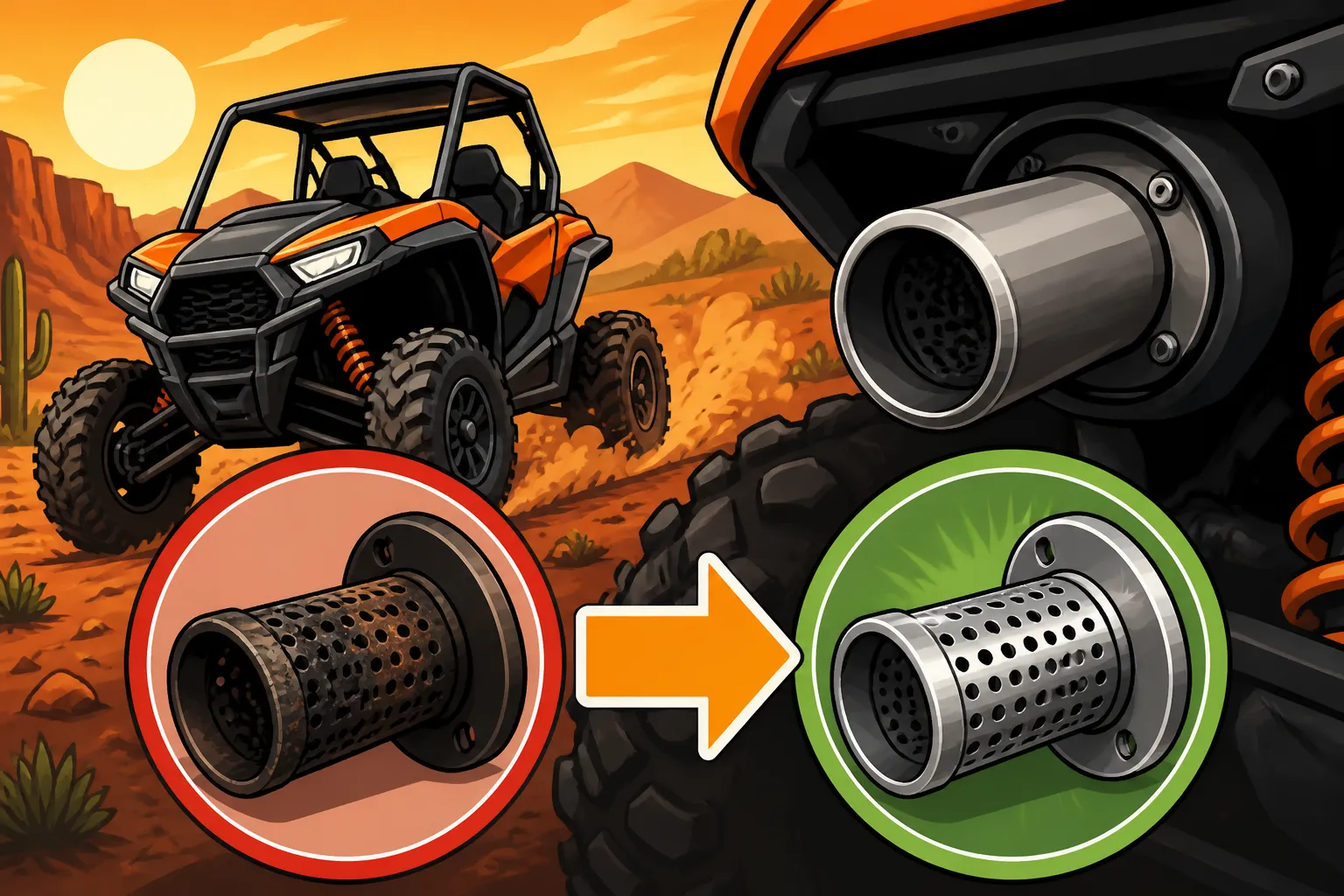
- Extract the Old Arrestor: Once the cap or muffler is off, you should be able to slide or pull out the spark arrestor screen. It might be quite caked with carbon. If it's heavily fouled, it might take a bit of wiggling or gentle prying. Inspect the old arrestor for any holes, tears, or significant warping. This will confirm why you're replacing it. Take a moment to scrape out any loose carbon buildup inside the muffler itself if you can access it, but be careful not to damage anything.
Installing Your New Spark Arrestor
With the old, worn-out arrestor removed and the area cleaned up, installing the new one is usually the reverse of removal.
- Insert the New Arrestor: Carefully slide the new spark arrestor screen into its housing. Make sure it seats properly and isn't crooked or forced. It should slide in relatively smoothly.
- Reattach the Cap/Muffler: If you removed a cap, align it and start threading the bolts back in by hand to prevent cross-threading. If you removed the entire muffler, reattach it to the exhaust header, again starting bolts by hand.
- Tighten the Hardware: Once all bolts are in place, tighten them securely. If you have a torque wrench and the manufacturer's specifications, use them. Over-tightening can strip threads, and under-tightening can lead to leaks or the part vibrating loose.
- Double-Check Everything: Give all the bolts a final check to ensure they're snug. Start your machine and listen for any exhaust leaks or unusual noises. Take it for a short, easy test ride to ensure everything feels right and there are no new warning lights.
- Dispose of the Old Part: Properly dispose of your old spark arrestor.
Having a fresh, clean spark arrestor ensures your machine performs optimally and, most importantly, keeps you compliant with Arizona's fire safety regulations. For those who frequently encounter rangers on the trails, a compliant machine is a stress-free machine. Knowing [What an Arizona Ranger Asks a Rider For] can help you understand the importance of this simple part.
| Spark Arrestor Condition | Common Symptoms | Recommended Action |
|---|---|---|
| New/Clean | Optimal performance, quiet exhaust, no visible sparks. | Regular inspection, preventative cleaning. |
| Clogged/Fouled | Reduced power, sluggish acceleration, louder exhaust, sputtering. | Thorough cleaning, possible replacement if screen is damaged. |
| Damaged/Burned-Out | Significant power loss, visible sparks, loud and raspy exhaust, potential engine damage. | Immediate Replacement with USFS-approved part. |
| Missing | Extremely loud exhaust, very high fire risk, illegal on public lands. | Immediate Installation of USFS-approved part. |
Keeping Your Spark Arrestor in Top Shape and Avoiding Future Issues
Replacing your spark arrestor isn't a "set it and forget it" task. To truly get the most out of your machine and avoid future problems (and potential tickets!), a little regular maintenance goes a long way.
Regular Cleaning: Your First Line of Defense
The primary reason spark arrestors get "burned out" or fail is excessive carbon buildup. This black, sooty residue clogs the fine mesh screen, preventing exhaust gases from flowing freely. This buildup isn't necessarily a sign of a bad spark arrestor, but rather an accumulation from combustion. Regular cleaning is absolutely essential. How often? It depends on how much you ride and the type of fuel you use, but a good rule of thumb is to check and clean it every 20-30 hours of riding, or at least once a season.
To clean it, you'll generally follow the removal steps above. Once the arrestor screen is out, use a wire brush to gently scrub away the carbon buildup. You can also use a non-flammable solvent, but make sure to rinse it thoroughly and let it dry completely before reinstallation. Some riders even use a small propane torch to carefully burn off carbon, but this requires extreme caution and should only be done in a well-ventilated area, away from anything flammable, and never on the machine itself. A clean spark arrestor ensures optimal engine performance, maintains its fire-preventing capabilities, and extends its lifespan. For more on proper care and legal requirements, check out [Arizona's Spark Arrestor Requirement].
Aftermarket Exhaust Systems and Arizona Fire Rules
Many riders love the performance boost and aggressive sound of an aftermarket exhaust system. And who can blame them? They look cool and often provide a noticeable difference in power. However, it's crucial to understand how these systems interact with Arizona's spark arrestor laws. Just because an exhaust system is "performance-oriented" doesn't automatically mean it's compliant. Always, always ensure that any aftermarket exhaust you install either comes with a USFS-approved spark arrestor built-in or has a dedicated port for installing one. If your fancy new pipe doesn't have one, or if you remove it for racing, you are breaking the law if you ride on public lands.
It's a common mistake, but an expensive one. If a ranger pulls you over and your aftermarket exhaust isn't spark-arrestor compliant, you'll be facing fines and potentially forced to trailer your machine off the trail. When shopping for aftermarket parts, look for brands like SuperATV that clearly state their products meet USFS requirements where applicable. Don't assume; verify. Being informed about [Aftermarket Exhaust and Arizona Fire Rules] can save you a lot of grief.
When to Seek Professional Help
While replacing a spark arrestor is generally a DIY-friendly task, there are times when it makes sense to call in the pros. If you're struggling to remove seized bolts, if the spark arrestor is integrated into a complex muffler system that you're uncomfortable disassembling, or if you're experiencing persistent performance issues even after cleaning or replacing the arrestor, a trip to a qualified powersports mechanic is a wise move. They have specialized tools, diagnostic equipment, and the expertise to handle stubborn issues or identify underlying problems that might be contributing to excessive carbon buildup, like an engine running too rich. Don't risk damaging your machine or creating a bigger problem if you're out of your depth. Sometimes, peace of mind is worth the cost of professional service. After all, you want to spend your time enjoying the trails, not wrenching in frustration.
Disclaimer
This article is for general informational purposes only and does not constitute professional advice. Laws, prices and regulations vary by location and change over time. Consult a qualified professional for guidance on your specific situation.