Citations That Reach an Arizona Parent
It’s a heart-stopping moment for any parent: seeing flashing lights in the rearview mirror or, even worse, getting a call that your child on their ATV or UTV has been stopped by law enforcement. The desert playgrounds of Arizona offer incredible opportunities for young riders, but with that freedom comes significant responsibility, and the citations that result from rule-breaking can often land squarely on the parent’s lap. This guide will walk you through the specifics of Arizona’s OHV laws concerning minors, detailing exactly how and why a parent can be held responsible for their child's actions on a machine, and what you can do to prevent those dreaded tickets.
Understanding Arizona's Age and Supervision Rules for Young Riders
Arizona has a robust set of regulations designed to keep young riders safe while enjoying our vast desert and mountain trails. These rules aren't just suggestions; they carry the weight of law, and overlooking them can quickly lead to citations. It’s crucial for parents to not only know these rules but to actively enforce them to avoid legal trouble.
Under 12 Restrictions and Designated Areas
The youngest riders are subject to the strictest guidelines in Arizona, and for good reason—their safety is paramount. If your child is under 12 years old, they face significant limitations on where and how they can operate an off-highway vehicle. The law is quite clear: children under the age of 12 are generally prohibited from operating an OHV on public lands unless they are operating on a closed course or on land owned or leased by their parents or guardians. This means that hitting popular trails with a young child at the controls is usually not permitted and can easily draw the attention of a ranger or deputy.
Imagine you're out near Table Mesa, a popular riding spot north of Phoenix. Your eight-year-old is eager to take the wheel of their small ATV. While it might seem harmless on a wide, open two-track, if that track is on public land, you could be cited for allowing an underage operator. The intent here is to keep very young riders, who may lack the necessary judgment, strength, and coordination, away from the complexities and hazards of open public trails. These areas can have unpredictable terrain, other riders, and sometimes even vehicles like jeeps or full-size trucks. For these youngest riders, finding a [Picking a First Quad for a Desert Kid] that is appropriately sized and safe for designated closed-course environments is critical.
12 to 18: License, Supervision, and Helmet Laws
As children grow, so do their responsibilities and the complexity of the rules they must follow. For riders aged 12 to 17, the regulations expand, encompassing not only where they can ride but also who must be with them, what they must wear, and what training they must complete. A common misconception is that if a child is old enough to ride, they're old enough to ride unsupervised. This is often not the case on public lands in Arizona.
Anyone under 18 operating an OHV on public land must be supervised by an adult (18 or older) who has a valid driver's license. This adult must be "in the immediate vicinity" of the minor. "Immediate vicinity" isn't strictly defined as being within arm's reach, but it implies close enough to observe and intervene if necessary. A parent letting their 15-year-old ride ahead while they are miles behind, or waiting at the staging area, is not fulfilling this supervision requirement. This is a critical point that rangers often check during [What an Arizona Ranger Asks a Rider For]. Furthermore, all riders under 18, regardless of their age, are legally required to wear a properly fitted and fastened U.S. DOT-compliant helmet. This helmet law applies to both drivers and passengers. Ignoring the [Arizona Helmet Rules for Riders Under 18] is not only dangerous but a direct path to a citation that will involve the supervising parent.
Another key requirement is the mandatory OHV education course. Every rider, regardless of age, who operates an OHV in Arizona must complete a free, online OHV safety education course. While it's free, it's mandatory, and proof of completion can be requested by law enforcement. The parent or guardian is responsible for ensuring the minor has completed this course. Failing to do so can result in a citation under [Arizona OHV Education Requirements]. It’s about building a foundation of safe riding habits from the start.
Common Violations That Lead to Parent Citations
Parents are often surprised to learn they can be cited for infractions committed by their minor children. This isn't just about direct supervision; it extends to ensuring the machine is legal and that the child understands and follows all rules. A lapse in judgment or a forgotten piece of paperwork can quickly escalate into a legal issue for the responsible adult.
Lack of Decal or Registration
One of the most frequent reasons an OHV operator, especially a minor, gets stopped in Arizona is for failing to have a valid OHV decal properly displayed. The [Arizona OHV Decal Explained] is mandatory for nearly all OHVs operating on public lands, roads, and trails. This includes ATVs, UTVs, dirt bikes, and even some larger vehicles. If your child is riding a machine without an annual OHV decal, it’s a clear violation, and the parent who permitted them to ride that machine on public land can be held responsible.
Consider a scenario: you bought your teenager a used side-by-side. You think you’ve taken care of everything—you have the title, the bill of sale, and maybe even insurance. But if you haven't gone through the process of getting an [Arizona Certificate of Title for an Off-Highway Vehicle] and securing that annual OHV decal, your child is essentially riding an unregistered vehicle on public land. Law enforcement officers are vigilant about decal compliance because the funds generated from these decals directly support trail maintenance, education, and enforcement efforts across the state. A minor operating an undecaled machine will likely lead to a citation, and as the parent, you'll be on the hook for [Penalties for an Undecaled Machine in Arizona].
Improper Equipment or Modifications
Beyond registration, the machine itself must comply with Arizona’s safety and equipment standards, especially if it’s street legal or operating on designated roads. Many parents outfit their children's machines with accessories or modifications, often for performance or aesthetics, without realizing these changes could make the vehicle illegal for certain uses.
For example, if a machine is being operated on county roads or attempting to be made street legal, it must have specific equipment like headlights, taillights, brake lights, a horn, a rearview mirror, and often turn signals. If your teenager is riding a modified dirt bike that lacks proper lighting for a county road, or a UTV without the required mirrors and horn, a citation can be issued. Even seemingly minor omissions, like a missing spark arrestor, are serious. Arizona requires a USDA-approved spark arrestor on all OHVs operating on public land to prevent wildfires. A missing or improperly maintained spark arrestor can lead to fines and is a violation that would ultimately reflect on the supervising adult. While customizing is fun, especially with brands like SuperATV offering a vast array of aftermarket parts, it's crucial to ensure that any additions or changes still meet Arizona's legal requirements for the intended riding environment. For instance, if you add a lift kit or larger tires from SuperATV, ensure they don't impede required lighting or visibility for road use.
Reckless Operation and Trespassing
These are perhaps the most dangerous and often publicized violations committed by young riders, and they almost always result in severe consequences for both the rider and their parents. "Reckless operation" can encompass a wide range of behaviors, from excessive speed for conditions, to riding in a manner that endangers others, performing stunts, or operating under the influence—even if it's just buzzing around a busy staging area.
Trespassing is another grave concern. Arizona has vast expanses of private land interspersed with public access, and distinguishing between them isn't always obvious. Yet, ignorance of boundaries is no excuse. If your child is caught riding on private property without permission, especially if gates are cut or damage is done, the consequences can be substantial. Beyond the immediate citation, there could be civil lawsuits for damages. [Arizona Trespass Rules Along Desert Roads] are strictly enforced, and parents are ultimately responsible for ensuring their children understand and respect property boundaries. If a minor engages in [Arizona Penalties for Reckless Riding] or trespasses, the parent who allowed them access to the machine and failed to properly supervise or educate them will face significant legal and financial repercussions. It is every parent's responsibility to instill respect for the land and other users.
The Legal Ramifications: Who Pays and What Happens
When a minor receives an OHV citation in Arizona, it's rarely just about the child. The legal system is set up to ensure accountability, and often, that accountability traces back to the adults responsible for the minor's supervision and education. Understanding these ramifications beforehand can help emphasize the seriousness of following the rules.
Financial Responsibility and Court Appearances
The most immediate and tangible consequence for a parent is the financial burden. Fines for OHV violations in Arizona can vary widely depending on the infraction, but they are rarely cheap. For example, a missing OHV decal might result in a few hundred dollars in fines. Reckless operation or severe trespassing can lead to fines well into the thousands, not to mention potential restitution for any damages. When a minor receives a citation, the fine is almost always levied against the parent or legal guardian. It's the parent who receives the bill and whose responsibility it is to pay it.
Beyond the fines, parents are typically required to appear in court on behalf of their minor child. This isn’t a quick process. It means taking time off work, possibly hiring an attorney, and navigating the local justice system. Even for minor infractions, a court appearance is often mandatory, especially if the minor is under a certain age or if the citation is contested. This isn't just an inconvenience; it's a direct consequence of a child's actions on the trail or road. The legal system views the parent as the responsible party for the minor's conduct.
Here’s a simplified breakdown of how responsibility often falls:
| Violation Type | Primary Responsible Party | Secondary Responsible Party | Potential Consequences for Parent |
|---|---|---|---|
| No OHV Decal | Rider (Minor) | Parent/Guardian | Fines, court appearance |
| Underage Operation (Under 12) | Rider (Minor) | Parent/Guardian | Fines, court appearance, mandatory education, civil liability if injury |
| No Helmet (Under 18) | Rider (Minor) | Parent/Guardian | Fines, court appearance, mandatory education |
| Reckless Operation | Rider (Minor) | Parent/Guardian | Hefty fines, court appearance, civil liability, potential criminal charges |
| Trespassing | Rider (Minor) | Parent/Guardian | Fines, court appearance, restitution for damages, potential civil suit |
| Improper Equipment | Rider (Minor) | Parent/Guardian | Fines, required repairs/modifications, court appearance |
| No Adult Supervision (Under 18) | Parent/Guardian | Rider (Minor) | Fines, court appearance, mandatory education |
Impact on Driving Privileges (Parent's/Child's)
While less common for minor OHV infractions, severe violations can, in some cases, impact driving privileges. If a minor commits a very serious offense, such as a DUI on an OHV, their ability to obtain a driver’s license or their existing license could be suspended or revoked. Arizona takes impaired driving very seriously, regardless of the vehicle type. [Arizona Alcohol Limit on an OHV] applies to all operators.
For the parent, while a typical OHV citation for a minor won't directly impact their street driving license, accumulation of serious offenses where the parent is found to have been grossly negligent or complicit could theoretically lead to more severe legal scrutiny beyond just fines. More practically, repeated violations can flag a family with local law enforcement, potentially leading to more frequent stops or increased scrutiny during future rides. The goal is always to avoid getting into a situation where a child's OHV actions jeopardize their future driving aspirations or a parent's legal standing.
Preventative Measures and Responsible Riding Education
The best defense against citations is a good offense: thorough education, responsible preparation, and consistent supervision. As a parent, you have the power to equip your child with the knowledge and habits necessary to be a safe, legal, and respectful OHV operator in Arizona. This proactive approach not only avoids fines but also fosters a lifelong love for responsible outdoor recreation.
Mandatory Education and Training
Arizona has a specific, free online OHV safety education course that all operators must complete. This isn't just a hurdle; it’s a foundational tool. Parents should not only ensure their child completes this course but should sit with them through it. The course covers critical topics like trail etiquette, environmental protection, basic rules of the road, and safety practices. It’s an excellent way to reinforce good habits and introduce rules that might not be immediately obvious.
Beyond the mandatory course, consider practical, hands-on training. Many organizations offer OHV rider training specific to different machine types and skill levels. These courses teach everything from proper riding posture to navigating obstacles and emergency braking. For a young rider, professional instruction can build confidence and competence far more effectively than self-teaching or learning solely from peers. It’s an investment in their safety and your peace of mind. Discussing these learnings and applying them during actual rides, such as when you’re [Supervising a Young Rider in the Desert], solidifies the knowledge.
Gear and Machine Preparation
Before your child even turns the key, the machine and rider should be properly prepared. This starts with ensuring the OHV is appropriate for the child's age, size, and skill level. An overpowered machine is an accident waiting to happen. The importance of proper safety gear cannot be overstated. A U.S. DOT-compliant helmet is legally required for all riders under 18, but helmets should be worn by everyone, regardless of age. Beyond helmets, eye protection (goggles or a face shield), sturdy over-the-ankle boots, gloves, long pants, and a long-sleeved shirt are essential. This protective attire minimizes injuries from falls, debris, and sun exposure.
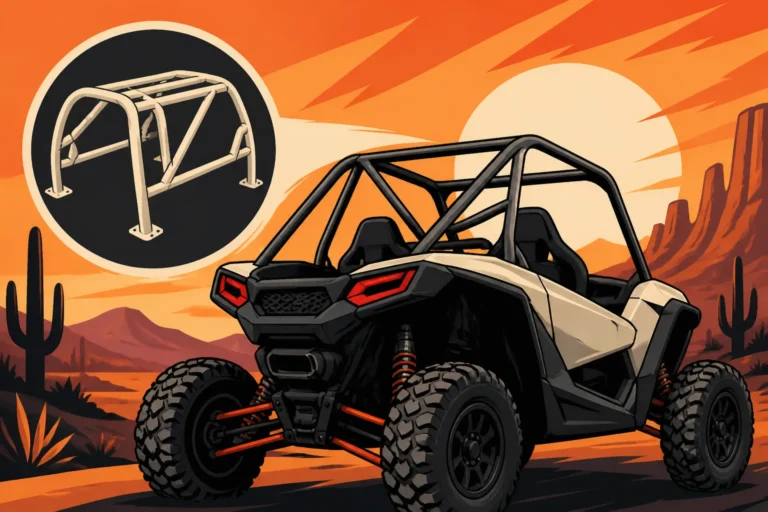
Before every ride, conduct a pre-ride inspection of the OHV. Check tire pressure, brakes, fluid levels, chain tension (if applicable), lights, and, critically, ensure the spark arrestor is intact and clean. Make sure the OHV decal is current and properly displayed, typically in the upper-left corner of the license plate. If you're going to be on any roads, even briefly, ensure all street-legal equipment (mirrors, horn, lights) is functional. Consider adding safety accessories from reputable brands like SuperATV, such as reinforced roll cages, doors, or windshields, which can significantly enhance protection for your child. Just remember to verify they meet Arizona's specific requirements if the machine is intended for street use. Proper preparation is the first line of defense against both accidents and citations.
Communication and Setting Expectations
Perhaps the most powerful preventative tool is open, consistent communication with your child. Before every ride, talk about the rules, the specific route, and any potential hazards. Discuss speed limits, how to interact with other trail users, and the importance of staying on marked trails. Emphasize that you are relying on them to make smart choices.
Clearly define the consequences of rule-breaking. Let them know that a citation for reckless riding or trespassing will mean a loss of riding privileges, not just a fine for you. Discussing [Arizona Fines for Illegal Road Riding] and other penalties can be a sobering but necessary conversation. Encourage them to ask questions and to feel comfortable stopping or turning back if they encounter something beyond their skill level or if they feel uncomfortable. Reinforce that their safety, and the safety of others, always comes first. This ongoing dialogue builds trust and empowers your child to be a responsible rider, rather than just a rule-follower.
Navigating the Citation Process and Appealing Tickets
Despite all the preventative measures, sometimes things go wrong, and a citation is issued. When this happens, it's important for parents to understand the process, their rights, and the steps they can take. Ignoring a citation is never the answer and will only lead to greater penalties.
Pleading Guilty vs. Contesting the Citation
Upon receiving a citation, you’ll typically have a choice: either plead guilty and pay the fine, or contest the citation in court. The decision depends on the circumstances of the stop and the evidence.
If the violation is clear-cut—for example, a missing decal that you know wasn't there—it might be more pragmatic to plead guilty and pay the fine. Sometimes, the court may offer options like traffic school (if applicable for the specific violation) to potentially reduce points or even the fine amount. Always research the specific court and violation to understand all available options.
However, if you believe the citation was issued in error, or if there were mitigating circumstances, you have the right to contest it. This means appearing in court and presenting your case to a judge. This could involve presenting evidence such as photos, receipts, or even witness testimony. For example, if your child was cited for underage operation but you can prove they were on private land with permission, or if a piece of equipment was cited as missing but you have proof it was present and functional, you might have a strong case. This is where knowing [Fighting an OHV Ticket in Arizona] becomes crucial. Be prepared to articulate your side calmly and respectfully.
Potential Penalties and Remedial Actions
The penalties for OHV citations vary significantly. They can range from a few hundred dollars for minor equipment violations or missing decals, up to several thousand for reckless endangerment or significant environmental damage. Beyond monetary fines, other penalties might include:
- Mandatory Education: In some cases, the court might require the minor (and potentially the parent) to complete additional OHV safety courses.
- Suspension of Riding Privileges: For serious offenses, a judge might order a temporary suspension of the minor's OHV riding privileges.
- Community Service: Some courts may assign community service hours, particularly for repeat offenders or serious violations.
- Restitution: If the violation involved damage to property or natural resources (e.g., trespassing and damaging land), the court could order restitution to the affected parties.
It’s important to understand that these penalties are designed to deter future violations and ensure responsible use of Arizona’s public lands. While no parent wants their child to receive a citation, using the experience as a learning opportunity can be invaluable. It’s a chance to reinforce the importance of rules, safety, and respect for the environment and other users.
Ensuring Your Machine Meets Arizona's Standards
A large part of preventing citations for young riders stems from ensuring their OHV is compliant with Arizona law. This involves not only the initial setup but ongoing maintenance and awareness of specific requirements, especially for machines that might briefly venture onto public roads or areas with specific equipment mandates.
Equipment Requirements for Young Riders
While there isn't a separate list of equipment requirements just for young riders' machines, any OHV they operate must meet the general Arizona OHV standards. The most critical items often overlooked or misinterpreted are:
- Spark Arrestor: As mentioned, this is non-negotiable for all OHVs on public lands. It prevents wildfires. Make sure it's USDA-approved and in good working order.
- Brakes: Functional brakes on all wheels are essential for safety.
- Muffler: An effective muffler is required to prevent excessive noise, which is a growing concern in many desert communities. [Arizona Muffler and Noise Limits] are often enforced.
- Headlights and Taillights: If riding at dusk, dawn, or night, or if operating on roads, these are mandatory. [Arizona Headlight Rules for Night Riding] are specific. Even during the day, good visibility is key.
- Rearview Mirror: Essential for street-legal machines or those on roads.
- Horn: A working horn, audible from a certain distance, is required for road use.
- Flag: A whip flag, at least 8 feet from the ground, is highly recommended and sometimes required in certain designated OHV areas (like sand dunes) to increase visibility.
It’s your responsibility as a parent to ensure the machine your child is riding is equipped correctly for the conditions and locations they'll be operating in. A quick check before each ride can prevent many potential issues.
Making Modifications Safely
Many OHV owners enjoy modifying their machines, whether for performance, comfort, or aesthetics. However, when a minor is operating the machine, any modifications must be made with safety and legal compliance as the top priorities.
For example, if you're upgrading components, ensure they don't compromise safety features. Installing a new exhaust system is common, but you must ensure it retains the spark arrestor and meets noise regulations. If you're adding protective gear like a roll cage or doors, verify that these additions don't obstruct the driver's view or interfere with seatbelt functionality. Brands like SuperATV offer a wide range of accessories, from windshields and roofs to complete roll cage replacements. When purchasing, always consider how these additions integrate with existing safety features and Arizona's legal requirements. For example, a full windshield might be great for dust protection, but you'll need to ensure it doesn't reduce visibility or require additional equipment like wipers if the machine is used on roads.
Before making any significant modifications to a machine that a minor will operate, ask yourself:
- Does this modification comply with Arizona OHV law for where we ride?
- Does it enhance or compromise the machine's safety features?
- Is it appropriate for my child's skill level and physical capabilities?
Being diligent about machine standards and modifications is a critical step in preventing citations and, more importantly, ensuring the safety of your young rider.
Disclaimer
This article is for general informational purposes only and does not constitute professional advice. Laws, prices and regulations vary by location and change over time. Consult a qualified professional for guidance on your specific situation.