Arizona City Streets Open to OHVs
It can be incredibly confusing trying to figure out where you're actually allowed to ride your ATV or UTV on the paved streets of Arizona's cities and towns. The thought of getting a ticket just for trying to get from your driveway to the trailhead or even just to the corner store for ice can be a real headache. This guide is here to clear up that confusion, diving deep into the rules and realities of navigating Arizona's urban landscapes on your off-highway vehicle, so you can ride with confidence, not constant worry.
Understanding Arizona's General OHV Road Rules
Arizona's vast expanses of desert and mountain trails are a paradise for off-highway vehicle (OHV) enthusiasts, but what about getting to those trails? Many riders live in or near cities, and the question of whether you can even roll your side-by-side down the local paved road to reach the dirt is a persistent one. It’s not as simple as "yes" or "no" across the board, which is where a lot of the frustration comes from. You're trying to do the right thing, but the rules feel like a moving target.
The Core Distinction: Street Legal vs. Off-Highway Only
The first and most fundamental concept to grasp is the difference between an OHV that is off-highway only and one that has been made street legal. An off-highway only machine, by its very definition, is designed for unpaved surfaces and cannot be legally operated on public paved roads or highways in Arizona, with very limited exceptions for things like crossing a road. This is the machine you trailer to the trailhead, unload, and then hit the dirt. You might see a sticker on your dash that says "for off-highway use only," and that means exactly what it says.
On the other hand, a "street-legal" OHV has been modified and registered to comply with the same standards as a traditional motor vehicle, allowing it to share paved roads. This is the dream for many riders—the ability to leave from home, cruise through town, and seamlessly transition to the trails without the hassle of a truck and trailer. The paperwork and modifications required to achieve this status are significant, transforming your rugged desert machine into something that can coexist with cars and trucks on city streets. It's a game-changer for convenience, but it comes with a new set of responsibilities.
What "Street Legal" Really Means for Your OHV
Achieving "street legal" status in Arizona isn't just about slapping a license plate on your UTV. It involves a specific list of modifications and a proper registration process to certify that your machine is safe for public roads. Imagine taking your trail-ready Polaris RZR or Can-Am Maverick and adding all the bits a regular car would have. This usually includes DOT-approved tires, windshield, and a horn. You’ll definitely need mirrors that give you a clear view of traffic behind you—two, to be precise, a rearview and a driver's side mirror. Turn signals are absolutely crucial for indicating your intentions, and yes, they need to flash front and rear. Headlights, taillights, and brake lights must all be fully functional and meet specific visibility standards, along with a license plate light for nighttime visibility.
Beyond the visible modifications, your OHV also needs to have a muffler that keeps noise levels within legal limits and a USDA-approved spark arrestor to prevent wildfires. Many riders turn to aftermarket providers like SuperATV for their comprehensive street-legal conversion kits, which often bundle many of these necessary components together, making the upgrade process a bit more streamlined. Without these modifications and the proper registration as a street-legal vehicle, your OHV, even with an OHV decal, is still largely restricted from city streets. You can find more detail on this in [Making a UTV Street Legal in Arizona].
The Role of Local Ordinances in City Riding
Here's where things get really localized and, frankly, often confusing for riders: even if your OHV is fully street legal according to Arizona state law, individual cities and towns have the power to enact their own ordinances that restrict or even prohibit OHV use on their specific streets. This means that what's perfectly legal in, say, Quartzsite, might get you a citation in Scottsdale. This patchwork of rules is a huge source of frustration, as you could be riding along, thinking you're doing everything right, only to find yourself in violation of a local rule you didn't even know existed.
These local ordinances can dictate anything from specific streets being closed to OHVs, limitations on hours of operation, or even outright bans within certain community zones. It's not uncommon for towns that are popular OHV destinations, like Wickenburg or Lake Havasu City, to have designated OHV-friendly routes that allow access to services or trailheads, while other, less OHV-centric communities might have much stricter rules. The bottom line is that simply being "street legal" at the state level is just the first step; you must also understand and abide by the local rules of every city you plan to ride through.
Navigating City-Specific OHV Access: How to Know Where You Can Go
So, you've got your street-legal machine, all decked out with the proper lights, mirrors, and registration. Now what? The biggest hurdle is figuring out which actual paved roads in Arizona's myriad cities and towns are open to you. It's not always intuitive, and relying on guesswork can quickly lead to an unwanted interaction with local law enforcement. Nobody wants a fun day on the trails to end with a costly ticket, especially when you've invested time and money in making your rig compliant.
Deciphering Local Ordinances and City Websites
The absolute best way to determine where you can ride your street-legal OHV within a specific city or town is to consult their local ordinances directly. This might sound like a pain, but it's really the most reliable source of information. Most cities maintain their municipal code online, usually accessible through their official city website. Look for sections related to "traffic," "motor vehicles," or "off-highway vehicles." You might find a specific article or chapter dedicated to OHV operation. For example, some cities near popular riding areas, like Lake Havasu City, often have clear maps or lists of approved streets, acknowledging the economic impact of OHV tourism.
If you can't find clear information online, don't hesitate to call the city's police department (non-emergency line, of course) or the city clerk's office. They can often direct you to the relevant sections of their code or provide clarification. Remember, rules can change, so it’s always a good idea to check for the most current information, especially if you haven't ridden through a particular town in a while. Getting this information proactively can save you a lot of hassle and potential fines down the road.
Reading the Signs: Posted Restrictions and Permitted Routes
While official ordinances are the gold standard, physical signage on the streets themselves is your real-time indicator of where you can and cannot go. Look for signs that specifically prohibit OHVs, or conversely, signs that indicate designated OHV routes. Many trail towns will have clear signage guiding OHV traffic through specific corridors, often from staging areas or hotels to the main trailheads. These signs are there to help you, not hinder you, by keeping OHV traffic on routes that minimize disturbance to residents and maximize safety.
However, the absence of a "No OHVs" sign doesn't automatically mean OHV access is permitted. You still need to operate under the assumption that if it's not explicitly allowed or part of a designated route, you might be venturing into prohibited territory. Especially in residential areas or on quieter side streets, local residents might not appreciate the noise or presence of OHVs, and complaints can quickly lead to increased enforcement. Always pay attention to speed limits, traffic signals, and general road rules, as these apply to street-legal OHVs just as they do to any other vehicle.
Common Scenarios: From Neighborhood Streets to Main Connectors
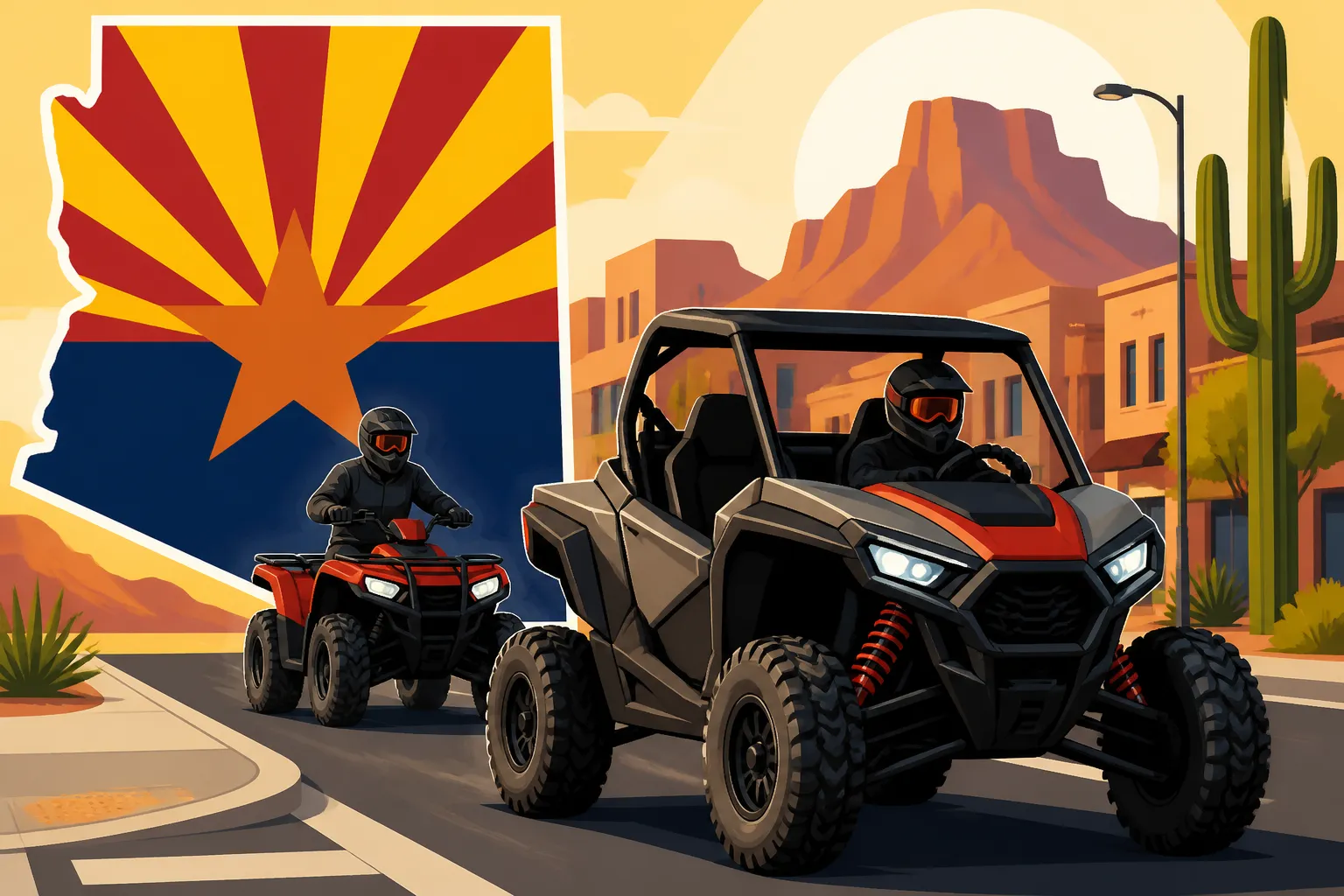
Let's imagine a few common scenarios. You live in a quiet residential neighborhood on the outskirts of Phoenix and want to ride your street-legal side-by-side to a gas station just a mile away, then connect to a designated BLM route. Can you do it? It depends entirely on the specific city you're in. In some communities, a street-legal OHV can use any public road unless specifically prohibited. In others, particularly larger cities, OHV access might be limited to designated "OHV corridors" or excluded from certain busy thoroughfares. [Arizona City Streets Open to OHVs] discusses these nuances.
Another scenario: you're staying in a hotel in a town like Payson and want to ride your street-legal ATV to the local restaurant for dinner. Again, this hinges on local ordinances. Smaller towns that embrace OHV tourism are more likely to have permissive rules, allowing you to use most city streets. Larger, more metropolitan areas, or cities with a strong residential anti-noise sentiment, might have much stricter regulations. Always assume conservative rules until you've confirmed otherwise. A quick check of the city's website or a call to their local law enforcement can provide clarity before you head out.
Equipping Your OHV for City Street Compliance and Safety
Making your OHV street legal isn't just about avoiding a ticket; it's fundamentally about safety—your safety, the safety of other motorists, and the peace of mind that comes from knowing you're operating within the law. The desert trails forgive a lot, but a busy intersection on a city street demands different equipment and a different mindset. This transition from off-road warrior to urban commuter requires specific gear and legal prerequisites that simply cannot be overlooked.
Essential Street-Legal Components Beyond the Decal
While your [Arizona's Annual OHV Decal Explained] is crucial for off-road riding, it's just one piece of the puzzle for street legality. For city streets, your machine needs to be equipped with all the standard safety features you'd expect on a car. We're talking about DOT-approved headlights that provide sufficient illumination and proper aiming, along with bright, visible taillights and brake lights that clearly signal your stopping. Turn signals, both front and rear, are absolutely non-negotiable for communicating your intentions to other drivers, especially when navigating multi-lane roads or busy intersections. A clear, functional horn is also required, ensuring you can alert others to your presence. Many aftermarket companies, like SuperATV, offer complete kits that include these lighting and signaling components, specifically designed for various UTV and ATV models, making the conversion process much easier.
Beyond lighting, you'll need at least one rearview mirror and a driver's side mirror to maintain situational awareness. A windshield is also often a requirement, offering protection from road debris. Lastly, your tires need to be DOT-approved, meaning they're rated for highway speeds and conditions, not just dirt and rocks. Having a reliable speedometer and odometer, along with a functional exhaust system that meets noise regulations, completes the core physical requirements. Think of it this way: if a car has it, your street-legal OHV likely needs it too.
Insurance and Driver Licensing: Your Paved Road Prerequisites
Just like any other vehicle on Arizona's roads, a street-legal OHV requires proof of financial responsibility, which for most of us means liability insurance. The state mandates minimum coverage amounts, typically referred to as 25/50/15, for [Arizona Insurance Minimums for Road Riding]. This means a minimum of $25,000 for bodily injury per person, $50,000 for bodily injury per accident, and $15,000 for property damage. Trying to ride your street-legal machine on city streets without this coverage is not only illegal but incredibly risky, leaving you financially vulnerable in case of an accident.
Furthermore, the operator of a street-legal OHV on city streets must possess a valid driver's license. This isn't like riding on private land or some designated trails where a license might not be strictly necessary for adults. When you're sharing the road with cars, trucks, and motorcycles, you're expected to be a licensed, competent driver. For more on this, check out [Driver's License Rules for Arizona Road Riding]. This ensures that anyone behind the wheel understands traffic laws, road etiquette, and the responsibilities that come with operating a motor vehicle in an urban environment.
Visibility and Noise: Being a Responsible Urban Rider
Even with all the required equipment, operating an OHV on city streets comes with unique challenges, especially regarding visibility and noise. OHVs, particularly side-by-sides, can be wider than many cars expect, and their lower profile might make them less visible in traffic, especially to larger vehicles. This means it's on you, the rider, to be extra vigilant, use your lights, and make yourself seen. Consider adding reflective tape or choosing bright colors for your machine and gear. Daytime running lights, even if not strictly required, are a smart addition.
Noise is another significant factor. While aftermarket exhausts can sound great in the open desert, they can be a real nuisance in residential areas. Many cities have noise ordinances designed to prevent excessive vehicle sound. Even if your street-legal exhaust is technically compliant, being a good neighbor and riding responsibly, especially in quiet zones or late at night, goes a long way. The perception of OHVs on city streets can be mixed, and demonstrating respect for the community through quiet, courteous operation helps maintain access for all riders.
Overcoming Common Challenges and Avoiding Costly Mistakes
Riding your OHV on city streets, even when fully compliant, isn't without its challenges. There's a learning curve, not just for you, but sometimes for other drivers and even local law enforcement who might not be accustomed to seeing a side-by-side at the traffic light. Understanding these potential pitfalls and preparing for them can make your experience much smoother and help you avoid unnecessary stress or expense.
The Lure of Unapproved Shortcuts and the Risk of Citations
It's a familiar scenario: you're trying to get from Point A to Point B, and there's a tempting shortcut down an unpaved alleyway, a small dirt path connecting two streets, or a quick hop across a vacant lot. When you're used to the freedom of off-road riding, these "shortcuts" can seem harmless. However, on city streets, even a short detour onto private property or a non-designated dirt path can land you in hot water. Remember, city rules apply even to dirt paths within city limits. If you're not on a legally designated OHV route or public paved road, you could be trespassing or operating off-road where it's not permitted.
The penalties for illegal OHV operation on city streets can range from significant fines to vehicle impoundment. An Arizona Ranger, city police officer, or county deputy can issue citations for everything from not having the proper street-legal equipment to operating on restricted roads. These aren't just minor inconveniences; they can seriously impact your wallet and your enjoyment of the sport. Always stick to clearly marked and permitted routes, even if it means taking a slightly longer path. [Arizona Penalties for Illegal Road Riding] is a good resource to review.
Dealing with Public Perception and Noise Complaints
Let's be honest: not everyone loves OHVs. While many appreciate the sport and its economic benefits, some residents in urban areas may view OHVs on city streets as noisy, dusty, or even dangerous. This often leads to complaints to local law enforcement, which can then result in increased patrols and stricter enforcement in specific areas. Even if you're riding legally, being courteous and mindful of your surroundings can go a long way in shaping public perception.
This means avoiding excessive engine revving, especially in residential zones or late at night. Slow down through neighborhoods, wave to pedestrians, and generally operate your machine in a way that minimizes disturbance. The goal is to be a good ambassador for the OHV community. If local communities feel overwhelmed by OHV traffic or perceive riders as disrespectful, it can lead to tighter restrictions and fewer opportunities for everyone. It's about collective responsibility to ensure that street-legal OHV access remains viable.
What Happens When an OHV Accident Occurs on a City Street
An accident involving an OHV on a city street is handled much like any other motor vehicle collision. Because your OHV is street legal, it falls under the same traffic laws and insurance requirements as cars and trucks. This means if you're involved in a collision, you'll need to exchange insurance information, report the accident to the police, and potentially deal with insurance claims. It underscores the critical importance of having adequate [Arizona Insurance Minimums for Road Riding] before venturing onto paved roads.
Without proper insurance, you could face severe financial repercussions for damages or injuries to other parties. Furthermore, if you're found to be operating your OHV on city streets without a valid driver's license or without all the required street-legal equipment, you could face additional legal penalties, and your insurance company might even deny coverage. The complexity and consequences of an accident on paved roads are far greater than a minor fender-bender on a remote trail, making compliance and caution paramount.
Planning Your City-to-Trailhead Adventures
The ultimate goal for many street-legal OHV owners is the freedom to seamlessly transition from urban environments to open trails. This requires thoughtful planning, not just for the off-road portion of your ride, but for the crucial connections through cities and towns. It’s about more than just knowing if you can ride on a certain street; it's about how to do it efficiently, safely, and courteously.
Strategic Route Planning for Seamless Transitions
Planning your route when your ride includes both city streets and trails means considering the urban segments with the same care you give to the off-road sections. Use maps, GPS apps, and city ordinances to identify the most direct and legal path from your starting point (home, hotel, staging area) to the trailhead. Look for "OHV-friendly" routes or designated corridors in towns that cater to riders. These are often designed to minimize conflict with residential areas and direct traffic efficiently.
Avoid peak traffic times if possible, especially when navigating larger towns. Your OHV might be quick, but it's not always as nimble or as visible as a car in dense traffic. Plot out specific turns and landmarks, so you're not caught making last-minute lane changes or unexpected maneuvers. Apps like onX Offroad can be incredibly helpful for identifying both legal street connections and the specific trails you want to hit. The aim is a smooth, stress-free journey where you're always confident in your legal standing and your route. For ideas, check out [Riding Town to Trailhead in Arizona].
Staging, Parking, and Trailhead Etiquette in Town
Even if your OHV is street legal, there might be times you still need to stage or park in a city or town before accessing a trail system. Knowing where this is permitted is essential. Many communities near popular trailheads have designated OHV staging areas, often with ample parking for trailers and machines. Some towns, like those along the Parker Strip, even have hotels that welcome OHV parking. If you're parking on a city street, make sure you're doing so legally and responsibly, just as you would with any other vehicle.
Avoid blocking driveways, fire hydrants, or creating hazards for pedestrians or other vehicles. If you're unloading or loading, do so quickly and efficiently, and in a designated area if one exists. Remember that while your machine is a lot of fun, it can also take up a fair bit of space. Being mindful of public spaces helps maintain good relations with locals and ensures continued access. [Parking a Side-by-Side at a Trailhead] offers some good advice on this.
The Importance of Always Carrying Your Documentation
No matter how well you know the rules or how perfectly street-legal your OHV is, you absolutely must carry all relevant documentation with you whenever you're riding on city streets. This includes your valid driver's license, proof of vehicle registration (showing it's street legal), and proof of insurance. Just like a car, if a law enforcement officer pulls you over, they will ask for these documents.
Being unable to produce them can lead to further complications, delays, or even citations, even if everything is otherwise in order. Keep these documents in a waterproof bag or container that's easily accessible on your machine. Don't risk a perfectly legal ride turning into a hassle because you forgot your paperwork at home. An officer might also ask to see your OHV decal if you're on a trail-adjacent road, so ensure it's properly affixed and visible. [What an Arizona Ranger Asks a Rider For] details what you might need to show.
| Aspect | Off-Highway Only OHV | Street-Legal OHV on City Streets |
|---|---|---|
| Registration | OHV Decal & Title (off-highway designation) | OHV Decal, Title (street-legal designation), & Vehicle Registration |
| Driver's License | Not always required for adults on designated trails | Required for all operators |
| Insurance | Not required by state for OHV portion, but recommended | Required (minimum liability) |
| Headlights/Taillights | Functional for trail use | DOT-approved, properly aimed, with brake & license plate lights |
| Turn Signals | Not required | Required (front & rear) |
| Mirrors | Not required | Required (at least rearview & driver's side) |
| Horn | Not required | Required (audible from 200 feet) |
| Windshield | Optional | Required |
| Tires | Off-road specific | DOT-approved (rated for highway use) |
| Muffler/Spark Arrestor | Required (USDA-approved spark arrestor) | Required (USDA-approved spark arrestor) & meets noise limits |
| Road Access | Limited to crossing, private land, designated OHV routes | Most public roads unless prohibited by state/local ordinance |
| Local Ordinances | Less impact on trail riding | Crucial – city-specific rules often override state allowance |
Disclaimer
This article is for general informational purposes only and does not constitute professional advice. Laws, prices and regulations vary by location and change over time. Consult a qualified professional for guidance on your specific situation.