Arizona Road Closures During Fire Restrictions
There’s nothing quite like planning out a perfect desert ride, mapping out those trails you’ve been itching to explore, only to find your favorite routes are suddenly off-limits because of fire restrictions. It’s a frustrating reality for anyone who loves to hit the Arizona backcountry, especially during our drier, hotter months. This guide is here to walk you through exactly what those fire restrictions mean for your ATV or UTV plans, how to figure out what's open and what's closed, and how you can stay safe and legal out there.
Understanding Arizona's Fire Restrictions: What They Are and Why They Happen
Arizona is a stunning state, but a significant portion of its beauty is found in its wildlands, which are prone to wildfires, especially during our long dry spells and scorching summers. Fire restrictions aren't just arbitrary rules; they're a critical measure taken by land management agencies like the U.S. Forest Service, Bureau of Land Management (BLM), and even state and county authorities to prevent devastating blazes. These restrictions are put in place based on several factors, including current and forecast weather conditions, fuel moisture levels (how dry the vegetation is), and the number of active fires in the region.
Think of it like this: when everything is parched and a strong wind is blowing, even a tiny spark from an exhaust or a discarded cigarette can quickly turn into a raging inferno. Agencies monitor these conditions diligently, escalating restrictions as the risk grows. What starts as a mild warning can quickly become a full-blown closure, impacting everything from campfires to where you can even drive your machine. It’s a serious issue that directly affects our ability to enjoy the trails, and understanding the "why" behind it helps us all be more responsible riders.
These restrictions often come in stages, each one increasing in severity. Stage I might prohibit campfires outside of developed campgrounds and smoking outside of vehicles. Stage II ramps it up, often banning all campfires, charcoal grills, and sometimes even welding or operating internal combustion engines without a spark arrester in specific areas. Then there are full closures, which mean exactly what they sound like: no public entry, period. Knowing the stage of restriction in your planned riding area is your first step to a successful and legal outing. You can find more details on [Arizona Fire Restrictions by Stage].
How Fire Restrictions Impact OHV Road Access and What Riders Need to Know
When fire restrictions are put into place, they can significantly alter where and how you can ride your off-highway vehicle. It's not just about campfires; these rules often directly address engine operation and vehicle access, especially on roads and trails that wind through fire-prone areas. For OHV enthusiasts, this can mean a last-minute change of plans or even completely canceling a long-anticipated trip. The frustration is real when you’ve loaded up your rig, only to find the gates closed.
In Stage I and II restrictions, you might still find many main roads open, but side trails, especially those that are less maintained or lead into dense vegetation, could be closed. Operating internal combustion engines, which our ATVs and UTVs certainly have, is often restricted to roads with a 3-foot clearance of flammable materials, or to paved or graveled surfaces. This means that dusty two-tracks through tall grass or dense brush could be off-limits. You might also find that smoking is prohibited except in an enclosed vehicle, or at a stopped, barren location. This is crucial for riders, as a carelessly dropped cigarette butt can easily ignite dry grass.
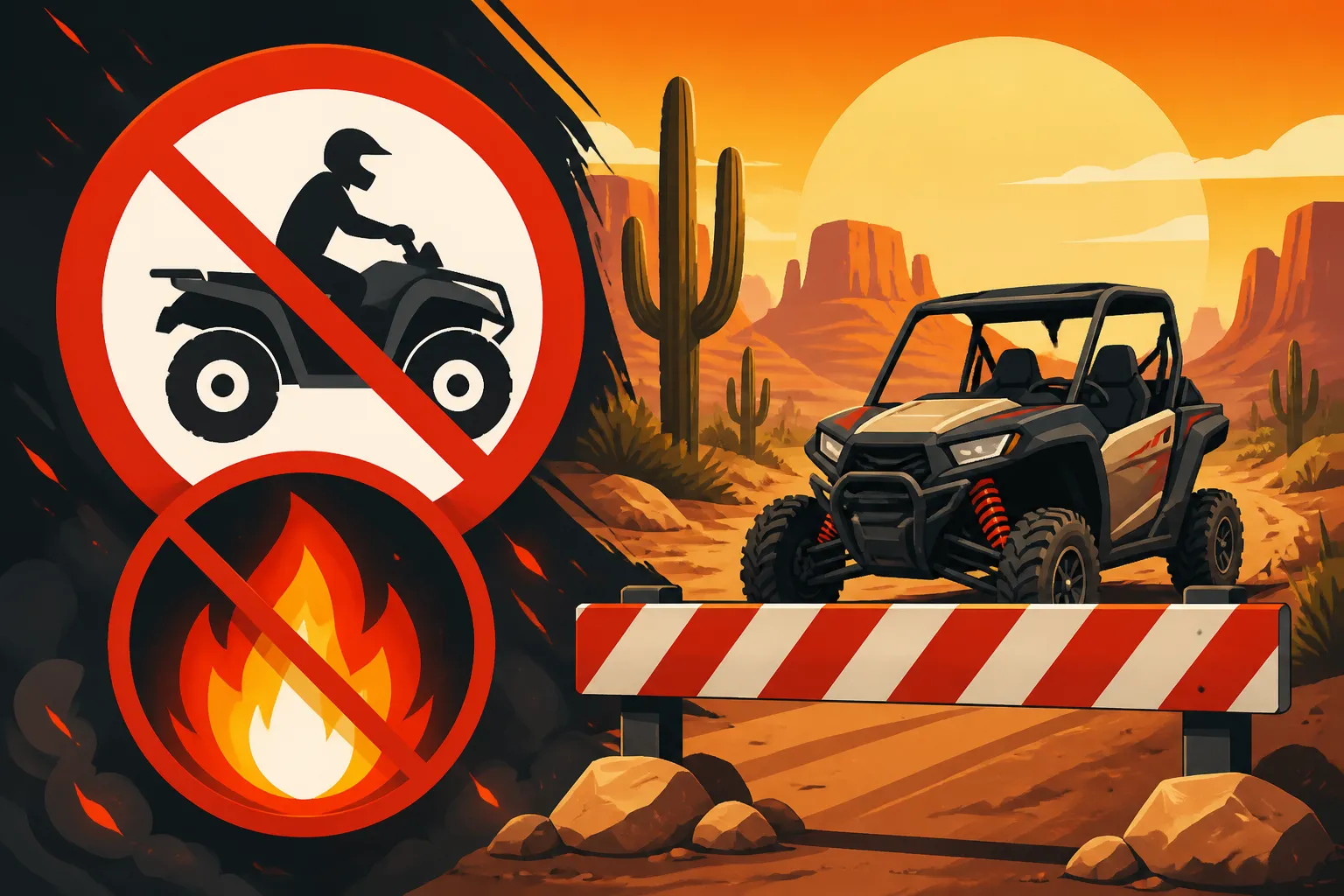
During a full closure, the impact is absolute. Entire forests, national monuments, or vast swathes of BLM land can be completely shut down to public entry, meaning no riding, no hiking, no camping—nothing. These closures are implemented when the fire danger is at its most extreme, and land managers deem the risk of human-caused fires too high, or existing fires pose an immediate threat. When you see notices about [Full Closures on Arizona Public Land], it’s time to find a different riding area, or postpone your adventure altogether. Attempting to ride in a fully closed area can lead to significant fines and penalties, and even put you in a dangerous situation if a fire starts or spreads rapidly.
Specific Road Types and Their Vulnerability
Not all roads are treated equally when fire restrictions hit. Paved highways and major county roads are generally less affected, as they act as natural firebreaks and are often critical for emergency vehicle access. However, many of the scenic and challenging routes that OHV riders seek out are unpaved, often traversing remote, vegetated terrain. These are the roads that are most susceptible to closures.
Consider the difference between a well-maintained, graveled forest service road that sees regular traffic and a narrow, sandy two-track leading deep into the backcountry. The latter, despite its appeal, presents a much higher fire risk and is often among the first to be closed. Even if a road technically remains "open," riders might be prohibited from parking on vegetated shoulders or operating their machines off the immediate road surface. This can limit staging options and access points to trails. Agencies might also prohibit riding specific types of vehicles, like dirt bikes, on certain roads due to their potential for sparks or their ability to access more remote, high-risk areas.
Another thing to remember is that roads on private land, even if you have permission to cross them, can still be subject to broader county or state fire restrictions if those apply to everyone, not just public land. It’s always a good idea to check with both the specific land management agency and local authorities for your intended riding spot. The landscape changes, and with it, the rules. For street-legal machines, understanding [Which Arizona Roads Are Open to OHVs] is key, as restrictions can add another layer of complexity.
The Role of Spark Arrestors
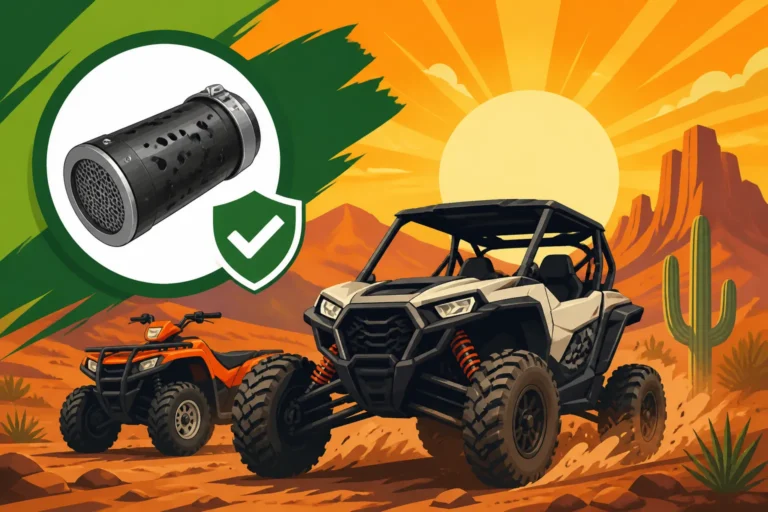
One universal rule that becomes even more critical during fire restrictions is the requirement for a properly functioning spark arrester on your OHV. A spark arrester is a device designed to prevent hot carbon particles (sparks) from exiting your exhaust system and potentially igniting dry vegetation. It’s always required for off-road riding on public lands in Arizona, but during fire season, enforcement is often heightened.
Even if a road or trail is open, operating a machine without a USDA-approved spark arrester can lead to fines and, more importantly, poses a serious fire hazard. Many riders will upgrade their exhaust systems, and if you do, ensure any aftermarket components, like those from a brand like SuperATV, still meet these crucial spark arrester requirements. It’s a small, inexpensive component that plays a massive role in fire prevention. You can read more about [Arizona's Spark Arrestor Requirement] and the specifics of [USDA-Approved Spark Arrestors in Arizona] to make sure your machine is compliant. This isn't just about avoiding a ticket; it's about protecting our beautiful desert and forest lands from devastating fires.
Your Action Plan: Finding Closure Information and Staying Compliant
Nobody wants to drive hours to a trailhead only to be met with a "ROAD CLOSED" sign. A little preparation goes a long way in navigating Arizona's fire restrictions. Your action plan should always start with checking current conditions before you even load your machine onto the trailer. This involves a multi-pronged approach because different agencies manage different lands, and their restriction levels can vary.
The absolute best way to stay informed is by checking the websites of the specific land management agencies for the area you plan to visit. For example, if you're heading to the Tonto National Forest, visit their official website. For BLM lands, look for the local BLM field office's page. The Arizona Department of Forestry and Fire Management (AZDFFM) also maintains a statewide fire restriction map and information hub that aggregates data from various agencies, which can be an excellent starting point. Don’t just rely on general news reports; go straight to the source. This diligence can save you a lot of wasted time and fuel.
Beyond official websites, many agencies use social media to post timely updates. Following your favorite forest or BLM district on Facebook or X (formerly Twitter) can provide real-time alerts. Local ranger district offices are also invaluable resources; a quick phone call can often get you the most up-to-date information, especially for smaller, localized closures. Always double-check, even if you checked a few days before your trip, as conditions can change rapidly. For more general advice on preparation, see [Checking Arizona Trail Status Before You Drive].
Tools and Resources for Staying Informed
In today's digital age, there are several tools at our fingertips that can help us stay on top of fire restrictions and road closures. Beyond official websites and social media, mobile apps and online maps can be incredibly useful.
Here's a quick look at some key resources:
| Resource Type | Description | Key Benefit |
|---|---|---|
| Agency Websites | US Forest Service, BLM, AZDFFM, National Parks, County Parks websites. | Official, most accurate and up-to-date information for specific areas. |
| InciWeb | An interagency all-risk incident information management system. | Details on active wildfires, including closures and evacuation information. |
| AZDFFM Fire Restrictions | Arizona Department of Forestry and Fire Management's statewide portal. | Centralized map and info for various jurisdictions in Arizona. |
| onX Offroad / Gaia GPS | Mapping apps that often integrate public land boundaries and sometimes closure overlays. | Visual representation of open/closed areas; useful for navigation. |
| Local Ranger Districts | Phone numbers for specific local offices. | Direct communication for nuanced questions and localized updates. |
These resources, especially when used in combination, give you the best chance of understanding where you can ride. Keep in mind that apps like onX Offroad are fantastic for navigation and showing public land boundaries, but they might not always have immediate, real-time updates on temporary closures. Always cross-reference with the official agency websites. For learning where official notices are posted, check [Where Arizona Closure Notices Are Posted].
What to Do If Your Planned Route is Closed
Finding out your planned route is closed can be a major bummer, but it’s not the end of the world. First, don't try to sneak in. Ignoring closure signs is illegal, dangerous, and can lead to hefty fines, machine impoundment, or even jail time. Land management agencies are serious about these closures for everyone's safety and the protection of resources.
Instead, have a backup plan. Arizona is vast, and often, if one area is under high restrictions, another might be less impacted. Sometimes, high-elevation areas are less prone to fire than low desert regions, or vice-versa, depending on recent rainfall. This is where your research beforehand pays off. Have a couple of alternative riding destinations in mind, or consider a different type of activity altogether for the day. Perhaps you can explore areas with more paved or graveled roads, or even consider a dedicated off-road park if one is available and open. Remember, riding during fire restrictions is about adapting and being flexible. Companies like SuperATV sell a variety of accessories, from storage solutions to lighting, that can help you adapt your machine for different kinds of adventures, even if your first choice of trail isn't available.
Respecting these closures is also a demonstration of responsible recreation. By doing so, we help prevent fires, preserve our access to these incredible lands for future generations, and maintain a positive relationship with land managers. It’s all part of being a good steward of Arizona's magnificent backcountry. Riding where you shouldn't could lead to [Arizona Resource Damage Citations] and other serious penalties.
Disclaimer
This article is for general informational purposes only and does not constitute professional advice. Laws, prices and regulations vary by location and change over time. Consult a qualified professional for guidance on your specific situation.