Arizona Roads Closed to Off-Highway Vehicles
It's incredibly frustrating when you're geared up for an adventure, ready to hit the road, only to find that the very path you hoped to take is off-limits to your off-highway vehicle. Arizona's vast and diverse landscape offers incredible riding, but knowing where you can and cannot legally operate your ATV or UTV on public roads can feel like navigating a minefield. This guide is here to unravel that confusion, helping you understand which Arizona roads are definitively closed to OHVs, and why, so you can plan your rides safely and legally.
The Frustration of the Forbidden: Understanding Why Some Arizona Roads Are Off-Limits to OHVs
You've got your machine, you've got your [Arizona's Annual OHV Decal Explained], and you're thinking about heading out for a spin. But then you see a sign, or a map, or a deputy, and suddenly, that smooth stretch of pavement is a no-go zone. This isn't just arbitrary; there are very specific reasons why some roads are closed to OHVs in Arizona, and understanding them is the first step to avoiding a costly ticket or, worse, an accident. It often comes down to a complex interplay of state law, local ordinances, and practical safety considerations.
The Legal Landscape: State Laws and Jurisdictional Control
At its core, Arizona state law defines what an off-highway vehicle is and where it can be operated. The general rule of thumb is that OHVs are designed for off-pavement use. When it comes to paved public roads, the default assumption is usually that they are not open to OHVs unless specifically designated or if the OHV has been made "street legal." Even then, "street legal" doesn't mean "any road legal." The Arizona Revised Statutes (A.R.S.) outline the classes of vehicles allowed on different roadways. For instance, major highways like interstates and U.S. routes are primarily for registered motor vehicles designed for high-speed travel, not necessarily your side-by-side or quad.
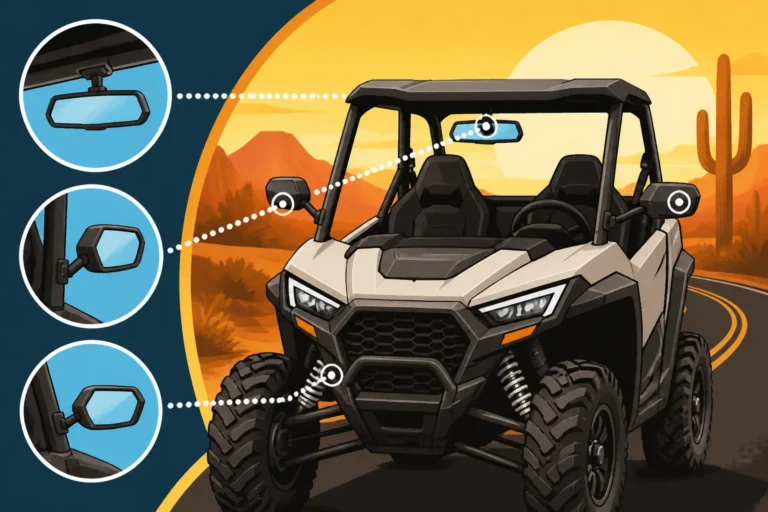
This means that even if you've gone through all the effort to ensure your machine meets street-legal requirements – adding turn signals, a horn, mirrors (perhaps with some durable components from SuperATV to withstand desert riding demands), and getting an MC plate – the state still reserves the right to restrict certain types of roads. It's not about your machine's equipment alone; it's about the road's intended purpose and the safety of all users. The jurisdiction over a particular road – whether it's a state highway, a county road, or a city street – dictates which set of specific rules applies.
Understanding this legal framework helps explain why a road you might expect to be open, given your machine's setup, could still be off-limits. It's a foundational concept that often trips up even seasoned riders, especially those new to Arizona's unique blend of open desert and regulated thoroughfares. Always remember that state law provides the overarching framework, and local jurisdictions then add their own layers of regulation.
When Local Ordinances Close the Gates
Beyond state laws, cities, towns, and even counties in Arizona have the authority to enact their own ordinances regarding OHV use on roads within their boundaries. This is where things can get particularly confusing, as rules can vary dramatically from one community to the next. What might be perfectly fine in a rural, OHV-friendly town like Florence could be strictly prohibited just a few miles away in a larger city like Mesa or Phoenix. These local ordinances are often driven by concerns about noise, traffic congestion, public safety, and the wear and tear on paved infrastructure.
A common scenario is a small desert community that embraces OHV tourism, allowing riders to cruise through town to get to trailheads or local businesses. You might see signs explicitly stating [Arizona City Streets Open to OHVs] in these areas. However, larger urban centers often have blanket prohibitions on OHVs on city streets, regardless of whether the machine is technically street-legal. They might restrict OHV travel to designated crossing points or completely ban it, pushing riders to utilize trailers or alternative routes.
It’s crucial not to assume that if one town allows it, the next one will. Always check local regulations or look for clear signage. The absence of a "no OHV" sign doesn't automatically mean you're in the clear. Ignorance of a local ordinance is rarely accepted as an excuse if you're pulled over. This patchwork of rules can be a real headache for riders trying to navigate between popular riding areas and their accommodations.
Safety, Speed, and Vehicle Design: The Practical Reasons for Restrictions
While laws and ordinances provide the legal basis, the practical reasons for closing certain roads to OHVs often boil down to safety, speed, and the fundamental design of the vehicles themselves. Interstates, for example, are designed for vehicles traveling at highway speeds, typically 65-75 mph. Most OHVs, even street-legal ones, are not built to safely maintain these speeds for extended periods, nor are they designed to handle the massive air displacement created by large trucks or the rapid lane changes common on highways. Their suspension, tires, and overall stability are optimized for off-road terrain, not high-speed pavement.
The risk of a catastrophic accident dramatically increases when a slower, less stable OHV shares a high-speed road with cars and trucks. The height difference, the exposure of riders, and the potential for a sudden mechanical failure or tire blowout at speed are all serious concerns. Similarly, on heavily trafficked city streets, the agile and sometimes less visible nature of an OHV, combined with the presence of pedestrians and bicycles, can create dangerous situations. This is why you'll find that [Can You Ride an OHV on an Arizona Highway?] is almost universally answered with a resounding "no."
Beyond speed and stability, noise is a significant factor. While your side-by-side might sound great out in the open desert, that same roar can be a major nuisance in residential areas. These practical considerations, aimed at protecting both OHV riders and other motorists, are a primary driver behind many of the specific road closures and restrictions you'll encounter.
Identifying the "No-Go" Zones: Highways, Interstates, and Specific City Restrictions
So, how do you actually tell which roads are off-limits? It's not always as simple as a single sign, but there are clear categories of roads where OHVs are almost universally restricted, along with specific local nuances you need to be aware of. Understanding these distinctions is critical for planning your ride and avoiding unwelcome encounters with law enforcement.
The Grand Divides: Interstate and Federal Highways
Let's start with the big ones: Interstates (like I-10 or I-17) and U.S. Federal Highways (like US-60 or US-93). These major arteries are the backbone of long-distance travel in Arizona and are almost entirely closed to OHVs, regardless of whether your machine has been made "street legal." The primary reason, as we discussed, is the significant speed differential and the inherent dangers of operating a machine designed for off-road use in such high-speed, high-traffic environments. You will not find any specific designation opening these roads to OHVs.
Attempting to ride an OHV on an Interstate or U.S. Highway is a serious offense that can result in significant fines and potentially endanger yourself and others. These are not county roads or forest service paths where you might see some leniency or specific exceptions. Their function is clear: move traffic efficiently and at high speeds. Your OHV, even a powerful side-by-side, simply isn't engineered for that kind of persistent, high-speed road travel. Always assume these major routes are absolutely forbidden for OHV use. This means you'll need a trailer if your route involves traveling significant distances on these types of roads.
Navigating City and County Street Rules
The rules get a bit more granular when you move from state-level highways to city and county roads. While Arizona state law allows for properly equipped "street legal" OHVs to operate on most public roads where the speed limit is 45 mph or less, this is where local ordinances can override or add specific restrictions. Many cities, especially larger ones like Phoenix, Tucson, or even smaller, densely populated areas, have outright bans or very limited access for OHVs on their paved streets. These restrictions are typically put in place to manage noise, reduce traffic congestion, and ensure public safety in areas with high pedestrian and vehicular traffic.
However, some rural towns or communities that are gateways to popular riding areas might embrace OHV traffic. They might allow street-legal OHVs to travel on most of their city streets, perhaps with specific routes designated for access to fuel, food, or lodging. Always be on the lookout for posted signs at city limits or within town that either welcome or prohibit OHV use. If you don't see clear signage, it's always safer to assume a restriction, especially in developed areas. [Riding Town to Trailhead in Arizona] can be a great experience, but you need to know the local rules before you venture onto city streets.
County roads offer another layer. Often, these unpaved or less-trafficked routes are more permissive for OHV travel, particularly in rural parts of the state. However, a paved county road leading into a residential area might still have speed restrictions or local rules that effectively limit OHV use. It's essential to consult a [Reading an Arizona Motor Vehicle Use Map] or directly check with the county's transportation department if you're unsure.
Special Closures and Designated Non-Motorized Areas
Beyond the general categories of highways and city streets, there are also specific areas and types of roads that are intentionally closed to OHVs, often for environmental protection, wilderness preservation, or to provide non-motorized recreational opportunities. These can include:
- Wilderness Areas: By federal law, all motorized and mechanized vehicles are prohibited in designated wilderness areas. Any roads or trails leading into or bordering a wilderness area will be closed to OHVs at the wilderness boundary. It's critical to respect these boundaries, as violations carry hefty fines and can lead to trail closures for everyone. [Arizona Wilderness Boundaries and Machines] outlines these restrictions in detail.
- Designated Non-Motorized Trails: Some public lands, including National Forests and BLM lands, have trails specifically designated for hiking, mountain biking, or horseback riding. These trails, even if they appear passable by an OHV, are strictly off-limits to motorized vehicles. Look for signs at trailheads indicating allowed uses.
- Private Property: While not a "public road," riding on private property without permission is trespassing, and many private roads are closed to public OHV use. Respecting "no trespassing" signs and fencing is paramount.
- Seasonal or Temporary Closures: Roads can also be closed temporarily due to fire danger (especially during [Arizona Stage Two Fire Restrictions]), severe weather, ecological restoration efforts, or construction. Always check for current conditions and closures before heading out. The Arizona Game and Fish Department (AZGFD) and land management agencies like the Forest Service and BLM are good resources for this information.
Always keep an eye out for signs. A simple "Road Closed" or "No Motorized Vehicles" sign is your definitive answer. Sometimes, these closures might not be immediately obvious, making proactive research a smart move.
| Road Type | General OHV Access in Arizona (with street-legal OHV) | Primary Reason for Restriction (if applicable) |
|---|---|---|
| Interstate Highways | No | High Speed, Traffic Volume, Safety |
| US Federal Highways | No | High Speed, Traffic Volume, Safety |
| State Highways | Generally No (unless posted otherwise/low speed zones) | Speed Limits > 45 mph, Safety |
| County Roads | Yes (under 45 mph, unless local ordinance restricts) | Varies, check local ordinances |
| City Streets | Varies by City (often restricted/banned in urban areas) | Noise, Traffic, Safety, Local Ordinances |
| Forest Service Roads | Yes (unless posted otherwise/seasonal closures) | Forest Management, Conservation, Wilderness Boundaries |
| BLM Roads/Trails | Yes (unless posted otherwise/wilderness boundaries) | Land Management, Conservation, Wilderness Boundaries |
| Private Roads | No (unless explicit permission from landowner) | Private Property Rights, Trespassing |
Your Roadmap to Compliance: How to Stay on the Right Side of the Law
Navigating Arizona's OHV road rules doesn't have to be a guessing game. There are clear steps you can take and resources you can utilize to ensure you're always riding legally and safely. The key is proactive planning and paying close attention to official information and signage. Getting caught on a restricted road isn't just an inconvenience; it can lead to fines, citations, and even the impoundment of your machine, which nobody wants.
Deciphering Signage and Official Maps
Your best immediate defense against riding on a closed road is to pay attention to signage. Arizona is generally good about posting signs where roads transition from open to closed, or where special rules apply. Look for:
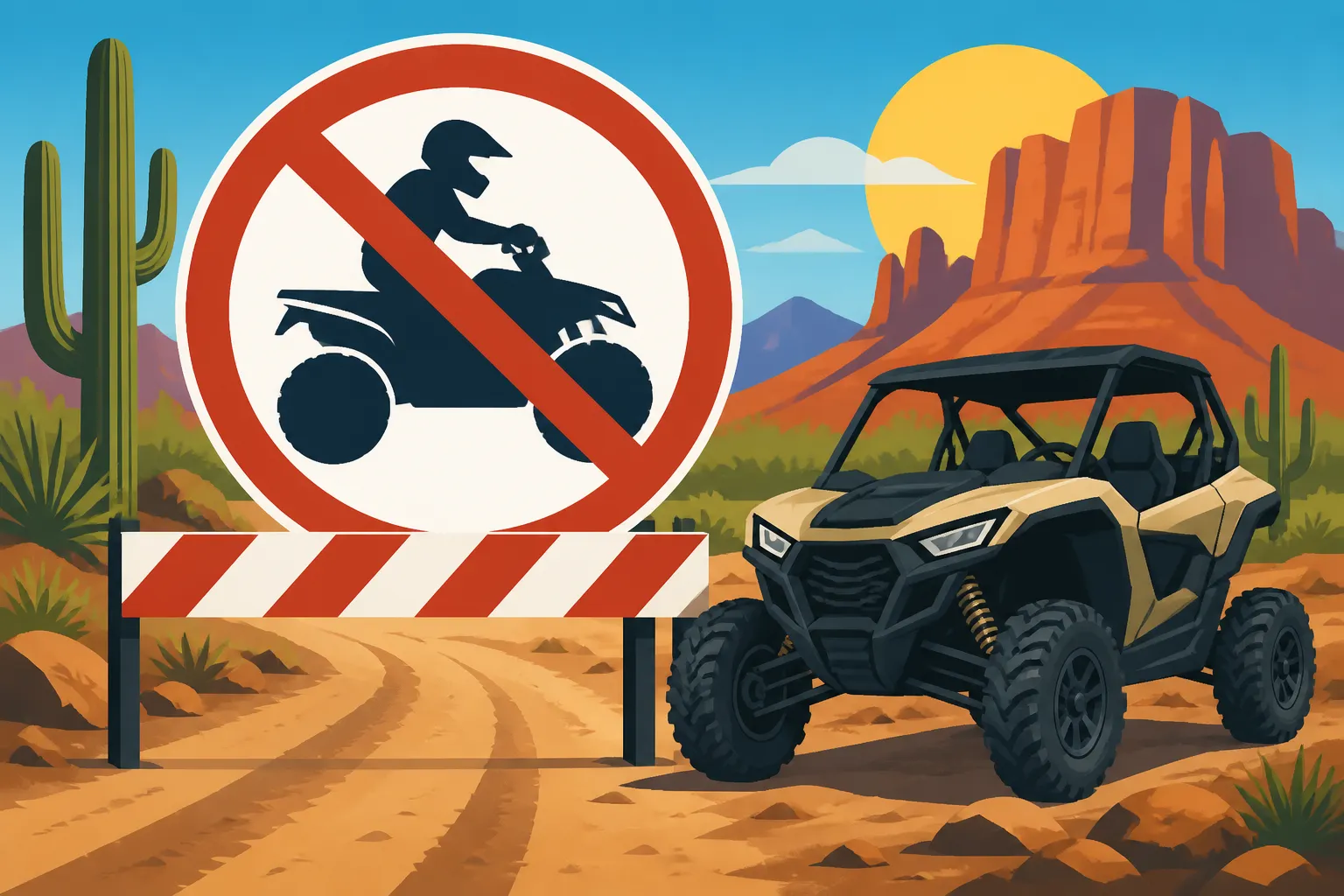
- "No OHV" or "No Off-Highway Vehicles" signs: These are the clearest indicators.
- "Road Closed" signs: These usually apply to all vehicles, but definitely include OHVs.
- "Wilderness Boundary" signs: These indicate the absolute end of motorized access.
- Speed limit signs: Remember the 45 mph rule for street-legal machines on state/county roads, but always defer to local ordinances.
- Motor Vehicle Use Maps (MVUMs): For national forests and BLM lands, these are invaluable. MVUMs specifically designate which roads and trails are open to various types of motorized vehicles, often showing seasonal closures or restrictions. They are the definitive guide for these public lands. You can usually find these online through the Forest Service or BLM websites, or pick up a physical copy at a ranger station. Looking at a [Arizona Motor Vehicle Use Map] before your trip can save a lot of headaches.
Don't ignore smaller, less prominent signs. Sometimes, a trail that seems to continue might have a subtle marker indicating it's now a non-motorized route. Always err on the side of caution.
The Role of Street-Legal Requirements vs. Road Access
This is a common point of confusion for many riders. Making your OHV "street legal" in Arizona, which involves adding specific equipment like mirrors, turn signals, a horn, and obtaining an MC plate (as detailed in [Making a UTV Street Legal in Arizona]), allows you to operate on some paved public roads. However, it absolutely does not grant you access to all paved roads. As we've covered, interstates, federal highways, and many city streets remain off-limits even for a fully street-legal machine.
Think of "street legal" as a permit to operate on designated open roads, not a blanket pass. It qualifies your machine for legal operation on certain roads, primarily county roads and some smaller state routes where the speed limit is 45 mph or less, provided there isn't a local ordinance prohibiting it. For example, if you've added robust mirrors and a windshield from SuperATV to make your Polaris RZR compliant, that's great for permitted roads, but it won't allow you to cruise down I-17. The modification helps you meet one set of requirements, but it doesn't nullify other restrictions based on road type or jurisdiction.
Always verify the specific road you plan to ride on, even if your machine is street-legal. The penalties for an [Arizona Penalties for a Missing Plate] or riding where you shouldn't be can be steep, so understanding this distinction is vital.
Planning Your Ride: Resources and Best Practices
The best way to avoid illegally riding on a closed road is to plan your route thoroughly before you even load your machine. Here are some best practices:
- Consult Official Maps: For state and federal lands, always rely on Motor Vehicle Use Maps (MVUMs). For county roads, check the county's public works or transportation department websites. For city streets, look up the specific city's municipal code or OHV ordinances. Many online mapping tools now integrate OHV-specific information.
- Use GPS/Navigation Apps: Many popular off-road GPS units and smartphone apps (like onX Offroad) provide layers showing OHV-legal roads and trails, often incorporating MVUM data. Just ensure your maps are up-to-date.
- Check for Current Closures: Before any trip, visit the websites of the Arizona State Land Department, Arizona Game and Fish Department, US Forest Service, and Bureau of Land Management for the specific areas you plan to visit. They often post temporary closures due to weather, fire restrictions, or maintenance.
- Join Local Riding Groups: Local clubs and online forums are invaluable resources. Experienced riders often have up-to-the-minute information on local rules, closures, and the best ways to access trails while staying legal.
- Always Look for Signs: Even with all your planning, things can change. Stay vigilant for signs on the ground. If you're unsure, turn around or find an alternative route. It's better to be safe than sorry.
By combining careful planning with an awareness of the different legal layers – state, county, and municipal – and by always heeding physical signage, you can significantly reduce the risk of ending up on an Arizona road that's closed to off-highway vehicles. There are thousands of miles of incredible trails and open roads in Arizona; focus on enjoying those legally and safely.
Disclaimer
This article is for general informational purposes only and does not constitute professional advice. Laws, prices and regulations vary by location and change over time. Consult a qualified professional for guidance on your specific situation.