Arizona Road Rules Riders Get Wrong
It's incredibly common for off-highway vehicle (OHV) riders in Arizona to believe they have a firm grasp on what it means to be "street legal" or where they can legally take their machine on public roads, only to find out they were seriously mistaken. This can lead to frustrating and expensive citations, or worse, dangerous situations. This guide dives deep into the often-misunderstood road rules for ATVs and UTVs in Arizona, helping you navigate the asphalt confidently and legally.
The Illusion of "Street Legal" and What Arizona Really Requires
Many riders mistakenly believe that simply having a license plate and an OHV decal means their machine is ready for any paved road. While those are crucial steps, Arizona's definition of "street legal" for an OHV is far more comprehensive and often overlooked. It's not just about a few basic items; it's about meeting specific safety and equipment standards designed for vehicles sharing the road with cars and trucks. The desert is one thing, but mingling with daily commuters requires a different level of compliance.
More Than Just a Plate: The Equipment Checklist
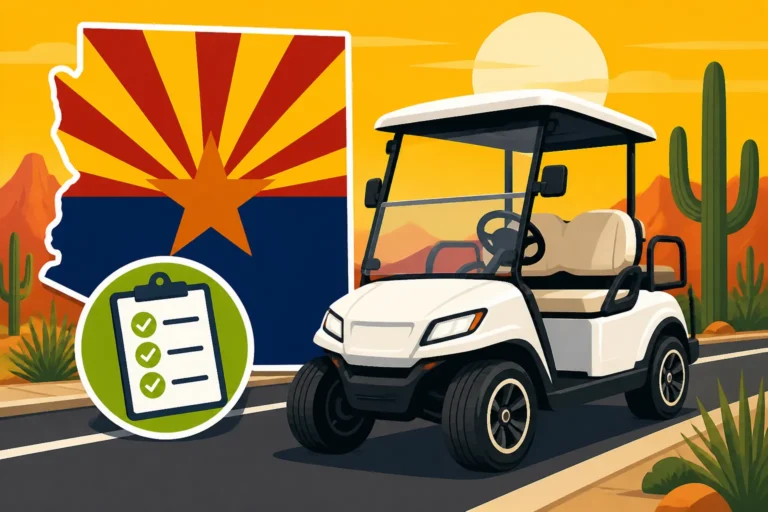
Getting a plate for your ATV or UTV is definitely step one, but it's far from the finish line. Arizona law demands a specific array of functional equipment for any OHV to be considered street legal. This isn't just a suggestion; it's a requirement that can lead to fines if neglected. Imagine rolling through a small town on your UTV, thinking you're all set, only to be pulled over for a missing horn or an inadequate mirror. It's a rude awakening many experience.
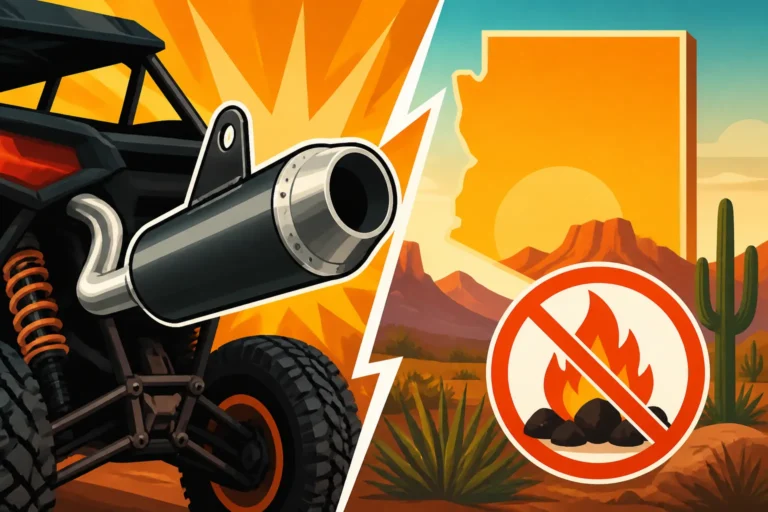
First and foremost, you need proper headlights and taillights. These aren't just for looking cool or lighting up the trail after dark; they need to meet specific visibility standards, often requiring them to be visible from 500 feet away. You'll also need brake lights that illuminate when the brake is applied. A working horn, audible from at least 200 feet, is essential for warning other drivers or pedestrians. Mirrors are another often-missed item; you need at least one rearview mirror, though many riders opt for two for better visibility, and companies like SuperATV offer excellent aftermarket options that bolt right on. Don't forget proper seatbelts for all occupants (if applicable to your machine), and adequate footrests for passengers. The machine must also have a muffler to prevent excessive noise, and a USDA-approved spark arrestor is always required on public and state lands, whether on a road or trail, to prevent wildfires. Neglecting any of these items can quickly turn a fun road cruise into a costly citation. For a full breakdown, check out [What Arizona Requires on a Street-Legal Machine] to make sure you're not missing anything critical.
Driver Qualifications and Age Restrictions on Arizona Roads
It's not just about what's on your machine; it's about who's operating it. Many assume that if they have a driver's license for a car, they're good to go on a street-legal OHV. While generally true for adults, there are nuances and strict age restrictions, especially concerning younger riders and passengers, that often catch people off guard.
If you're an adult (18 or older) with a valid driver's license, you can generally operate a street-legal OHV on permitted roads. However, the rules become more complex for younger riders. For instance, while a 16-year-old with a valid driver's license can operate a street-legal OHV on permitted roads, there are specific helmet requirements for riders under 18 that apply even on the street. It’s a common misconception that once a machine is street-legal, all helmet rules disappear for everyone. Not so. When it comes to passengers, Arizona generally requires all occupants to be in a seat designed for the machine, with appropriate restraints. Having a child in a side-by-side with proper restraints is usually fine, but strapping a kid onto the back of an ATV not designed for a passenger will definitely earn you a ticket. The state is very serious about the safety of young riders and passengers. You can learn more about specific operator requirements in [Driver's License Rules for Arizona Road Riding].
Where You Can (and Can't) Ride: Road Classifications & Access
One of the biggest areas of confusion, and where many riders get it wrong, is understanding precisely which roads are open to OHVs in Arizona. The idea of "street legal" doesn't grant you carte blanche to ride anywhere a regular car can go. Arizona has a nuanced system of road classifications, and knowing the difference between a county road, a city street, and a state highway is absolutely vital to avoid illegal riding.
City Streets, County Roads, and Highways: Navigating the Maze
Let's clear this up: just because your UTV has a plate, it doesn't mean you can drive it down the middle of a busy state highway or interstate. This is a common and dangerous misconception. Generally, OHVs are prohibited on controlled-access highways and interstates. You might be able to cross a state highway at an intersection, but riding on it for any significant distance is almost always illegal and incredibly unsafe.
The rules for city streets and county roads are where it gets tricky and varies the most. Many rural county roads are open to OHVs, especially those that primarily serve as access to trails or remote areas. However, within city limits, it's often a different story. Each municipality in Arizona has the authority to regulate OHV access on its own streets. What's perfectly fine in a small trail town like Kearny or Florence might be strictly prohibited in Phoenix, Tucson, or even a smaller community that doesn't embrace OHV tourism. Some cities might allow OHVs on specific designated streets to get from a staging area to a trailhead, or even to access services like gas stations and restaurants. Other cities might have blanket bans. The key takeaway here is: do not assume. Always check local ordinances. Don't rely on what you "heard" or what you saw another rider do. Knowing [Which Arizona Roads Allow OHVs] is crucial for planning your rides, and drilling down into [Arizona City Streets Open to OHVs] can save you a lot of grief.
For example, imagine you're visiting Lake Havasu City with your side-by-side. You see other machines on certain streets, so you assume it's all good. But without checking, you might not realize that those riders are on a designated route to access the Copper Basin Dunes area, and you've just taken a wrong turn onto a prohibited street. It's a common mistake, and it highlights why understanding these specific local rules is so important.
The "Just This One Time" Fallacy: Common Violations and Penalties
We've all been there: the trailhead is just a quarter-mile down a paved road, and you think, "It's just a short hop, no one will care." Or perhaps you need gas, and the station is only a few blocks away on a prohibited street. This "just this one time" mentality is exactly what leads to the most common violations and, unfortunately, the stiffest penalties. Arizona law enforcement, especially in popular OHV areas, is well aware of these shortcuts and often patrols these specific stretches of road.
Riding an undecaled machine where a decal is required, or taking a street-legal machine onto a prohibited street, can result in significant fines. These aren't just minor infractions; they're citations that can quickly add up, easily costing you hundreds of dollars. Beyond monetary penalties, repeat offenses can lead to more serious consequences, including impoundment of your machine. It’s also crucial to remember that riding an OHV on a paved road, even if it's street legal, still requires you to follow all standard traffic laws: speed limits, stop signs, traffic signals, and yielding right-of-way. These aren't just "desert rules" anymore. Riding an OHV illegally on a road is not only a legal risk but a huge safety risk. A Ranger can quickly tell if you're out of bounds. To avoid a bad day, make sure you know [Arizona Fines for Illegal Road Riding] and the potential costs of [Arizona Penalties for a Missing Plate].
Insurance, Alcohol, and Other Critical Overlooks
Beyond equipment and road access, there are other crucial aspects of operating an OHV on Arizona roads that riders frequently get wrong. These involve everything from proper insurance coverage to the serious implications of alcohol consumption, all of which are treated with the same gravity as if you were driving a car.
The Insurance Gap: Thinking Your Auto Policy Covers Your OHV
This is perhaps one of the most dangerous and costly misconceptions out there: assuming your standard automobile insurance policy automatically extends to cover your ATV or UTV when it's operating on public roads. In almost all cases, it does not. While your auto policy might offer some limited coverage for a trailer hauling your OHV, it rarely provides liability or collision coverage for the OHV itself, especially when it's being driven.
For an OHV to be legally street-legal and operated on Arizona roads, it must meet the state's minimum liability insurance requirements, just like any other motor vehicle. This means having coverage for bodily injury and property damage. Without this specific OHV insurance, you're not only breaking the law but exposing yourself to immense financial risk if you're involved in an accident. Imagine hitting a car with your side-by-side on a paved road; without the right insurance, you could be personally responsible for tens of thousands, or even hundreds of thousands, of dollars in damages. Don't gamble with this. Always verify with your insurance provider that your OHV is specifically covered for street use. Many companies offer specialized policies for OHVs that cover both off-road and on-road use. You can get more information on what to expect for [Arizona OHV Insurance Cost] and the minimum coverage you'll need in [Arizona Liability Minimums for Street-Legal Machines].
Open Containers, DUIs, and Reckless Riding: The Same Rules Apply
Just because you're out in the desert, enjoying the open air, doesn't mean the rules around alcohol consumption or reckless behavior suddenly disappear. When you bring your OHV onto any public road, even a dirt county road, you are subject to the same strict laws as someone driving a car. This is another area where riders commonly make dangerous and illegal assumptions.
Arizona has zero tolerance for impaired driving, and that absolutely includes OHVs. Operating an ATV or UTV with a blood alcohol concentration (BAC) of 0.08% or higher is a DUI, with all the serious consequences that entail: hefty fines, license suspension, mandatory alcohol education, and even jail time. Furthermore, open container laws apply. Having an open alcoholic beverage in your OHV while on a public road is illegal, regardless of whether you're actively drinking it. The notion that "it's just a UTV, so it's different" is a fast track to a very bad day with law enforcement.
Beyond alcohol, reckless riding on public roads—such as excessive speed, unsafe maneuvers, or disregarding traffic signals—will be treated with the same severity as if you were driving a car. There's no special leniency for OHVs. The same citations, fines, and potential loss of driving privileges apply. It's crucial to remember that public roads are shared spaces, and your actions reflect on the entire OHV community. For specifics on legal limits, refer to [Arizona Alcohol Limit on an OHV] and understand the severe repercussions of [A DUI on an OHV in Arizona].
Key Documentation and Ongoing Compliance
Even with all the right equipment and a clear understanding of where to ride, there are administrative details that often trip up even experienced riders. Having your paperwork in order and staying compliant with annual requirements are critical to avoid hassles on the trail or road.
Carrying Your Paperwork: What an Officer Wants to See
This might seem obvious, but it's astonishing how many riders venture out without the necessary documentation readily available. When an Arizona Game and Fish Department officer, a county sheriff, or a city police officer stops you on a public road (or even on a trail), they're going to ask for a few key items. Just like in a car, you need to be able to produce:
- Your valid driver's license: If you're the operator, this is non-negotiable.
- Proof of registration: This confirms your machine is legally registered with the state.
- Proof of insurance: For street-legal machines, this is critical to show you meet liability requirements.
- Your OHV decal: While usually affixed to the plate, an officer might ask for confirmation or the related paperwork.
- Your Arizona State Trust Land Recreational Permit: If you're riding on State Trust Land, which many roads and trails cross, this is a separate permit you need.
It's a good idea to keep these documents in a waterproof bag or container, either on your person or securely on your machine. Fumbling around or admitting you left your paperwork at home will lead to delays and potentially a citation. Don't make an officer's job harder, or your day longer. Keep your important papers handy; [Keeping the Paperwork on the Machine] is just good practice, and knowing [What an Arizona Ranger Asks a Rider For] helps you be prepared.
Decals, Emissions, and Inspections: Staying Legal Year-Round
Staying legal isn't a one-time event; it's an ongoing commitment. Two major areas often cause confusion: the annual OHV decal and, for street-legal machines in specific areas, emissions testing.
Every OHV in Arizona, whether street legal or not, must display a current OHV decal if it's going to be operated off private property. This decal is renewed annually and the funds go directly into maintaining and improving Arizona's vast trail system. It's easy to forget to renew, especially if you don't ride year-round. An expired decal is a quick way to earn a ticket. You can find out more about [Arizona's Annual OHV Decal Explained].
For those aiming for full street-legal status, especially if you live in or regularly ride through the Phoenix and Tucson metropolitan areas, you might also be subject to emissions testing. While not all OHVs require it, those that are registered as "street legal" in these specific zones often do. This means your machine needs to pass a tailpipe test, just like a car, to ensure it meets air quality standards. Many aftermarket performance modifications can make passing this test a challenge. It's something to consider when you're thinking about upgrading your exhaust or engine components. Always verify the current emissions requirements for your specific machine and location. For details, refer to [Emissions Testing for OHVs in Phoenix and Tucson].
| Misconception | Actual Arizona Road Rule |
|---|---|
| Introduction: Many new OHV owners in Arizona hit the trails assuming they're fully compliant with all the rules. But often, the road rules for ATVs and UTVs are far more intricate than people realize, leading to unexpected citations or even dangerous situations when they transition from dirt to pavement. This guide will walk you through the most commonly misunderstood Arizona road rules for OHVs, making sure you know what's truly required to stay legal and safe. |
The Illusion of "Street Legal" and What Arizona Really Requires
It’s a tale as old as time in the Arizona OHV community: someone gets their UTV or ATV a license plate and an OHV decal, slaps a "Street Legal" sticker on it, and believes they’re good to go anywhere a regular car can go. The reality, however, is far more complex and involves a thorough understanding of specific equipment, driver qualifications, and even local ordinances. The desert trails might be forgiving of certain omissions, but the asphalt roads demand adherence to a different, stricter set of rules. Missing these details can quickly turn a fun cruise into a costly lesson.
More Than Just a Plate: The Equipment Checklist
The plate and decal are indeed essential, but they are just the entry ticket, not the whole show. Arizona law is very specific about the additional equipment required to make an OHV truly street legal. It’s not just about meeting the minimums; it’s about ensuring your machine is safely integrated into regular traffic flow.
First, let's talk about visibility. Your OHV must be equipped with working headlights that project at least 500 feet, and taillights that are visible from 500 feet to the rear. This isn't just for night riding; these lights are crucial for visibility during dawn, dusk, or even during adverse weather conditions. You also need functional brake lights that illuminate when the brakes are applied. Beyond lighting, a horn, audible from 200 feet, is a non-negotiable safety item. Imagine a close call on a busy road where a quick "beep" could prevent an accident; without one, you're relying purely on evasion.
Mirrors are another critical component. While many machines come with a single rearview mirror, Arizona law generally requires at least one, and most riders find a left and right side mirror, easily sourced from accessory makers like SuperATV, to be far safer and more effective for monitoring traffic. Beyond these, you’ll need functional seatbelts for all occupants (if your machine has multiple seats), and footrests for any passengers. An exhaust system that’s not excessively loud and includes a USDA-approved spark arrestor is always necessary when riding on public lands, which includes many county roads. If your machine is registered as street legal, you can’t just remove or modify these essential items without risking a citation. For a comprehensive list of what your machine needs, dive into [What Arizona Requires on a Street-Legal Machine] to ensure every box is checked.
Driver Qualifications and Age Restrictions on Arizona Roads
It’s not enough for your machine to be street legal; the person behind the wheel must also be legally qualified. This is where many riders, particularly those with younger family members, run into unexpected issues.
For adults aged 18 and over, holding a valid driver's license typically qualifies you to operate a street-legal OHV on permitted roads. However, the rules tighten significantly for minors. While a 16-year-old with a valid driver's license can operate a street-legal OHV on allowed roads, they are still subject to Arizona's helmet law for riders under 18, regardless of whether they are on a paved road or a dirt trail. This is a common point of confusion; many parents believe that once the machine is street legal, the helmet rule only applies off-road.
Passenger rules also vary. All passengers must be in a seat designed for the machine, with appropriate safety restraints. Carrying a passenger on an ATV not designed for two riders, for example, is illegal and dangerous. For side-by-sides, ensuring every passenger has a designated seat and is properly belted in is paramount. These age and qualification requirements aren't minor suggestions; they are strictly enforced to ensure the safety of all road users. Ignoring them can lead to citations for the operator, and in cases involving minors, can result in charges against parents or guardians. If you’re planning a family ride on Arizona’s roads, make sure everyone is qualified and properly equipped. You can find detailed information on operator requirements in [Driver's License Rules for Arizona Road Riding].
Where You Can (and Can't) Ride: Road Classifications & Access
This is perhaps the trickiest and most frequently misunderstood aspect of Arizona’s OHV laws. The concept of "street legal" does not translate into "anywhere a car can go." Arizona has a complex web of road classifications, and your OHV's access depends entirely on where you are. Assuming all paved roads are fair game is a fast track to a ticket and a frustrated conversation with law enforcement.
City Streets, County Roads, and Highways: Navigating the Maze
Let's cut right to it: interstates and controlled-access highways are almost universally off-limits for OHVs, even those fully street legal. You might be able to cross them at an intersection, but riding on them, even for a short stretch, is a serious violation. This is a safety issue first and foremost, as OHVs are not designed for high-speed highway traffic.
The real complexity lies in distinguishing between county roads and city streets. Many unpaved and even some paved county roads, particularly in rural areas or those leading to popular trailheads, are often open to OHVs. These roads are typically managed by county governments and may serve as crucial links for OHV users to get from staging areas to trails. However, the moment you enter an incorporated city or town, the rules often change dramatically.
Each individual city or town in Arizona has the authority to enact its own ordinances regarding OHV use on its streets. This means what's permissible in one community might be strictly forbidden just a few miles down the road in another. For example, some trail-friendly towns might designate specific streets as OHV routes, allowing riders to access gas stations, restaurants, or lodging, or to get to a trailhead. Other cities, however, might have outright bans on OHVs on any paved streets within their limits. This patchwork of regulations can be incredibly confusing for riders, especially visitors. Always check with the local city or town hall, or their website, for specific OHV ordinances before you ride on their paved streets. It’s far better to spend a few minutes researching than to face a citation. For broader guidance, explore [Which Arizona Roads Allow OHVs] and look for specific details on [Arizona City Streets Open to OHVs] and [County Roads and Arizona OHV Access].
The "Just This One Time" Fallacy: Common Violations and Penalties
Ah, the "just this one time" scenario. We've all been tempted. "The gas station is only two blocks away, and it's a prohibited street," or "The trail starts right across this highway, and it's just a quick dash." This mentality is the breeding ground for the most common and easily avoidable violations. What seems like a minor shortcut to you looks like a clear infraction to a patrolling officer.
The consequences for these "minor" transgressions are anything but minor. Riding an OHV on a prohibited street, even for a short distance, can result in a significant citation. These fines can quickly reach hundreds of dollars, making that "convenient" detour incredibly expensive. Beyond fines, repeated violations can lead to more serious penalties, including the impoundment of your machine, which adds towing fees, storage costs, and a huge headache to an already bad situation.
It's also critical to remember that once you are on any public road, whether paved or dirt, all standard traffic laws apply. This means speed limits, stop signs, traffic lights, and yielding right-of-way are just as binding for your OHV as they are for a sedan. Ignoring these rules can lead to speeding tickets, reckless driving charges, and even accidents. Officers are particularly vigilant for OHVs violating these basic traffic laws, as they are often seen as less predictable than traditional vehicles. Knowing [Arizona Fines for Illegal Road Riding] and understanding the impact of [Arizona Penalties for a Missing Plate] can really drive home the importance of strict compliance.
Insurance, Alcohol, and Other Critical Overlooks
Beyond the physical requirements for your machine and understanding where you can ride, there are other crucial legal and safety considerations that OHV riders on Arizona roads frequently overlook. These often pertain to legal liabilities and personal conduct, areas where the state treats OHVs with the same seriousness as any other motor vehicle.
The Insurance Gap: Thinking Your Auto Policy Covers Your OHV
This is arguably the most common and potentially devastating mistake an OHV owner can make: operating their machine on Arizona roads under the false assumption that their standard car insurance policy will cover them. Let me be clear: your regular auto insurance policy almost certainly does NOT cover your ATV or UTV for street legal operation.
While your car insurance might offer some limited coverage if your OHV is being towed on a trailer, it typically excludes liability and collision coverage for the OHV itself when it is being driven on public roads. Arizona law requires all street-legal motor vehicles to carry minimum liability insurance. This means if you are involved in an accident with your street-legal OHV and you don't have specific OHV insurance that covers road use, you could be personally responsible for all damages and injuries. Imagine rear-ending a car with your side-by-side; the repair costs, medical bills, and potential lawsuits could be financially ruinous.
It is absolutely imperative to contact your insurance provider and explicitly ask about coverage for your OHV when operating it on public roads. Many insurance companies offer specialized OHV policies that include coverage for both off-road and on-road use, sometimes even providing options for aftermarket accessories you might have added from brands like SuperATV. Don't wait until an accident happens to discover this critical insurance gap. Understanding [Arizona OHV Insurance Cost] and the specifics of [Arizona Liability Minimums for Street-Legal Machines] is your first line of defense.
Open Containers, DUIs, and Reckless Riding: The Same Rules Apply
The perception that "what happens in the desert stays in the desert" unfortunately extends to alcohol and reckless behavior for some riders. However, the moment your OHV touches a public road, even a remote dirt county road, all laws regarding impaired driving and responsible operation apply with the same force as if you were driving a passenger car.
Arizona has very strict laws against Driving Under the Influence (DUI), and operating an ATV or UTV with a blood alcohol concentration (BAC) of 0.08% or higher will result in a DUI charge. The consequences are severe: hefty fines, mandatory alcohol education, suspension of your driver's license (which affects your ability to drive any vehicle), and potentially jail time. Furthermore, Arizona's open container laws apply to OHVs on public roads. This means having any open container of an alcoholic beverage in your machine, even if you’re not actively consuming it, is illegal.
Beyond alcohol, reckless riding on public roads—such as excessive speed, aggressive maneuvering, or disregard for traffic signs and signals—is treated with the same penalties as if you were driving a car. You can receive tickets for speeding, reckless driving, and other moving violations. There is no special "OHV exception" for these laws. Maintaining a safe, responsible, and sober approach is not just about avoiding legal trouble; it's about ensuring your own safety and the safety of everyone else on the road. Familiarize yourself with [Arizona Alcohol Limit on an OHV] and the serious implications of [A DUI on an OHV in Arizona] before you even consider mixing alcohol with your ride.
Key Documentation and Ongoing Compliance
So you've equipped your machine, understood where you can ride, and squared away your insurance. What's next? The administrative side of OHV ownership and operation is just as vital. Carrying the right paperwork and staying current with annual requirements are often overlooked details that can lead to unnecessary delays or citations during an encounter with law enforcement.
Carrying Your Paperwork: What an Officer Wants to See
Imagine this scenario: you're cruising down a permitted county road, enjoying the scenery, when you see flashing lights behind you. A law enforcement officer pulls you over. Their first request will almost certainly be for your documents. Fumbling around, or worse, admitting you left them at home, will immediately complicate the situation and could lead to a citation for not having proof of registration or insurance.
When operating your street-legal OHV on any public road or public land in Arizona, you should always have the following readily accessible:
- Your valid driver's license: The operator must carry this at all times.
- Proof of OHV registration: This verifies your machine is legally registered with the state.
- Proof of OHV insurance: Crucial for street-legal machines to show compliance with liability laws.
- Your Arizona OHV decal paperwork: While the decal itself is affixed to the plate, having the supporting document can be helpful.
- Your Arizona State Trust Land Recreational Permit: If you're on State Trust Land, which many OHV routes traverse, this separate permit is required.
It's a smart idea to keep these documents in a waterproof bag or small, secure compartment on your machine, or even a fanny pack on your person. Digital copies on your phone might be accepted in some situations, but a physical copy is always safest. Being prepared shows respect for the law and helps ensure a smooth interaction. For a full rundown on what to keep handy, check out [Keeping the Paperwork on the Machine] and know [What an Arizona Ranger Asks a Rider For] to avoid any surprises.
Decals, Emissions, and Inspections: Staying Legal Year-Round
Legal compliance for your OHV isn't a one-and-done task; it requires ongoing attention. Two primary areas where riders often fall out of compliance are the annual OHV decal and, for some street-legal machines, emissions testing.
The Arizona OHV Decal: This is a mandatory annual requirement for almost all OHVs operated on public lands in Arizona. It's a small sticker affixed to your license plate, and the fees collected from its sale directly fund trail maintenance, safety education, and enforcement efforts throughout the state. It's easy to forget to renew, especially if you only ride seasonally. An expired decal is a clear indicator to law enforcement that your machine is not compliant, and it will result in a citation. Make it a habit to check your decal's expiration date. Learn more about the ins and outs in [Arizona's Annual OHV Decal Explained].
Emissions Testing: For street-legal OHVs, especially those registered within the metropolitan areas of Phoenix and Tucson, emissions testing might be a requirement. This is just like car emissions testing; your machine needs to pass a tailpipe test to ensure it meets state air quality standards. If your street-legal OHV fails to pass, you won't be able to renew your registration until it's rectified. This is particularly relevant if you've installed aftermarket exhaust systems or made significant engine modifications. Always confirm if your specific machine and its registration location fall under these emissions requirements. Understanding these rules is critical for continued legal operation. You can find more information about this in [Emissions Testing for OHVs in Phoenix and Tucson].
Staying informed and proactive about these seemingly minor details can save you a lot of grief and ensure your time exploring Arizona's diverse landscapes is spent enjoying the ride, not dealing with avoidable legal hassles.
Disclaimer
This article is for general informational purposes only and does not constitute professional advice. Laws, prices and regulations vary by location and change over time. Consult a qualified professional for guidance on your specific situation.