Mirrors, Seats and Footrests on an Arizona Build
When you dream of hitting Arizona's open roads in your trusty ATV or UTV, the reality of making that machine truly "street legal" can feel like navigating a maze of regulations. It's not just about a license plate and a horn; the often-overlooked requirements for mirrors, seats, and footrests are absolutely critical, and getting them wrong can lead to frustration or even a citation. This guide will walk you through the nitty-gritty details of what Arizona expects from these essential components, helping you build a safe and compliant ride that's ready for both the desert trails and the paved highways.
The Basics of Arizona Street-Legal OHV Requirements
Before we dive into the specifics of mirrors, seats, and footrests, it's helpful to understand the foundational philosophy behind Arizona's street-legal OHV laws. These aren't just random rules pulled from thin air; they exist to ensure that off-highway vehicles, when operated on public roads, meet a minimum standard of safety comparable to traditional street vehicles. This means addressing visibility, occupant safety, and control.
Why Arizona Cares About Your Setup
Think about it: when you're driving your car down a paved road, you expect other vehicles to have certain safety features. You count on them having mirrors to see you, proper seating for their passengers, and a stable platform for the driver to operate the vehicle. Arizona's regulations for street-legal OHVs stem from this same principle. They want to integrate these machines safely into the existing traffic flow, protecting not only the OHV operator and passengers but also other motorists, cyclists, and pedestrians. Without these basic safety features, an OHV on a public road becomes a potential hazard, and that's exactly what the state aims to prevent. It's about minimizing risk in a shared environment.
Moreover, these rules help distinguish a true street-legal conversion from a simple trail machine with a decal. The state wants to ensure that if you're going to traverse city streets or county roads, your machine is equipped to handle the demands of that environment responsibly. It’s a common-sense approach to road safety that protects everyone.
What Makes an OHV "Street Legal" in Arizona?
Achieving street-legal status for your off-highway vehicle in Arizona involves more than just buying an [Arizona's Annual OHV Decal Explained]. While the decal is crucial for trail access, it doesn't automatically grant you permission to ride on paved roads. To be truly street legal, your ATV or UTV needs to meet a specific list of equipment requirements, many of which are similar to those for motorcycles or cars. This includes things like headlights, taillights, brake lights, a license plate light, turn signals, a horn, and often, an emissions test depending on your location and vehicle type.
Beyond the obvious, the lesser-known requirements for mirrors, seating, and footrests are equally important and often where riders run into trouble. These elements are not just aesthetic additions; they are fundamental safety components that ensure you have full situational awareness and that your passengers are securely accommodated. It's a comprehensive approach to making sure your powerful off-road machine can coexist safely with traditional traffic. For a deeper dive into the full spectrum of requirements, check out our guide on [Making a UTV Street Legal in Arizona].
Mirror Requirements for Street-Legal ATVs and UTVs
When you're out on the open road, whether it's a bustling city street or a quiet county road, being aware of your surroundings is paramount. This is where mirrors come into play, providing those crucial rear and side views that prevent accidents. Arizona has specific expectations for mirrors on street-legal OHVs, and it's essential to understand them.
The "Rear View" Rule and How It Applies
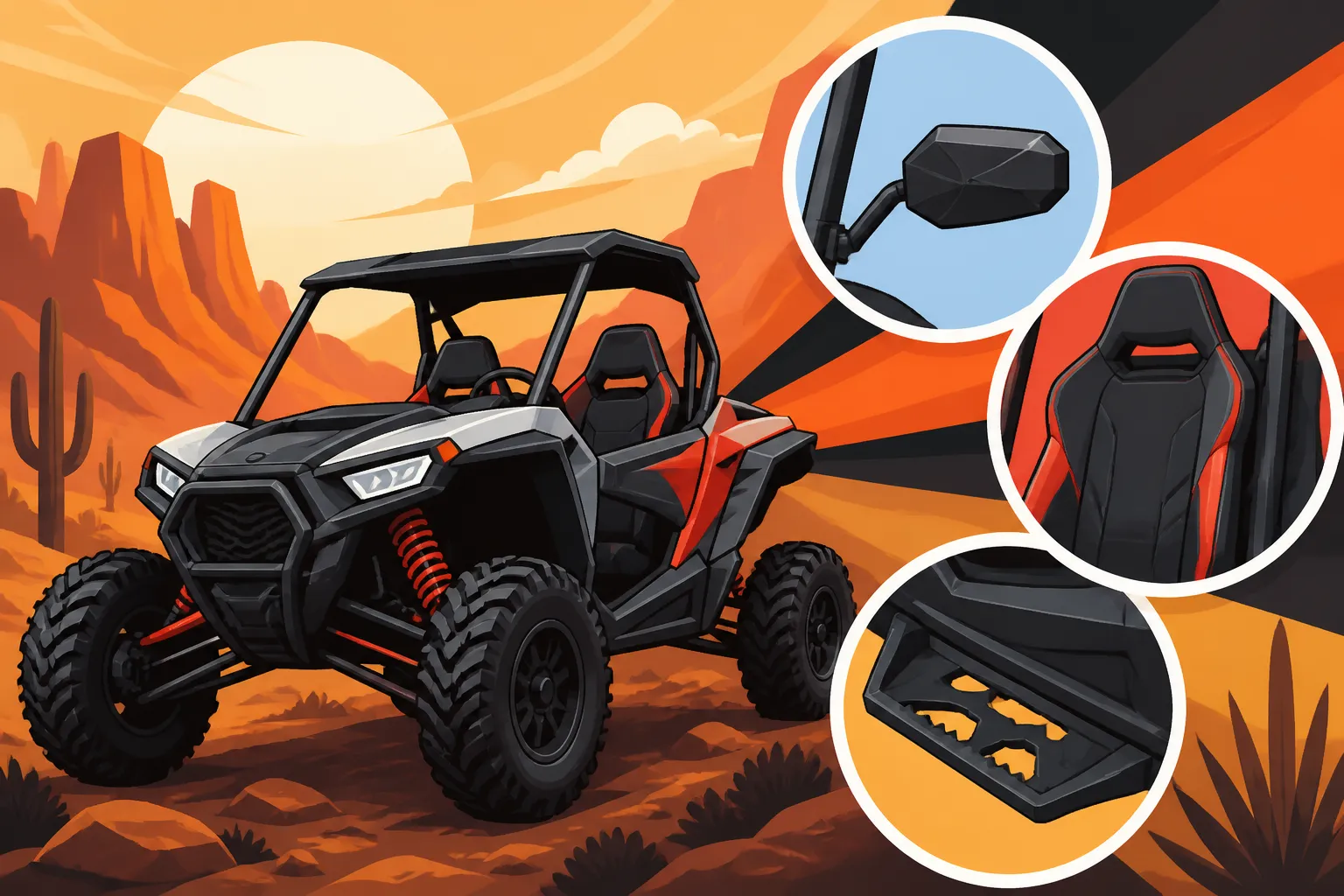
For any vehicle operating on an Arizona public road, including a street-legal ATV or UTV, you are generally required to have at least one mirror that provides a clear view of the highway to the rear of your machine for a distance of at least 200 feet. This "rear view" mirror is your primary tool for seeing what's coming up behind you, enabling you to make safe lane changes, turns, and stops. For many ATVs, a single handlebar-mounted mirror might suffice, as long as it meets the visibility criteria.
For UTVs, a center-mounted rearview mirror, often affixed to the roll cage or windshield frame, is a popular and effective solution. The key here isn't just having a mirror, but having one that actually provides an unobstructed and adequate view. If your mirror is too small, vibrates excessively, or is positioned where your own body or passenger blocks the view, it might not pass muster with a law enforcement officer. It needs to be functional and effective in real-world driving conditions.
Side Mirrors: Are They Optional or Essential?
While Arizona law often states a minimum of one rearview mirror, incorporating side mirrors into your street-legal build is highly recommended and in many cases, practically essential for safe operation. For UTVs, side mirrors offer a much broader field of vision, helping to eliminate blind spots that a single center rearview mirror might miss. Imagine navigating a busy intersection or merging onto a faster road; having a clear view of traffic on both sides significantly reduces risk.
Many aftermarket companies, including SuperATV, offer robust side mirror kits specifically designed for UTV roll cages, providing durable and adjustable options that can withstand both on-road and off-road abuse. Some municipalities or counties might even have specific local ordinances that go beyond the state minimum, effectively making side mirrors a de facto requirement for practical safety. Even if not strictly mandated by state law, equipping your machine with two side mirrors and a center rearview mirror provides the best possible situational awareness and is a hallmark of a responsible street-legal conversion.
Choosing the Right Mirrors for Durability and Visibility
When selecting mirrors for your street-legal OHV, you need to consider both their legality and their practicality for both paved roads and the occasional trail adventure. Standard adhesive mirrors meant for cars often won't hold up to the vibrations and potential impacts of off-road riding, leading to cracks, loss of adhesion, or simply poor visibility due to shaking. Instead, look for mirrors specifically designed for powersports applications.
Roll cage mounted mirrors are a fantastic option for UTVs, offering secure attachment and adjustability. These often feature breakaway designs, allowing them to fold in if they hit a branch or another obstacle, preventing damage. Handlebar-mounted mirrors are common for ATVs, and you'll want ones that are sturdy and provide a stable image. When shopping, prioritize materials like shatter-resistant glass or acrylic, and robust housings that can handle the elements. Companies like SuperATV excel in this area, offering a range of heavy-duty mirrors that provide excellent visibility while standing up to the harsh Arizona desert environment. Proper mirror choice enhances safety and ensures you won't be constantly replacing flimsy components.
Seats and Seatbelt Regulations for Arizona Road Use
The comfort and safety of you and your passengers are paramount, whether you're cruising down a scenic highway or tackling a challenging trail. Arizona's street-legal requirements extend to how people are seated in your OHV and how they are restrained, mirroring standards found in traditional passenger vehicles.
Designated Seating for All Occupants
One of the most fundamental rules for carrying passengers on any public road is that everyone must have a designated, secure seat. This means no riding in the cargo bed of a UTV, no sharing a seat that's clearly designed for one person, and absolutely no standing up while the machine is in motion. Each seat must be designed and affixed to the vehicle to safely accommodate an individual passenger. This rule is straightforward but often overlooked by riders who are accustomed to more casual arrangements on private land or dedicated off-road trails.
If your UTV has a bench seat, it needs to be clear how many occupants it's designed for and if each can be properly belted in. For ATVs, which are typically designed for a single rider, carrying a passenger on public roads is often illegal unless the machine is specifically designed and equipped for two riders with appropriate passenger handholds and footrests. Always consult your owner's manual and state regulations to ensure your seating configuration is compliant for the number of people you intend to carry.
Seatbelt Standards and Proper Usage
Just having a seat isn't enough; every designated seating position on a street-legal OHV must be equipped with a functional seatbelt. These aren't optional accessories when you're on paved roads. Arizona law requires that all occupants use their seatbelts whenever the vehicle is in motion on public roadways. This means inspecting your seatbelts regularly for fraying, damage, or wear and tear, and ensuring that buckles engage securely.
For many UTVs, factory-installed three-point seatbelts are standard, much like in a car. If you've upgraded your seats or roll cage, you need to ensure that the new setup integrates properly with your existing seatbelt system, or that you've installed compliant aftermarket belts. Four-point or five-point harnesses, while often preferred for aggressive off-road driving, are also acceptable as long as they are properly installed and maintained. The focus is on securely restraining occupants in the event of a sudden stop or collision. Understanding [Belts and Nets in a Side-by-Side] is crucial for all riders.
Aftermarket Seats and Rollover Protection
Many riders choose to upgrade their factory seats for improved comfort, support, or even aesthetics. While aftermarket seats can significantly enhance the riding experience, it's vital to ensure they don't compromise safety or compliance. When installing new seats, you must confirm that they are securely mounted to the vehicle's frame or roll cage and that they do not interfere with the proper function and fit of your seatbelts.
Furthermore, any modifications to seating should always be considered in conjunction with your machine's rollover protection structure (ROPS) or roll cage. The roll cage is a critical safety feature, and any seat upgrades should complement, not detract from, its protective capabilities. While not a direct seating requirement, it’s worth noting that a robust [Roll Cages on a Street Build] works hand-in-hand with your seatbelts and seats to provide maximum protection in an unfortunate incident. Companies like SuperATV offer a range of aftermarket seating and harness options designed to integrate seamlessly with various UTV models, providing both enhanced comfort and safety for your street-legal adventures.
Footrests and Rider Protection
The ability to keep your feet securely planted is a foundational aspect of safe vehicle operation. For OHVs, this means ensuring proper footrests or floorboards are in place for both the driver and all passengers, protecting them from the elements and ensuring a stable riding platform.
Ensuring Secure Foot Placement for Driver and Passengers
Arizona law requires that all occupants of a street-legal OHV have adequate footrests or floorboards. This isn't just about comfort; it's a critical safety measure. For the driver, secure foot placement on footrests or pedals ensures proper control of the machine, especially when navigating uneven terrain or braking suddenly. For passengers, stable footrests prevent their feet from dragging on the ground, getting caught in the tires, or being thrown around during bumps and turns.
On an ATV, this typically means the integrated footpegs or floorboards that come standard. For UTVs, the floorboards provide this essential support. The key is that these areas must be present, sturdy, and provide a non-slip surface to prevent accidental slips or loss of footing, which could lead to serious injury, particularly when traversing public roads alongside other vehicles. Make sure these are free from excessive mud, debris, or anything that could compromise grip.
Protecting Occupants from Road Debris and Hazards
Beyond providing a stable platform, well-designed footwells and floorboards serve a crucial protective role. When riding on paved roads, especially at higher speeds, loose gravel, small rocks, and other debris can be kicked up by your tires or by other vehicles. Robust floorboards and side panels help shield your feet and lower legs from these impacts.
Consider also the hazards of splashing water or mud, which can not only be uncomfortable but can also obscure controls or cause feet to slip. Adequate foot protection ensures that your feet remain securely within the confines of the vehicle, protecting them from external threats that are more prevalent when sharing the road with traffic. This thoughtful design helps ensure that your ride is not only legal but also genuinely safe and comfortable across different environments.
Customization and Aftermarket Footrests
For some ATVs, especially older models, or UTVs used heavily in challenging terrain, the factory footrests or floorboards might not offer optimal protection or grip. This is where aftermarket solutions come into play. Many riders opt for wider, more aggressive footpegs on ATVs for better grip and control. For UTVs, you can find upgraded floor mats with better traction, or even reinforced lower door panels and footwell enclosures that offer enhanced protection against debris and intrusions.
When choosing aftermarket options, ensure they maintain or improve upon the safety aspects of the original equipment. They should be securely fastened, durable, and not create any new snag points or hazards. Manufacturers like SuperATV offer a variety of floorboard protectors, full doors, and even upgraded footpegs that not only enhance the look of your machine but significantly boost safety and compliance, ensuring peace of mind whether you're on the trail or the pavement.
The Bigger Picture: Compliance and Enforcement
Meeting the specific requirements for mirrors, seats, and footrests is not just about avoiding a ticket; it's about making sure your street-legal OHV is genuinely safe for both you and other road users. However, understanding what to expect from law enforcement and how to maintain compliance over time is just as important as the initial build itself.
The Importance of Regular Inspections
Once you've gone through the effort of making your OHV street legal, the job isn't entirely done. These components, like any other part of your machine, are subject to wear and tear, especially with the vibrations, dust, and occasional rough treatment that off-road vehicles endure. Regular, pre-ride inspections of your mirrors, seats, and footrests are absolutely crucial. Check your mirrors for cracks, loose mounts, or anything that might obscure your view. Verify that all seatbelts latch securely, are free of fraying, and retract properly. Ensure that your footrests or floorboards are intact, securely attached, and free of any damage that could compromise their stability or protective function.
Failing to maintain these components can not only lead to safety issues but also result in a citation if an officer deems them to be in disrepair or non-compliant. A quick visual check before each ride can save you a lot of headache and keep you safely on the road.
What an Arizona Officer Looks For During a Stop
When an Arizona law enforcement officer pulls over an OHV operating on a public road, they're typically looking for compliance with all street-legal requirements, not just your OHV decal. While they'll certainly check for a visible license plate and working lights, they will also pay close attention to your mirrors, seats, and footrests. An officer wants to see that you have clear rearward visibility from at least one mirror, and ideally, from both side mirrors for a UTV. They will observe if all occupants are properly seated and securely buckled into functioning seatbelts.
They'll also visually confirm that adequate footrests or floorboards are present for everyone in the vehicle, ensuring no feet are dangling outside or resting precariously. Officers are trained to spot modifications that might compromise safety or legal requirements. Being able to demonstrate that these components are not only present but also functional and well-maintained can make a significant difference in how a traffic stop proceeds. To be better prepared for what an officer might ask or inspect, refer to our comprehensive guide on [What an Arizona Ranger Asks a Rider For].
Avoiding Citations and Staying Safe on Arizona Roads
The easiest way to avoid citations related to your mirrors, seats, and footrests is simple: ensure they are fully compliant, properly installed, and regularly maintained. Don't cut corners on these items; they are foundational to safe road operation. Beyond avoiding legal trouble, strict adherence to these requirements dramatically enhances the safety of your ride. Proper mirrors mean you see that car merging from behind. Secure seats and functional seatbelts mean you and your passengers are protected in a sudden stop or impact. Robust footrests ensure stability and protection from debris.
The goal isn't just to "check the box" for street-legal status, but to operate your OHV responsibly and safely on shared public roadways. Understanding the serious implications of non-compliance can help reinforce the importance of these often-understated requirements. You can learn more about the potential repercussions in our article about [Arizona Penalties for Illegal Road Riding]. Your proactive approach to these details ensures that every trip on Arizona’s roads is both enjoyable and free from unnecessary risks or legal hassles.
Practical Tips for Your Arizona Street-Legal Build
Embarking on a street-legal OHV build or conversion can be a rewarding project, but it often involves nuanced details that extend beyond just the state's basic requirements. Taking a thoughtful, proactive approach can save you time, money, and headaches down the line.
Researching Local Ordinances
While Arizona state law sets the baseline for street-legal OHVs, it's incredibly important to remember that local municipalities and counties can, and often do, impose their own additional restrictions or requirements. What's perfectly legal on a county road outside of Phoenix might be prohibited or require additional equipment within the city limits of Sedona or Lake Havasu City. These local ordinances can dictate anything from specific operating hours, permissible roads, speed limits, or even additional equipment requirements like specific mirror sizes or types of seatbelts.
Before you plan a ride through a new town or community, always take a few minutes to research their local OHV ordinances. A quick search on the city's official website or a call to their local police department's non-emergency line can provide the clarity you need. Being caught unaware of a local rule can lead to an unexpected citation, even if you're fully compliant with state law. Our guide on [Finding an Arizona City's OHV Ordinance] offers more insight into navigating these local rules.
Documenting Your Modifications
Keeping meticulous records of all your street-legal modifications can be a lifesaver, especially if you ever encounter questions from law enforcement or need to prove compliance for insurance purposes. This means holding onto receipts for aftermarket parts like mirrors, seats, footrests, lighting kits, and any other components you've added to meet the requirements. It's also a good idea to take photos of your installed equipment, especially if it's not immediately obvious how a part meets a specific legal definition.
Consider creating a small binder or a digital folder on your phone dedicated to your OHV's street-legal documentation. This could include copies of relevant Arizona statutes, local ordinances you've researched, and detailed descriptions or links to the products you've installed. Having this information readily available can streamline a traffic stop, demonstrate your diligence, and help you confidently explain how your machine meets all necessary standards.
Getting Professional Installation or Advice
While many OHV owners are skilled do-it-yourselfers, some aspects of a street-legal conversion are best left to professionals, or at least guided by expert advice. This is particularly true for critical safety components like seatbelt anchor points, roll cage modifications, or ensuring proper integration of aftermarket seats. A certified powersports mechanic or a shop specializing in street-legal conversions will have the expertise to ensure all components are installed correctly and meet both safety standards and legal requirements.
They can also provide invaluable advice on product selection, helping you choose durable and compliant parts. For instance, SuperATV parts are designed for easy installation, but if you're ever in doubt about the structural integrity or legal compliance of a modification, don't hesitate to seek professional guidance. Investing in professional installation for key components can give you peace of mind, knowing that your machine is not only street-legal but also safe and reliable for every mile of your Arizona adventures.
Comparing OEM and Aftermarket Street-Legal Components
When building a street-legal OHV, riders often weigh the options between retaining factory (OEM) components and upgrading with aftermarket parts. Both have their pros and cons, especially concerning mirrors, seats, and footrests.
| Feature | OEM (Factory) Components | Aftermarket Components (e.g., SuperATV) |
|---|---|---|
| Cost | Generally included with machine, replacements can be pricey | Varies widely, from budget-friendly to premium performance |
| Compliance | Designed to meet minimum factory standards | Specifically designed to meet or exceed legal requirements |
| Durability | Engineered for general use, may not withstand extreme abuse | Often designed for enhanced toughness, impact resistance |
| Visibility | Basic functionality, may have limitations in scope | Wider viewing angles, break-away designs, anti-glare options |
| Comfort | Standard ergonomics, can be basic for long rides | Ergonomic improvements, better padding, custom fit options |
| Protection | Basic coverage from elements and debris | Enhanced shielding, reinforced materials, custom fit for protection |
| Aesthetics | Blends with original machine design | Custom styles, colors, and finishes to personalize your build |
| Availability | Dealer specific, may have lead times for older models | Wide range of suppliers, often readily available, innovative designs |
This table highlights that while OEM components provide a reliable starting point, aftermarket parts, particularly from reputable brands like SuperATV, often offer superior durability, enhanced safety features, and customization options that can make your street-legal OHV build truly shine. Whether it's a stronger mirror that won't vibrate loose, more comfortable seats for long hauls, or reinforced footwells for added protection, aftermarket choices can significantly improve your riding experience and compliance.
Disclaimer
This article is for general informational purposes only and does not constitute professional advice. Laws, prices and regulations vary by location and change over time. Consult a qualified professional for guidance on your specific situation.