Helmet Rules for a 17-Year-Old in Arizona
Navigating the rules for young riders, especially teenagers, can feel like a minefield in Arizona. You're trying to figure out if your 17-year-old needs a helmet every single time they hop on their ATV or UTV, whether it's on a designated trail, a county road, or even just around the ranch. It's a valid concern, because nobody wants a ticket, and more importantly, everyone wants to stay safe. This guide will cut through the confusion and clarify exactly when and where a 17-year-old rider in Arizona must wear a helmet, and what kind of helmet is required.
Understanding Arizona's General Helmet Requirements for OHVs
Arizona takes the safety of its younger off-highway vehicle (OHV) riders seriously, and for good reason. The desert can be unpredictable, and accidents, unfortunately, do happen. While adults might have more leeway in certain situations, the rules are much stricter for those under 18, reflecting a statewide commitment to protecting our youth on the trails and roads. It's not just about avoiding a citation; it's about minimizing the risk of serious injury in the event of a crash or even just a minor tip-over.
For anyone operating or riding as a passenger on an OHV in Arizona who is under the age of 18, a helmet isn't just a suggestion; it's the law. This blanket rule applies whether you're tearing up the sand dunes, navigating rocky trails, or cruising down an approved county road. This comprehensive approach means that almost every time a 17-year-old is on an ATV, UTV, or dirt bike in Arizona, a helmet needs to be securely on their head. It removes any guesswork about specific trails or types of riding, simplifying the safety message for everyone involved.
The Arizona Game and Fish Department, along with the Arizona Department of Transportation, works to ensure these rules are communicated clearly. They understand that families want to enjoy the vast outdoor opportunities Arizona offers, but they also want to ensure everyone comes home safely. This means that ignorance of the law isn't an excuse, and enforcement officers are out on the trails and roads ensuring compliance. Keeping up with regulations, like those detailed in [Arizona OHV Rules for Operators Under 18], is crucial for any family with young riders.
Age-Based Mandates on Public and State Land
When your 17-year-old is out riding on public lands, such as those managed by the Bureau of Land Management (BLM) or the Forest Service, or on Arizona State Trust Land, the helmet mandate is absolute. There's no gray area here. If they're operating or riding on these lands, they must be wearing an approved helmet. This rule is in place because these areas often present varied terrain, from loose gravel and sandy washes to rocky climbs and descents, all of which carry inherent risks. The potential for unexpected obstacles or sudden changes in conditions makes head protection paramount.
Consider a typical weekend ride in the Coconino National Forest, where families might be exploring fire roads or connecting trails. Even if the pace is leisurely, a sudden loss of traction or an encounter with an unseen rock can lead to an overturn. A helmet provides that critical layer of protection for a developing brain. The same applies if you're riding in the Sonoran Desert near Phoenix, navigating washes and two-tracks. The terrain might seem less challenging, but speeds can be higher, and unforeseen situations, like wildlife darting across the path, are always a possibility.
It's also important to remember that this mandate extends to passengers. So, if your 17-year-old is a passenger in a side-by-side on state land, they are also required to wear a helmet, even if the driver is over 18 and technically not required to wear one in that specific vehicle type (though it's always recommended!). This ensures that the most vulnerable individuals in a potential incident are adequately protected, regardless of their role on the machine.
Approved Helmet Standards (DOT-Rated)
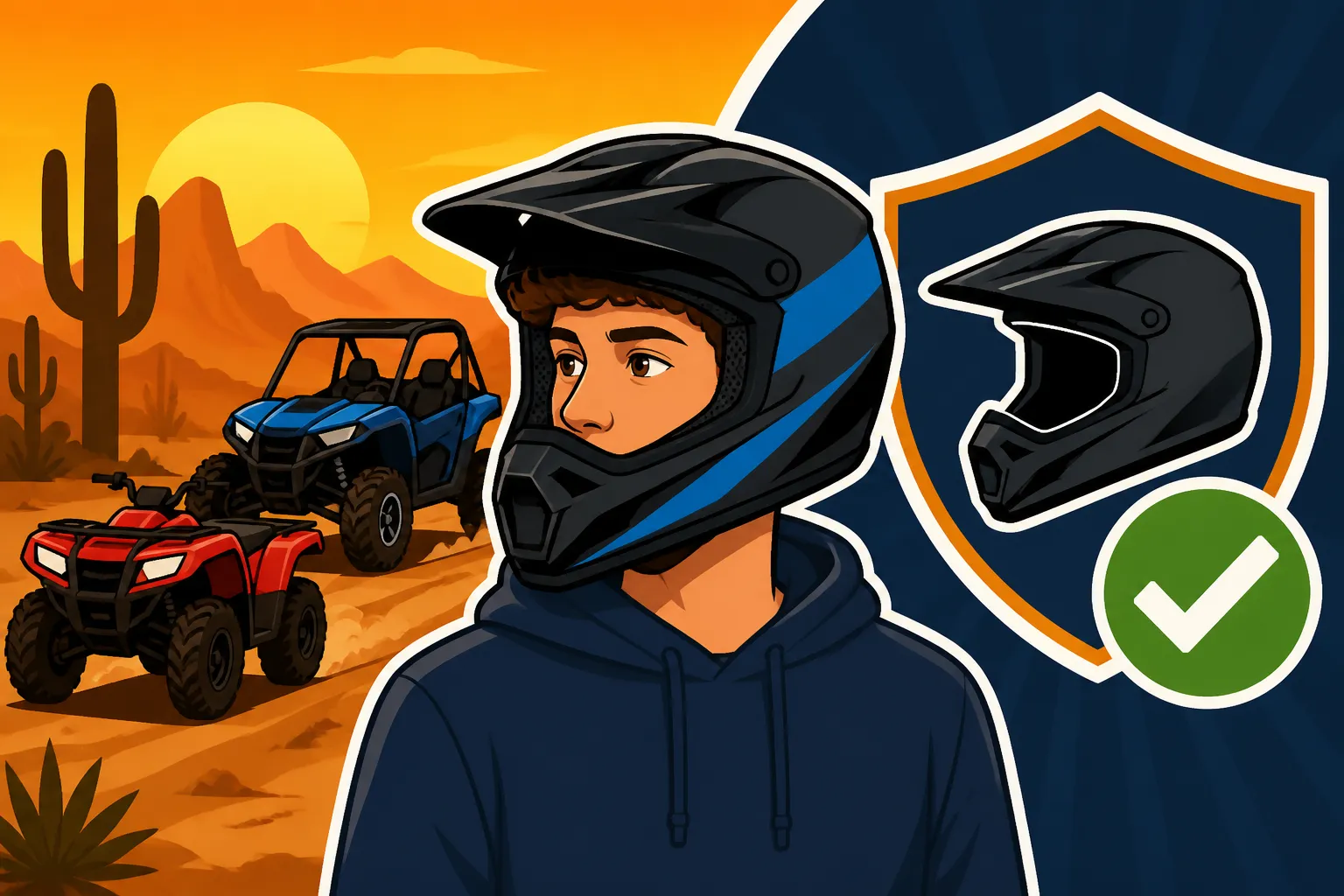
It's not just any helmet that will do; Arizona law specifies that the helmet must meet certain safety standards. Specifically, it must be approved by the United States Department of Transportation (DOT). This isn't just some arbitrary sticker; the DOT certification means the helmet has undergone rigorous testing to ensure it can withstand impacts and protect the wearer's head effectively. Looking for that DOT sticker on the back of the helmet is your first step in ensuring compliance and, more importantly, effective protection.
Helmets come in many shapes and sizes, from full-face designs to open-face versions. For OHV riding, especially at higher speeds or on technical terrain, a full-face helmet often provides the most comprehensive protection, covering the jaw and face in addition to the skull. However, as long as the helmet is DOT-approved, it meets the legal requirement. You can delve deeper into what these certifications mean by looking into resources like [DOT Helmet Ratings Arizona Accepts].
Choosing a quality helmet from a reputable manufacturer is key. While the law only mandates DOT approval, many riders opt for helmets that also carry Snell or ECE certifications, which often indicate even higher levels of safety testing. These certifications go above and beyond, offering an extra layer of confidence when your young rider is out on the trail. Investing in a good helmet isn't just about ticking a box; it's about providing the best possible safety equipment.
The Importance of Proper Fit and Fastening
Even the most expensive, DOT-approved helmet offers minimal protection if it doesn't fit correctly or isn't properly fastened. This is a crucial point that often gets overlooked. A helmet that's too loose can shift during an impact, exposing parts of the head or even coming off entirely. Conversely, a helmet that's too tight can be uncomfortable, distracting, and may even obscure vision, leading to other safety issues. For growing teenagers, regularly checking helmet fit is essential, as their head size can change.
When you're fitting a helmet for your 17-year-old, ensure it sits snugly on their head without being painful. It shouldn't move freely when they shake their head from side to side or nod up and down. The chin strap is equally vital; it needs to be adjusted so that it's tight enough to keep the helmet firmly in place but not so tight that it chokes them. You should only be able to fit one or two fingers between the strap and their chin. Understanding [Fitting and Fastening a Helmet Properly] can make a significant difference in how well the helmet performs.
Parents should take the time to teach their young riders how to properly don and secure their helmets every single time. It should become a habit, just like buckling a seatbelt in a car. Even for short rides around the campsite or staging area, that helmet needs to be on and secured. This consistent approach reinforces good safety practices and ensures that the helmet is ready to do its job if and when it's needed, preventing potential serious injuries from what might seem like a minor fall.
Specifics for 17-Year-Old Riders on Arizona Roads and Trails
Arizona offers a unique landscape where OHVs can often transition from rugged trails directly onto certain paved or unpaved public roads. This can be fantastic for connecting different riding areas or even just getting to a gas station. However, these transitions bring different sets of rules, especially regarding helmet usage for young riders. A 17-year-old needs to be acutely aware of these distinctions, as riding an OHV on a road, even a county road, often aligns with motor vehicle laws that have specific provisions for minors.
The general rule of thumb for any 17-year-old in Arizona is simple: if you're on an OHV, wear a helmet. The context of whether it's a "road" or a "trail" often doesn't change this core requirement for minors. This proactive stance ensures maximum safety across diverse riding environments. It takes the guesswork out of the equation for parents and young riders, establishing a clear and consistent expectation. It's about instilling a culture of safety that prioritizes protection over convenience or perceived comfort in any situation.
Even on designated OHV routes that might be wide, graded dirt roads, the under-18 helmet rule still applies. These routes, while sometimes resembling regular roads, are still considered part of the OHV recreational network where specific rules for off-highway vehicles, including safety equipment mandates for minors, are strictly enforced. Whether your machine is stock or equipped with aftermarket parts from brands like SuperATV that enhance performance or utility, the legal obligation for a 17-year-old to wear a helmet remains constant across virtually all public and state-managed areas.
Riding an OHV on Street-Legal Roads
Arizona has provisions for making OHVs "street legal," which means they can be operated on certain public roads. This opens up incredible opportunities for exploration, allowing riders to connect trails, access services, or even just enjoy a scenic drive. However, when a 17-year-old is operating or riding as a passenger in a street-legal OHV on a paved or unpaved public road, the helmet requirement remains in full effect. This aligns with broader motorcycle and motor vehicle laws concerning minors.
If a 17-year-old is driving a street-legal side-by-side or ATV on a road where a street-legal vehicle is permitted, they fall under the same helmet requirements as a minor riding a motorcycle. This means a DOT-approved helmet is mandatory. There's no exemption for being in an enclosed UTV, or for having a windshield. The age of the rider is the determining factor. Families often confuse this, thinking that if the machine has a roll cage and seatbelts, a helmet might not be needed. However, for anyone under 18, that's not the case on Arizona roads. You can find more details in [Arizona Helmet Law for Riders Under 18].
It’s crucial to know which roads are open to OHVs in the first place. Not all roads are fair game, and riding on restricted highways or city streets can lead to significant fines, regardless of helmet use. Always check local ordinances and state regulations, like those discussed in [Which Arizona Roads Are Open to OHVs], before planning a road-based OHV journey. The combination of proper helmet use and legal road access ensures both safety and compliance for your 17-year-old rider.
Helmet Use on Forest Service and BLM Roads
A significant portion of Arizona's OHV riding takes place on roads and trails managed by the U.S. Forest Service and the Bureau of Land Management (BLM). These areas are often vast and offer diverse riding experiences, from high-desert scenic routes to winding mountain tracks. For a 17-year-old operating an OHV on any road or trail within these federal lands, the helmet rule is consistently enforced. Whether it's a graded forest road or a tight single-track trail, head protection is mandatory.
These federal agencies collaborate closely with state and local law enforcement to ensure compliance with OHV regulations, including safety gear requirements. A Forest Ranger or BLM officer has the authority to issue citations for non-compliance. So, while you might be far out in the wilderness, the rules still apply, and patrols are common, especially in popular riding areas. It’s not uncommon for officers to conduct checks at trailheads or along main access routes.
This mandate is crucial because even on what might appear to be a smooth, wide dirt road, conditions can change rapidly. Dust can obscure vision, other vehicles (including full-size trucks) may be encountered, and unforeseen hazards like washed-out sections or loose debris are always a possibility. The helmet provides essential protection against impacts, flying debris, and even sun exposure. For a 17-year-old, the expectation is clear: helmet on, always.
Exceptions and Private Land Considerations
While the "under 18, wear a helmet" rule is very broad in Arizona, there are a few nuances, primarily concerning private property. If your 17-year-old is riding an OHV exclusively on private land that you own or have explicit permission to use, and that land is not accessible to the public, the state's helmet law for minors technically may not apply. This is a common situation for ranch owners or those with large plots of acreage where an OHV might be used for chores or recreational purposes within the property's boundaries.
However, even on private land, common sense and personal safety should always prevail. While the law might not mandate a helmet, the risk of injury doesn't disappear just because you're on private property. Many experienced riders and parents strongly advocate for helmet use regardless of the legal requirement, particularly for younger riders. A head injury is just as devastating whether it happens on a public trail or in your backyard. Therefore, it's highly recommended to maintain the helmet habit for your 17-year-old, irrespective of the legal landscape of the specific parcel of land.
It's also important to be absolutely sure that the land is indeed private and not subject to any easements or public access agreements. Sometimes, what appears to be private land might have public access routes crossing it, or it might be adjacent to state or federal lands. In such cases, if your ride inadvertently crosses onto public land, the helmet rules immediately become applicable. When in doubt, it’s always safest to wear the helmet. This cautious approach eliminates any legal ambiguity and prioritizes the rider's well-being above all else. [Do You Need a Decal on Private Arizona Land?] can offer further clarity on property distinctions.
Beyond the Helmet: Other Safety Gear and Parental Responsibilities
While the helmet is undoubtedly the most critical piece of safety gear for a 17-year-old OHV rider in Arizona, it's just one component of a comprehensive safety strategy. Riding an ATV or UTV, especially in the diverse and often challenging Arizona terrain, requires a full suite of protective equipment to minimize the risk of injury. Parents play a pivotal role in ensuring their young riders are not only equipped with the right gear but also educated on its importance and proper use.
The desert environment itself presents unique challenges, from intense sun exposure to abrasive dust and sharp vegetation. These factors necessitate protection for the entire body, not just the head. Beyond physical gear, parental responsibility extends to supervision, training, and instilling a strong sense of safe riding practices. This holistic approach is what truly prepares a 17-year-old for safe and enjoyable off-highway adventures, making every ride a positive experience.
Companies like SuperATV often emphasize comprehensive rider safety, beyond just the basics. They offer products designed to enhance the vehicle's protection, such as heavy-duty skid plates and robust bumpers, which indirectly contribute to rider safety by preventing machine damage that could lead to an accident. But ultimately, the individual rider's gear is the first line of defense. Equipping your teen with the full range of appropriate safety gear is an investment in their well-being and a testament to responsible OHV recreation.
Eye Protection and Goggles
Right up there with a helmet in terms of importance is proper eye protection. Whether your 17-year-old is wearing a full-face helmet with a visor or an open-face helmet, goggles are non-negotiable. The Arizona desert is notorious for its dust, which can quickly blind a rider, leading to a loss of control. Beyond dust, you'll encounter flying debris such as small rocks kicked up by other vehicles, insects, and even low-hanging branches on forested trails. Any of these can cause serious eye injury or distract a rider at a critical moment.
Goggles should fit snugly over the eyes and integrate well with the helmet, leaving no gaps for dust or debris to enter. Anti-fog lenses are a huge plus, especially on cooler mornings or during strenuous rides. If using an open-face helmet, make sure the goggles provide adequate coverage around the periphery of the eyes. For those instances when your 17-year-old might be riding a street-legal machine, [Goggles or a Windshield on the Street] can provide additional context on requirements and best practices.
Just like with helmets, teach your teen to always wear their goggles. A common mistake is to push goggles up onto the helmet when stopped, only to forget to pull them back down before taking off. Make it a routine: helmet on, chin strap fastened, goggles down. This simple habit can prevent countless potential issues and keep their vision clear and protected throughout the ride.
Protective Clothing and Footwear
While not always legally mandated for riders over 18 (unless on a street-legal motorcycle), protective clothing is highly recommended for all OHV riders, especially teenagers who are still learning and prone to tumbles. Long pants, long-sleeved shirts, and sturdy over-the-ankle boots provide crucial protection against abrasions, cuts, and scrapes from falls, as well as against sun exposure, thorns, and engine heat. Denim jeans are a minimum, but purpose-built riding pants and jerseys offer better protection and comfort.
Gloves are another essential item. They protect hands from blisters, impacts, and brush, and improve grip on the handlebars. In Arizona's often scorching temperatures, breathable, moisture-wicking fabrics are key to preventing heat exhaustion. Even if it's 110 degrees, the risk of road rash or other injuries from exposed skin means that full coverage is still advisable. Look for gear designed for powersports, as it offers impact protection and better ventilation than regular clothing.
For footwear, durable boots that cover the ankle are critical. Tennis shoes offer virtually no protection in a crash or if a foot gets caught under the machine. Off-road riding boots often have reinforced toes, ankles, and shins, providing robust protection against impacts and crushing injuries. Investing in good riding gear is an investment in your child's safety and comfort, allowing them to focus on the ride rather than potential discomfort or injury.
Parental Supervision and Liability
Beyond providing the right gear, parents have a significant responsibility to supervise their 17-year-old riders and ensure they understand and adhere to all safety rules. This means more than just sending them out with a helmet; it means actively riding with them, monitoring their behavior, and teaching them responsible riding etiquette. [Supervising a Young Rider in the Desert] delves deeper into these aspects.
As the legal guardian, you are ultimately responsible for your minor child's actions, including any citations they might receive for not wearing a helmet or for reckless riding. Arizona law can hold parents accountable for their child's violations. Furthermore, in the unfortunate event of an accident, a parent could face civil liability if their child was riding without proper safety equipment or supervision. Understanding [Arizona Penalties for Reckless Riding] is also important to grasp the broader context of riding responsibility.
Instilling a strong safety culture from a young age is invaluable. This includes emphasizing defensive riding, respecting trail rules, understanding machine limits, and always prioritizing safety over speed or stunts. Regular discussions about trail conditions, potential hazards, and how to respond in emergencies are also critical. Your consistent example and guidance will shape your 17-year-old into a responsible and safe OHV enthusiast, ready to enjoy Arizona's incredible landscapes for years to come.
Arizona Helmet Rules for OHV Riders Under 18: At a Glance
| Rider Age | Location Type | Helmet Requirement | Approved Standard | Additional Notes |
|---|---|---|---|---|
| Under 18 | Public Land (BLM, Forest Service) | Mandatory | DOT Certified | Applies to operators and passengers. |
| Under 18 | Arizona State Trust Land | Mandatory | DOT Certified | Applies to operators and passengers. |
| Under 18 | Street-Legal Roads (Open to OHVs) | Mandatory | DOT Certified | Aligns with motorcycle helmet laws for minors. |
| Under 18 | Private Property (No Public Access) | Not legally mandated | N/A (Highly Recommended) | Parental discretion, but safety is paramount. |
| Under 18 | Designated OHV Recreation Areas | Mandatory | DOT Certified | Includes all trails, staging areas, etc. |
Disclaimer
This article is for general informational purposes only and does not constitute professional advice. Laws, prices and regulations vary by location and change over time. Consult a qualified professional for guidance on your specific situation.