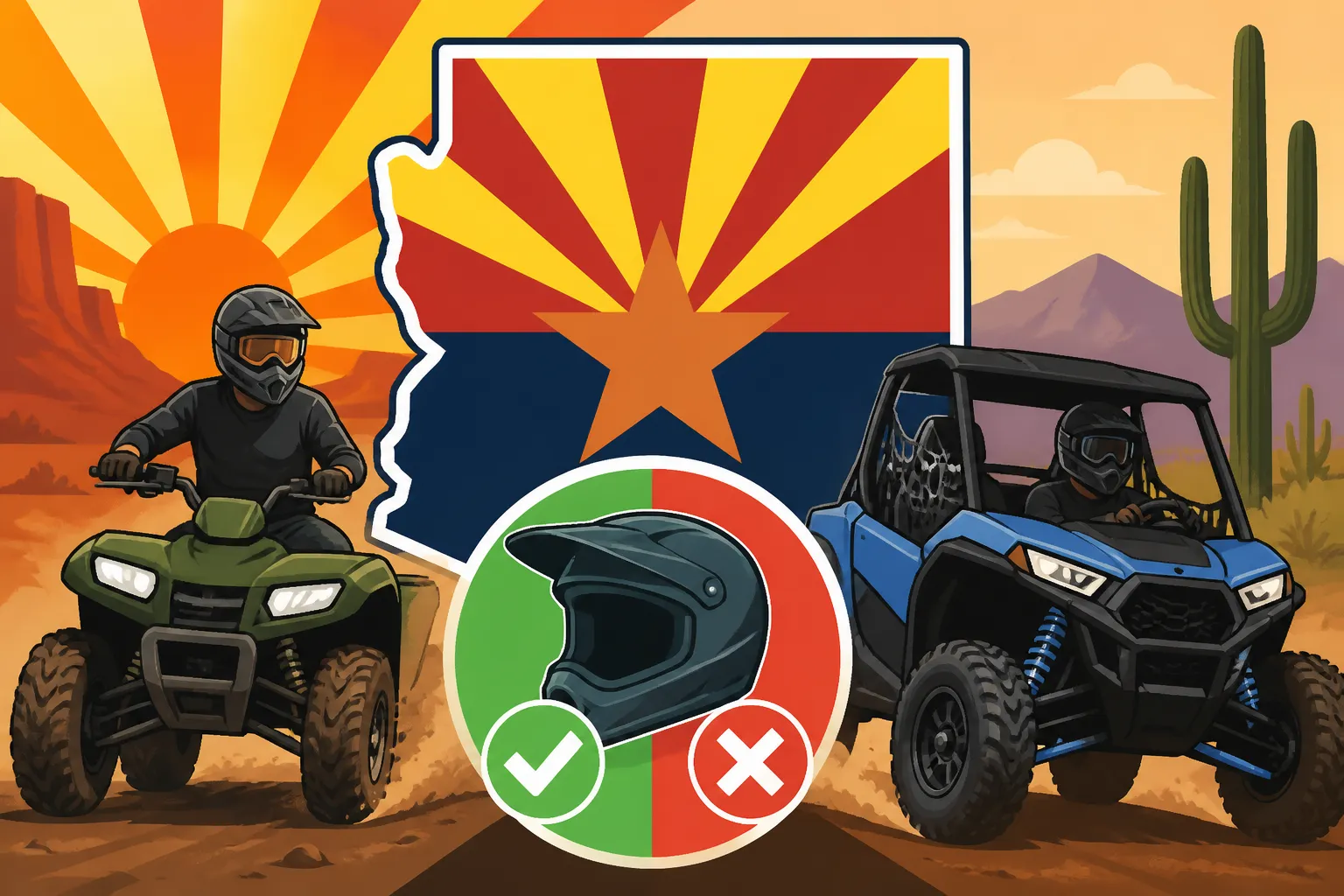
Arizona Helmet Law for Riders Over 18
It's easy to feel like you need a law degree just to understand what's required of you as an OHV rider in Arizona. You've got your UTV or ATV, you're over 18, and you just want to know: do I really need to wear a helmet every single time I hit the dirt or cruise down a paved road? This guide is here to untangle the often-confusing web of Arizona's helmet laws specifically for adult riders, making sure you know when it's legally mandated and when it's simply a wise choice for your safety.
Understanding Arizona's General Helmet Requirements
Arizona's approach to helmets for off-highway vehicle (OHV) riders over the age of 18 isn't a blanket "always wear one" rule. Instead, it’s far more nuanced, often depending on where you're riding. This is a common point of confusion for many riders, especially those who grew up in states with stricter, all-encompassing helmet mandates. Here in Arizona, the focus shifts depending on whether you're off the pavement or on it, and what kind of machine you're operating.
The general principle is that if you're riding on public lands, unimproved roads, or designated OHV trails, and your machine isn't considered "street legal" with all the proper registrations and equipment, then for adult riders (over 18), a helmet is typically not legally required. This often comes as a relief to many, but it doesn't mean it's a good idea to go without one. The desert can be unforgiving, and even a slow-speed tip-over can result in serious injury. It's about balancing legal obligation with personal safety, and those two don't always align.
However, the moment your machine touches a paved surface, especially a public road or highway, the rules change significantly. Arizona's laws are designed to integrate OHVs into the existing traffic code when they operate on public streets. So, while you might be able to ride helmet-free on a dirt track, the instant you transition to a county road to get to the next trailhead, you could find yourself needing one. This distinction is crucial and often catches riders by surprise.
Distinguishing Street Legal from Off-Highway Only
To truly grasp Arizona's helmet laws for adult riders, you first need to understand the fundamental difference between an "off-highway only" machine and a "street-legal" OHV. This distinction is the bedrock upon which all other regulations, including helmet requirements, are built. An off-highway only machine is exactly what it sounds like: it's designed and registered solely for use off pavement. It will carry an [Arizona's Annual OHV Decal Explained] and typically have an RV plate, if it has one at all. These machines are meant for the trails, the desert washes, and the designated riding areas. When operating one of these strictly off-highway machines on non-paved surfaces, adult riders are generally not legally obligated to wear a helmet, though again, it’s highly advisable for safety.
Now, let's talk about street-legal machines. Making your ATV or UTV street legal in Arizona is a process that involves meeting a specific set of requirements, turning your off-road beast into a road-worthy vehicle. This means equipping it with all the safety gear mandated for automobiles or motorcycles, such as headlights, taillights, brake lights, mirrors, a horn, and often turn signals. Once your machine meets [What Arizona Requires on a Street-Legal Machine] and has received the proper MC (Motorcycle) plate from the Arizona MVD, it’s treated much like any other vehicle on the road. This is where the helmet law for adults comes into play most prominently.
The moment your OHV is classified as street legal and you're operating it on a paved public road, highway, or even crossing a public thoroughfare, you step into a different legal framework. The law then often aligns with motorcycle helmet requirements, which do have specific mandates depending on age. Knowing whether your machine is truly street-legal or still considered off-highway only is the first step in determining your helmet obligations.
The Role of Age in Arizona's Helmet Laws
When it comes to helmet laws, age is more than just a number in Arizona; it's a critical factor that dictates legal requirements. The rules for riders under 18 are much stricter, reflecting a broader commitment to protecting younger, potentially less experienced operators. For anyone under the age of 18, whether on public land, trails, or any public road, a helmet is generally a non-negotiable requirement. This means if you have a teenager in your group, even as a passenger, they must be wearing an approved helmet. We cover more details on those rules in [Arizona Rules for Operators Under 18] and [Arizona Rules for a Rider Who Turns 16].
However, the focus of this guide is on adult riders—those 18 years of age and older. For this demographic, the law offers more flexibility when riding strictly off-road. On the vast majority of Arizona's off-highway trails and public lands, if you are 18 or older and your machine is not operating on a public paved road, you are legally permitted to ride without a helmet. This is where many riders breathe a sigh of relief, often opting for comfort over maximum protection in certain low-speed, low-risk off-road scenarios.
But don't let this flexibility lull you into a false sense of security. While the law might not require it, common sense and safety certainly do. Even seasoned riders can encounter unexpected obstacles, lose traction, or make a misjudgment. A helmet provides crucial protection against head injuries, which can be life-altering. So, while the law acknowledges your adult judgment, it doesn't diminish the inherent risks of OHV riding. It's a personal choice when off-road, but it's important to remember that the desert doesn't care about your age or legal exemptions—it just delivers consequences.
When an Adult Rider Must Wear a Helmet in Arizona
Okay, so we've established that the "rules of the road" change when you transition from dirt to pavement. For adult OHV riders in Arizona, the primary situation where a helmet becomes legally mandatory is when your machine is operating on a public road or highway that is open to vehicular traffic. This isn't just about high-speed interstates; it includes county roads, city streets, and even paved routes that simply connect one section of trail to another. If your machine is street legal and you're sharing the pavement with cars and trucks, you need to be wearing a helmet.
Think about it: when you're on a public road, your OHV is now part of the flow of traffic, subject to the same rules and exposed to similar risks as other road vehicles. A collision with a car at 45 mph is going to be just as devastating whether you're on a street-legal UTV or a motorcycle. This is why Arizona's laws, and those in many other states, mandate helmets for adult riders on public roads when operating a "motorcycle" or a "motor-driven cycle"—categories that often encompass street-legal ATVs and UTVs. The intent is to offer the same level of protection to OHV riders as to motorcyclists in similar on-road environments.
This means that even if you're just [Riding Town to Trailhead in Arizona] for a quick coffee before hitting the dirt, that stretch of pavement requires you to don your helmet. It's not about the distance, but the environment. Many experienced riders make a habit of always wearing their helmet, regardless of the legal mandate, simply because it’s the safest practice. But if you’re looking strictly at the letter of the law for riders over 18, this is the main scenario that makes it mandatory.
Riding Street-Legal OHVs on Paved Roads
If you’ve gone through the effort and expense of making your ATV or UTV street legal in Arizona, congratulations! You’ve opened up a whole new world of riding possibilities, allowing you to legally connect trails, run into town for supplies, or simply enjoy a cruise on scenic backroads. However, this convenience comes with the responsibility of adhering to all applicable traffic laws, and for adult riders, that absolutely includes helmet use when on paved public roads. When your machine displays an MC plate and is rolling on asphalt, it's considered a motorcycle for many legal purposes, and Arizona's motorcycle helmet law applies.
Specifically, Arizona law states that a person operating or riding on a motorcycle or motor-driven cycle on a highway must wear protective headgear if they are under 18 years of age. While this might seem to suggest that those over 18 are exempt, the definition of "motorcycle" can be broad enough to include many street-legal OHVs. The safest interpretation, and one many law enforcement officers will enforce, is to wear a DOT-compliant helmet when riding your street-legal ATV or UTV on public paved roads, regardless of age. This aligns with the spirit of the law and minimizes your risk of a citation, not to mention serious injury. For details on what kind of helmet is acceptable, check out [DOT Helmet Ratings Arizona Accepts].
Furthermore, it's not just the helmet itself, but also how you wear it. It needs to be properly fitted and securely fastened. A helmet dangling from your arm or loosely strapped is as good as no helmet at all in a crash, and could still lead to a citation. So, if you're riding your street-legal machine on Arizona's roads, treat it like a motorcycle: gear up completely. This includes not only your helmet but also appropriate eye protection, which is also generally required when on public roads. Companies like SuperATV offer a range of windshields and other accessories that can enhance safety and comfort on paved surfaces, complementing your helmet use.
Crossing or Briefly Accessing Public Roads
Sometimes, you're not planning a long road trip; you just need to get from one section of trail to another. Perhaps your favorite riding area is bisected by a county road, or you need to cross a short stretch of pavement to reach a gas station. This scenario is where many adult riders become confused about the helmet law. Even if your machine is primarily "off-highway only" and not fully street legal, the moment your wheels touch a public paved road or highway, even for a brief crossing, you are technically subject to different rules.
While the primary mandate for adult helmet use applies most clearly to fully street-legal machines operating on public roads, the act of crossing or briefly accessing a public paved road for any OHV can still put you in a grey area. To avoid any doubt, and more importantly, to ensure your safety, it's highly recommended that you wear a helmet whenever you are on any public paved surface. Law enforcement often takes a conservative view when it comes to safety equipment on roads, and arguing the nuances of "brief access" versus "operation" after an incident is not a position you want to be in.
Consider the potential consequences: a sudden stop, a driver who doesn't see you, or an unexpected patch of gravel can all lead to a fall, even at low speeds. A quick traverse of a busy intersection without a helmet could turn into a life-changing event. Therefore, if your trail route includes any sections of public paved road, regardless of how short, it’s always best practice for an adult rider to put on a DOT-approved helmet. This not only keeps you compliant with the strictest interpretation of the law but, more importantly, protects your head. It’s a small inconvenience for a huge peace of mind.
Navigating Exemptions and Special Circumstances
While Arizona's helmet laws for adult OHV riders lean towards flexibility off-road and stricter enforcement on public roads, there are always nuances and specific situations that can cause confusion. It's not always a clear-cut scenario, and understanding these edge cases can help you ride confidently and legally.
One common question revolves around private property. If you're riding solely on private land, such as your own acreage or a friend's ranch with permission, Arizona's helmet laws for public roads generally do not apply. On private property, the landowner sets the rules, and while they might require helmets for safety, it's not a state mandate. This is usually pretty straightforward, but remember that the moment you leave that private property and access any public land or road, state laws kick back in.
Another scenario often discussed is when an OHV is being used for agricultural or ranching purposes. While there are some [Arizona OHV Rules for Ranch and Farm Machines] that provide exemptions for certain aspects of registration or decal requirements when operating on private land or across limited stretches of public roads for work, these exemptions typically do not extend to overriding safety equipment laws like helmets when on public paved roads. A utility UTV used to haul feed across a county road is still a vehicle on a public road, and the operator should adhere to road safety requirements. It's crucial not to confuse operational exemptions with safety equipment exemptions.
Ultimately, the general advice for adult riders in Arizona is to err on the side of caution. If there's any doubt about whether you're on a public road or if your machine's classification necessitates a helmet, it's always safer and wiser to wear one. The laws are designed to protect you, and while they acknowledge the different environments OHVs operate in, they prioritize safety where risks are highest.
Agricultural and Commercial Use Exemptions
For many who live and work in Arizona's rural areas, OHVs are not just recreational vehicles; they are essential tools for daily tasks on farms and ranches. This practical use leads to questions about helmet exemptions, particularly when these machines briefly traverse public roads to move between fields or access different parts of a property. While Arizona law does provide certain allowances for agricultural and commercial machines, it's vital to understand that these are often limited in scope and don't always equate to a blanket exemption from all safety equipment laws.
Generally, an OHV used solely for agricultural purposes on private land is exempt from many registration and decal requirements. If that farm machine occasionally needs to cross a public road, there might be specific provisions for that limited use without needing full street-legal conversion. However, these specific allowances primarily focus on registration and operational permissions, not necessarily on overriding safety equipment mandates for the operator when on a public road. If your ranch UTV, for instance, is making a trip down a paved county road—even a short one—to move livestock or equipment, the driver, if over 18, would still be subject to the same helmet considerations as any other OHV operator on a public road. The nature of the road, not solely the machine's purpose, often dictates the helmet rule.
The safest approach, even for agricultural or commercial operators, is to wear a helmet when any portion of your travel takes you onto a public paved road. This eliminates any ambiguity and ensures you're protected from the risks inherent in sharing the road with other traffic. It's about personal safety and avoiding potential citations that could arise from a misunderstanding of nuanced legal definitions. Always consult the latest MVD guidelines or local law enforcement if you have specific questions regarding commercial or agricultural use, as interpretations can vary.
Riding on Private Property vs. Public Land
The distinction between private property and public land is perhaps the most significant factor in determining helmet requirements for adult OHV riders in Arizona. This is where most of the flexibility for riders over 18 comes into play, but it also highlights the abrupt shift in regulations when you move between these environments.
When you're riding on private land that you own, lease, or have explicit permission to access, you are largely outside the purview of state-mandated helmet laws. For example, if you're exploring trails on your own sprawling property near Prescott or cruising around a friend's vast desert acreage outside of Tucson, and you're over 18, a helmet is not legally required by the state. The decision to wear one rests entirely with you or the property owner, who might set their own safety rules. This freedom is one of the reasons many adult riders appreciate Arizona's nuanced laws; it allows for personal choice in environments where risks might be perceived as lower.
However, the moment your tires touch public land—whether it's Bureau of Land Management (BLM) property, Forest Service roads, State Trust Land, or any designated OHV area—state laws become applicable. And, as discussed, if that public land includes a paved public road, the rules shift again. If you're on unpaved public trails, like those you'd find in the Cinder Hills OHV Area or on many of the [Arizona's 40,000 Miles of OHV Trail], and you are an adult over 18, a helmet is not legally required by Arizona state law. It's strongly recommended for safety, but not mandated.
The key takeaway is to always know whose land you're on. A casual ride on private property might not demand a helmet, but that same ride on an adjacent public trail or a connecting paved road will put you under different legal obligations. Always be aware of your surroundings and the specific land designations to ensure you're compliant and safe.
Beyond the Helmet: Other Critical Gear for Adult Riders
While helmets are often the focus of legal discussions, responsible OHV riding, especially for adults, involves much more than just head protection. When you’re out on the Arizona trails or even cruising a street-legal machine on pavement, a comprehensive approach to safety gear can make all the difference between a minor incident and a serious injury. Think of it as a system, where each piece of gear works together to keep you safe and comfortable, no matter the terrain or conditions.
One of the most frequently overlooked pieces of safety equipment, even when a helmet isn't legally mandated off-road, is eye protection. Flying dust, gravel, branches, and even insects can cause significant damage to your eyes, impairing your vision and leading to dangerous situations. Whether it's goggles, a full-face helmet with a visor, or even sturdy riding glasses, protecting your eyes is paramount. For street-legal machines, [Goggles or a Windshield on the Street] is often a requirement anyway, underscoring its importance.
Beyond the head, consider what else protects your body. Sturdy riding boots protect your feet and ankles from impacts and provide grip. Gloves shield your hands from blisters, impacts, and brush, while also improving your grip on the handlebars. Long pants and long-sleeved shirts, even in Arizona’s heat, offer crucial protection against scrapes, UV rays, and impacts. Modern riding gear is designed with breathability and flexibility in mind, so you don't have to sacrifice comfort for protection. Companies like SuperATV also provide options like full doors, roll cages, and enhanced restraints that significantly increase occupant protection in a side-by-side, going beyond just personal apparel to safeguard everyone in the machine. Investing in this gear is an investment in your safety and enjoyment of the ride.
Eye Protection Rules and Recommendations
When it comes to OHV riding in Arizona, protecting your eyes is almost as critical as protecting your head, and in many instances, it's also a legal requirement, particularly on public roads. For adult riders, even when a helmet might not be mandated off-road, adequate eye protection is always a smart choice due to the harsh desert environment.
On unpaved public lands and trails, Arizona law doesn't explicitly mandate eye protection for adult riders (over 18) if they are not required to wear a helmet. However, common sense should prevail here. The Sonoran Desert, or any of Arizona's diverse terrains, is a master at throwing dust, small rocks, and debris into the air. A single piece of gravel or a low-hanging branch at speed can cause severe eye injury, leading to temporary blindness and a loss of control. Therefore, riding goggles or shatter-resistant glasses are highly recommended for every off-road excursion, regardless of legal mandates.
The situation changes when your street-legal ATV or UTV hits a public paved road. Just as with helmet laws, when you transition to on-road operation, you become subject to traffic code regulations. Arizona law typically requires operators of motorcycles and motor-driven cycles (which often include street-legal OHVs) to wear protective glasses, goggles, or a transparent face shield unless the vehicle is equipped with a windshield. This means if you’re riding your street-legal UTV without a full windshield or your ATV on a public road, you must have eye protection. For more specific details, refer to [Eye Protection Rules on Arizona Streets]. Ensure your chosen eye protection meets safety standards and offers clear, unobstructed vision to stay safe and compliant.
The Importance of Protective Clothing and Footwear
While helmets and eye protection directly address critical areas of the head, the rest of your body is also vulnerable to the unique hazards of OHV riding in Arizona. Neglecting proper protective clothing and footwear is a common mistake that can lead to unnecessary injuries, even in seemingly minor incidents. For adult riders, investing in gear that covers and protects your limbs and torso is just as important as the items designed for your head.
Think about the environment: the desert is full of sharp rocks, thorny bushes, and abrasive surfaces. A simple slide or fall can result in nasty scrapes, bruises, and even broken bones if your skin is exposed. That's why long sleeves and long pants, made from durable, tear-resistant materials, are highly recommended. While it might seem counterintuitive in Arizona's heat, modern riding jerseys and pants are designed to be breathable, wicking away sweat and offering UV protection, often outperforming regular t-shirts and shorts in both comfort and safety. Armored jackets and knee/elbow pads provide an additional layer of impact protection, which can be invaluable in a rollover or collision.
Footwear is another critical component. Open-toed shoes or flimsy sneakers offer virtually no protection against foot injuries from rocks, impacts, or even the weight of the machine itself. Sturdy over-the-ankle boots, preferably designed for riding, are essential. They protect your feet and ankles from twists, impacts, and debris, and provide better grip on footpegs or floorboards, ensuring you maintain control of your machine. In a side-by-side, even with a roll cage and seatbelts, your limbs can still be jostled and impacted, making full-body protection a wise choice.
Other Essential Safety Equipment
Beyond what you wear, there's a whole host of other essential safety equipment that every adult OHV rider in Arizona should consider carrying or having installed on their machine. This goes beyond legal requirements and delves into proactive preparedness for the unpredictable nature of off-road adventures, especially in remote desert environments.
First, let's talk about the machine itself. Many modern UTVs come with robust roll cages, seatbelts, and even doors as standard, but older models or ATVs may lack these features. Ensuring your machine's safety systems are in good repair is critical. For side-by-sides, a securely mounted fire extinguisher is a wise addition, given the risk of fuel leaks or electrical fires in the desert. A first-aid kit, well-stocked for cuts, scrapes, and other common injuries, should be a permanent fixture in your machine.
When you venture into the backcountry, communication and navigation become paramount. Cell service can be spotty or non-existent in many of Arizona's vast OHV areas. Carrying a satellite messenger or a two-way radio can be a lifeline in an emergency. A GPS device or a reliable navigation app on your phone (with downloaded maps for offline use) is essential for staying on track and avoiding getting lost on unsigned desert two-tracks. Tools for basic trailside repairs, like a tire repair kit, a small air compressor, and a basic toolkit, can save you from being stranded miles from pavement. For those tackling more challenging terrain, recovery gear such as a winch, tow strap, and shovel are indispensable.
Lastly, and perhaps most importantly in Arizona’s climate, always carry ample water. Dehydration can set in quickly, even on cooler days, and can rapidly lead to serious health issues. A fully charged phone, even if it has no service, can still be used to call 911 in an emergency. Preparing for the unexpected, with a comprehensive array of safety and recovery gear, is the mark of a truly responsible adult rider in Arizona.
| Riding Environment | Adult Helmet Legally Required? | Eye Protection Recommended? | Key Considerations |
|---|---|---|---|
| Paved Public Roads/Highways | YES (Generally, for street-legal OHVs) | YES (Often legally required) | Treated like motorcycles; shared traffic risks. |
| Unpaved Public Trails/Land | NO (But strongly recommended) | YES (Highly recommended) | Dust, debris, obstacles; personal safety choice. |
| Private Property | NO (Unless landowner mandates) | YES (Highly recommended) | Landowner rules apply; personal safety choice. |
| Crossing Public Paved Road | YES (Best practice, safest interpretation) | YES (Best practice) | Brief exposure to public road risks. |
| Agricultural Use (on farm) | NO (On private land) | YES (Recommended) | Limited road exemptions don't always apply to helmets. |
Disclaimer
This article is for general informational purposes only and does not constitute professional advice. Laws, prices and regulations vary by location and change over time. Consult a qualified professional for guidance on your specific situation.