Desert Community Noise Complaints
There's nothing quite like the freedom of exploring Arizona's vast and breathtaking desert landscapes on an ATV or UTV. The roar of the engine, the dust flying, the wind in your face – it’s an experience many of us cherish. However, as more and more people discover the joy of off-roading, and as Arizona's desert communities expand, a growing tension has emerged: noise. The very sound that signifies adventure to one person can be an intrusive disturbance to a desert resident seeking peace and quiet. This guide is here to shed light on desert community noise complaints, helping both riders understand their impact and residents navigate the process of addressing excessive noise from off-highway vehicles, aiming for a more harmonious coexistence in our shared desert environment.
Understanding the Landscape of Noise in Arizona Desert Communities
Arizona's desert communities are unique places, often appealing to those who crave wide-open spaces, stunning natural beauty, and a certain degree of tranquility. Yet, these same communities are often nestled right up against public lands, which are prime destinations for off-highway vehicle (OHV) enthusiasts. This juxtaposition creates a natural point of friction, leading to many of the noise complaints we hear about.
The Inevitable Clash: Residents vs. Riders
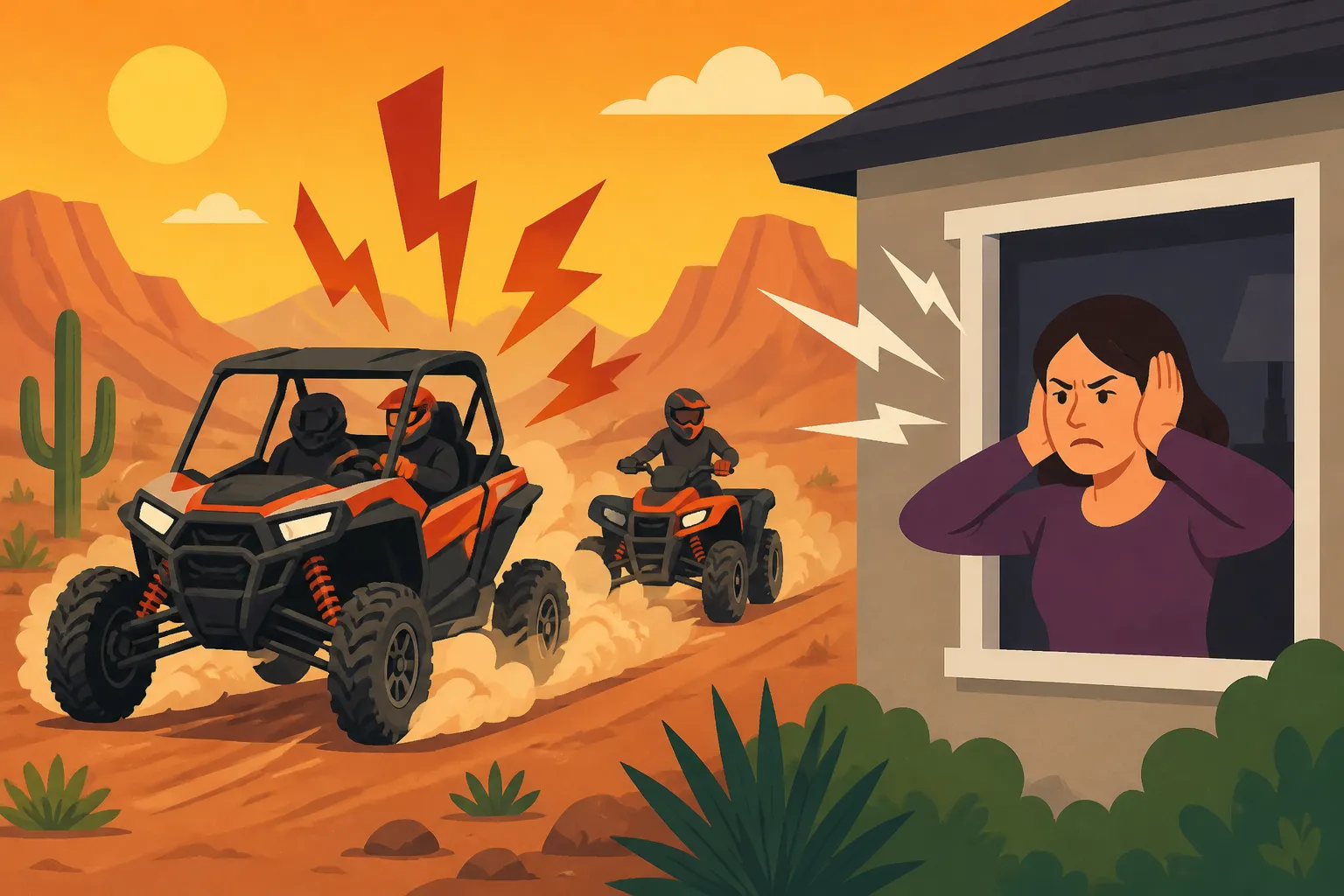
For many, the dream of desert living involves quiet mornings, starlit nights, and the sounds of nature. They’ve moved out here specifically to escape the hustle and bustle, the sirens, and the constant hum of city life. When that peace is broken by the continuous drone of an engine, the sudden rev of a throttle, or the collective noise of a group of side-by-sides, it can feel like a direct invasion of their chosen sanctuary. It's not always about outright malice; often, it's a fundamental difference in how people perceive and utilize their environment.
Riders, on the other hand, often see the desert as their playground, a place to de-stress and enjoy their passion. They might assume that because they are on public land or a designated route, they are free to ride as they please. The idea that their enjoyment is causing significant distress to others might not even cross their minds, or they might feel unfairly targeted. This clash of expectations is at the heart of most noise complaints, where neither side truly understands the other's perspective or the specific frustrations they face.
What Constitutes "Excessive Noise" in the Desert?
Defining "excessive noise" is tricky, especially in areas where sound travels far and wide due to the open landscape. What might be acceptable engine noise in a dedicated OHV park might be a major problem when it echoes through a quiet canyon community. Generally, excessive noise refers to sounds that are unusually loud, prolonged, or occur at times when peace and quiet are expected, such as early mornings, late evenings, or during typical rest hours.
It's not just the decibel level; it's also the duration and frequency. A single machine passing by quickly might not be a huge issue, but a group of riders continually looping near homes, or a machine idling for extended periods, can quickly become a significant nuisance. This can include loud exhaust systems, engine braking, constant revving, or even loud music from machines. The subjectivity of noise perception means that what one rider considers "normal" operating sound, a resident might find deeply disturbing, leading to calls to law enforcement.
Navigating Arizona's Noise Regulations for OHVs
The legal framework surrounding OHV noise in Arizona can feel a bit like a patchwork quilt, with different threads of rules stitched together by various governmental bodies. It’s rarely as simple as one blanket state law covering all situations. This complexity often frustrates both residents seeking relief and riders trying to be compliant.
State, County, and Local Ordinances: A Patchwork
Arizona doesn't have a single, statewide decibel limit specifically for off-highway vehicles in all contexts. Instead, noise regulation is often a layered approach. The Arizona Department of Transportation (ADOT) and the Arizona Game and Fish Department (AZGFD) oversee much of the OHV registration and decal requirements, but local jurisdictions — cities and counties — often have their own specific noise ordinances. These local rules are what usually come into play when residents file complaints.
For instance, a city ordinance might prohibit "unreasonable noise" or set specific quiet hours, particularly within residential zones. County ordinances might address similar issues on unincorporated land, often where desert communities are located. What's perfectly legal on a remote BLM road might be a violation if that road passes through a sensitive area or close to homes. Street-legal OHVs, which have obtained an MC plate, must generally adhere to the same muffler and noise limits as other motor vehicles on public roads, but off-highway-only machines often fall into a gray area once they leave designated OHV areas and approach developed land. Understanding this nuanced approach is crucial, as deputies or park rangers responding to a complaint will often be enforcing local codes in addition to any state statutes. [Arizona Muffler and Noise Limits] are a great example of the state-level expectations, but local enforcement can add further restrictions.
Practical Steps to Address Noise Concerns
Whether you're a resident tired of the noise or a rider wanting to avoid causing trouble, there are practical steps you can take to navigate these issues.
For residents, the first step is often documentation. Keep a log of incidents: date, time, duration, type of vehicle (if identifiable), and a brief description of the noise. This detailed record is far more effective than a vague complaint. Once documented, contact your local law enforcement agency – this could be the county sheriff's office if you're in an unincorporated area, or the city police department if you're within city limits. Explain the situation calmly and provide your documentation. Code enforcement departments in some cities also handle noise complaints. It's important to remember that law enforcement's ability to act depends on being able to witness the violation or having sufficient evidence to cite someone. Sometimes, simply talking to neighbors and presenting a united front can also be effective in demonstrating the community impact.
For riders, the best defense is a good offense: be proactive about being a good neighbor. Before you head out, especially if your route takes you near residential areas, check the local city or county ordinances for noise restrictions and quiet hours. Assume that sound carries further in the open desert, especially during cooler, still parts of the day like early mornings or evenings. Be mindful of your exhaust system; while performance is great, excessive noise can literally shut down access to trails. Consider modifications that reduce noise without sacrificing too much performance. If you're running a particularly loud setup, try to adjust your riding habits accordingly, keeping away from homes. Awareness and courtesy go a long way in preventing formal complaints.
How Riders Can Be Better Neighbors (and Avoid Complaints)
Being a responsible OHV rider in Arizona extends beyond just having your [Arizona's Annual OHV Decal Explained] and a [Arizona Certificate of Title for an Off-Highway Vehicle]. It also means being a respectful part of the larger desert community. Proactive measures, from equipment choices to riding habits, can significantly reduce the likelihood of noise complaints and help preserve access for everyone.
Equipment Choices: Quieter is Better
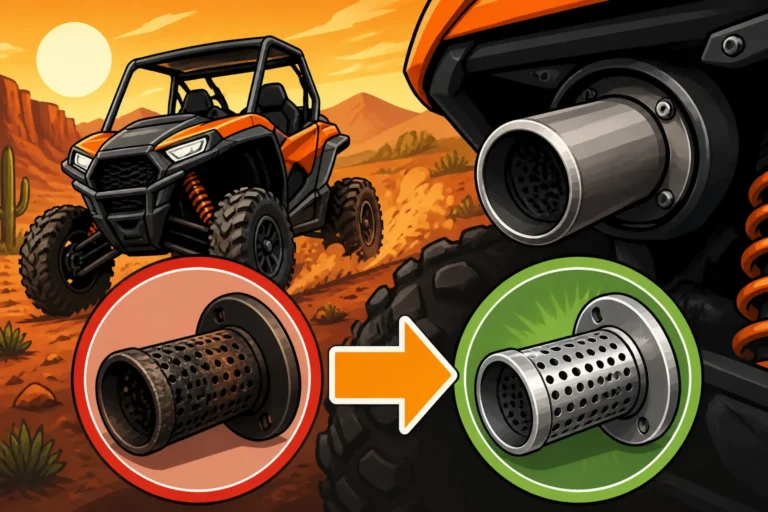
One of the most common sources of excessive OHV noise is the exhaust system. Many riders upgrade to aftermarket exhausts for increased horsepower, a different sound, or improved aesthetics. However, some aftermarket systems are significantly louder than stock and may not comply with noise regulations, especially when ridden near homes. While state laws require proper mufflers and spark arrestors, the exact sound level is often left to interpretation and local enforcement.
If you know you'll be riding near residential areas, investing in a quieter aftermarket exhaust or ensuring your current system meets sound limits is a responsible choice. Some brands, like SuperATV, offer a range of accessories for ATVs and UTVs, including exhaust components that balance performance with reduced sound output. They might offer options that are designed to be less intrusive without completely sacrificing the engine's power. Similarly, ensuring your spark arrestor is in good condition and not contributing to excessive noise is also important. [Aftermarket Exhaust and Arizona Fire Rules] are also a consideration, as modifications can impact compliance there too.
Riding Habits and Trail Etiquette
Beyond your equipment, your riding habits play a huge role in how your presence is perceived by desert residents. It's often not just the single loud burst, but the cumulative effect of constant noise that leads to frustration.
- Time of Day: Avoid riding very early in the morning or late at night, especially near residential areas. These are typically the quietest times, and OHV noise will be far more noticeable and disruptive.
- Speed and Proximity: Slow down significantly when you're passing near homes, businesses, or developed areas. The faster you go, the more engine and exhaust noise you generate, and the more dust you kick up. [Riding Slowly Past Desert Homes] is not just about safety; it's about courtesy.
- Idling and Staging: Avoid prolonged idling or staging (gathering before a ride) in residential zones or areas where noise will carry into neighborhoods. Engine noise, even at idle, can be annoying over time. Move to designated staging areas further away from homes before gathering your group and getting ready.
- Group Noise: When riding in a group, the collective noise of multiple machines can be amplified. Be mindful of conversations, music, and the overall sound level of your group, especially when passing through or near small desert towns. [Group Etiquette Through a Small Desert Town] suggests that riders should act as ambassadors for the sport.
- Respect Private Property: Never ride on private property without explicit permission. Not only is it trespassing, but it's a sure way to generate immediate and angry noise complaints. Always stick to established trails and public access routes.
Enforcement and Consequences of Noise Violations
No one wants to get a ticket or, worse, see their favorite riding areas closed down. Understanding how noise complaints are enforced and the potential consequences can help riders make better choices and encourage community harmony.
What Happens When a Complaint is Filed?
When a resident files a noise complaint about OHVs, it typically triggers a response from local law enforcement, such as the county sheriff's office or city police. A deputy or ranger will be dispatched to the area to investigate. Their primary goal is often to observe the alleged violation themselves. If they can directly witness an OHV operating in a manner that violates a specific noise ordinance or state statute, they can issue a warning or a citation.
For example, if riders are excessively revving engines during quiet hours in a residential zone, or if their machine is equipped with an illegal exhaust system, they could be stopped. The responding officer will usually ask for basic information, check registration and decal status – sometimes leading to discovery of other violations – and address the noise issue. [Deputy Enforcement on Arizona Back Roads] often involves officers specifically looking for compliance with various OHV laws, and noise is definitely on their radar.
The Bigger Picture: Preserving Access for Everyone
The direct consequence of a noise violation might be a fine, which can range from a warning to a significant monetary penalty. [Arizona Fines for Illegal Road Riding] and other infractions can quickly add up. However, the long-term consequences of persistent noise complaints are far more impactful and affect the entire OHV community.
When desert communities are continually plagued by OHV noise, residents often become vocal advocates for stricter regulations, increased enforcement, or even the closure of nearby trails and riding areas. This isn't just a hypothetical threat; it has happened in various locations across Arizona and the nation. Losing access to trails that have been ridden for years or having new, highly restrictive ordinances put in place is a devastating blow for riders. The OHV community thrives on access, and that access is directly tied to being responsible and respectful stewards of the land and good neighbors to the people who live near it. By being considerate of noise levels, riders actively contribute to the preservation of their riding privileges and ensure that the Arizona desert remains a welcoming place for both residents and adventurers. [Arizona Routes That Lost Motorized Access] are often a direct result of user conflicts, including noise. The positive reputation of OHV riders, supported by respectful behavior, is essential for securing future funding for [Arizona OHV Fund and Trail Projects] and maintaining public land access.
Here's a quick look at the perspectives and actions involved in managing OHV noise:
| Stakeholder | Primary Concern | Common Actions Leading to Complaints | Recommended Proactive Actions (Rider) | Recommended Reactive Actions (Resident) |
|---|---|---|---|---|
| Rider | Enjoyment, access, performance | Loud exhausts, riding during quiet hours, excessive revving, group noise near homes | Check local ordinances, use quieter equipment (e.g., compliant exhausts from SuperATV), slow down near residences, avoid early/late riding | N/A (focus on being proactive to avoid complaints) |
| Resident | Peace, quiet, property value | Incessant noise, feeling of intrusion, disruption of daily life | N/A (focus on addressing existing issues) | Document incidents (date, time, duration), contact local law enforcement/code enforcement, discuss with neighbors |
| Law Enforcement | Public safety, enforcing laws, community peace | Calls for service regarding noise, safety violations | Educate riders on local rules, visible presence, enforce noise ordinances as observed | Respond to complaints, investigate, issue warnings/citations if violations observed |
| OHV Community | Maintaining access, positive public perception | Negative publicity due to irresponsible rider behavior | Self-policing, promoting responsible riding etiquette, supporting quiet-ride events | N/A (focus on advocating for responsible access) |
Disclaimer
This article is for general informational purposes only and does not constitute professional advice. Laws, prices and regulations vary by location and change over time. Consult a qualified professional for guidance on your specific situation.