Sharing a Road With Ore Trucks
Riding Arizona's vast and rugged backcountry often means encountering more than just wildlife and fellow enthusiasts. For those venturing near mining operations, the sudden appearance of an enormous ore truck can be truly startling, creating immediate safety concerns on narrow, dusty roads. This guide aims to prepare you for these imposing encounters, offering practical strategies and essential safety tips to ensure you and your off-highway vehicle (OHV) navigate these shared industrial thoroughfares without incident.
Understanding the Giants of the Road: Ore Trucks and Their Environment
It's easy to feel intimidated when a behemoth of an ore truck looms into view, especially on a road that feels barely wide enough for your side-by-side. These aren't your typical delivery vehicles; they are specialized, heavy-duty machines built for a single purpose: moving massive quantities of rock and ore. Understanding their operational realities is the first step toward safe sharing of the road.
What Makes Ore Trucks So Challenging to Share the Road With?
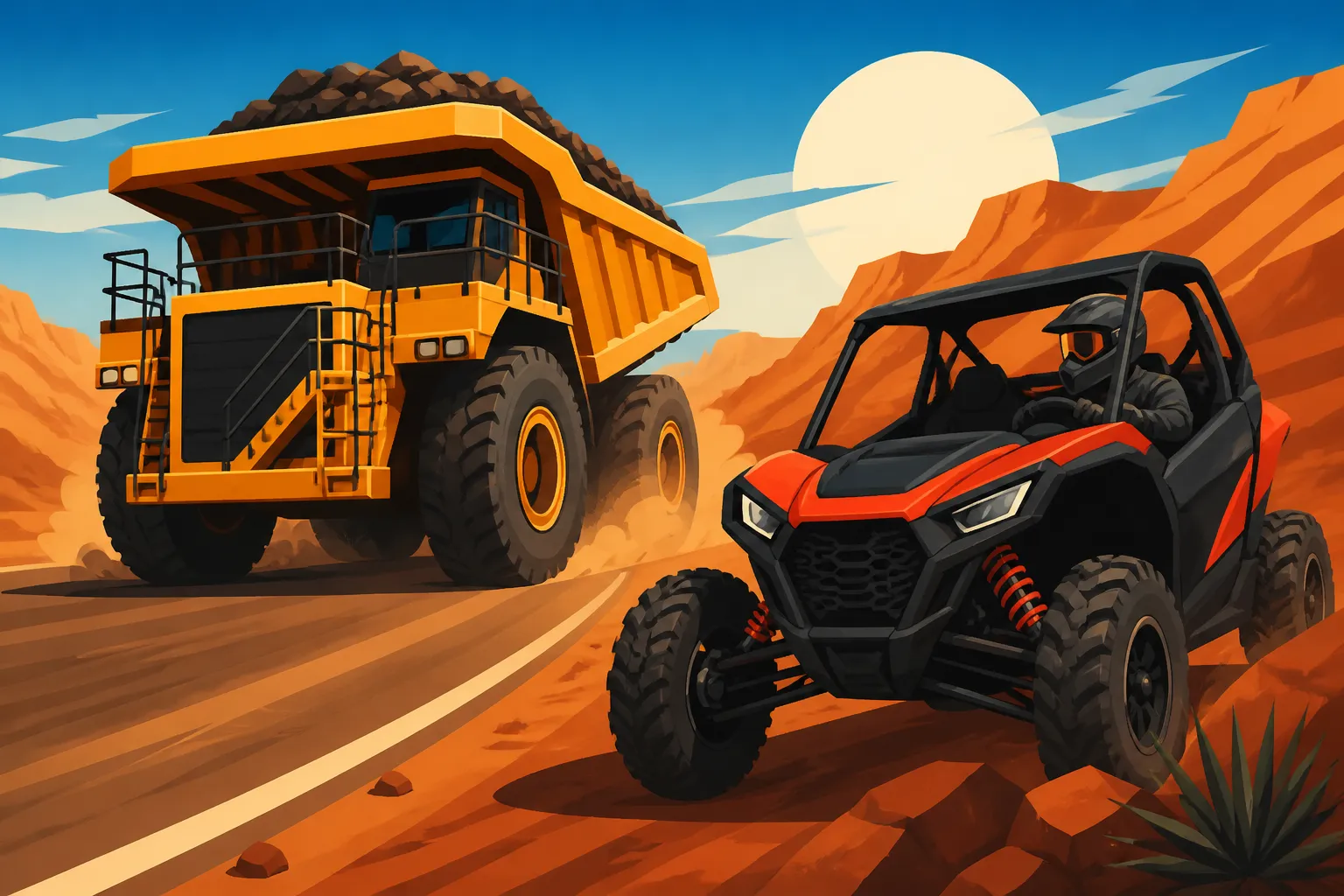
First off, these trucks are incredibly heavy, often weighing tens or even hundreds of thousands of pounds when fully loaded. This immense weight impacts everything from their acceleration and braking to their maneuverability. They can't stop on a dime, nor can they swerve quickly to avoid obstacles. What feels like a minor bump to an ore truck could be catastrophic for an ATV or UTV. Think about the roads around places like the Morenci Mine in Greenlee County or the vast operations near Bagdad; these aren't always perfectly paved, multi-lane highways. They are often dirt, gravel, or chip-seal, making dust and reduced traction constant issues, especially for smaller vehicles.
Another major challenge is their sheer size, which creates enormous blind spots. The driver, seated high up in the cab, has limited visibility directly around the truck, especially close to the wheels, along the sides, and immediately behind. They often rely on mirrors and sometimes even advanced camera systems, but these still have limitations. Imagine a driver peering over a mountain of ore in their rearview; it's just not going to happen. This means it's your responsibility as the rider to make sure you are seen and to assume that if you can't see the driver's eyes in their mirrors, they probably can't see you.
The Dynamics of Industrial Roadways
Many of the roads you might share with ore trucks are, at their heart, industrial arteries. They are designed for heavy vehicle traffic, often with speed limits that seem slow for a truck but fast for a rider encountering one. These roads may also have specific rules or right-of-way protocols that differ from typical public roads. For instance, sometimes the larger vehicle might be granted the right-of-way simply due to its limited maneuverability. [Speed Limits for Arizona Machines on Roads] might be posted, but the practical reality of these roads, coupled with truck traffic, demands a more cautious approach from OHV riders.
Dust is another massive factor. A single ore truck can kick up a blinding cloud of dust that hangs in the air for minutes, especially on dry, unpaved sections. Riding into or through one of these dust clouds is like driving into a thick fog; your visibility, and the truck driver's, goes to zero. This isn't just an annoyance; it's a serious hazard that can lead to collisions if not handled with extreme caution. Always remember that these truck drivers are often on a schedule, moving loads repeatedly throughout the day. While they are trained professionals, they are also focused on their job, and you need to ensure you don't become an unexpected impediment or, worse, an unseen hazard.
Strategies for Safe Encounters with Ore Trucks
When you're out exploring Arizona's diverse terrain, from the red rocks to the mining districts, encountering an ore truck demands a specific set of defensive riding skills. It’s not about asserting your right-of-way; it’s about ensuring everyone gets home safely.
Spotting and Approaching with Caution
The first rule of thumb is active scanning. Always be looking far down the road, especially around blind corners, crests of hills, and through washes. Listen for the distinct rumble of heavy machinery, which can often be heard before the truck is seen. If you see or hear an ore truck approaching from the opposite direction, the safest action is almost always to pull over to the side of the road, well in advance. Choose a spot that offers good visibility for both you and the truck driver, and where you can get completely off the main travel lane if possible.
If an ore truck is coming up behind you, pay attention. These drivers are often moving at a steady pace, and you don't want to surprise them by remaining directly in their path. Use your mirrors frequently, and if you see a truck gaining on you, find a safe spot to pull over. Signal your intention to pull off the road if you can, using a clear hand signal. Once you're pulled over, turn off your engine if you're comfortable doing so – it helps with communication if you need to shout, and it reduces engine noise, making it easier to hear the truck. Never assume the truck driver sees you; make yourself visible and predictable.
Navigating Dust and Poor Visibility
Dust clouds are perhaps the most insidious danger when sharing roads with ore trucks. When you encounter a truck, especially on a dirt or gravel road, a massive plume of dust will invariably follow or precede it. If a truck is coming towards you, and it kicks up a dust cloud, slow down dramatically, turn on all your lights, and if possible, pull completely off the road and wait for the dust to settle. Do not try to ride through a thick dust cloud; it's a recipe for disaster. Visibility can drop to zero in an instant, and you won't know if another vehicle is hidden within it.
If you are following an ore truck and it's kicking up dust, maintain a very significant following distance – far more than you would with a passenger car. The dust will obscure potholes, rocks, and even other vehicles that might be pulling out. It also reduces the truck driver's ability to see you in their mirrors. If you need to pass, ensure you have an incredibly clear stretch of road, signal clearly, and execute the pass as quickly and safely as possible, being mindful of kicking up your own dust cloud that could affect the truck driver or other riders behind you. Always remember that [Dust Behind You on a Desert Road] is a hazard for everyone, not just you.
Communication and Courtesy
While verbal communication might be impossible over the roar of an engine or through dusty windows, visual signals are crucial. A simple wave of acknowledgment as a truck passes, or pointing to the clear road ahead if you've pulled over for them, can go a long way. Many truck drivers appreciate the courtesy of OHV riders who understand the dynamics of their work environment. They’re professionals trying to do a job, and mutual respect makes the road safer for everyone.
Always assume the truck has the right of way, simply due to its size and limited maneuverability. This isn't a legal mandate everywhere, but it's a practical safety measure. If there’s any doubt, yield. Remember, losing an argument with a 100-ton truck isn't an option. Riding single file on a narrow road is also a smart group strategy when you anticipate truck traffic, as it minimizes your footprint and makes it easier for trucks to pass. [Single File on a Narrow Desert Road] isn't just good manners; it's a safety imperative.
Equipping Your Machine for Visibility and Safety
Sharing roads with massive ore trucks isn't just about how you ride; it's also about how well your machine is equipped to handle the challenges. Enhancing your visibility and having the right tools can make all the difference when safety is on the line.
Maximize Your Visibility
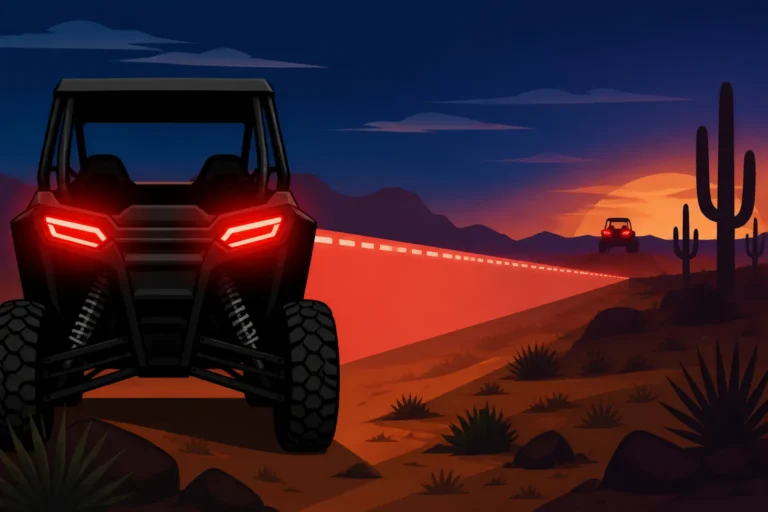
Making your OHV as visible as possible is paramount. This starts with proper lighting. Ensure your headlights, taillights, and brake lights are fully functional and clean. Consider adding auxiliary LED light bars, especially if you often ride at dawn, dusk, or in areas prone to dust clouds. Brands like SuperATV offer a wide range of robust lighting solutions, from powerful LED light bars to cube lights, which can significantly increase your forward and rearward visibility. The more light you project, the more likely a truck driver will spot you, especially when that sun glare is hitting their windshield just right.
Beyond lights, think about reflective materials. Adding reflective tape to your machine, helmet, or riding gear can make you stand out, particularly in low-light conditions or when a truck's headlights catch you. [Reflective Tape for a Dusk Desert Ride] is a small investment that can yield huge safety dividends. Another critical piece of equipment, especially in areas with heavy truck traffic or when riding in groups, is a whip flag. A tall, brightly colored whip flag makes your machine visible above terrain features, dust, and even over the top of a shorter side-by-side or ATV, giving truck drivers more warning of your presence. [Whip Flags on a Road Section of a Ride] are often seen in dune areas, but they're just as valuable on dusty mining roads.
Essential Safety Gear and Accessories
While not directly for visibility, having the right mirrors on your OHV is crucial for situational awareness, especially when monitoring traffic behind you. High-quality side mirrors and a rearview mirror can help you spot an approaching ore truck long before it's right on your bumper. SuperATV provides robust mirror options designed to withstand the rigors of off-road riding, offering clear, stable views even over bumpy terrain. A good horn, audible at a reasonable distance, can also be a vital communication tool if you need to alert a truck driver to your presence in an emergency.
Consider also equipping your machine with a winch. While you might not be winching out a large truck, getting yourself unstuck quickly and efficiently can prevent you from becoming an obstruction or hazard in an active haul road. SuperATV offers reliable winch systems that can be a lifesaver in unexpected situations. Always carry a well-stocked first-aid kit, plenty of water, and essential tools for basic repairs, as these industrial roads can be remote, and help may be far away. Remember, safety isn't just about avoiding a collision; it's about being prepared for anything the desert (or a mining road) throws at you.
Legal, Etiquette, and Community Considerations
Riding near active industrial sites means understanding not just the physical dangers, but also the unwritten rules and legal frameworks that govern these unique environments. It's about being a responsible recreational user on roads that are primarily economic lifelines.
Respecting Industrial Zones and Private Land
Many ore trucks operate on roads that may pass through or abut private mining land, or even through areas with mixed ownership, including state trust land. Always be aware of signage indicating private property, active industrial areas, or roads designated for specific uses. [Arizona OHV Rules for Ranch and Farm Machines] share some similarities, but mining operations often have even stricter rules due to safety and security concerns. Trespassing onto active mining property is not only dangerous but can lead to severe penalties. What appears to be an open trail might actually be a critical access road for heavy machinery.
Furthermore, some roads are maintained by the mining companies themselves, and while they might appear public, they serve a specific industrial purpose. These companies invest heavily in road maintenance for their operations. Riding responsibly, minimizing dust, and not contributing to road damage helps maintain good relations between the OHV community and industrial users. Always check local ordinances or land manager rules before venturing into areas known for mining activity, as specific permits or restrictions might apply that are not immediately obvious.
Emergency Preparedness and Reporting
Despite all precautions, accidents can happen. If you are involved in an incident with an ore truck, or if you witness one, knowing what to do is critical. First, ensure your immediate safety and the safety of any passengers. Move to a secure location if possible, and then contact emergency services immediately. Provide clear, concise information about your location, the nature of the incident, and any injuries. [Arizona OHV Accident Reporting] procedures are in place for a reason; follow them carefully.
Carrying a reliable communication device is essential, as cell service can be spotty in remote mining areas. A satellite messenger or a two-way radio might be a better option than relying solely on a cell phone. Having a pre-planned emergency contact and understanding the local terrain can also shave precious minutes off response times. Always be prepared to provide proof of ownership for your machine, such as your [Arizona MVD OHV Registration Explained] and any relevant insurance information, if law enforcement responds. Your ability to provide accurate information calmly can make a significant difference in the outcome.
Being a Good Neighbor on Shared Roads
Ultimately, sharing roads with ore trucks comes down to courtesy and common sense. These roads are often used by other community members as well, including ranch hands, local residents, and other recreationists. Your actions reflect on the entire OHV community. By riding defensively, respecting the working environment of the truck drivers, and adhering to all applicable rules and etiquette, you contribute to a positive perception of OHV use in Arizona's diverse landscapes. This proactive approach helps ensure that these shared roads remain open and safe for all users for years to come.
| Challenge with Ore Trucks | Rider Solution/Strategy | Essential Gear |
|---|---|---|
| Massive Blind Spots | Assume you are unseen; actively make eye contact in mirrors. | Bright LED lights (front/rear), high-contrast clothing, whip flag. |
| Long Braking Distances | Allow huge following distance; pull over well in advance for oncoming traffic. | Vigilance, defensive riding skills. |
| Wide Turning Radii | Give trucks ample room, especially on corners; stay clear of their path. | Situational awareness, wide mirrors. |
| Blinding Dust Clouds | Slow down, pull off the road, wait for dust to settle. | Full lighting package, dust mask/goggles. |
| Narrow Roadways | Pull over completely; ride single file; yield right-of-way. | Defensive riding, clear communication. |
| Industrial Pace | Be predictable; avoid sudden moves; don't impede flow if avoidable. | Respect, patience, good planning. |
Disclaimer
This article is for general informational purposes only and does not constitute professional advice. Laws, prices and regulations vary by location and change over time. Consult a qualified professional for guidance on your specific situation.