Arizona’s Stupid Motorist Law and Riders
Arizona's desert landscape can change in a heartbeat, especially during monsoon season, turning a bone-dry wash into a raging torrent. It's a terrifying sight, and far too often, riders make the dangerous and costly mistake of trying to cross these flooded areas. This guide dives deep into Arizona's "Stupid Motorist Law" and how it specifically impacts off-highway vehicle (OHV) riders, helping you understand the risks, the penalties, and how to avoid becoming a victim of its strict provisions.
What Exactly is Arizona's "Stupid Motorist Law"?
Arizona Revised Statutes (ARS) 28-910, famously (or infamously) known as the "Stupid Motorist Law," isn't officially called that in the statute books. Its colorful nickname was coined by emergency responders and the public, tired of witnessing preventable incidents and footing the bill for reckless behavior. The core of this law is simple: if you drive around or through a barricade, or into a flooded area that is clearly marked or otherwise obviously dangerous, and you get stuck, you become financially responsible for the cost of your own rescue.
This law was born out of frustration. Every monsoon season, countless drivers would attempt to navigate flooded washes or streets, often with disastrous results. These incidents not only put the lives of the motorists at risk but also diverted critical emergency resources – fire departments, swiftwater rescue teams, law enforcement – away from other genuine emergencies. The law aims to instill a sense of personal responsibility, serving as a powerful deterrent against such dangerous and avoidable actions. It's a testament to the state's commitment to public safety and judicious use of taxpayer money.
Beyond Just Cars: How it Applies to OHVs
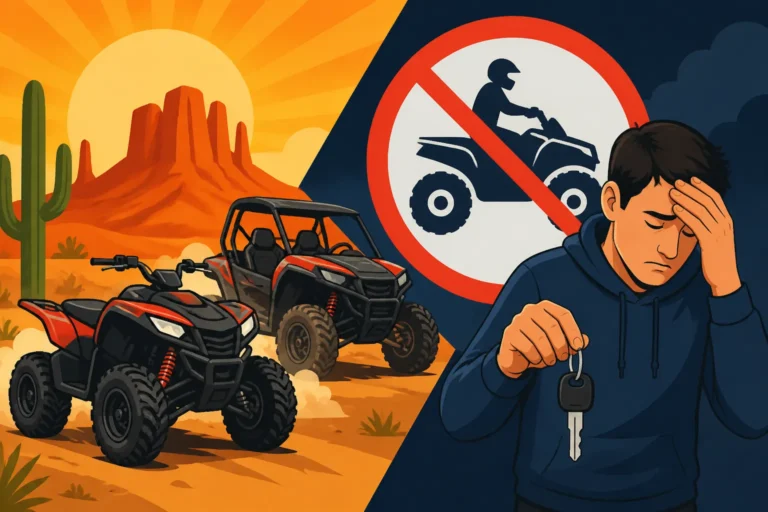
One of the most critical misunderstandings among off-highway vehicle riders is the assumption that this law doesn't apply to them. Perhaps because they are "off-road" or their machines are perceived as more capable, many believe they are somehow exempt from the stipulations of the "Stupid Motorist Law." This could not be further from the truth. The law makes no distinction between a passenger car stuck on a city street and a side-by-side submerged in a remote desert wash; if the conditions were clearly hazardous or marked, the law applies equally.
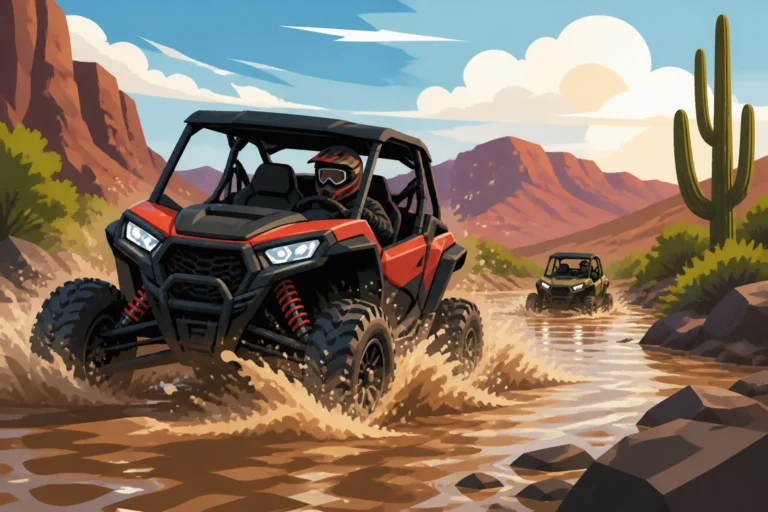
Many OHV riders, especially those with modified machines boasting enhanced suspension, larger tires, or heavy-duty components, might feel overconfident. They might think their Polaris RZR, Can-Am Maverick, or Honda Talon, perhaps outfitted with robust parts from SuperATV, can simply power through anything. However, the sheer, undeniable force of moving water, especially during a flash flood, can overcome any vehicle, regardless of its modifications or perceived capabilities. The law's focus is on the act of driving into a clearly dangerous situation, not the type of vehicle. A seemingly shallow wash can conceal unpredictable currents, hidden obstacles, and rapidly changing depths that can quickly turn an exciting adventure into a life-threatening ordeal.
The Financial Ramifications of Disregarding the Law
This is where the "Stupid Motorist Law" hits hard, transforming a moment of poor judgment into a potential financial catastrophe. The law explicitly allows the state or any political subdivision – be it a county, city, or fire district – to charge the individual for the full cost of the emergency response. This isn't a minor traffic ticket; it can easily escalate into tens of thousands of dollars. Imagine the resources deployed: a swiftwater rescue team, often involving multiple personnel, specialized boats, ropes, wetsuits, and potentially even aerial support like helicopters. Each hour of operation, every piece of equipment, and every responder's salary contributes to this staggering bill.
This financial burden extends beyond just the immediate rescue. If your OHV is damaged, lost, or completely destroyed in such an incident, your insurance policy might refuse to cover the damages. Many policies contain clauses that exclude coverage for losses incurred while breaking the law, engaging in reckless behavior, or intentionally putting yourself in harm's way. This means you could be left not only with a massive bill for the rescue but also responsible for replacing your expensive machine out of pocket. Such a financial hit can be absolutely devastating, far outweighing any perceived thrill or convenience of attempting to "make it through" a flooded area. It's a stark and sobering reminder that a moment of misjudgment can lead to lasting financial hardship, in addition to the very real physical dangers.
Common Scenarios Where OHV Riders Encounter Flooded Washes
Arizona's unique geography and climate create specific conditions that often lead to OHV riders encountering flooded washes. Understanding these common scenarios can help riders anticipate dangers and make safer choices.
Monsoon Season: The Biggest Culprit
Without a doubt, Arizona's monsoon season, which typically runs from June through September, is the most notorious period for flash floods. During these months, the desert experiences sudden, intense downpours that can drop inches of rain in a matter of minutes. What makes this particularly dangerous for OHV riders is the rapid transformation of seemingly benign dry washes into raging rivers. Even if the sky is clear and sunny where you are riding, a powerful storm brewing 20 miles away in the mountains can send a destructive wall of water rushing down a wash in a terrifyingly short amount of time.
Many popular [Arizona's 40,000 Miles of OHV Trail] crisscross countless washes that remain bone-dry for the majority of the year. This familiarity can breed a false sense of security. Riders often underestimate the speed and volume of water that can accumulate and flow in these washes. They might spot a distant cloudburst and believe they have ample time to cross, or they become so absorbed in the immediate trail ahead that they fail to notice rapidly rising water levels or the tell-tale sound of an approaching flood. The desert's hard-packed earth and sparse vegetation are not designed to absorb large quantities of water quickly, which only exacerbates the speed and power of flash floods. Awareness of these dynamics is crucial, as is understanding the phenomenon of [Monsoon Flooding Across an Arizona Road].
Unexpected Crossings and "Just a Little Bit of Water"
The deceptive nature of water is a major contributor to incidents involving flooded washes. Riders often encounter crossings where water is flowing, but it doesn't immediately appear deep or threatening. This leads to the dangerous "just a little bit of water" mentality, underestimating the power of even a small amount of moving water. A mere foot of fast-moving water, for instance, has enough force to sweep away a full-size SUV, let alone a lighter side-by-side or ATV. Beneath the muddy, churning surface, the wash bottom can be scoured out, revealing hidden drop-offs, treacherous sinkholes, or previously unseen debris like large rocks, tree trunks, or even pieces of metal.
These hidden dangers can instantly transform what looks like a manageable crossing into a perilous trap. Riders frequently get stuck when their machines become high-centered, submerged in an unexpected depression, or entangled in debris, leaving them stranded in rapidly rising and fast-moving water. Sometimes, riders are simply caught off guard, perhaps following a well-worn route, unaware that recent heavy rains have drastically altered a familiar crossing. The temptation to push through, especially if riding with a group or feeling pressured by time, can override common sense and directly lead to a situation where the "Stupid Motorist Law" is invoked. Understanding the risks associated with [Driving Through a Flooded Wash] is paramount for rider safety.
The Very Real Dangers of Riding Through Flooded Washes
Attempting to ride through flooded washes presents a myriad of serious dangers that extend far beyond simply getting stuck. These are life-threatening situations that demand the utmost caution and respect.
Hidden Debris and Erosion
What lies beneath the surface of floodwaters is often the greatest and most unpredictable danger. That muddy, opaque water can conceal a terrifying array of debris, from jagged rocks and sharp pieces of metal to entire tree trunks and even remnants of damaged vehicles. Any of these hidden objects can puncture tires, severely damage suspension components, or, more critically, cause an OHV to become immobilized or violently flip over. Even if your machine is equipped with heavy-duty skid plates or protective accessories, perhaps from SuperATV, these are designed for typical trail hazards, not the unpredictable and immense destructive power of a flash flood.
Furthermore, the force of moving water relentlessly erodes the wash bottom. This means that what was a relatively smooth, predictable crossing just hours or even minutes before can transform into a treacherous minefield of unexpected holes, trenches, and severe drop-offs. These carved-out depressions are invisible until it's too late, capable of swallowing a machine whole and leaving occupants stranded in rising, fast-moving water. This combination of hidden debris and dynamic erosion creates a situation where even the most experienced rider on the most robust machine is at a significant disadvantage, turning a simple crossing attempt into a roll of the dice with potentially fatal consequences.
Getting Swept Away: The Force of Flash Floods
This is perhaps the most terrifying and often fatal outcome of attempting to cross flooded washes. Water is incredibly heavy and possesses immense power, especially when moving swiftly. Even a few inches of fast-moving water can be enough to knock an adult off their feet, making it impossible to regain footing. A mere foot of rushing water has the capability to float an entire off-highway vehicle, transforming it from a controlled machine into a helpless, unguided vessel. Once you and your OHV are swept away, you are completely at the mercy of the current.
The dangers multiply rapidly: you can be dragged into culverts, become entangled in submerged debris, or be violently smashed against rocks, causing severe injuries or drowning. The Arizona desert, while beautiful, offers precious few handholds or safe havens once you are caught in such a torrent. Hypothermia can quickly become a serious risk, even in warm Arizona temperatures, if you are immersed for an extended period, particularly during cooler monsoon evenings or after sunset. The sheer speed and overwhelming force of a flash flood make escape nearly impossible once you are in its grip, underscoring why entering these waters is an absolute gamble with your life.
Rescue Efforts and the Costly Bill
When an OHV rider gets stuck or swept away in a flooded wash, it doesn't just put them in danger; it triggers a full-scale, often complex, and resource-intensive emergency response. Local fire departments, sheriff's deputies, and specialized search and rescue teams are immediately deployed, often putting their own lives at considerable risk to save yours. The equipment involved can be extensive, including multiple rescue vehicles, swiftwater boats, intricate rope systems, wetsuits, and in many severe cases, aerial support such as helicopters. The coordination of these efforts requires significant personnel, specialized training, and a substantial budget.
Under the provisions of Arizona's "Stupid Motorist Law," the individual who necessitated this rescue is directly billed for the entire cost of the operation. This isn't just a hypothetical fee; it's a very real financial consequence. The bill can encompass personnel hours for every responder, fuel for all vehicles and aircraft, depreciation on equipment, and even administrative overhead, potentially reaching into the tens of thousands of dollars. This staggering amount can be a devastating financial blow for individuals and families, far exceeding what most are prepared to pay. Beyond the financial impact, these preventable rescues divert vital resources that might be desperately needed for other, truly unavoidable emergencies elsewhere in the community. It's a stark reminder that a moment of recklessness can carry a crushing cost, both personally and publicly. For serious incidents, understanding [Arizona OHV Accident Reporting Rules] may also become necessary.
Avoiding the "Stupid Motorist" Label: Smart Riding Practices
To ensure your safety, protect your finances, and preserve emergency resources, adopting smart riding practices is essential, especially when dealing with Arizona's unpredictable weather.
Planning Your Route and Checking Conditions
Prevention is the cornerstone of responsible OHV riding, particularly during Arizona's monsoon season. Before every single ride, make it an absolute habit to meticulously check the weather forecast. This means not just for your immediate riding area, but also for any upstream regions that feed into the washes you plan to traverse. Use reliable, local weather apps, websites, and news sources to stay informed about any flood watches, warnings, or significant storm activity. If you spot dark clouds gathering in the distance, even if your current location is sunny, consider it a serious warning sign and be prepared to postpone or significantly alter your ride.
Familiarity with your route is also crucial. Utilize topographical maps or advanced GPS applications like onX Offroad to proactively identify all washes, low-lying areas, and potential flood zones along your planned path. Never rely solely on what a trail looked like last week or even yesterday, as conditions in the Arizona desert can change dramatically and rapidly. Always develop a "Plan B" route, or at the very least, an established exit strategy to reach high ground or a safe area if weather conditions unexpectedly deteriorate. Proactive planning and staying informed are your best defense against encountering dangerous floodwaters, and knowing how to begin [Checking Arizona Trail Status Before You Drive] is a critical first step.
Equipping Your Machine for Safety (and Not for Recklessness)
While no amount of equipment can render a flooded wash safe to cross, having the right gear can significantly aid in responsible riding and recovery in non-flood situations. Essential items include a robust winch, high-quality recovery straps, and an air compressor for on-the-go tire adjustments. Investing in durable, appropriate tires with excellent tread is also crucial for navigating challenging desert terrain. Communication is paramount; a reliable GPS device, a satellite messenger (such as an InReach or Zoleo), or even a two-way radio can be a lifesaver if you find yourself stranded in an area with no cell service, highlighting the importance of understanding [Cell Service in the Arizona Backcountry].
It's important to remember that modifications from reputable companies like SuperATV are designed to enhance your OHV's performance, durability, and capability for typical demanding terrain – not to defy the laws of nature or common sense when facing flash floods. While these upgrades are excellent for conquering rock gardens or deep sand, they do not make your machine invincible against the immense force of moving water. The spirit of the "Stupid Motorist Law" underscores that no vehicle, no matter how well-equipped or customized, is immune to the dangers of extreme natural conditions. The goal of equipping your machine should always be to enhance safety and capability for appropriate riding, not to enable reckless behavior.
When in Doubt, Turn Around or Wait It Out
This is the golden rule of desert riding, especially during monsoon season: if you encounter a wash with moving water, or if you see a barricade warning you of flooded conditions, do not attempt to cross it. Period. Even if other vehicles are attempting to cross, or if the water appears shallow, the risks are simply too high. Your life, your machine, and your financial well-being are not worth gambling against the unpredictable power of a flash flood.
The safest course of action is always to turn around and find an alternate route. If no alternate route is immediately available, or if you're already at a point of no return, seek the nearest high ground and wait for the water to recede. Flash floods in the Arizona desert, while incredibly powerful, often subside relatively quickly once the rain stops. Patience and extreme caution are your most valuable allies. There is absolutely no shame in turning back or waiting out a flood; the real shame, danger, and potential for crippling costs come from making a preventable mistake that leads to a rescue operation. Always ensure you carry sufficient supplies, particularly [How Much Water a Desert Ride Needs], and have a reliable means of communication if you become stranded on safe ground, but never, ever put yourself or your machine into harm's way by entering floodwaters.
| Practice | Safe Riding | Risky Behavior |
|---|---|---|
| Pre-Ride Check | Consult weather for ride area AND upstream; check warnings. | Rely on clear skies at trailhead; ignore distant clouds. |
| Wash Crossings | Avoid any wash with moving water; find alternate route. | "It's just a little water; my machine can handle it." |
| Emergency Prep | Carry water, communication device, recovery gear. | Assume you'll be fine; rely solely on others. |
| Route Knowledge | Study maps for wash locations and high ground. | Follow others blindly; stick to habit without checking. |
| Response to Flooding | Seek high ground; wait it out; turn back. | Attempt to push through; drive around barricades. |
| Machine Capability | Use aftermarket parts for intended terrain challenges. | Believe a modified OHV is immune to flood forces. |
| Cost Awareness | Understand potential rescue costs and legal penalties. | Ignore the law's financial and legal repercussions. |
Disclaimer
This article is for general informational purposes only and does not constitute professional advice. Laws, prices and regulations vary by location and change over time. Consult a qualified professional for guidance on your specific situation.