Driving Through a Flooded Wash
Navigating Arizona's vast and often unpredictable desert landscape on your ATV or UTV is an incredible experience, but it comes with its unique challenges. One of the most dangerous and commonly misunderstood situations riders face is encountering a flooded wash, especially during our intense monsoon season. It’s easy to underestimate the power of seemingly shallow water, and many riders have found themselves in serious trouble, facing not only significant damage to their machines but also legal and even life-threatening consequences. This guide is here to walk you through the real risks, legalities, and practical steps you need to consider before ever attempting to cross a flooded wash in the Arizona desert, helping you stay safe, legal, and ready for your next adventure.
Understanding Arizona's Monsoon Season and Wash Dangers
Arizona's monsoon season, roughly from June to September, brings with it a dramatic shift in weather patterns. What might start as a clear, sunny day can turn into a torrential downpour within minutes, often catching riders off guard. These storms, while vital for our ecosystem, transform dry desert washes into raging rivers, creating hazards that are far more treacherous than they appear.
The Unpredictable Nature of Desert Water
The biggest misconception about desert washes is that if it's not actively raining where you are, the wash will be dry or only slightly damp. This couldn't be further from the truth. A monsoon storm can drop inches of rain many miles upstream, sending a wall of water, mud, and debris rushing down a wash with little to no warning. This phenomenon, known as a flash flood, can turn a calm, sandy path into a torrent in a matter of seconds. The water is often murky, hiding rocks, logs, and even larger debris that can easily sweep away a machine or cause it to roll. The ground beneath the water can also be severely eroded, creating sudden drop-offs or soft, treacherous quicksand-like conditions that can trap even the most capable side-by-side. It’s a situation where the appearance of calm can be incredibly deceptive, lulling riders into a false sense of security.
Even if the water seems to be flowing slowly, its weight and momentum are immense. Just a few inches of moving water can knock a person off their feet, and a foot or two can float an ATV or UTV. Once your machine loses traction and begins to float, you lose all control, and you become a passenger in a very dangerous situation. This is why vigilance, especially during monsoon months, is absolutely critical. Always be aware of the weather not just where you are, but what's happening in the hills and mountains upstream. For more on this, check out [Monsoon Flooding Across an Arizona Road] and [Flash Flooding in a Desert Wash].
Legal Implications of Driving Through a Flooded Wash
Beyond the physical dangers, attempting to cross a flooded wash in Arizona can also carry significant legal repercussions. The state has a law specifically designed to deter people from entering flooded areas, often referred to as the "Stupid Motorist Law." This law isn't just a catchy name; it has real teeth. If you drive into a flooded area that has been barricaded or posted with a "Do Not Enter" sign, and you require rescue, you can be held liable for the costs of that rescue.
Imagine this: you're out riding, the skies open up, and a wash quickly fills. A deputy or local law enforcement has already put up temporary barriers or signs warning of floodwaters. You decide to try and make it through, thinking your ATV or UTV can handle it, only to get stuck or swept downstream. Emergency services, including sheriff's deputies, firefighters, and even search and rescue teams, will be dispatched to help you. These operations are incredibly expensive, involving personnel, specialized equipment, and significant time. Under Arizona law, you could receive a substantial bill for every dime spent on your rescue, on top of any citations for ignoring warnings. This law serves as a stark reminder that safety isn't just about your machine's capabilities; it's about respecting the power of nature and the warnings put in place to protect you and our first responders. For deeper insight into this, read [Arizona's Stupid Motorist Law and Riders].
Assessing the Risk Before You Cross
So, you're out on the trail, and you come to a wash that has water flowing through it. Your first instinct might be to just power through, especially if it doesn't look too deep. But this is where experience and a healthy dose of caution need to kick in. Taking a moment to truly assess the situation can be the difference between a minor inconvenience and a major disaster.
How to Gauge Water Depth and Current
The golden rule for any water crossing, especially in a desert wash, is: When in doubt, turn around. Never, ever attempt to cross water if you cannot clearly see the bottom. Murky water hides all manner of hazards – submerged rocks, sudden drop-offs, or even washed-out sections of the wash that are far deeper than the surface suggests. If the water is flowing rapidly, or if you see debris like branches or tumbleweeds being carried downstream, it's a clear signal to stop. The current is far stronger than it looks, and it can easily sweep your machine away, regardless of its weight or horsepower.
If the water appears shallow and relatively calm, and there are no official "Do Not Enter" warnings, you still need to be incredibly cautious. Use a stick or a long branch to probe the depth of the water ahead of you. Slowly walk the edge of the wash, observing how the water moves. Does it swirl around obstacles? Are there whitecaps or ripples that suggest a strong current? Pay attention to the banks of the wash – if they look heavily eroded or undercut, it's another sign of powerful recent flows, indicating unstable conditions. Look for a wider, shallower section if possible, and try to pick a path that minimizes your time in the deepest part. Even then, remember that the wash bed itself might be soft and uneven. Sometimes, the safest option is to wait for the water to recede, which can happen surprisingly quickly in the desert, or find an alternative route, even if it adds miles to your journey. It's simply not worth the risk to your safety or your machine.
Prepping Your Machine for a Water Crossing (If You Must)
If, after careful assessment, you decide a crossing is absolutely necessary and appears safe, there are some basic preparations you can take to minimize the risk of damage to your ATV or UTV. Keep in mind, these are for shallow, slow-moving water, not raging torrents. The first thing to consider is your machine's intake and exhaust. Water entering the engine's intake can cause catastrophic "hydro-lock," which can destroy an engine almost instantly. If your machine is equipped with a snorkel system, designed to raise the air intake above the waterline, that's a huge advantage. However, even with snorkels, there are limits.
Many aftermarket companies, like SuperATV, offer products designed to enhance water capability, such as snorkel kits, waterproof electrical connectors, and extended differential breathers. Extended breathers are crucial because they prevent water from being sucked into your differential and transmission housings as they cool down in the water, which can contaminate your gear oil and lead to expensive repairs. Before entering any water, ensure your drain plugs are secure and that any vulnerable electrical connections are as sealed as possible. Some riders apply dielectric grease to spark plug boots and other key electrical points. Remember, even with these modifications, no ATV or UTV is a submarine. There's always a risk when you push the limits of your machine, and the best preparation is often to avoid the crossing altogether if there's any doubt. Knowing your machine's capabilities, and more importantly, its limitations, is key.
Safely Navigating a Shallow Wash Crossing
Let's say you've done your due diligence: the water is shallow, the current is minimal, and you've decided to proceed. While it might seem straightforward, there are specific techniques that can help you cross safely and reduce the chances of getting stuck or damaging your machine. It's not about speed; it's about control and respect for the environment you're in.
Techniques for a Controlled Crossing
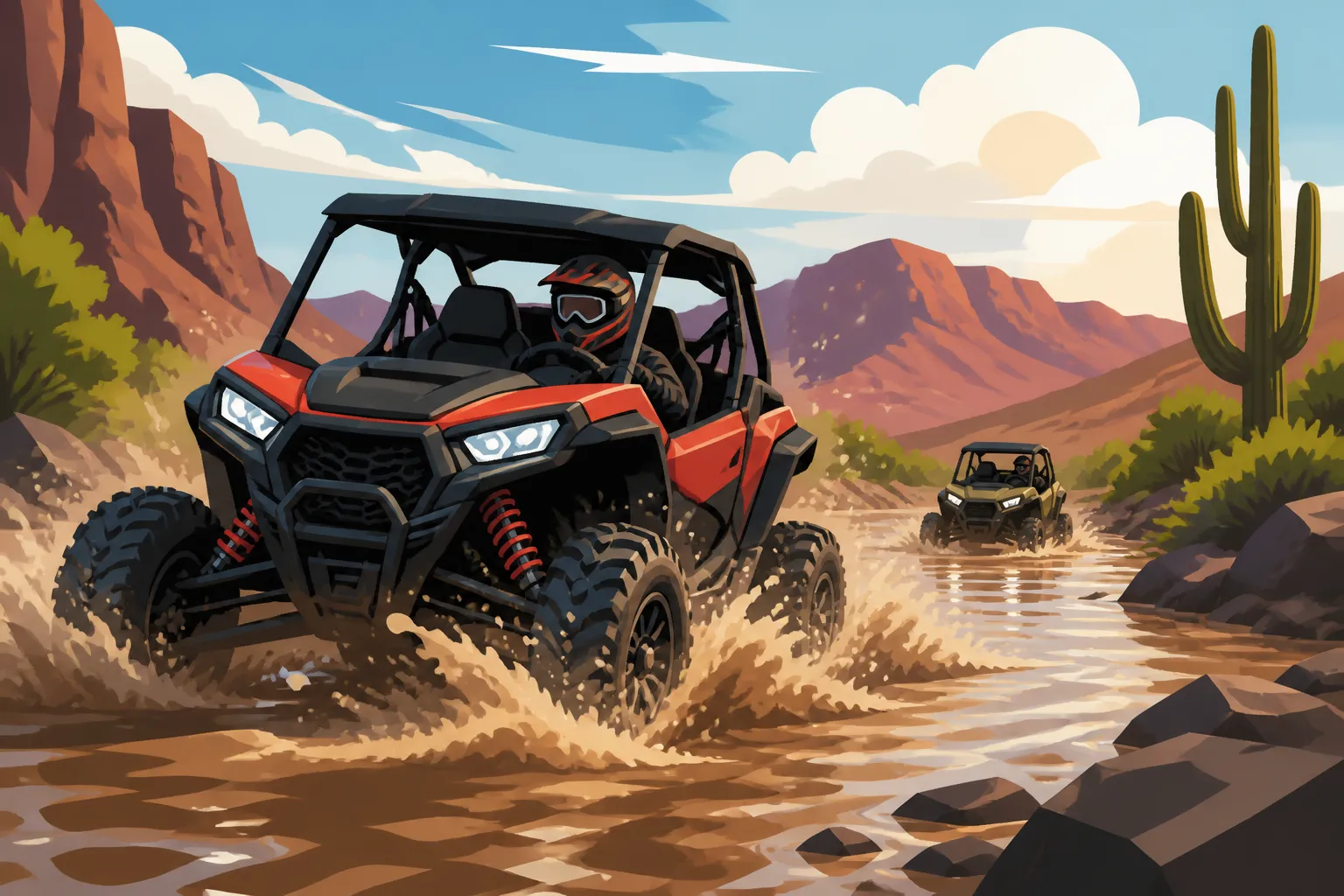
The key to a successful water crossing in your ATV or UTV is a slow, steady approach. Don't hit the water at high speed, as this can create a huge splash, drenching your engine and potentially getting water into vital components. Instead, approach the water slowly, entering at a controlled pace. Once you're in, maintain a steady, consistent throttle. The goal here is to create a "bow wave" in front of your machine. This small wave pushes water away from the front of your ATV or UTV, effectively creating a slightly lower water level for your intake and engine area. Keeping a consistent speed, typically in a low gear, helps maintain this bow wave and minimizes the chance of water splashing up and over the hood into critical areas.
Avoid sudden stops or rapid acceleration in the water, as this can disrupt your bow wave, cause you to lose traction, or even stall the engine. If your engine does stall while you're in the water, resist the urge to immediately try and restart it, especially if the exhaust pipe is submerged. Attempting to crank a hydro-locked engine can cause severe internal damage. If you have a winch, now is the time to use it, or carefully try to push the machine out of the water if it's safe to do so. Otherwise, it might be time to call for help, which could invoke the "Stupid Motorist Law" if you were warned not to enter the area. Always aim for the shortest, shallowest path across, and if riding with a group, go one machine at a time, allowing each rider to clear the crossing before the next one enters.
After the Crossing: What to Check
Once you've successfully navigated the water crossing, your work isn't quite done. Before you blast off down the trail, take a few moments to inspect your machine. The first and most critical check is your brakes. Water can significantly reduce braking performance by lubricating the brake pads and rotors. Drive slowly for a short distance, lightly applying the brakes repeatedly to generate friction and help dry them out. You'll likely feel them grab better as the water evaporates.
Next, check your air filter. Even if you maintained a bow wave, a fine spray or splash could have made its way into the airbox. A wet air filter needs to be replaced or thoroughly cleaned and dried, as a damp filter can restrict airflow and, worse, allow fine particles into your engine. While you're at it, visually inspect for any trapped debris, like sticks or mud, that might have lodged in your suspension components, radiator, or skid plates. Mud packed around moving parts can cause premature wear. Also, ensure your lights and any accessories are still functioning properly, as water can sometimes short out electrical connections. Finally, it's a good practice to check fluid levels (oil, coolant, brake fluid) and the condition of your differential and transmission oils if you suspect water may have entered through unvented breathers. If you're concerned about any potential damage from your ride, understanding [After a Crash on an Arizona Desert Road] can give you broader context on what steps to take, though hopefully, your wash crossing won't lead to such extremes.
The Absolute Don'ts of Flooded Washes
While we've discussed how to potentially cross a shallow wash, the reality is that often, the safest and smartest decision is simply not to cross at all. The desert, especially during monsoon season, demands respect, and pushing your luck can lead to severe consequences for yourself, your passengers, and your machine. Knowing when to definitively turn around is a crucial part of being a responsible rider.
When to Turn Around, No Questions Asked
There are certain conditions that should be non-negotiable red flags. If you encounter a wash with rapidly moving water, especially if it's turbulent, foamy, or carrying significant debris like logs, boulders, or large amounts of vegetation, do not attempt to cross. Even if the water appears to be only a foot deep, the force of a fast-moving current can be enough to sweep your ATV or UTV downstream, causing you to lose control, roll, or become trapped. This is particularly true for side-by-sides, which have a higher center of gravity and can be more susceptible to tipping in strong currents.
Another absolute "don't" is when you cannot determine the depth of the water. If the water is murky, brown, or otherwise opaque, you have no way of knowing what lies beneath the surface. It could be a shallow, firm bottom, or it could be a sudden, deep hole or quicksand-like silt that will instantly trap your machine. Any signs of erosion on the banks, or if the water level looks significantly higher than normal for the wash, should also prompt you to turn back. Finally, if there are any official signs, barricades, or warnings from local authorities or other riders, respect them. These warnings are put in place for your safety, often based on real-time observations of dangerous conditions. No trail ride is worth risking your life, your machine, or incurring hefty fines. Always remember the potential dangers of [Monsoon Flooding Across an Arizona Road] and [Flash Flooding in a Desert Wash].
The Costs and Consequences of Misjudgment
The consequences of misjudging a flooded wash crossing can range from minor inconvenience to catastrophic. On the machine side, water ingestion (hydro-lock) can completely destroy your engine, leading to thousands of dollars in repairs or a total loss. Electrical systems are highly vulnerable; water can short out components, corrode wiring, and cause intermittent issues that are incredibly difficult to diagnose and fix. Your differential and transmission fluids can become contaminated, leading to accelerated wear and eventual failure of expensive drivetrain components. Aftermarket parts from companies like SuperATV, while robust, still have limits against the sheer force and corrosive nature of floodwaters.
Beyond machine damage, there are personal and financial tolls. Getting stuck or swept away will likely require a rescue, which, as discussed, could result in you being billed for the entire operation under Arizona's "Stupid Motorist Law." You could also face fines for ignoring warning signs or for reckless operation, which can add up quickly. For example, if you're riding in an area not permitted, you might get additional [Arizona Fines for Illegal Road Riding]. More importantly, there's the risk of personal injury or even death. Being swept away in a flash flood is an incredibly dangerous situation, and people lose their lives in Arizona's washes every monsoon season. Don't be another statistic. Always prioritize safety, and if in doubt, choose the alternative route or wait it out.
Here's a quick look at the do's and don'ts when facing a flooded wash:
| Action | Do | Don't |
|---|---|---|
| Assessment | Probe depth with a stick, observe current, look for clear bottom | Drive into murky water, ignore official warnings, assume it's shallow |
| Preparation | Check for snorkel/breather extensions, secure loose items | Rely solely on factory sealing, rush the pre-check |
| Crossing Technique | Enter slowly, maintain steady throttle, create a bow wave | Hit water at high speed, stop abruptly, attempt rapid acceleration |
| After Crossing | Test brakes, check air filter, inspect for debris | Ignore post-crossing checks, assume no damage occurred |
| Safety First | Turn around if conditions are risky, wait for water to recede | Underestimate current strength, risk a rescue, ignore the "Stupid Motorist Law" |
When it comes to riding in Arizona, especially during the wetter months, staying informed and prioritizing safety above all else is paramount. The allure of crossing a wash can be strong, but the potential risks often far outweigh any perceived reward. Always respect the power of the desert, and make smart, cautious decisions to ensure you and your machine can continue to enjoy the incredible trails Arizona has to offer for years to come. Remember, a dry trail is always better than a submerged machine or a dangerous situation.
Disclaimer
This article is for general informational purposes only and does not constitute professional advice. Laws, prices and regulations vary by location and change over time. Consult a qualified professional for guidance on your specific situation.