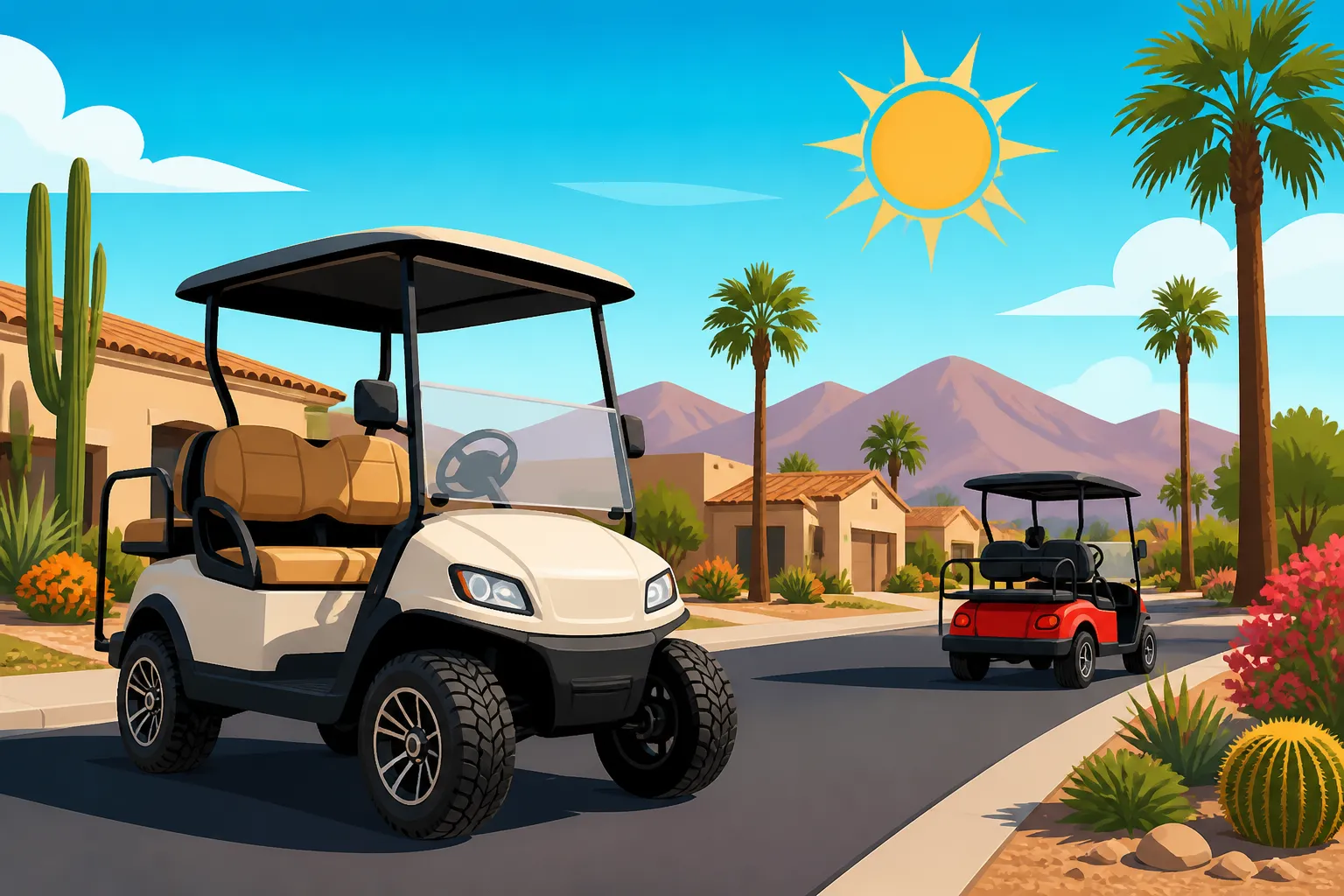
Golf Carts on a Sun City Street
There's nothing quite like the convenience of a golf cart, especially when you live in a community like Sun City, where the slower pace of life and accessible amenities practically invite you to ditch the car. But if you’ve ever wondered about taking your trusty golf cart beyond the greens or private community roads and onto the public streets, you're not alone. The rules can feel like a tangled desert vine, and it's easy to feel confused about what's legal and what's not. This guide is here to untangle those rules, explaining exactly how golf carts fit into Arizona's street-legal framework, especially within planned communities like Sun City.
The Unique World of Golf Carts in Arizona's Planned Communities
Sun City, with its sprawling golf courses, recreational centers, and interconnected neighborhoods, was practically designed with golf cart travel in mind. It's a fantastic perk for residents who want to zip to the grocery store, visit a neighbor, or head to the clubhouse without firing up a full-size vehicle. However, this convenience often comes with a layer of complexity when you start to consider state laws versus local community rules.
Why Sun City is Different for Golf Carts
Many communities across Arizona, particularly those with a strong retirement or resort focus, have embraced golf cart culture. Sun City is a prime example. These communities often have designated golf cart paths, lower speed limits, and an unspoken understanding among residents that golf carts are a primary mode of local transportation. The historical context here is important: these communities were often planned to facilitate this kind of localized, lower-speed travel.
However, the "golf cart friendly" nature of Sun City doesn't automatically mean that every street is open to every golf cart. While a community might have local ordinances that allow golf carts on certain streets, these local rules must still operate within the framework of Arizona state law. It's a delicate balance, and often, the key differentiator comes down to whether the road you're on is considered a private community road or a public street maintained by the county or state. On truly private roads within a gated community, the rules might be much more relaxed. But the moment you venture onto a public thoroughfare, even one winding through Sun City, you're subject to Arizona Revised Statutes. Understanding this distinction is crucial to avoid an unexpected interaction with law enforcement. [Arizona Rules for a Golf Cart in a Community] covers some of these nuances.
Understanding the "Low-Speed Vehicle" (LSV) Distinction
The most important concept to grasp when considering golf carts on public Arizona streets is the "Low-Speed Vehicle" or LSV designation. In Arizona, a standard golf cart, as it rolls off the dealer's lot, is generally not considered street-legal for public roads. Why? Because it typically lacks the safety equipment required for operating alongside other motor vehicles.
Arizona law defines an LSV as a four-wheeled vehicle whose top speed is greater than 20 miles per hour but not greater than 25 miles per hour. This speed range is critical. If your golf cart can only go 15 mph, it doesn't fit the LSV definition, and if it can go over 25 mph, it's considered a different class of vehicle entirely, potentially falling into the Off-Highway Vehicle (OHV) or even full-sized vehicle categories, each with its own, often more stringent, requirements.
To be registered and operated on public roads, an LSV must also meet specific safety equipment standards, which we'll dive into shortly. Many golf cart owners in communities like Sun City choose to modify their carts to meet these LSV standards. This often involves upgrading various components to ensure compliance, transforming a basic golf cart into a street-legal conveyance capable of navigating public streets where allowed. Without these upgrades and proper registration, even a brief trip down a public street could result in a citation.
Making Your Golf Cart Street Legal for Sun City Roads
So, you love your golf cart, and you want to use it more freely on the public streets within Sun City. This means transforming it into a legitimate Low-Speed Vehicle (LSV) in the eyes of Arizona law. It’s not just about slapping on a license plate; there's a specific set of equipment your cart needs, along with the proper paperwork.
Essential Equipment for Arizona LSV Compliance
The Arizona Department of Transportation (ADOT) and the Motor Vehicle Division (MVD) have a clear list of what an LSV needs to be considered street-legal. Think of it like taking a driving test, but for your golf cart instead of a car. Each piece of equipment is designed to enhance safety and visibility for you and others on the road.
Here’s a breakdown of the mandatory equipment:
- Headlights: You'll need two, clearly visible from at least 500 feet, to illuminate the path ahead and make your presence known to oncoming traffic, especially at dusk or dawn.
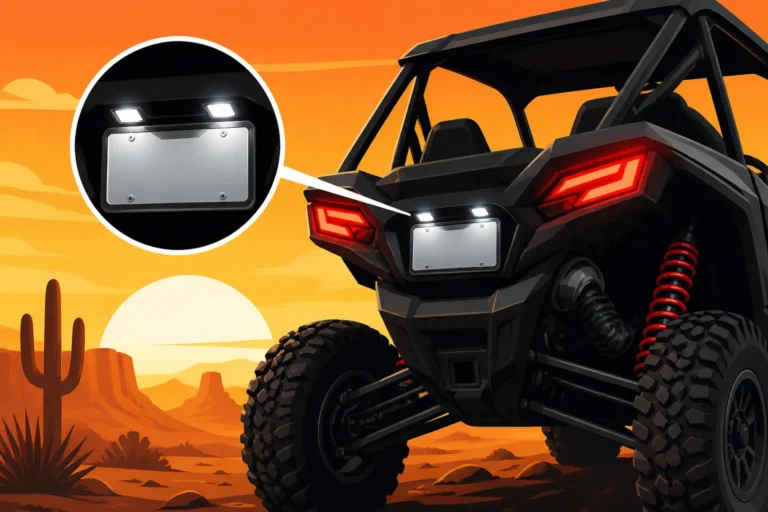
- Taillights: Two red taillights are required at the rear, visible from 500 feet. These are crucial for alerting drivers behind you.
- Brake Lights: These are separate from your taillights and must illuminate when you apply the brakes. They're a non-negotiable safety feature to signal when you're slowing or stopping.
- Turn Signal Lamps: Front and rear turn signals are essential for indicating your intentions to change lanes or turn. They need to be visible from 300 feet.
- Reflex Reflectors: Two red reflectors must be mounted at the rear, visible at night from all distances from 100 to 600 feet when illuminated by lawful low-beam headlights.
- Mirrors: You need at least one rearview mirror, either mounted on the driver's side or a center mirror, to provide a clear view of the road behind you. Many prefer both a center and side mirrors for maximum visibility.
- Windshield: A DOT-approved windshield is required. This isn't just for comfort; it's a safety feature to protect you from road debris.
- Seatbelts: Each seating position in an LSV must be equipped with a lap belt or a lap and shoulder belt. Safety first, always!
- Vehicle Identification Number (VIN): Your golf cart must have a VIN. If it doesn't, or if it's unclear, you'll need to go through a process to obtain one through the MVD, which typically involves an inspection. [Finding the VIN on a Desert-Worn Machine] can be helpful in locating this.
Many owners turn to aftermarket suppliers to get their carts up to snuff. Companies like SuperATV offer a wide range of accessories, from full lighting kits with turn signals and brake lights to DOT-approved windshields and mirrors, specifically designed for various golf cart makes and models. These kits can make the conversion process much smoother than sourcing individual parts.
Registration, Title, and Insurance for an LSV
Once your golf cart has all the necessary safety equipment and meets the speed requirements, it's time for the paperwork. This is where your LSV officially becomes street-legal.
First, you'll need to title your LSV. This establishes legal ownership. If you bought your golf cart new from a dealer as an LSV, they likely handled this. If you converted an existing golf cart, you'll need to apply for a title through the MVD. You'll need proof of ownership, like a bill of sale, and potentially an MVD inspection to verify the VIN and equipment. [Arizona Certificate of Title for an Off-Highway Vehicle] covers similar titling processes.
Next comes registration. Once titled, your LSV needs to be registered with the Arizona MVD. This process is very similar to registering a car or motorcycle. You'll receive a license plate, which for an LSV, will often be an "MC" (motorcycle) plate, as it's not a full-sized vehicle but still operates on roads. [MC Plates and Street-Legal Machines] provides more context on this plate type. The annual registration fee will apply.
Finally, insurance is non-negotiable. Just like any other motor vehicle on public roads, your LSV must carry the state-mandated minimum liability insurance coverage. This typically includes bodily injury and property damage coverage. Without proof of insurance, you cannot register your LSV, and driving uninsured on public roads is illegal and can lead to significant penalties. Make sure your insurance provider understands it's an LSV being used on public roads, as some standard golf cart policies might not cover this type of use. [Arizona Insurance Minimums for Road Riding] outlines the state's minimum requirements.
Navigating Speed Limits and Road Restrictions
Even with a fully street-legal LSV, there are still rules about where and how you can operate it in Sun City and across Arizona.
The primary restriction for LSVs is that they are generally not allowed on roads with a posted speed limit higher than 35 miles per hour. This means you can stick to the slower-speed neighborhood streets in Sun City, but you can't take your LSV onto a major arterial road or highway, even if it's within community boundaries, if that road has a higher speed limit. This is a crucial safety measure, as LSVs are designed for lower speeds and would pose a hazard on faster roads.
Additionally, while Sun City may have many golf cart-friendly areas, specific local ordinances can dictate where LSVs are permitted. Always check with the local Sun City homeowners' association or county regulations for any additional restrictions that might apply only within your immediate area. Some communities might have designated crossing points for LSVs across busier roads, or specific times of day when golf carts are allowed on certain routes. Knowing these local nuances, in addition to state law, will keep you riding safely and legally. [Arizona City Streets Open to OHVs] discusses broader access for different vehicle types.
General Arizona Road Rules for Golf Carts (and LSVs)
Once your golf cart is properly transformed into an LSV, titled, registered, and insured, you're ready to hit the road! But remember, you're now operating a motor vehicle on public streets, and with that comes responsibilities and adherence to all applicable traffic laws, just like driving a car.
Driver Licensing and Age Requirements
This is a point of common confusion for many golf cart owners. If you're operating an LSV on a public Arizona road, you must possess a valid driver's license. This isn't like driving a golf cart on a private course where a license might not be required. On public streets, even an LSV operator needs to be a licensed driver.
This also means that generally, operators must be at least 16 years old to obtain a standard Arizona driver's license. So, while your teenager might be a whiz behind the wheel on the golf course, they cannot legally drive an LSV on Sun City's public streets unless they hold a valid driver's license. There are specific rules for younger riders for different types of machines, but for LSVs on public roads, the driver's license rule applies. [Driver's License Rules for Arizona Road Riding] details these requirements more broadly.
Important Safety Considerations and Enforcement
Operating an LSV on public roads requires the same defensive driving skills and awareness you'd use in a full-sized car, perhaps even more so. LSVs are smaller, lighter, and generally less visible than cars, making them more vulnerable in traffic.
Here are some safety considerations:
- Visibility: Always assume other drivers don't see you. Use your turn signals well in advance, consider adding a bright flag to your cart, and wear visible clothing, especially at dusk or dawn.
- Following Traffic Laws: All traffic laws apply – stop signs, traffic lights, yielding to pedestrians, maintaining safe following distances, and so on. Don't assume that because it's a golf cart, you're exempt from these rules.
- Passengers: Ensure all passengers are seated properly and using seatbelts. Overloading your LSV can affect its handling and stability.
- Distractions: Avoid distracted driving. No texting, no fiddling with navigation, and keep your full attention on the road.
Local law enforcement in areas like Sun City do enforce these rules. Officers are trained to spot violations, whether it's an unlicensed driver, an un-equipped golf cart on a public street, or an LSV speeding in a restricted area. The penalties for operating an illegal or unsafe golf cart can range from citations and fines to having your vehicle impounded. [Arizona Fines for Illegal Road Riding] can be substantial, and repeated offenses or reckless behavior can even lead to [Arizona Penalties for Reckless Riding]. It's always better to be safe, compliant, and informed than to risk a ticket or, worse, an accident.
Exemptions and Specific Scenarios
The world of golf carts and public roads can get a little murky because there are often specific scenarios or types of property where the rules change. It’s vital to distinguish between genuinely private areas and public thoroughfares.
Private Property vs. Public Roads
This is perhaps the biggest misconception. Many golf cart owners assume that because they're in a "golf cart community," all roads are fair game. However, a significant distinction lies between private property and public roads.
- Private Property: This includes golf course paths, internal roads within a private, gated community (where the roads are maintained by the HOA and not by the city or county), and your own driveway or yard. On these types of private lands, the strict Arizona LSV laws generally do not apply. You typically wouldn't need a driver's license, registration, or LSV equipment, as long as the property owner permits the use. [Do You Need a Decal on Private Arizona Land?] clarifies the lack of decal requirements for private land, and the same principle often extends to other vehicle regulations in purely private settings.
- Public Roads: These are streets and highways maintained by a city, county, or the state, even if they run through the heart of Sun City. The moment you cross onto one of these public roads, your golf cart (unless it's a properly equipped and registered LSV) is subject to all state and local traffic laws. This is why knowing which roads are public versus private is so important. Sometimes, it's not immediately obvious, but checking local ordinances or community maps can provide clarity.
For example, many retirement communities have a mix of private, HOA-maintained roads and public roads that are still part of the broader municipal or county road system. You might be able to drive your standard golf cart on the former, but you'll need an LSV to legally drive on the latter.
Golf Carts on a Sun City Street
To help clarify the distinctions, let's look at a quick comparison of a standard golf cart versus a street-legal LSV specifically for riding on Sun City's public streets.
| Feature | Standard Golf Cart (Not LSV) | Street-Legal Low-Speed Vehicle (LSV) |
|---|---|---|
| Speed | Typically up to 20 MPH | 20-25 MPH (must meet this range) |
| Public Road Legal? | NO (only on private property or designated paths) | YES (on roads ≤ 35 MPH, in accordance with local laws) |
| Headlights | Often basic, sometimes none | Two DOT-compliant, visible 500 ft |
| Taillights/Brakes | Basic or none | Two red taillights and brake lights, visible 500 ft |
| Turn Signals | None | Front and rear, visible 300 ft |
| Mirrors | Optional | At least one rearview mirror |
| Windshield | Optional | DOT-approved windshield required |
| Seatbelts | Optional, often none | Lap or lap/shoulder belts for all seating positions |
| VIN | Sometimes none, or not easily accessible | Required for title/registration |
| Registration/Plate | Not required | Required (often MC plate) |
| Insurance | Often covered by homeowners (check policy) | State minimum liability required |
| Driver's License | Not required on private property | Required for public roads |
| Emissions Test | Not applicable | Not typically required for LSVs, unlike some full-size vehicles [Arizona Emissions Testing for a Street Machine] |
This table clearly illustrates the upgrades and legal requirements involved in transforming a golf cart into a vehicle that can truly roam the public streets of Sun City. It's an investment in both safety and compliance, ensuring you can enjoy the freedom your community offers without breaking any laws.
Ultimately, the desire to use a golf cart for everyday errands and social calls in a community like Sun City is entirely understandable and often a central part of the lifestyle. The key to doing so legally and safely on public streets is understanding that your golf cart must be reclassified and equipped as a Low-Speed Vehicle (LSV) according to Arizona state law. This means more than just speed; it involves specific safety equipment, proper titling, registration, and insurance. Once you've made these necessary upgrades and are clear on where your LSV can legally travel, you can truly embrace the golf cart-friendly spirit of Sun City, enjoying the convenience and camaraderie it offers, all while staying compliant with the rules of the road.
Disclaimer
This article is for general informational purposes only and does not constitute professional advice. Laws, prices and regulations vary by location and change over time. Consult a qualified professional for guidance on your specific situation.