Arizona Insurance Minimums for Road Riding
Navigating the ins and outs of vehicle insurance in Arizona can feel like trying to cross a flash-flooded wash – confusing and potentially dangerous if you don't know the rules. For those of us who love the thrill of an ATV or UTV and want the flexibility of making it street legal, understanding the exact insurance requirements is crucial. This comprehensive guide will cut through the confusion, helping you understand the minimum liability coverage needed for road riding in Arizona and why it's so much more than just a piece of paper.
The Basics of Arizona OHV Insurance: On-Road vs. Off-Road
It's easy to assume that because your machine has an OHV decal, all its legal bases are covered. While that decal is absolutely essential for hitting our incredible desert trails, it doesn't automatically mean you're insured for every scenario, especially when you venture onto paved roads. The distinction between purely off-road use and street-legal operation is where most riders get tripped up, and it's vital to get it right to avoid hefty penalties and financial exposure.
Why "Off-Highway" Doesn't Always Mean "No Insurance"
When you get your [Arizona's Annual OHV Decal Explained], you're primarily paying into a fund that helps maintain trails, manage resources, and promote safe riding across the state. It grants you legal access to millions of acres of public land for recreation. However, that decal does not provide any form of liability or collision insurance for your machine. This means that if you're out on a designated trail and you accidentally collide with another rider, or perhaps roll your side-by-side, any damage to your machine or injuries to yourself would typically not be covered without a separate policy.
Many riders mistakenly believe that since they're "off-highway," they're exempt from insurance concerns. While Arizona doesn't mandate liability insurance for purely off-road machines that are never driven on public roads (even briefly), the financial risks remain significant. Imagine a scenario where you're riding with friends, and your machine unexpectedly veers, causing damage to a new, expensive side-by-side. Without insurance, you'd be personally responsible for the repair costs, which can easily run into the tens of thousands of dollars. Having some level of coverage, even for off-road-only use, is a wise decision for any serious rider.
The Line Between OHV and Street-Legal Vehicle
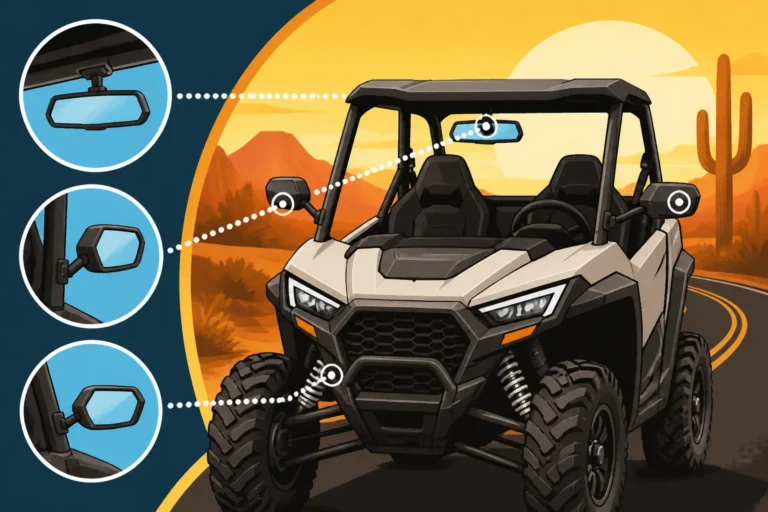
The moment you decide to make your ATV or UTV street legal in Arizona, the rules of the game change dramatically. Your machine transitions from being solely an "off-highway vehicle" to being recognized as a "motor vehicle" for the purposes of operating on public roads. This usually means obtaining an MC (Motorcycle) or RV (Recreational Vehicle) license plate, depending on your machine's weight and intended use. You can learn more about [Why Arizona Plates Read MC or RV] to understand the distinction. To get one of these plates, your machine must meet a series of specific requirements, including headlights, taillights, brake lights, a horn, mirrors, and often a windshield. Modifications using parts from trusted brands like SuperATV can help achieve these requirements.
Once your machine has successfully navigated the inspection process and received its proper street-legal registration and plate, it's subject to the same laws as any other vehicle on the road—be it a car, truck, or motorcycle. This includes Arizona's financial responsibility laws, which unequivocally mandate minimum liability insurance. The convenience of being able to legally ride from your home to a trailhead, or cruise through a small trail town, comes with the responsibility of ensuring you're properly insured. Without this crucial step, you're not just risking a ticket; you're risking your entire financial future if an accident occurs on a public road.
Arizona's Financial Responsibility Law and OHVs
Arizona takes its financial responsibility laws very seriously, and rightfully so. The goal is to ensure that anyone operating a motor vehicle on public roads can cover the costs of damages or injuries they might cause to others. For off-highway vehicles that have been modified and registered for street use, this isn't an option; it's a non-negotiable requirement. Ignoring it can lead to severe consequences, not just legally but financially as well.
What "Financial Responsibility" Means for Your Side-by-Side
In Arizona, demonstrating "financial responsibility" means proving you have the means to pay for damages or injuries if you're at fault in a traffic accident. While there are a few ways to technically meet this requirement (like posting a bond or depositing cash with the state treasurer), the vast majority of drivers, including those with street-legal OHVs, do so by purchasing liability insurance. This insurance isn't about protecting your machine or your medical bills; it's specifically designed to protect other people and their property from harm you might cause.
When you're out on an Arizona road with your street-legal UTV, you're sharing that space with sedans, pickups, commercial vehicles, and motorcycles. The potential for a serious accident is real, and the costs associated with medical treatment, vehicle repairs, or legal fees can quickly skyrocket. Having the right liability coverage ensures that if you, for instance, accidentally run a stop sign in your side-by-side and cause a collision with a family car, the insurance company will step in to cover the damages to the other vehicle and the medical expenses of the occupants, up to your policy limits. It's a critical safety net for everyone on the road.
The Minimum Coverage Amounts Explained (25/50/15)
Arizona's minimum liability insurance requirements, often referred to as "25/50/15," are the absolute lowest amounts of coverage you must carry to legally operate a motor vehicle, including your street-legal OHV, on public roads. Let's break down what these numbers actually mean:
- $25,000 for Bodily Injury Liability per Person: This means your insurance will pay up to $25,000 for the medical expenses, lost wages, and pain and suffering of a single individual injured in an accident where you are found at fault. So, if you hit another vehicle and one person in that car is injured, your policy would cover their costs up to this amount.
- $50,000 for Bodily Injury Liability per Accident: This is the maximum amount your insurance will pay for all bodily injuries sustained by all parties in a single accident where you are at fault, regardless of how many people are hurt. If two people are injured, each claiming $30,000 in damages, your policy would pay out a total of $50,000, leaving you personally responsible for the remaining $10,000.
- $15,000 for Property Damage Liability per Accident: This is the maximum your insurance will pay for damage to other people's property (like their car, a fence, or a utility pole) in an accident where you are at fault. If you total a new truck that's worth $60,000, your policy will only cover $15,000 of that, leaving you on the hook for the other $45,000.
It's crucial to understand that these figures are minimums, and in today's world of escalating medical costs and vehicle repair prices, they are often woefully inadequate for serious accidents. Many seasoned riders and insurance professionals will advise you to carry much higher limits to truly protect your assets. Relying solely on these minimums leaves you vulnerable to potentially catastrophic out-of-pocket expenses if you're involved in a significant collision. This is the essence of [Arizona Insurance Minimums of 25/50/15].
Proving Your Coverage on Arizona Roads
Having the right insurance is one thing; being able to prove it when asked by a law enforcement officer is another. Just like with a regular car, you're legally required to have proof of your financial responsibility with you whenever you're operating your street-legal OHV on public roads. Failure to do so, even if you are insured, can lead to unnecessary hassle and citations.
Documents You Must Carry When Riding Street-Legal
Whenever you head out on your street-legal ATV or UTV, especially when you plan to be on any paved or maintained public road, you need to have immediate access to proof of insurance. This isn't a suggestion; it's a legal mandate. The most common and widely accepted form of proof is your insurance ID card. Many insurance providers now offer digital versions of these cards that you can display on your smartphone, which is perfectly acceptable in Arizona. However, it's always a good idea to have a physical card tucked away somewhere on your machine, just in case your phone battery dies or you're in an area with no signal.
In addition to your insurance ID card, some riders choose to carry a copy of their policy's declaration page. This document provides a detailed overview of your coverage, including policy numbers, effective dates, and the specific liability limits you carry. While not strictly required like the ID card, it can be helpful for quick reference or if there's any ambiguity about your coverage. Remember, when a law enforcement officer pulls you over and asks for your license, registration, and proof of insurance, they expect to see these documents promptly. Being unprepared can turn a simple stop into a more protracted and frustrating experience. It all falls under [Proving Coverage on an Arizona Road].
Consequences of Riding Without Proper Insurance
The state of Arizona has a clear message for drivers: if you're on public roads, you must be insured. This applies equally to your street-legal OHV. The penalties for operating without proper insurance are significant and can severely impact your ability to drive and even your financial stability. For a first offense, you could face substantial fines, a suspension of your driving privileges (which includes your ability to operate any motor vehicle, including your OHV), and your vehicle could even be impounded.
Imagine being pulled over in your side-by-side on your way to a popular trail, only to find out you've forgotten to renew your insurance or mistakenly thought your old policy still covered you. Not only would you be looking at an immediate citation, but you'd have to arrange for your machine to be towed from the roadside, pay impound fees, and then deal with the MVD to reinstate your driving privileges and resolve the fines. The financial burden and logistical nightmare can be immense. Furthermore, if you cause an accident while uninsured, you become personally liable for all damages and injuries. This could mean massive medical bills, repair costs for other vehicles, and potentially devastating lawsuits that could lead to wage garnishment or asset seizure. It's a risk simply not worth taking.
Beyond the Minimums: Recommended Coverage for OHV Riders
While meeting Arizona's 25/50/15 minimums is legally essential for street-legal OHVs, it's really just the bare minimum of protection. For most riders, especially given the unique risks and high costs associated with off-highway vehicles and their repairs, it's a strongly recommended practice to consider coverage options that go well beyond what the state legally requires. Protecting your investment and your personal finances means looking at a more robust policy.
Why Basic Liability Might Not Be Enough in the Desert
Think about the environment where many OHV accidents occur: rugged desert terrain, remote trails, and often high-speed maneuvers. These conditions inherently carry risks that differ significantly from typical road driving. Rolling your machine, hitting a rock or a tree, encountering unexpected washouts, or even colliding with wildlife are all distinct possibilities. Basic liability insurance, remember, only covers damages and injuries you inflict upon others. It does absolutely nothing to cover the cost of repairing or replacing your own prized side-by-side if you crash it, nor does it cover your own medical bills if you get hurt.
Consider a scenario: you're enjoying a fantastic ride on a challenging trail near the [Cinder Hills OHV Area], and you misjudge a turn, causing your UTV to roll. While no one else is involved, your machine sustains significant frame damage, a shattered windshield, and a broken suspension component. If you only carry the minimum liability, you'd be looking at a repair bill that could easily hit five figures, all coming straight out of your pocket. For many riders, that's a financial hit they can't absorb, effectively rendering their machine useless until they can save up for repairs. This is why a more comprehensive approach to insurance is critical for protecting your investment in your OHV.
Exploring Comprehensive and Collision for Your OHV
To truly protect your off-highway vehicle, especially if you've invested significant money into it (and perhaps even more on aftermarket upgrades from SuperATV), you'll want to explore comprehensive and collision coverage. These are the two policy components that directly protect your machine.
-
Comprehensive Coverage: This is your shield against non-collision incidents. Think of events like theft, vandalism, fire, natural disasters, or hitting an animal (which is a real concern in Arizona's wildlands). If your side-by-side is stolen from your driveway, or if a rogue dust storm causes debris to scratch and dent your machine, comprehensive coverage would step in to cover the repair or replacement costs, minus your deductible. It's especially valuable in Arizona where machines are often stored outdoors or exposed to harsh desert conditions that can lead to unexpected damage.
-
Collision Coverage: This coverage is designed to pay for the damage to your own OHV if you collide with another vehicle or object, regardless of who is at fault. This includes single-vehicle accidents, such as hitting a rock, sliding into a ditch, or the aforementioned rollover scenario on a challenging trail. If you're involved in an accident and your machine is damaged, collision coverage will help pay for the repairs or the actual cash value of your OHV if it's totaled, again, minus your deductible. For an expensive UTV, this can be the difference between getting back on the trail quickly and facing a monumental financial setback.
Additional Coverage Options for Peace of Mind
Beyond comprehensive and collision, there are several other types of coverage that can add significant layers of protection for Arizona OHV riders:
-
Uninsured/Underinsured Motorist (UM/UIM): This is a critically important coverage, especially in a state like Arizona where many drivers unfortunately operate without adequate insurance. If you're hit by an uninsured or underinsured driver while on a public road, UM/UIM can cover your medical expenses and damage to your machine that the at-fault driver's minimal or non-existent policy won't. Given the frequency of these incidents, it's a wise addition for any street-legal OHV.
-
Medical Payments (MedPay): Also known as personal injury protection (PIP) in some states, MedPay covers reasonable and necessary medical expenses for you and your passengers if you're injured in an accident, regardless of who was at fault. This can be incredibly valuable for covering deductibles, co-pays, or other out-of-pocket medical costs that might arise from an off-road or on-road injury sustained during a ride.
-
Accessory Coverage: If you've spent good money customizing your OHV with winches, light bars, upgraded suspension components, or a new sound system, your standard policy's comprehensive and collision coverage might not fully cover these additions. Many policies have limits on accessory coverage. An "accessory endorsement" or "custom parts and equipment" coverage can be added to ensure that all those valuable extras, perhaps high-quality parts from SuperATV, are fully protected in case of damage or theft.
-
Roadside Assistance/Towing: Breaking down on a remote desert trail or even a less-traveled county road can be a major headache. This optional coverage can be a lifesaver, covering the cost of towing your disabled OHV to the nearest repair shop. Given how far off the beaten path many riders venture, this can save you hundreds, if not thousands, in potential towing fees.
How OHV Insurance Differs from Car Insurance
While the financial responsibility laws for street-legal OHVs mirror those for cars, the actual insurance policies and the factors that influence them can be quite different. It's not a "one size fits all" situation, and understanding these distinctions is key to getting the right coverage. You can't just assume your existing auto policy will seamlessly extend to your newly street-legal side-by-side.
Specialized OHV Policies vs. Standard Auto Policies
One of the biggest misconceptions riders have is that their existing car insurance policy will automatically cover their ATV or UTV, especially once it's street legal. In most cases, this simply isn't true. Standard auto insurance policies are written specifically for automobiles and often contain exclusions for vehicles designed for off-road use, even if they are legally modified for street travel. Trying to force your OHV onto a regular auto policy might result in very limited coverage, or even a denied claim, leaving you completely exposed.
Instead, you need a specialized OHV, ATV, UTV, or powersports insurance policy. These policies are specifically designed to address the unique risks and uses associated with off-highway vehicles, whether they're ridden purely off-road or have been made street legal. Companies like Progressive, GEICO, Allstate, and others offer dedicated powersports insurance products. These policies are tailored to cover everything from the specific types of damage an OHV might incur (like rollover damage or damage from trail hazards) to liability while operating on unpaved roads and trails, in addition to the required street-legal coverage. It’s always best to seek out an insurer who understands the nuances of OHV riding in Arizona.
Factors Affecting Your OHV Insurance Premiums
Just like with car insurance, several factors go into determining the premium for your OHV policy. These can vary significantly, so it’s helpful to understand what impacts your rates:
- Type of Machine: Is it an ATV or a UTV/side-by-side? UTVs, especially larger, more powerful, or higher-value models, often have higher premiums due to their increased cost of repair, potential for more significant damage, and greater risk of causing substantial damage in an accident. Engine size also plays a role.
- Machine Value and Age: A brand new, high-performance Polaris RZR will cost more to insure than an older, lower-value Honda Foreman ATV. More expensive machines mean higher potential payouts for comprehensive and collision claims.
- Your Riding History: A clean driving record (including your regular driver's license record) with no accidents or violations will generally result in lower premiums. Conversely, a history of tickets or claims can significantly increase your rates.
- Storage Location: Where do you keep your OHV? A machine stored in a locked garage is typically seen as less risky than one consistently parked outdoors or in an unsecured area, which could lead to lower comprehensive rates.
- How Often You Ride: While not always a direct factor like mileage in a car, some insurers might inquire about your estimated usage.
- Geographic Location: Rates can vary by zip code, reflecting local accident rates, theft rates, and even the availability of specific types of roads or trails.
- Rider Age and Experience: Younger, less experienced riders often face higher premiums due to statistical risk factors.
- Safety Features/Modifications: Some safety features (like certain roll cages or GPS tracking devices) might offer discounts, while performance-enhancing modifications (especially those not factory-installed, even quality ones from SuperATV) could potentially increase risk or require special accessory coverage, influencing your premium.
Here's a simple comparison table of common factors:
| Factor | Impact on Premiums (Generally) | Notes |
|---|---|---|
| Machine Type | UTVs > ATVs | Larger, more powerful, higher value often means higher premiums. |
| Machine Value | Higher Value = Higher Premium | More expensive to replace or repair after a claim. |
| Riding Record | Clean Record = Lower Premium | Fewer accidents/tickets demonstrate lower risk. |
| Storage (Secured) | Secured = Lower Premium | Garage storage reduces theft/vandalism risk. |
| Coverage Limits | Higher Limits = Higher Premium | More protection for you means more potential payout for insurer. |
| Deductibles | Higher Deductible = Lower Premium | You pay more out-of-pocket, insurer pays less, so they charge less. |
| Modifications | Significant Mods = Higher Premium | Especially performance mods or those requiring accessory coverage. |
| Rider Age | Younger Riders = Higher Premium | Statistically higher risk of accidents. |
Understanding these factors can help you discuss your needs more effectively with an insurance agent and find ways to potentially lower your rates while still getting adequate coverage.
Getting an OHV Insurance Quote in Arizona
Securing the right insurance for your street-legal OHV doesn't have to be a daunting task. With a little preparation and a clear understanding of what you need, you can navigate the process efficiently. The key is to gather all the necessary information beforehand and not be afraid to ask questions to ensure you're getting comprehensive protection.
Information You'll Need to Provide
When you call an insurance provider or fill out an online quote form for your street-legal ATV or UTV, they'll need quite a bit of detail to accurately assess your risk and provide a personalized quote. Having this information ready will streamline the process:
- Your Personal Information: This includes your full name, date of birth, address, and driver's license number. They will likely check your driving record for any accidents or violations.
- OHV Details: Be ready with the Vehicle Identification Number (VIN) for your machine, along with its make, model, year, and engine size. The VIN is paramount for identification.
- Usage Information: How often do you plan to ride your OHV on public roads versus off-road? Where do you typically ride (e.g., desert trails, mountain roads, city streets in trail towns)?
- Storage Location: Where is your OHV stored when not in use? A locked garage, a shed, or out in the open?
- Modifications and Accessories: This is crucial. If you've added aftermarket parts that increase the value or performance of your machine—such as lift kits, larger tires, custom roll cages, upgraded suspension, winches, light bars, or audio systems—you need to disclose these. Be specific, especially if you've invested in products from companies like SuperATV. These additions impact the machine's value and potential repair costs.
- Desired Coverage Limits and Deductibles: You'll need to specify if you want just the minimum [Arizona Liability Minimums for Street-Legal Machines] (25/50/15) or higher limits. Also, consider your preferred deductibles for comprehensive and collision coverage. A higher deductible will typically lower your premium, but means more out-of-pocket if you make a claim.
Being upfront and accurate with all this information is vital. Misrepresenting details could lead to issues with claims down the line, potentially invalidating your policy.
Comparing Quotes and Understanding Your Policy
Once you've provided your information, it's highly recommended that you obtain quotes from several different insurance providers. Don't just go with the first quote you receive. Different companies specialize in different areas, and their underwriting criteria can vary significantly, leading to different pricing structures. Some companies might offer better rates or more comprehensive coverage for specific types of OHVs or rider profiles.
When comparing quotes, don't just look at the bottom line premium. Dive into the details:
- Check the coverage limits: Are they all providing the same liability limits? Are comprehensive and collision included? What are the deductibles?
- Read the fine print: Pay close attention to any exclusions or limitations, especially regarding off-road use, racing, or specific types of modifications. Some policies might have geographical restrictions or limits on how many days a year you can ride on public roads.
- Review accessory coverage: If you have custom parts, confirm how much coverage is included for them and if you need an additional endorsement.
- Ask about discounts: Inquire about potential discounts for things like multi-policy bundles (if you insure your car and OHV with the same company), safety courses, anti-theft devices, or even for being part of an OHV club.
Finally, once you select a policy, take the time to read the entire policy document thoroughly. Understand what's covered, what's excluded, and your responsibilities as the policyholder. If anything is unclear, call your agent and ask for clarification. It's much better to understand these details upfront than to be surprised and frustrated after an incident occurs.
Common Scenarios and Misconceptions for Arizona Riders
The world of OHV ownership and riding is full of unique situations and often-repeated myths, especially when it comes to insurance. Many riders make assumptions based on car insurance or anecdotal evidence, which can lead to significant gaps in coverage. Let's clear up some common misunderstandings that Arizona OHV enthusiasts often face.
"My Homeowners Policy Covers My Quad, Right?"
This is one of the most persistent and potentially dangerous misconceptions out there. Many people assume that because their ATV or UTV is stored at their home, their existing homeowners insurance policy will cover it for theft, damage, or, crucially, liability if an accident occurs. While a homeowners policy might offer very limited coverage for theft or fire damage to your OHV while it is on your property and not being operated, it almost universally does not provide liability coverage for accidents that happen when you're operating the machine, especially away from your property. This is a crucial distinction and something you should be aware of, as also explored in [Does a Homeowners Policy Reach Your Quad?].
Think about it: homeowners insurance is designed for your home and personal belongings, not for vehicles operated off your premises. If you're riding your quad down a county road (legally, with a street-legal setup) and cause an accident, your homeowners policy will almost certainly not step in to cover the bodily injury or property damage claims against you. You need a dedicated OHV insurance policy to cover those risks. Relying on homeowners insurance for your OHV's liability is a gamble that could cost you everything if you're involved in a serious accident.
What About Street-Legal Golf Carts and Low-Speed Vehicles?
Arizona's embrace of recreational vehicles extends beyond ATVs and UTVs. In many communities, you'll see golf carts and other Low-Speed Vehicles (LSVs) cruising on local streets. While they may not seem like traditional "off-highway vehicles," when they are modified and registered to operate on public roads, they generally fall under similar financial responsibility laws as street-legal OHVs. This means if you're driving a golf cart on a public road in a community like Sun City, it needs to be properly insured.
These vehicles often have specific requirements for registration, titling, and equipment (like headlights, taillights, seat belts, and speed limits) that differentiate them from traditional OHVs. However, the principle of liability insurance remains the same: if you're operating it on a public thoroughfare, you need to be able to cover damages or injuries you might cause. So, whether you're navigating the streets in a souped-up side-by-side or a neighborhood-friendly golf cart, if it has a license plate and is on an Arizona road, assume insurance is required. This directly relates to [Arizona Rules for a Golf Cart on a Street].
Renting an OHV in Arizona: Who Insures What?
Arizona is a popular destination for OHV recreation, and many visitors opt to rent machines from local outfitters. This brings up another common insurance question: who is responsible for coverage when you're riding a rented ATV or UTV? Generally, when you rent an OHV from a reputable company in Arizona, they will typically offer their own insurance or a damage waiver as part of the rental agreement. This might be mandatory, or an optional add-on that significantly reduces your financial liability for damage to the rental machine.
It's absolutely critical to understand the terms of this coverage before you hit the trail.
- Damage Waivers: These usually cover damage to the rental machine itself but often do not include liability for damages or injuries you cause to other people or property.
- Liability Coverage: Some rental companies may offer limited liability insurance, but it might not always meet the full spectrum of your needs.
- Your Personal Policy: While your personal OHV policy might offer some limited coverage for rentals, many policies have exclusions. Your credit card might offer rental car insurance benefits, but these very rarely extend to off-highway vehicles.
Before you sign the rental agreement, ask direct questions about what is covered: "What happens if I damage the machine?" "What if I hit another rider?" "What if I cause damage to public property?" Make sure you are comfortable with the level of protection provided, or consider if you need to purchase additional short-term coverage. This is a vital consideration covered in [Renting a Side-by-Side in Arizona]. Don't assume you're fully covered just because you're paying a rental fee; always verify the insurance details.
Disclaimer
This article is for general informational purposes only and does not constitute professional advice. Laws, prices and regulations vary by location and change over time. Consult a qualified professional for guidance on your specific situation.