Riding Back to Camp After Sundown
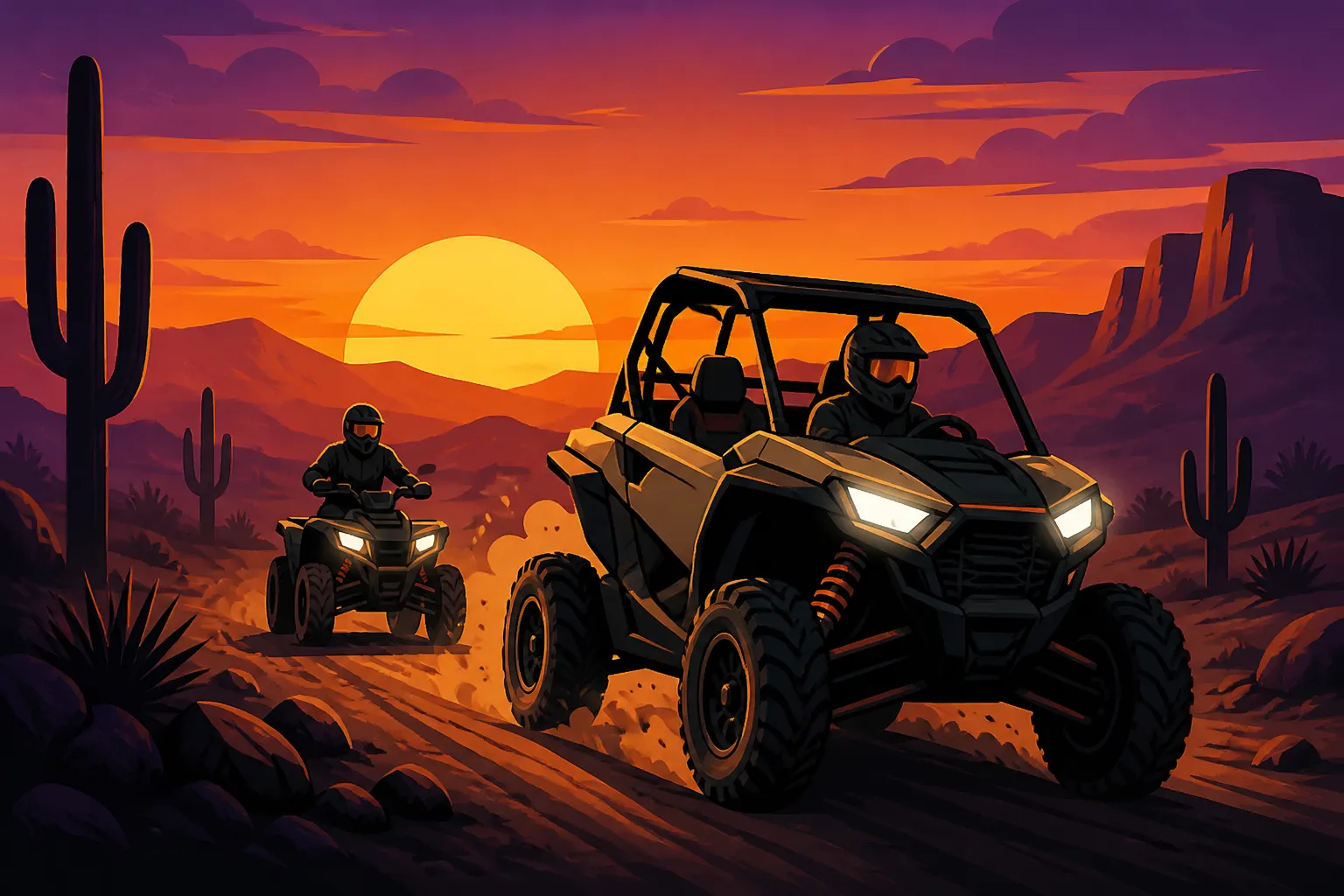
It’s happened to the best of us: you start out on a perfect desert afternoon ride, chasing the sun-drenched trails, and before you know it, the light starts to fade, giving way to the vast, inky blackness of the Arizona night. Suddenly, that familiar trail looks completely different, and anxiety can creep in. This guide is all about equipping you with the knowledge and preparation needed to confidently and safely navigate your ATV or UTV back to camp or civilization after sundown, ensuring those epic sunset views don't turn into a panicked night navigation challenge.
Meeting Arizona's Lighting Requirements After Dark
When the sun dips below the horizon, your off-highway vehicle (OHV) becomes subject to specific lighting requirements in Arizona. This isn't just about being able to see where you're going; it's crucially about being seen by others, whether they're fellow riders, law enforcement, or even a rancher on a dirt road. Ignoring these rules can lead to citations, but more importantly, it puts you and everyone else at serious risk.
Mandatory Headlights for Night Operation
First and foremost, your OHV needs at least one headlight that's functional and properly aimed. While many modern side-by-sides come with two headlights, even a single, powerful one is sufficient under Arizona law, as long as it illuminates the road or terrain ahead for a specified distance. The law states that your headlight must be visible from a distance of 500 feet, which is pretty far when you’re out in the wide-open desert. It's not just about turning them on; they need to be bright enough to clearly project forward. Think about upgrading your stock lights if they feel dim. Many riders swear by aftermarket LED light bars and pods for their impressive throw and spread, often looking to trusted brands for robust solutions.
Having your headlights on also means they need to be effective. This isn't just about "seeing," it's about seeing well. A dusty, scratched lens won't cut it. Take a moment before any night ride to wipe down your headlight lenses. If you're on a street-legal machine, remember that these headlights have specific aims to avoid blinding oncoming traffic. On the trail, however, the goal is maximum visibility, and many riders choose to add auxiliary lights, like those from SuperATV, to flood the trail with light, especially when navigating technical terrain. You can learn more about specific requirements in [Arizona's 500 Foot Headlight Rule].
Taillights and Reflectors for Rear Visibility
Just as important as seeing where you're going is ensuring that you can be seen from behind. Arizona law requires your OHV to have at least one red taillight that is visible from a distance of 500 feet to the rear. This isn't optional; it's a critical safety feature, particularly if you’re riding in a group or crossing a public road. Additionally, your OHV must be equipped with at least one red rear reflector, which provides passive visibility even if your taillight fails. These reflectors should also be visible from 500 feet.
Many riders opt for more than the bare minimum, adding extra brake lights or even illuminated whip flags to increase their visibility. This is especially smart if you're riding through dusty conditions where your taillights can quickly become obscured. Remember that dust kicked up by your rig and others can make it incredibly difficult for a following rider to see your brake lights, so good, clean, and perhaps even redundant rear lighting is a wise investment. You'll want to review [Taillights and Rear Reflectors Arizona Requires] for detailed guidelines.
Illuminating Your License Plate
If your OHV is registered and plated (which it should be for most public land use in Arizona, especially if street-legal), then your license plate needs to be clearly visible at night. This means it must have a white light that illuminates the plate. This might seem like a small detail, but it's a legal requirement, and it ensures that law enforcement can easily identify your vehicle if needed. Often, this light is integrated into the taillight assembly, but it’s crucial to confirm it’s working.
Check your license plate light before you head out. A burnt-out bulb or a wire that’s come loose on a bumpy trail can leave you non-compliant. If you’re building out a custom rig or adding a new license plate mount, make sure this small but important detail isn’t overlooked. It’s part of the comprehensive visibility package that keeps you safe and legal after dark. You can find more information about this specific requirement in [License Plate Lights on an Arizona Machine].
Other Essential Gear for Night Riding
While not strictly lighting, other equipment contributes significantly to safety when riding after sundown. If your machine is street-legal, mirrors and a horn are mandatory. Mirrors become even more important at night for checking your surroundings without having to turn your head constantly, which can be disorienting in the dark. A horn can warn wildlife or other approaching vehicles that might not see you. Additionally, always carry your registration and proof of OHV decal. When a ranger asks for your papers at night, fumbling around in the dark is no fun, so keep them somewhere easily accessible and protected, as outlined in [What an Arizona Ranger Asks a Rider For].
Planning for the Unpredictable: Night Riding Safety
Riding after sundown introduces a whole new set of challenges that can quickly turn an exhilarating adventure into a stressful situation if you're not prepared. The desert transforms at night, and what was familiar by day can become a maze in the dark. Proper planning and a focus on safety are paramount.
Pre-Ride Checks Are Non-Negotiable
Before you even think about hitting the trail or road after dark, a thorough pre-ride check is absolutely essential. This goes beyond the usual quick glance. You need to verify that all your lights are working – headlights, taillights, brake lights, and your license plate light. Check your battery's charge; night riding puts a higher demand on your electrical system with prolonged light use. Inspect your tires for any signs of wear or damage that could lead to a flat in the dark, and make sure you have enough fuel. Breaking down in the pitch black of the Arizona desert is a scenario no one wants.
It’s also wise to check your communication devices. Is your cell phone charged? Do you have a backup power bank? If you’re riding in areas with spotty cell service, consider carrying a satellite messenger. These devices can literally be lifesavers when you're miles from nowhere and need to contact help. [Cell Service in the Arizona Backcountry] can give you an idea of where coverage might be an issue.
Navigating the Desert in Darkness
Even if you know a trail like the back of your hand during the day, it will look vastly different at night. Familiar landmarks disappear, and the depth perception you rely on is severely diminished. This is where good navigation tools come into play. A GPS unit with pre-loaded maps of your route is invaluable. Don't rely solely on your phone, as battery life and signal strength can be unreliable. Many riders also bring a physical map and compass as a backup, just in case electronics fail.
Beyond the tools, it's about your mindset. Slow down. Your reaction time will be slower in the dark, and unseen obstacles are a major hazard. Maintain a greater distance from other riders in your group to reduce dust and allow for better visibility. Keep your eyes on the trail immediately ahead, but also scan further out to anticipate turns and elevation changes. Even seemingly minor washouts can become major hazards when you can't see them clearly.
Riding Etiquette and Personal Gear for Night Rides
Riding in a group at night requires extra consideration. Dust becomes a huge problem, significantly reducing visibility for everyone behind the lead vehicle. If you’re leading, try to maintain a steady pace and avoid excessive speed that kicks up massive plumes. If you’re following, keep a safe distance, but also ensure you can still see the taillights of the machine in front of you. [Riding Slowly Past Desert Homes] reminds us that quiet riding is always appreciated, but especially at night when desert communities are sleeping.
For personal gear, think warmth and extra light. Even in Arizona, desert nights can get surprisingly cold, especially in the higher elevations or during winter months. Dress in layers. Always carry a headlamp or a powerful flashlight; these are critical for roadside repairs, checking maps, or simply walking around camp. Eye protection is also important, not just for dust but for glare from your own lights or those of other vehicles. While not mandated for adults, [Arizona Helmet Rules for Riders Under 18] highlights the importance of protective gear for younger riders, a good reminder for all of us.
Facing the Desert's Nocturnal Challenges
The Arizona desert is a vibrant ecosystem, and at night, many of its inhabitants become active. This, combined with drastic environmental changes, presents unique challenges that you must be prepared to handle.
Wildlife Encounters After Dark
One of the most significant differences between day and night riding is the increased likelihood of encountering wildlife. Javelina, deer, coyotes, and even larger animals like mountain lions are more active after sundown. These animals can dart across trails unexpectedly, posing a serious collision risk. Their eyes often reflect in your headlights, giving you a brief warning, but it can be fleeting.
Stay alert and keep your speed in check, especially in areas known for wildlife activity, such as near water sources or dense vegetation. If you see an animal, give it space. Remember, you’re in their home, and respecting their presence is part of responsible off-roading. A good light bar, perhaps from SuperATV, can help illuminate the periphery, giving you more time to react if an animal decides to cross your path.
Dramatic Temperature Drops and Terrain Challenges
The desert is notorious for its extreme temperature swings. A scorching 100-degree day can quickly give way to a night in the 50s or even colder, especially at higher elevations or during the winter. This drop can be a shock if you're not dressed appropriately, leading to discomfort or even hypothermia if you get stranded. Always pack extra layers, even if the day feels warm.
Beyond the cold, the terrain itself becomes more treacherous. Washes that were easy to spot in daylight can become invisible until you're right on top of them. Rocks and ruts cast long, confusing shadows that distort your perception of depth and distance. Riding slower isn't just a suggestion; it's a necessity to avoid hidden obstacles. Keep an eye out for any changes in the trail surface, as loose sand or rocky sections can be harder to discern in the dark.
Monsoon Season's Treachery
If you find yourself riding after dark during Arizona’s monsoon season (typically July through September), the risks escalate significantly. Flash floods can occur with little to no warning, even if the rain is miles away. A dry wash can become a raging torrent in minutes. Crossing a flooded wash at night is incredibly dangerous, as you cannot gauge the depth, current, or hidden debris.
Always check weather forecasts before heading out, and if there’s any chance of rain, it’s often best to reconsider night riding, especially in low-lying areas or washes. If you do encounter rising water, do not attempt to cross it. Turn back or find higher ground. Arizona has a "Stupid Motorist Law" for a reason, and it applies to OHV riders as well. You can find more details about how weather affects riding in [Monsoon Flooding Across an Arizona Road].
What To Do If You Get Caught Unprepared
Despite our best intentions, sometimes things go wrong, and you might find yourself in the desert after dark, feeling unprepared. It’s a gut-wrenching feeling, but panicking is the worst thing you can do. Having a plan for these scenarios can make all the difference.
Emergency Supplies and Communication
If you realize you’re going to be out longer than planned and the light is fading, first assess your situation. Do you have any working lights, even a flashlight or headlamp? If not, the immediate priority is to find a safe place to stop before it's completely dark. Park in a visible spot, perhaps on high ground if possible, and set up any reflective gear you have.
Beyond lights, make sure your emergency kit is robust. This should include extra water, non-perishable food, a basic first-aid kit, a whistle, and a fire starter. A space blanket can provide critical warmth if you’re facing a cold night. If you have a satellite messenger or two-way radio, now is the time to use it to let someone know your situation and location. Don't rely solely on cell service, as the desert is full of dead zones.
Staying Put Versus Trying to Move
One of the hardest decisions in an unexpected night situation is whether to stay put or try to continue. Generally, if you are truly unprepared—meaning no functional lights, no GPS, unfamiliar terrain, or very low fuel—staying put is often the safest option. Trying to navigate unfamiliar, dark terrain without proper lighting is a recipe for an accident. It's better to spend an uncomfortable night waiting for daylight or for rescue than to get injured or hopelessly lost.
If you decide to stay, make yourself as visible as possible. If you have any working lights on your OHV, keep them on if the battery allows. Build a small, controlled fire if it’s safe and legal to do so, for warmth and as a signal. Stay with your machine; it's easier to spot than a lone person. On the other hand, if you have sufficient lighting, reliable navigation, and still have a sense of your surroundings, proceeding cautiously at a very slow pace might be an option, but err on the side of caution.
Getting Help and Reporting Issues
If you or someone in your group gets injured or truly lost and cannot self-rescue, knowing how to call for help is crucial. If you have cell service, call 911. Be prepared to describe your location as accurately as possible, using landmarks or GPS coordinates if you have them. If you’re in an area with no cell service, this is where a satellite messenger shines; most have an SOS button that will alert emergency services with your exact location.
Remember that reporting any OHV accidents, especially those involving injury, is required in Arizona. [Arizona OHV Accident Reporting Rules] provides guidelines on what to do. Even a seemingly minor incident can become serious if you’re stranded after dark. By being prepared, knowing the rules, and riding responsibly, you can enjoy the magic of Arizona's desert nights without the stress.
Arizona OHV Lighting Requirements Summary
To help you quickly check your rig before that evening ride, here's a quick summary of essential lighting:
| Requirement | Minimum Standard in Arizona OHV Law | Best Practice for Night Riding |
|---|---|---|
| Headlights | At least one, visible from 500 feet forward. | Two or more powerful LED headlights/light bars for broad illumination. |
| Taillights | At least one red taillight, visible from 500 feet to the rear. | Redundant taillights, perhaps an illuminated whip, for maximum visibility. |
| Rear Reflectors | At least one red reflector, visible from 500 feet to the rear. | Ensure reflectors are clean and strategically placed. |
| License Plate Light | White light illuminating license plate. | Verify function pre-ride; integrated into taillight if possible. |
| Other (Street Legal) | Mirrors and horn. | Ensure clear visibility in mirrors; test horn. |
| Auxiliary Lighting | Not required, but highly recommended. | Spotlights, floodlights, rock lights for terrain awareness. |
This article is for general informational purposes only and does not constitute professional advice. Laws, prices and regulations vary by location and change over time. Consult a qualified professional for guidance on your specific situation.