Helmets Adults Are Not Required To Wear
Arizona adults riding an ATV or UTV may be surprised to find that a helmet is not legally required in every off-highway situation. But “not required” does not mean “not worth wearing,” and the answer can depend on where you ride. Here’s what the adult exemption means, what to check before a trip, and how to choose a helmet if you decide to wear one.
What Arizona’s adult helmet exemption means
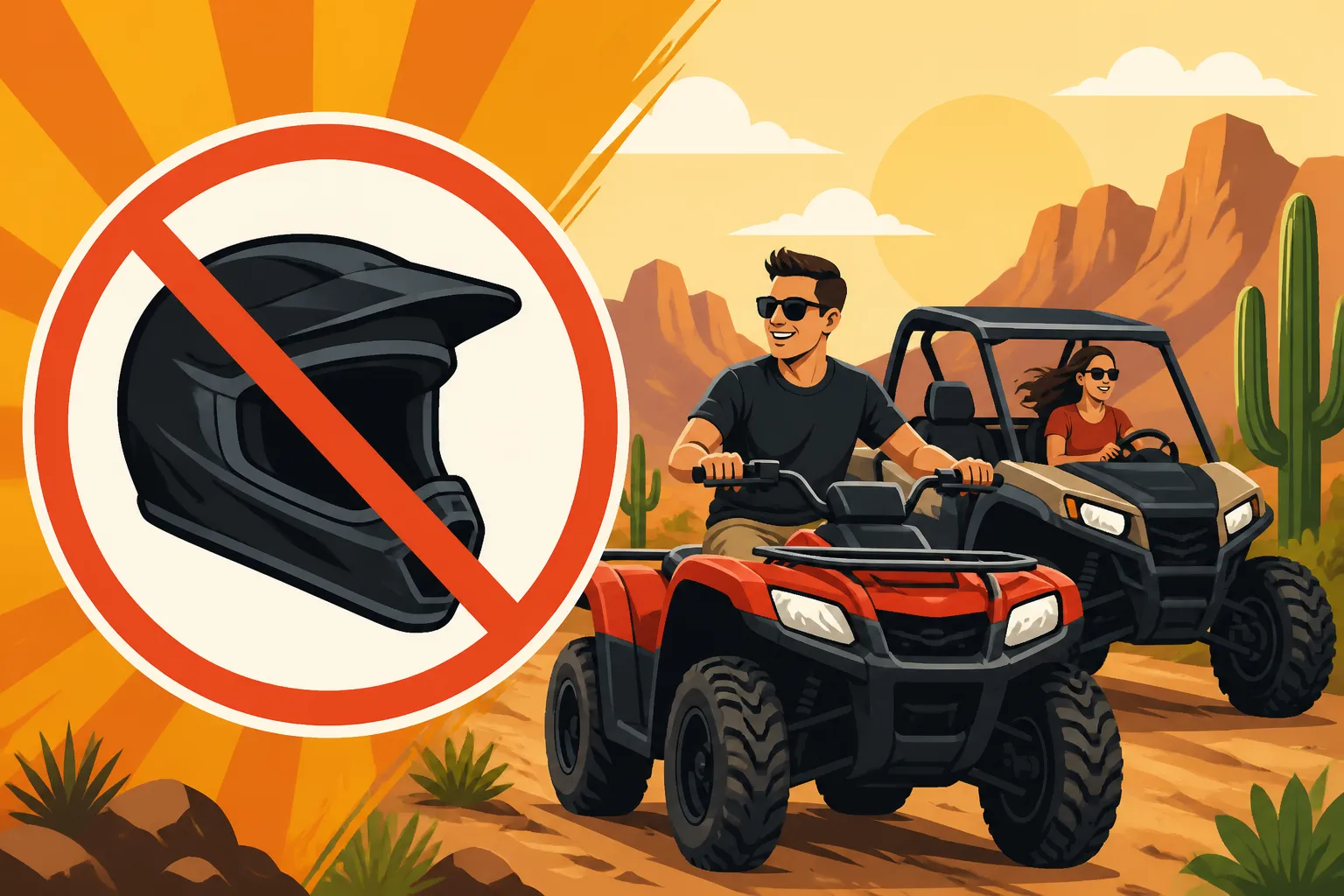
According to the Arizona Legislature, Arizona’s mandatory protective helmet law for off-highway vehicles applies to operators and passengers under 18, so adult riders 18 and older are legally exempt from wearing a helmet under that law. The key detail is that this is an off-highway vehicle rule; it should not be treated as a blanket statement about every road, land manager, event, or riding situation.
For an adult riding an ATV or UTV off-highway, the state requirement described above does not make a helmet mandatory. That answers the basic legal question, but it does not settle whether another rule applies to a specific place or activity. Before you ride, check current requirements for the route and the land where you will be riding. If your trip includes public roads or a street-legal section, confirm the rules that apply to that part of the ride rather than assuming the off-highway exemption covers it.
The difference between a law and a safety recommendation matters. A rider can be legally allowed to go without a helmet and still face serious head-injury risk in a rollover, collision, hard landing, or fall. A UTV’s roll cage, doors, nets, or seat belt can help keep occupants in place, but they do not make head protection irrelevant. An ATV offers less surrounding structure, but a crash in either kind of machine can involve impact with the ground, the vehicle, another object, or a passenger.
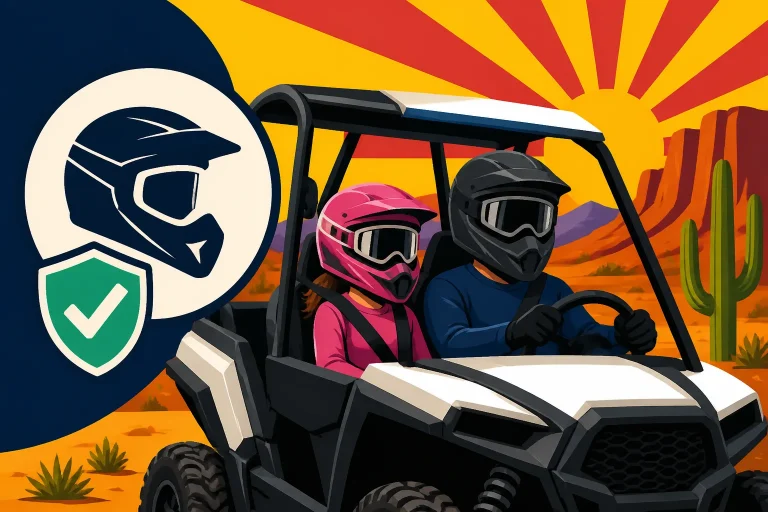
If you ride with someone under 18, do not apply the adult exemption to them. The Arizona Legislature’s rule applies to operators and passengers under 18. For details about young riders and the rules for riding on state land, see Arizona Helmet Requirements on State Land. For a broader look at how the helmet rule is framed, Arizona Helmet Standards on Public and State Land is also relevant.
| Riding situation | What the adult exemption tells you | What to check |
|---|---|---|
| Adult riding an ATV off-highway | The Arizona Legislature’s under-18 helmet requirement does not require an adult to wear one under that law | Whether the route or land has an additional rule |
| Adult riding a UTV off-highway | The same adult exemption applies under the stated off-highway helmet law | Whether the machine is on a road or in a setting with separate rules |
| Passenger under 18 | The adult exemption does not apply to the passenger | The applicable helmet requirement and any other youth rules |
| Ride that includes public roads | The off-highway rule alone may not answer every road-related question | Rules for the specific road and vehicle use |
The table is a starting point, not a substitute for checking the exact route. If you are unsure whether a route counts as off-highway use or includes a different regulatory setting, ask the responsible land manager or check the official rules before heading out.
Why adults may still choose to wear a helmet
A legal exemption is about what the law requires, not what best protects you. A helmet can help protect your head during an impact, and a properly fitted one can also shield you from dust, wind, and debris. Whether those benefits are worth the extra heat, weight, or inconvenience is a personal decision, but the risk is not limited to high-speed riding or difficult terrain.
A routine ride can include uneven ground, unexpected obstacles, dust that limits visibility, or another rider making a sudden move. A machine can also lose traction or tip in a place that looked manageable. The fact that an ATV or UTV feels stable does not guarantee it will stay upright or that every impact will be predictable.
The decision can be especially important when the ride is remote. Getting help may take longer if someone is injured far from a road or trailhead. A helmet does not prevent every injury, and it should not be treated as a substitute for riding within your ability, using appropriate restraints, or planning for emergencies. It is one part of a broader risk-reduction approach.
Think about the conditions you expect rather than relying on a general impression of the ride:
- Terrain: Rock, loose sand, ruts, steep grades, and uneven ground can all create opportunities for a fall or rollover.
- Visibility: Dust, glare, and changing light can make it harder to see a hazard or another machine.
- Speed and traffic: A busy route or a group ride can leave less room to react when something changes.
- Distance from help: A mechanical problem or injury may be harder to manage far from services.
- Who is riding with you: A passenger’s age and equipment can affect what is required and what is sensible.
For a legal question about a particular place, start with the relevant local or land-management information instead of relying only on what another rider says. Arizona Rules on Private Land can help clarify why the type of property matters, while Arizona Wilderness Boundaries and Machines is useful when planning routes around areas where motorized access is restricted.
Adults who choose not to wear helmets should make that choice with a clear understanding of the trade-off. Adults who do wear one should make sure it fits and is secured correctly; a helmet that shifts or is not fastened may not offer the intended protection. See Fitting and Fastening a Helmet Properly for practical guidance.
Choosing and wearing a helmet for an Arizona ride
If you decide to wear a helmet, choose one intended for the kind of riding you will do and make sure it fits comfortably and securely. A helmet that is uncomfortable may end up riding loose, getting removed during stops, or being left behind on the next trip. Fit is not a minor detail: it affects how stable the helmet feels and whether you can wear it for the length of the ride.
Check the manufacturer’s fit instructions and confirm that the helmet sits level, feels snug without painful pressure, and stays in place when fastened. If you are buying in person, try it on before deciding. When shopping online, including through Amazon, review the manufacturer’s sizing information and return conditions, and make sure the model is intended for your type of riding. Product listings and retailer descriptions are not a substitute for checking the helmet’s own labeling and instructions.
A helmet is only one part of protective equipment. Goggles or other appropriate eye protection can help keep dust and debris out of your eyes, which is particularly relevant in a group where a leading machine may throw up dust. A windshield does not necessarily provide the same protection in every riding setup. If your trip includes street riding, check the applicable eye-protection rules rather than assuming that an off-highway setup meets them. Goggles or a Windshield on the Street and Eye Protection Rules on Arizona Streets address those separate questions.
Before you leave, it is worth checking a few things:
- The helmet is intended for the type of machine and riding you plan to do.
- The size and fit follow the manufacturer’s instructions.
- The fastening system is secure and comfortable.
- The helmet is in good condition and has no damage that could affect its use.
- Your eye protection is suitable for dust, wind, and the conditions on your route.
- Any passenger has equipment that fits them and complies with the rules that apply to them.
Do not choose a helmet only because it looks rugged or matches the machine. Read the product’s use instructions and safety information. If you have had a crash or are unsure whether a helmet is damaged, follow the manufacturer’s guidance about whether it should be replaced. The practical goal is not simply to own a helmet; it is to have protective equipment that fits, is appropriate for the ride, and will actually be worn.
A practical check before you ride
A quick pre-ride check can prevent a legal misunderstanding from turning into a problem at the trailhead. First, identify where the route goes: private property, public land, a road section, or a mix. Then confirm which rules apply to that setting. The adult exemption described by the Arizona Legislature concerns the state’s off-highway helmet requirement for riders under 18; it does not automatically answer every question about roads, land access, or other requirements.
Next, consider who will be on the machine. An adult operator may be legally exempt under the stated law, but an under-18 passenger is not covered by that exemption. Avoid using the driver’s status to make assumptions about everyone riding along. If a child is part of the trip, review the rules for young operators and passengers before leaving.
Then make the safety decision separately from the legal one. Ask whether the route, dust, terrain, group size, or distance from help makes a helmet especially worthwhile. If you choose to wear one, check fit and fastening before starting. If you choose not to, recognize that this is a decision to accept more head-injury exposure, not proof that the ride is risk-free.
Finally, make sure the rest of the trip plan supports a safe ride. Choose a route that fits the abilities of the operator and passengers, use the machine’s safety equipment as intended, and carry what you need for the conditions. Helmet use cannot compensate for poor route planning or unsafe operation, but it can be a meaningful part of preparing for an off-highway ride.
The useful takeaway is simple: Arizona’s stated off-highway helmet requirement applies to riders under 18, not adults. Adults can decide whether to wear a helmet under that rule, but they should check for separate requirements on their route and weigh the legal exemption against the protection a properly fitted helmet can provide.
Disclaimer
This article is for general informational purposes only and does not constitute professional advice. Laws, prices and regulations vary by location and change over time. Consult a qualified professional for guidance on your specific situation.