Decals for a Borrowed Machine
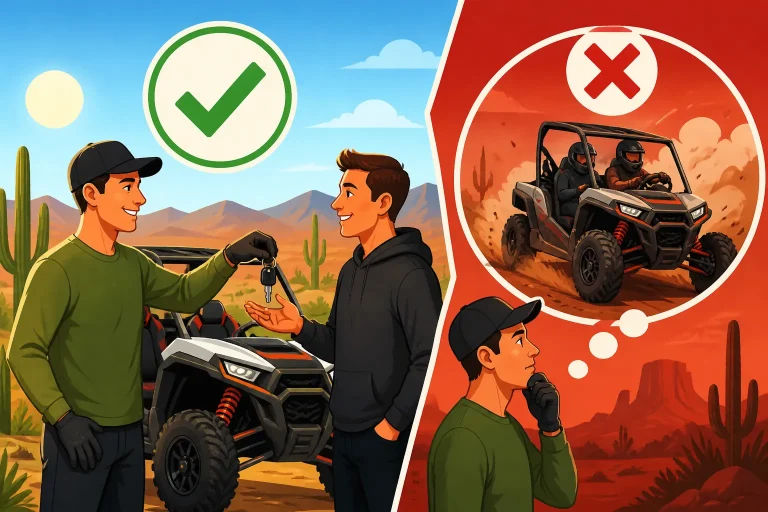
Borrowing an ATV or side-by-side for an Arizona ride raises a practical question: does the decal belong to the person riding, or to the machine? The answer usually depends on the vehicle’s registration and whether it already displays the required Arizona decal. Check the machine before you leave, because a friend’s permission to borrow it does not automatically make it legal to ride everywhere.
The decal generally follows the machine
An Arizona OHV decal is associated with a particular vehicle, not with a rider who can carry it from one machine to another. So if you borrow an eligible machine that already has the correct, current Arizona decal displayed, you generally do not need to buy a second decal just because you are the person operating it.
The reverse is also true: your own decal does not cover a borrowed machine. A decal displayed on your ATV cannot be moved to a friend’s UTV, and buying a decal for one machine does not satisfy the requirement for another. If the borrowed machine needs an Arizona decal and does not have one, the owner’s willingness to lend it does not replace that requirement.
| Borrowed machine | What to check before riding |
|---|---|
| Arizona machine with a current decal | Confirm the decal is for that machine and is still valid |
| Arizona machine with no decal | Check whether the machine needs one and arrange the required decal before riding |
| Machine registered outside Arizona | Check whether Arizona’s visitor decal rules apply |
| Street-legal machine | Confirm its registration status and whether it is exempt from a separate OHV decal |
| Machine with an expired, damaged, or unclear decal | Verify its status before riding; do not assume the sticker is valid |
The vehicle’s home registration matters. Arizona distinguishes between resident and visitor decal situations, and an out-of-state machine may require a nonresident decal when used in Arizona. The deciding factor is not simply whether the person holding the handlebars lives in Arizona. If you are an Arizona resident borrowing a machine registered elsewhere, do not assume your residency makes that machine an Arizona-registered vehicle. Likewise, a visitor borrowing an Arizona machine should not assume they need a personal decal if the machine already has the required valid one.
For a closer look at how the categories differ, see Resident Decals Versus Visitor Decals in Arizona and Arizona’s Non-Resident OHV Decal. If the machine is from another state, review Arizona Rules for Visiting Riders as well.
The decal requirement is only one part of checking the machine. Whether you can legally ride it also depends on where you plan to go, what kind of registration it has, and the rules for that land or route. A decal is not a general pass for every trail, road, or staging area.
How to check a machine before borrowing it
Ask the owner about the decal before loading the machine or heading to a trailhead. A quick check at home is easier than discovering a problem when you are already out riding.
- Identify the machine and its registration. Ask whether it is registered in Arizona or another state, and whether it is registered as an off-highway vehicle or as street-legal. If the owner is unsure, have them check the registration record or paperwork rather than relying on a remembered description.
- Look for the decal on the machine. Check that a decal is actually displayed, not just that the owner says one was purchased. Arizona decal placement rules matter; see Where the Arizona OHV Decal Goes on the Plate.
- Check its condition and validity. A faded, torn, or partly detached sticker may be hard to verify. If the expiration or other details are unclear, confirm the decal status with the owner or the appropriate Arizona source before riding.
- Ask whether the machine’s status has changed. Recent registration changes, a move to Arizona, or a change in how the machine is being used can affect what paperwork or decal is needed. The owner should resolve questions about the record before lending it.
- Confirm the route and land rules. The decal does not guarantee access to a particular trail or staging location. Check current route closures, permits, and land restrictions separately.
If the machine has no decal, do not try to solve the problem by peeling one from another vehicle. A decal is not a transferable rider pass. The owner should determine which decal or registration applies to that particular machine and complete the required steps before it is used where a decal is required.
If a decal is present but the owner cannot say whether it is current, treat that as an unresolved paperwork issue—not as proof that everything is in order. The same applies if the machine has been moved from another state or the registration does not match what the owner says. For background on the machine’s record and ownership paperwork, Arizona Records and a Machine’s Ownership History may help.
Out-of-state and street-legal machines need a separate check
An out-of-state machine is the case most likely to cause confusion. Borrowing it does not erase its registration status, and the operator’s Arizona residency does not automatically substitute for the machine’s required decal. If the machine is registered outside Arizona, find out whether it needs Arizona’s nonresident decal before using it on Arizona public land.
Do not assume that a decal or permit from the machine’s home state satisfies Arizona’s requirements. Requirements can differ across state lines, and Arizona’s decal rules are specific to use in Arizona. The owner should check the machine’s eligibility, registration, and decal status rather than treating another state’s sticker as interchangeable.
A machine that is street-legal may follow a different path from an off-highway-only machine. In some cases, street-legal registration can take the place of a separate OHV decal, but the machine’s actual registration and the rules for the route still matter. A plate, turn signals, or other equipment alone does not prove that its registration qualifies. See Street-Legal Registration Instead of a Decal for the distinction, and What Arizona Requires on a Street-Legal Machine for the equipment side.
Even with street-legal registration, an owner and borrower should confirm that the machine can be used on the specific roads and trails planned. Some routes are closed to motor vehicles or have separate restrictions. A decal—or a street-legal plate—does not authorize riding on a closed route, private land without permission, or land requiring an additional permit.
That last point matters on Arizona State Trust Land. A decal and a recreational permit serve different purposes. If your route involves Trust Land, check whether the rider needs a permit and whether the planned activity is allowed. Arizona State Trust Land Recreational Permits and Why a Decal Alone Will Not Let You Stage explain why those checks are separate.
Borrowing responsibly: permission, proof, and passengers
A valid decal does not prove that you have the owner’s permission to use the machine, and the owner’s permission does not prove that the decal is valid. Keep those questions separate. Before you go, make sure the owner has authorized the trip and that you know how to reach them if a ranger, deputy, or other official asks about the vehicle.
Carry or have access to the relevant registration and ownership information, especially when the machine is borrowed or registered out of state. Requirements about what a rider must carry can depend on the situation, so check rather than relying on a photo of a sticker alone. For practical preparation, see Keeping the Paperwork on the Machine and What an Arizona Ranger Asks a Rider For.
If the owner is lending more than one machine, check each one separately. A decal on one quad does not cover a second quad, even if both belong to the same person or are being used by one group. The same machine-by-machine approach is useful when planning a group ride; see Decals for a Second Machine.
Passengers should not confuse the decal requirement with permission to ride as a passenger. The decal is associated with the vehicle, while passenger rules relate to the machine’s seating and applicable riding rules. A passenger generally does not need a separate decal for the same vehicle, but the machine must be designed or equipped for that passenger, and route-specific rules still apply. See [Do Passengers Need an Arizona Decal?] for that distinction.
Rental machines are another special case. A shop may handle the decal paperwork or provide a machine already prepared for the permitted routes, but do not assume that every rental includes everything needed for every destination. Confirm directly with the rental provider. Arizona Decal Rules for a Rented Machine covers the rental-specific questions.
A reliable pre-ride check is straightforward: identify the machine’s registration, confirm that its decal or qualifying street-legal status is current, make sure you have permission and relevant paperwork, and check access rules for the route. If any part is uncertain, ask the owner to resolve it before you ride. That is safer than assuming a decal belongs to the person borrowing the machine or that a sticker covers every land-access requirement.
Disclaimer
This article is for general informational purposes only and does not constitute professional advice. Laws, prices and regulations vary by location and change over time. Consult a qualified professional for guidance on your specific situation.