Keeping the Paperwork on the Machine
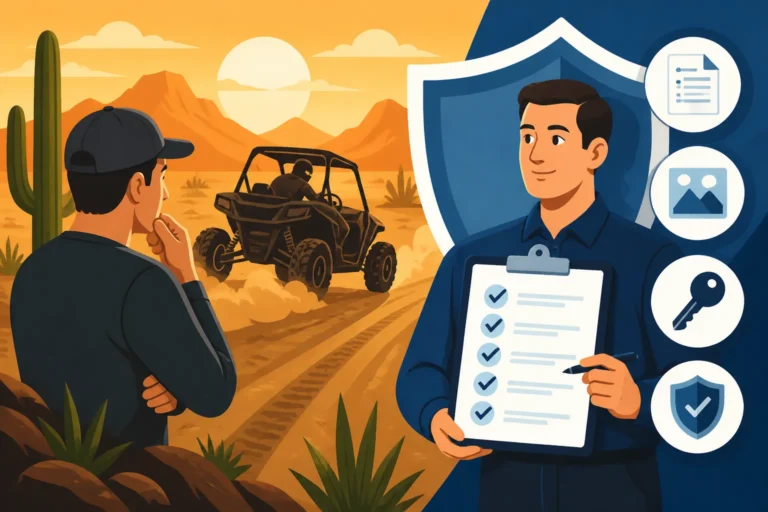
It’s a common scenario: you’re out enjoying a fantastic ride on Arizona’s incredible trails, the sun is shining, and then you see it—a ranger, deputy, or local law enforcement official waving you over. Immediately, a little knot forms in your stomach. What do they need? Do you have everything? This guide will cut through the confusion, clearly outlining what paperwork you absolutely need to have with your Arizona ATV or UTV, why it matters, and the best ways to keep it safe and accessible.
What Arizona Law Requires You to Carry
When you're out exploring Arizona's vast and varied terrain on your off-highway vehicle, there are a few key pieces of documentation that state law expects you to have on your person or readily available with the machine. This isn't just about avoiding a ticket; it's about proving ownership, showing you're properly registered, and ensuring you're meeting basic safety and environmental requirements.
Your Driver's License or ID
Let's start with the obvious, but often overlooked, piece of identification. If you're operating an OHV on public lands, roads that allow OHV access, or really anywhere outside of completely private property, you need to be able to identify yourself. For most adult riders, this means a valid driver's license. It's not just about proving who you are; it also confirms you're of legal age and have the basic privilege to operate a motor vehicle. If you're a younger rider, [Do You Need a License to Ride an Arizona Road?] might be something you've already looked into, but even if you don't need a full driver's license for the specific type of riding, having some form of government-issued ID is always a good practice. Think of it like this: if you were driving your truck, you'd have your license. Your OHV is no different in the eyes of law enforcement when you're on public ground.
For those situations where a minor is operating an OHV, especially on roads or trails where a license might be required for an adult, identifying that minor and their eligibility to ride is paramount. Parents often wonder about [Youth Machine Size Rules Arizona Parents Ask About] and the associated responsibilities. Having proof of age or a state ID for a younger rider can certainly smooth over any questions an officer might have about age compliance.
Proof of Arizona OHV Registration and Decal
This is arguably the most crucial piece of paperwork for any OHV owner in Arizona. Every off-highway vehicle in Arizona that's used on public land must have a current registration and display a valid OHV decal. You see these decals proudly affixed to the upper-left corner of the license plate on countless machines out on the trails. It's not just a sticker; it's your proof that you've contributed to the OHV fund, which directly supports the trails you love to ride. [Arizona's Annual OHV Decal Explained] goes into great detail about this system, but the short version is: you need one.
When a ranger or deputy checks your machine, they'll be looking for that decal. But they'll also likely ask for the actual registration document that proves the decal belongs to your specific machine, matching the VIN and your ownership. This piece of paper often comes directly from the Arizona Motor Vehicle Division (MVD) or a third-party provider like those discussed in [Registering Through Arizona MVD or a Third Party]. Without it, even if you have a decal, you might have trouble proving it's legitimate or that you're the rightful owner. It’s peace of mind for you, and it helps law enforcement ensure everyone is playing by the rules. The fines for not having this in order can definitely put a damper on your day out.
Arizona Certificate of Title for Your OHV
While you might not be asked to produce your Certificate of Title every single time you encounter law enforcement on the trail, it's absolutely an essential document to keep safe and accessible, even if not on the machine itself. The title is the ultimate proof of legal ownership. Think of it as the deed to your home or the title to your car. [Getting an Arizona Certificate of Title for a Quad] details the process of obtaining this critical document.
The title shows who legally owns the machine, lists the Vehicle Identification Number (VIN), and records any liens on the vehicle. If you ever need to sell your machine, report it stolen, or resolve any ownership disputes, the title is what you'll turn to. While you're unlikely to carry the original title on your UTV (and probably shouldn't, due to risk of loss or damage), having a copy readily available, perhaps digitally or securely stored in your tow vehicle, is highly recommended. It’s the foundational document for your OHV’s legal existence.
Essential Paperwork You Should Carry (Beyond Legal Minimums)
Beyond what Arizona law strictly requires you to have on hand, there are several other documents that can save you a lot of headache, time, and potential financial pain in specific situations. These are the "smart rider" documents – the ones that show you're prepared for more than just a smooth ride.
Proof of Insurance
Arizona doesn't universally require insurance for all off-highway vehicles, especially if they are used strictly off-road and not made street-legal. However, if your machine is street-legal with an "MC" or "RV" plate and you’re riding it on public roads, then you absolutely need to carry proof of liability insurance, just like you would for any other vehicle. [Insuring an ATV in Arizona] clarifies the minimum coverages you'd need. Even if your machine isn't street-legal, carrying proof of any coverage you do have is still a very good idea.
Why? Well, accidents happen. Even if you're the most careful rider, a collision with another OHV, a fence, or even an unexpected piece of terrain can occur. Having your insurance information readily available means you can quickly exchange details with another party, or provide it to emergency services if there's an injury or significant damage. It prevents situations where you're trying to remember policy numbers or contact information when you're stressed or shaken up after an incident. An insurance card in your wallet, or a photo of it on your phone, is a small effort for a huge potential benefit.
State Trust Land Permit
Many of Arizona's most incredible riding areas are on State Trust Land. This land is managed by the Arizona State Land Department, and while it's open to the public for recreational use, you absolutely need a permit to access it. This is a common point of confusion for riders, especially those new to Arizona or just visiting. [Arizona State Trust Land Recreational Permits] provides a deep dive into how to get one, but the key takeaway is: if you're riding on State Trust Land, you need proof of your current permit.
This permit isn't something MVD provides; it comes from the State Land Department. An officer checking permits on State Trust Land will ask for this specifically. Much like your OHV decal, it's a small fee that goes directly back into managing these lands for everyone's enjoyment. Carrying a printed copy or having the digital confirmation on your phone can prevent fines and ensure you're riding legally. You don't want to get all the way out to a fantastic trail system only to be turned back or cited because you forgot this one crucial piece of paper.
Bill of Sale or Other Proof of Purchase
While not legally required to carry on your person while riding, a bill of sale can be incredibly useful, particularly if you're riding a newly acquired machine or if there's ever a question about ownership. Let's say you just bought a used side-by-side from a private seller, and you haven't yet completed the title transfer at MVD. Or perhaps you're borrowing a friend's machine. [What an Arizona Bill of Sale Should Carry] details what makes a good, solid bill of sale.
Having a clear bill of sale in your tow vehicle, or even a photo on your phone, can act as interim proof of ownership. This is especially true if you are stopped and there is a question about the machine's provenance. It shows you acquired the vehicle legitimately, which can be critical if there are any doubts about theft or proper transfer. For those looking to create a secure, legally sound bill of sale, online resources like LawDepot can be very helpful, offering templates that ensure all the necessary information is included to protect both buyer and seller. It's another layer of protection for you as an owner or operator.
Best Practices for Protecting and Storing Your OHV Documents
Now that we've covered what to carry, let's talk about how to carry it. The Arizona desert is a harsh environment: dust, heat, water, and vibration are all enemies of paper documents. Keeping your essential paperwork safe, legible, and accessible is key.
Physical Document Storage Strategies
When it comes to physical documents you absolutely need on your person or with the machine, think robust and waterproof.
- Laminated Copies: For things like your OHV registration and any State Trust Land permit, consider laminating a copy. This protects them from sweat, dust, and unexpected splashes when crossing a wash. The original registration always goes in a safe place at home, but a laminated copy for the trail is smart.
- Waterproof Bag or Case: A small, heavy-duty Ziploc bag or a dedicated waterproof document pouch is indispensable. These can fit into a glove box, a small storage compartment, or even a fanny pack or backpack. Don't just toss papers loose in a compartment; they'll quickly become illegible dust-filled wads.
- Driver's Wallet: Your driver's license and insurance card typically live in your wallet, which is usually on your person. Make sure it's secure in a zippered pocket or within a protective case, especially if you take a tumble.
It's tempting to throw everything into the utility box, but remember that these boxes can get hot, dusty, and sometimes water-logged during monsoon season. Prioritize what's critical and give it the best protection possible.
Digital Alternatives and Backups
In today's digital age, your smartphone can be an incredibly powerful tool for document management. While some rangers might still prefer a physical document, having digital backups is always a good idea and often accepted for non-critical documents like a bill of sale or a State Trust Land permit.
- Photos on Your Phone: Take clear, high-resolution photos of your registration, title (the one safely stored at home), insurance card, and any permits. Store them in a dedicated album on your phone for quick access. This is a fantastic backup.
- Cloud Storage: Go a step further and upload these photos to a cloud storage service (like Google Drive, Dropbox, or iCloud). This way, if you lose your phone, you still have access to your documents from another device.
- Email to Yourself: Another simple backup is to email copies of your documents to yourself. You can easily search your inbox for "OHV documents" if needed.
Remember, technology can fail. Batteries die, phones get lost or damaged. So, don't rely solely on digital copies for everything, especially for your driver's license or the OHV registration that must accompany the machine. Use digital as a robust backup, not a complete replacement for legally required physical documents.
Dealing with Missing or Damaged Documents While Out on the Trail
Even the most prepared rider can run into issues. Maybe your waterproof bag failed, or you genuinely forgot a crucial piece of paper. What happens then, and what can you do? It's a frustrating situation, but understanding the potential consequences and your options can make it less stressful.
Potential Consequences of Missing Paperwork
First, let's be realistic: riding without the legally required documents in Arizona can lead to citations. If you're caught without a valid OHV decal and registration, or if your machine isn't titled, you could face fines. [What Riding Arizona Undecaled Costs You] details some of the financial penalties involved. It's not usually a "go to jail" situation, but it can certainly put a dent in your wallet and ruin your day.
Moreover, if there's a serious incident like a theft or an accident, a lack of proper documentation can complicate matters immensely. Proving ownership to law enforcement for a stolen machine, or providing insurance details after a collision, becomes much harder without immediate access to the necessary papers. This is where those "should carry" documents, like a bill of sale, can really come in handy as interim proof while you sort out the official replacements. You might also find yourself unable to proceed on a trail if a ranger determines you lack the necessary permits, such as for State Trust Land.
Steps to Take If Documents Are Missing or Damaged
If you realize you're missing a document or it's been damaged beyond recognition while you're out on a ride, don't panic.
- Check Digital Backups: First, check your phone for any digital copies you might have. As mentioned, often a photo of a registration or permit will suffice to satisfy an officer, especially if they can verify it on their end.
- Contact a Friend or Family Member: If you have copies at home, call someone who can access them and perhaps text or email you a picture. This is why having someone reliable aware of where your important documents are stored can be a lifesaver.
- Explain the Situation Calmly: If you are stopped by law enforcement, be polite and explain what happened. While they are within their rights to issue a citation, showing good faith and offering to provide the documentation later (if possible) can sometimes lead to a warning instead of a ticket.
- Know How to Replace Documents: As soon as you're off the trail, take steps to replace any missing or damaged documents.
- Lost Registration: You can usually get a replacement registration through the Arizona MVD or a third-party provider. This typically involves a small fee.
- Lost OHV Decal: Similarly, [Ordering a Replacement Decal] is a straightforward process through Arizona Game and Fish or MVD.
- Lost Title: A lost Certificate of Title is more serious but can be replaced through MVD. [Replacing a Lost Arizona Title] explains the process, which usually involves completing a form and paying a fee.
- Lost State Trust Land Permit: You can typically reprint these online from your Arizona State Land Department account.
Having access to resources like LawDepot can be invaluable if you need to quickly re-create a bill of sale or other supporting documents if your physical copies are lost or damaged. They provide templates and guidance to help you generate legally sound paperwork without having to start from scratch. Taking these proactive steps can minimize the disruption and keep you riding legally and safely.
Disclaimer
This article is for general informational purposes only and does not constitute professional advice. Laws, prices and regulations vary by location and change over time. Consult a qualified professional for guidance on your specific situation.