Decal Rules for a Sand Rail
It can be incredibly confusing to figure out the specific registration and decal requirements for an off-highway vehicle (OHV) in Arizona, especially when you own something as unique as a sand rail. Many owners find themselves scratching their heads, wondering if their custom-built machine falls under the same rules as a factory-made ATV or side-by-side. This guide is here to cut through that confusion, explaining exactly what you need to know to ensure your sand rail is legally decaled for Arizona's beautiful public lands and trails.
Understanding Arizona's OHV Decal Requirement for Sand Rails
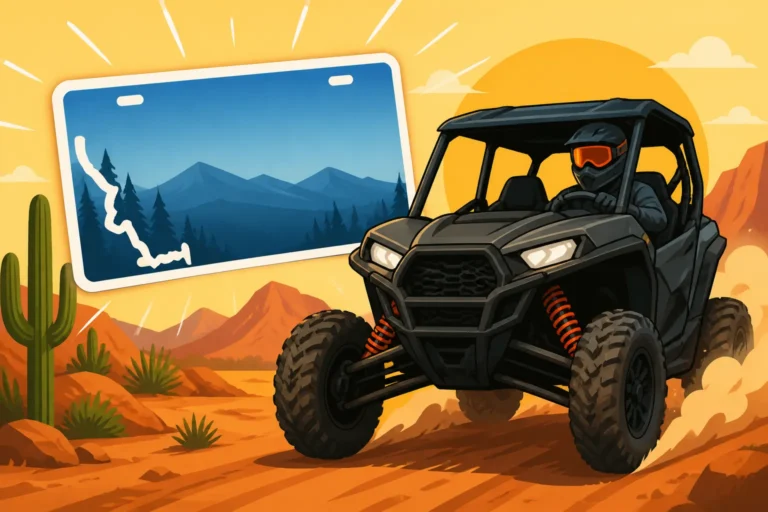
Arizona's desert playground is incredible, but it comes with rules designed to keep everyone safe and preserve the land for future generations. One of the most important rules for anyone operating an off-highway vehicle is the annual OHV decal. Sand rails, despite their often custom, sometimes exotic nature, are absolutely included in this requirement if you plan to hit public trails.
What Qualifies as an Off-Highway Vehicle in Arizona?
When we talk about an "off-highway vehicle" in Arizona, we're casting a pretty wide net. The Arizona Revised Statutes define an OHV as any motorized vehicle operated off-highway, generally on land that isn't a paved public road. This includes things like ATVs, UTVs (side-by-sides), dirt bikes, and yes, custom-built sand rails. The key here isn't just what your machine looks like, but its intended use: if it’s designed for and operated off-pavement, it’s an OHV.
There's a common misconception that if a machine is really lightweight or, conversely, built like a tank, it might be exempt. While there is a weight threshold for some specific OHV rules – machines weighing less than 1,800 pounds might have slightly different considerations for title type – the core decal requirement applies to nearly all motorized vehicles used off-highway on public land. It's the activity of off-road riding on designated trails or open desert that triggers the need for that annual decal. Even if your sand rail has some street-legal modifications, if you take it off a paved road onto public dirt, that decal becomes mandatory.
Why Sand Rails Need a Decal Just Like ATVs or UTVs
It's easy to think a custom-built sand rail, perhaps pieced together from various components or built from a kit, might somehow slip through the cracks or have a different classification. However, Arizona's system is designed for equity. The annual OHV decal program is crucial for funding the very trails, staging areas, and educational programs that we all enjoy. Every dollar generated from those decals goes directly back into the OHV program, supporting maintenance, signage, and even search and rescue operations. You can learn more about how this works by looking into the [Arizona OHV Fund and Trail Projects].
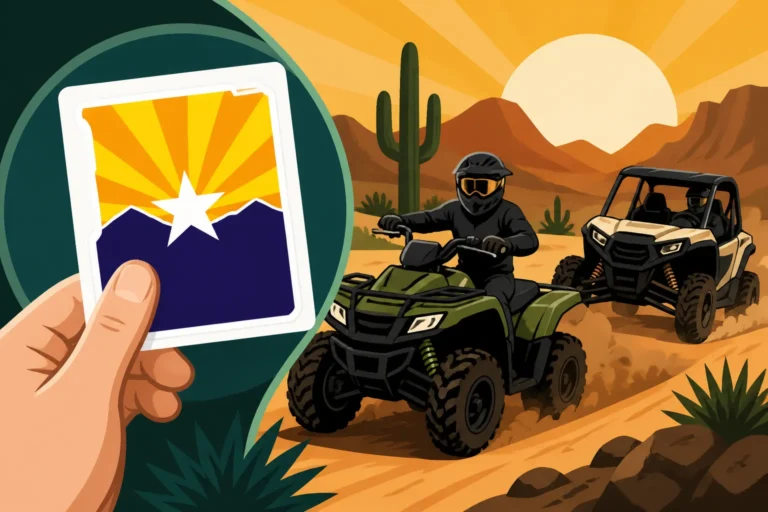
So, when you see that little sticker on the upper-left corner of a license plate, it's more than just a permit; it's your contribution to the continued enjoyment and responsible management of Arizona's vast and beautiful backcountry. Regardless of whether your machine is a factory-fresh Polaris RZR, a venerable Honda Foreman, or a roaring custom sand rail, if you're exploring Arizona's public lands, you're benefiting from these programs, and your decal helps keep them going. It's all about playing by the same rules for the greater good of the riding community and the environment.
The Process for Obtaining Your Sand Rail's OHV Decal
Getting that coveted OHV decal for your sand rail in Arizona involves a couple of important steps. It's not usually a one-and-done trip to the motor vehicle department, especially with custom builds. Understanding the full picture beforehand can save you a lot of headaches and repeat visits.
First Steps: Titling Your Sand Rail
Before you can even think about an OHV decal, your sand rail absolutely needs to be properly titled in Arizona. This is where things can get a bit complicated for custom-built machines. If you bought a factory-built ATV or UTV, it likely came with a manufacturer’s certificate of origin (MCO) or an existing title. For a sand rail, especially one you've built yourself or purchased from a private party without a clear title history, the process requires more attention.
The Arizona Motor Vehicle Division (MVD) requires a Vehicle Identification Number (VIN) for titling. If your sand rail was built using an existing frame with a VIN, you'd typically use that. However, for fully custom builds, you may need to apply for an assigned VIN from the MVD after a thorough inspection process. This inspection is to verify the vehicle's components, ensure it's not made of stolen parts, and confirm its roadworthiness (or off-road worthiness, in this case). Gathering all your receipts for major components—engine, transmission, frame materials—is critical. You'll need solid [Proof of Ownership for an Arizona Title]. If you've acquired your sand rail through multiple private sales and the paperwork chain is incomplete, you might even need to look into a bonded title process. For documenting private sales or creating affidavits of construction for a custom build, resources like LawDepot can be very helpful for generating legally sound documents that outline the transaction or build details. They provide templates that can assist in formalizing agreements, which is essential when dealing with MVD.
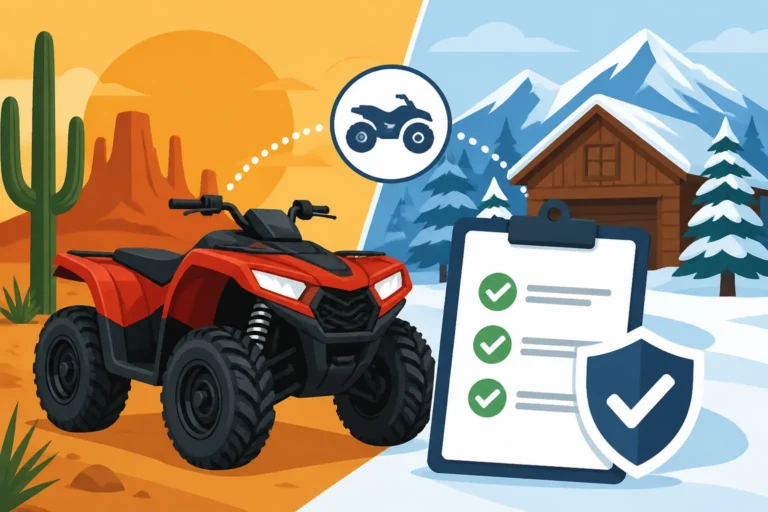
The goal is to secure an Arizona Certificate of Title in your name. This piece of paper is the fundamental proof of ownership that ties you to your machine. Without it, you cannot legally register or decal your sand rail for use on public lands. You can find more detailed information on this process by checking out the [Arizona Certificate of Title for an Off-Highway Vehicle] guide. Once you have a valid title, the path to the decal becomes much clearer.
Applying for the Annual OHV Decal
With your sand rail successfully titled in Arizona, getting the actual OHV decal is the next step. This process is handled by the Arizona Game and Fish Department (AZGFD), and it’s primarily an online affair. You’ll need to create an account on their portal if you haven't already. During the application, you'll enter your sand rail's Arizona title or registration number. This links your specific machine to the decal.
One crucial detail that many new riders (and even some seasoned ones) overlook is the mandatory OHV Decal Course. As of a recent change, many riders need to complete this free, online course before their decal application can be fully processed. It's a great way to brush up on safe and ethical riding practices, and it's something every sand rail owner should consider. You can find more information about this by exploring [Arizona's Free Mandatory OHV Decal Course]. Once you’ve paid the [Arizona OHV Decal Price and Processing Fee] and completed any required education, AZGFD will mail the decal to you. It's important to understand that the decal is valid for a year from the date of purchase, or sometimes through March 31 of the following year, depending on when you buy it. While you wait for it to arrive, you technically need to have a valid decal to ride on public land, so planning ahead is key. There's a dedicated guide on [Riding Arizona While the Decal Ships] that might offer further insights if you're in that interim period. You will also need to plan for [Renewing an Arizona OHV Decal Each Year] to keep your sand rail legal.
Where to Display the Decal and What Happens If You Don't
Once you've navigated the titling process and received your shiny new OHV decal for your sand rail, you might think you're all set. But there's one more critical step: proper placement. Getting this wrong can still lead to a citation, even if you've paid all your fees.
Proper Decal Placement on Your Sand Rail
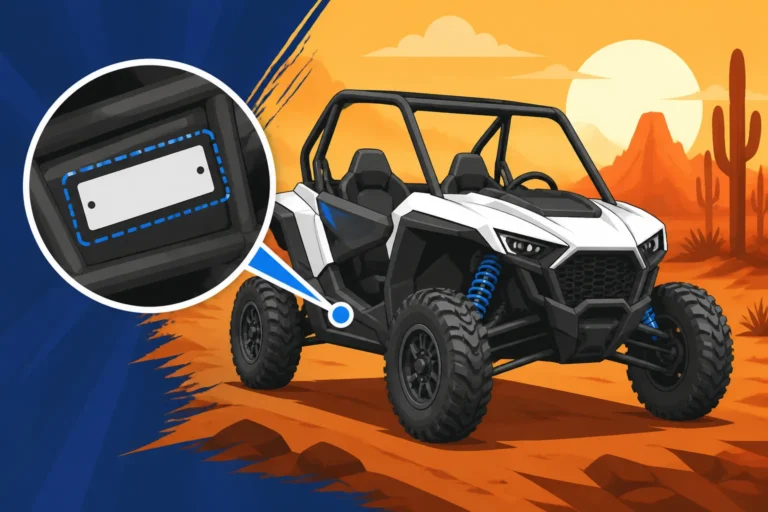
Arizona law is very specific about where your OHV decal needs to go: it must be affixed to the upper-left corner of the rear license plate. This might sound straightforward, but for a custom sand rail, which often has unique plate mounts or minimalist designs, it can sometimes be a puzzle. The key is that the decal must be clearly visible and permanently attached. It's not meant to be tucked away in a glove box or on the dash; it needs to be on the plate itself.
Enforcement officers patrolling Arizona's vast OHV trail network are trained to look for this decal. Its clear visibility allows them to quickly confirm that your sand rail is legally permitted to be on public land. If your plate mount on the sand rail is unconventional, ensure that the upper-left corner of the plate is still accessible and provides a flat surface for the decal. Some riders use strong adhesives or even clear protective covers to ensure the decal stays put and doesn't get torn or faded by the harsh desert sun and abrasive dust. For more specific guidance on this, you can refer to [Where the Arizona OHV Decal Goes on the Plate] and [Decal Placement on the Upper-Left Corner]. Taking the time to properly affix it ensures a smooth and uninterrupted ride.
Consequences of an Undecaled Sand Rail
Riding a sand rail on Arizona's public lands without a current, properly displayed OHV decal is simply not worth the risk. The consequences can range from a friendly warning to a significant citation. Enforcement officers, including Arizona Game and Fish rangers, county deputies, and even Forest Service or BLM rangers, regularly patrol popular riding areas, staging grounds, and trailheads. They are well-versed in Arizona's OHV laws and will check for valid decals.
If you are caught operating an undecaled sand rail on public land, you could face fines and penalties. These can add up quickly, far exceeding the cost of the annual decal itself. Beyond the financial hit, it can also lead to an uncomfortable interaction with law enforcement and potentially cut your day of riding short. It’s a preventable situation that no one wants to experience. You can read more about the specifics of these consequences in [Penalties for an Undecaled Machine in Arizona]. While riding on private land with the owner's permission generally doesn't require an OHV decal, the moment you transition onto any public road or trail, that decal becomes mandatory. Always double-check your status before heading out; ignorance of the law is rarely an acceptable excuse. To get a better sense of how enforcement operates, you might find [Deputy Enforcement on Arizona Back Roads] helpful.
Special Considerations for Sand Rails
Sand rails, by their very nature, often present unique challenges compared to mass-produced ATVs or UTVs. Their custom construction and occasional dual-purpose use (off-road and street-legal) can add layers of complexity to the decal and registration process.
Street Legal Sand Rails and Decal Requirements
The trend of making OHVs street legal is growing, and sand rails are no exception. Many owners modify their sand rails with headlights, taillights, mirrors, horns, and other safety equipment to meet Arizona’s requirements for street-legal vehicles. If your sand rail successfully navigates this process and receives a standard Arizona license plate (often an MC or RV plate, depending on weight and classification), it can be legally driven on many public roads. You can find detailed information on this in [Making a UTV Street Legal in Arizona] and [Getting an MC Plate for a Side-by-Side].
Here's the critical distinction: if your sand rail is purely street legal and never touches public land off-highway, then it doesn't need an OHV decal. The road registration covers its use on pavement. However, if you plan to drive your street-legal sand rail down a county road to access a public dirt trail, or if you simply take it off the pavement onto designated OHV routes, then it still requires an OHV decal. The decal is specifically for off-highway use on public lands, regardless of whether your machine also has street-legal plates. It's not an either/or situation; it's a matter of covering all the bases for how and where you intend to ride. Think of it this way: your street-legal plate allows you to drive on pavement, and your OHV decal allows you to drive off-pavement on public land. If you do both, you need both.
VIN Verification and Custom Builds
For many sand rail owners, especially those who have built their machines from scratch or significantly modified existing frames, the VIN verification process is a significant hurdle. Unlike factory-built vehicles that come with a pre-assigned, standardized VIN, a custom sand rail may not have one. In Arizona, if your sand rail does not have a manufacturer-issued VIN, or if the VIN is missing, obscured, or deemed insufficient, the MVD will require a Level I or Level II inspection.
During this inspection, an MVD agent or a certified law enforcement officer will physically examine your sand rail. They'll look at the major components, cross-reference any existing partial VINs, and confirm that the vehicle isn't composed of stolen parts. This is a crucial step for the MVD to then assign a new, unique Arizona VIN to your sand rail. This assigned VIN will be permanently affixed to the frame and recorded on your new Arizona title. It’s absolutely essential to keep meticulous records and receipts for all major components you've used in your build. A document created with a tool like LawDepot, detailing the components used, their origin, and the construction timeline, can significantly aid in this process by providing a clear, formal declaration of your build process. This helps the MVD understand the vehicle's history and legitimate construction. Navigating this process ensures your custom build gets the legal identity it needs to be titled and, subsequently, decaled for Arizona adventures.
Summary of Sand Rail OHV Decal & Registration
To help clarify the requirements for sand rails in Arizona, here's a quick overview of the distinctions between different use cases:
| Feature | Off-Highway Use Only (Public Land) | Street Legal + Off-Highway Use (Public Land) | Street Legal Use Only (Paved Roads) |
|---|---|---|---|
| Arizona Title Required? | Yes | Yes | Yes |
| OHV Decal Required? | Yes (Must be displayed) | Yes (Must be displayed) | No |
| Street-Legal Plate? | No | Yes (MC or RV) | Yes (MC or RV) |
| Insurance Required? | No (for OHV decal, but recommended) | Yes (liability for road use) | Yes (liability for road use) |
| VIN Verification? | Yes (especially for custom builds) | Yes (especially for custom builds) | Yes (especially for custom builds) |
| Decal Placement | Upper-left of rear plate (if issued) | Upper-left of rear plate | Not applicable |
| Key Purpose | Funds trails, allows off-highway access | Allows road travel AND off-highway access | Allows road travel only |
This table highlights that while street-legal status offers more versatility, it does not negate the need for an OHV decal if you plan to hit the dirt on public lands. Always prioritize having the correct documentation for how and where you ride your sand rail to ensure you're always riding legally and responsibly in Arizona.
Disclaimer
This article is for general informational purposes only and does not constitute professional advice. Laws, prices and regulations vary by location and change over time. Consult a qualified professional for guidance on your specific situation.