Arizona OHV Title Fee
Navigating the world of off-highway vehicles (OHVs) in Arizona can sometimes feel like trying to find your way through a new trail system without a map. One area that often leaves riders scratching their heads, or at least pulling out their wallets with a sigh, is the cost associated with getting a title for their beloved ATV or UTV. This guide is here to shed light on the Arizona OHV title fee, explaining what it entails, what other costs you might encounter, and how to smoothly get your machine officially recognized in the Grand Canyon State.
Understanding the Arizona OHV Title Fee
When you bring a new-to-you OHV into your life, whether it's a brand-new side-by-side from a dealer or a well-loved quad from a private seller, one of the first big steps is securing its official Certificate of Title. This isn't just a formality; it's the legal document that proves you are the rightful owner of that machine, much like the title for your car or truck. The Arizona OHV title fee is the administrative charge the Arizona Motor Vehicle Division (MVD), or an authorized third-party provider, collects for processing this critical piece of paperwork.
It's easy to get the title fee mixed up with other charges you'll face as an OHV owner. Many folks mistakenly lump it in with the annual OHV decal fee or even sales tax. However, the title fee is a distinct cost specifically for the creation and issuance of your Certificate of Title. This fee helps cover the state's administrative costs in recording your ownership, maintaining the title record, and preventing theft by establishing a clear chain of ownership. It's a foundational expense that ensures your machine is properly documented from the get-go.
Think of it this way: your title is the machine's birth certificate and deed rolled into one. Without it, proving ownership can become a nightmare, especially if you ever need to sell the machine, get it financed, or even recover it if it's ever stolen. The fee, while an additional expense, contributes to a robust system designed to protect owners and maintain order within the world of OHV ownership. It's a small price to pay for peace of mind and legal recognition.
What the Title Fee Covers
The Arizona OHV title fee primarily covers the processing and issuance of the physical title document itself. This includes the administrative work of verifying your ownership documents, updating the state's records with your information, and printing out that official certificate that confirms your rights to the machine. It's a one-time fee per titling transaction, meaning you'll pay it when you first title a machine in your name, and again if you transfer a title to someone else, or if you need a replacement.
It's important to differentiate this from other regular costs. For instance, the annual [Arizona's Annual OHV Decal Explained] is a separate fee that allows you to legally operate your OHV on designated public lands. The title fee doesn't grant you riding privileges; it only establishes legal ownership. Similarly, any sales tax you pay on the purchase of the machine is a tax on the transaction itself, not a fee for the title document. While you'll often handle both sales tax and title fees at the same time, they are financially distinct.
When you're walking through the MVD office or a third-party provider, the title fee is typically a straightforward, fixed amount. It doesn't usually vary based on the machine's value or type, unlike sales tax. What might vary are any additional service charges if you opt to use a third-party MVD provider, which we'll discuss later. But for the core titling process, the state's portion for issuing that vital document remains consistent, ensuring everyone pays the same for the foundational step of establishing legal ownership.
When You'll Pay the Title Fee
You'll generally encounter the Arizona OHV title fee in a few key scenarios. The most common is when you acquire a new or used OHV and need to transfer the title into your name. Whether you're buying from a dealership, which often handles the paperwork for you, or a private seller, you're responsible for ensuring the title is properly transferred. This is the moment you'll pay the title fee as part of the full transaction.
Another instance is if you move to Arizona from another state and bring your OHV with you. Even if you had a title in your previous state, Arizona requires you to get an [Arizona Certificate of Title for an Off-Highway Vehicle] here. This process, known as [Registering an Out-of-State Machine in Arizona], will also involve paying the Arizona OHV title fee to establish the machine's new legal home in the state's records. It ensures that Arizona has a complete and accurate database of OHV ownership within its borders.
Finally, if your original Arizona title is ever lost, stolen, or damaged beyond recognition, you'll need to apply for a replacement. In this case, you'll pay a title fee again, specifically for the reissuance of a new title document. It's a necessary step to maintain clear proof of ownership. While this can be a frustrating situation, especially if your original title simply vanished, the fee ensures the MVD can process and send you a new, valid document to keep your ownership status legitimate. For more on this, check out [Replacing a Lost Arizona Title].
Navigating Related Costs During Titling
Getting an Arizona OHV title isn't just about the title fee itself; there are other related costs that often come into play during the process. These can range from sales tax to registration fees, and even charges for using third-party services. Understanding these different components will help you budget accurately and avoid any unpleasant surprises when you head to the MVD or an authorized office.
One of the biggest related costs, and often the most substantial, is sales tax. When you purchase an OHV, you're generally required to pay Arizona sales tax on the transaction, unless you're exempt. This is a percentage of the purchase price and is collected at the time of titling and registration. It's crucial not to confuse this with the title fee, as they are calculated differently and serve different purposes. You can learn more about this in [Arizona Sales Tax on a Machine Purchase]. If you're bringing a machine into Arizona from another state, you might be subject to use tax, which is essentially Arizona's sales tax for out-of-state purchases. This is covered in [Use Tax on a Machine Brought Into Arizona].
Beyond taxes, you'll also likely pay for the OHV registration and annual decal. While the title establishes ownership, the registration and decal allow you to legally ride on public lands. These are distinct fees that are typically paid concurrently with your title fee, as most riders want to get everything squared away at once. It’s convenient to handle them together, but remember, each has its own purpose and cost.
Sales Tax vs. Title Fee
It's a common point of confusion for many new OHV owners: What's the difference between sales tax and the title fee? While both are typically paid when you acquire an OHV and transfer its title into your name, they are entirely separate charges. The title fee, as discussed, is a fixed administrative charge for the production and recording of your ownership document. It's usually a relatively small, set amount.
Sales tax, on the other hand, is a percentage-based tax on the purchase price of the OHV. Arizona, like most states, imposes a transaction privilege tax (often called sales tax by consumers) on retail sales. If you buy from a dealer, they'll usually collect this from you directly. If you buy from a private seller, you're typically responsible for declaring the purchase price and paying the sales tax directly to the MVD when you process the title transfer. This can be a significant amount, especially for newer, higher-value machines.
Imagine you've just bought a used Polaris RZR for a fair price from a private seller in Mesa. When you head to the MVD office, you'll declare the sale price on your bill of sale. Based on that price, the MVD will calculate the sales tax due. Separately, they will also charge you the flat Arizona OHV title fee for issuing the new title in your name. You'll likely pay both in one transaction, but understanding their individual components helps clarify where your money is going. Ensuring you have a clear [What an Arizona Bill of Sale Should Carry] is crucial for accurate sales tax calculation.
Service Fees from Third-Party Providers
While you can go directly to an Arizona MVD office to handle your titling and registration needs, many people opt for the convenience of a third-party MVD service provider. These are privately run businesses authorized by the state to perform many of the same transactions as the MVD, often with shorter wait times and more personalized service. However, this convenience usually comes with an additional service fee on top of the state-mandated charges.
When you use a third-party provider, you'll still pay the standard Arizona OHV title fee, sales tax, and registration/decal fees that would be charged at a regular MVD office. The extra cost you incur is the third-party's service charge for their time and convenience. This fee can vary between providers, so it’s always a good idea to inquire about their total charges upfront if you’re trying to manage your budget closely. Some riders find the time saved and the enhanced customer service well worth the additional expense, especially if their local MVD office typically has long lines.
For instance, if you're trying to title your new Can-Am Maverick in Phoenix and you're short on time, heading to a third-party MVD office like Express Titles or a similar service might save you hours. They'll process your title transfer, collect your sales tax, and get your new OHV decal. The convenience of their streamlined service will be reflected in an added fee on your total bill. While the title fee itself is state-mandated, the decision to pay a little extra for faster service is entirely up to you. For a deeper dive into these options, see [Third-Party MVD Providers That Register OHVs].
The Titling Process and Documentation
Getting your OHV titled in Arizona involves more than just paying a fee; it requires specific documentation and a clear understanding of the steps. Whether you're purchasing from a dealer, a private party, or bringing a machine from out of state, having your paperwork in order is crucial to a smooth process. Missing a single document can lead to delays and multiple trips to the MVD or third-party provider.
The core of the titling process revolves around proving ownership and identity. You'll need the previous title, if applicable, signed over correctly, or a Manufacturer's Certificate of Origin (MCO) for new machines. Beyond that, a bill of sale detailing the transaction is almost always required, especially for private party sales, as it serves as a record of the purchase price for sales tax calculations. You'll also need personal identification and, in some cases, a vehicle identification number (VIN) inspection.
It's a process designed to ensure that vehicles are legally transferred, taxes are properly collected, and accurate records are maintained for all OHVs operating within the state. Understanding these steps and preparing your documents in advance can save you a significant amount of hassle and ensure your title fee is put to good use without any unnecessary re-dos.
Required Documents for Titling
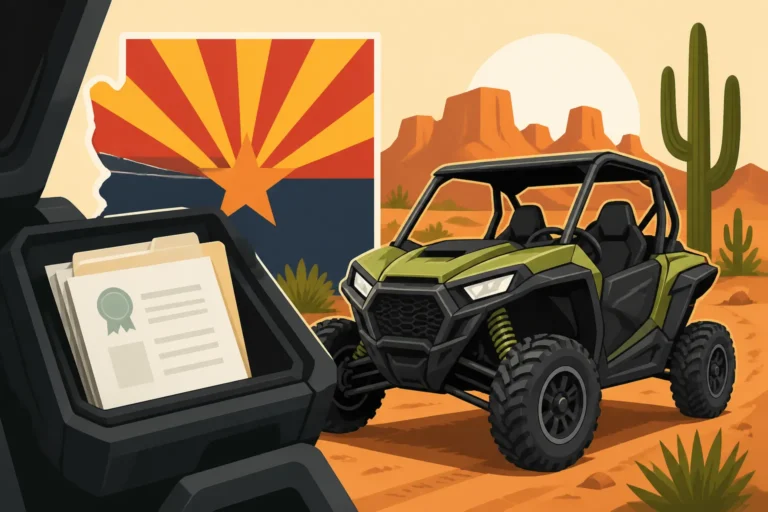
When you're ready to get your OHV titled in Arizona, a stack of paperwork often accompanies the transaction. The most critical document is the previous Certificate of Title from the seller, properly signed and dated, or the Manufacturer's Certificate of Origin (MCO) if the machine is brand new. This document establishes the chain of ownership and allows the MVD to transfer it into your name. Without it, you might be looking at a more complex process like a bonded title.
In addition to the title or MCO, you'll need a bill of sale. For private party sales, this document should clearly state the buyer and seller's information, the OHV's description (including VIN), the purchase price, and the date of sale. While you can create your own, using a template from a reputable service like LawDepot can ensure all the necessary legal clauses are included, protecting both buyer and seller. This ensures you have solid [Proof of Ownership for an Arizona Title]. You'll also need a valid form of personal identification, such as an Arizona driver's license or state ID.
For machines coming from out of state, or if there's any discrepancy, a VIN inspection might be required. This is to verify that the VIN on the machine matches the paperwork, a critical step in preventing fraud and ensuring accuracy. Always check with the MVD or third-party provider beforehand to confirm the exact documents needed for your specific situation, as requirements can sometimes vary slightly depending on the age of the machine or the nature of the transaction. For more on ensuring your paperwork is correct, consider [What an Arizona Bill of Sale Should Carry].
MVD vs. Third-Party Offices: Convenience vs. Cost
Deciding where to process your OHV title—at an official Arizona MVD office or a third-party authorized provider—often boils down to a trade-off between convenience and potential additional cost. Both options will get the job done, but the experience can be quite different. Knowing what to expect from each can help you make the best choice for your situation.
MVD offices are the direct state channels. They charge only the state-mandmandated fees, which include the Arizona OHV title fee, sales tax, and registration/decal fees. The primary drawback for many is the potential for long wait times, particularly during peak hours or popular seasons. If you have plenty of time and prefer to pay only the absolute minimum required, an MVD office is a perfectly viable option. You'll get the same official title, just potentially with a longer wait in a government building. You can find out more about the overall process at [Titling an ATV at an Arizona MVD Office].
Third-party providers, on the other hand, offer a more streamlined and often quicker experience. They are privately owned but licensed to perform MVD transactions. While they charge the same state fees as the MVD, they add their own service fee for the convenience. This extra charge covers their operational costs and allows them to offer amenities like shorter lines, extended hours, or more personalized service. If your time is valuable and you're willing to pay a bit extra for efficiency, a third-party provider might be your preferred choice. They're particularly helpful for complex situations or when you need quick turnaround. When considering the options, exploring [Registering Through Arizona MVD or a Third Party] might be useful.
Avoiding Common Titling Headaches and Unexpected Fees
Even with all the information at your fingertips, the titling process can sometimes throw curveballs. Small oversights or misunderstandings can lead to unexpected delays, additional fees, or even the need for more complex procedures. Being proactive and knowing the common pitfalls can help you navigate the process smoothly, ensuring your Arizona OHV title fee is the only state-mandated cost you pay for the title itself, without any added penalties or re-filing expenses.
One of the biggest headaches arises from incomplete or incorrectly signed paperwork. A title missing a signature, an incorrect date, or a VIN discrepancy on the bill of sale can grind the entire process to a halt. Always double-check all documents before heading to the MVD. Another common issue is not having the full amount of sales tax or use tax ready, especially if you bought from a private seller and didn't account for it in your purchase budget. This can lead to an unexpected bill at the counter.
By being meticulous with your paperwork, understanding all the costs involved beyond just the title fee, and knowing when and where to seek clarification, you can save yourself a lot of time, frustration, and potentially, extra money. It's all about being prepared and approaching the process with an informed mindset.
Correcting Paperwork Mishaps
Few things are as frustrating as showing up to the MVD or a third-party office, only to be told your paperwork isn't quite right. A common mistake is a misfilled or unsigned title. The seller's signature must be in the correct spot, and often a notary is required for certain sections, depending on the state the title originated from. If the seller has already left town, or you bought the machine from a distance, correcting these errors can be a significant challenge.
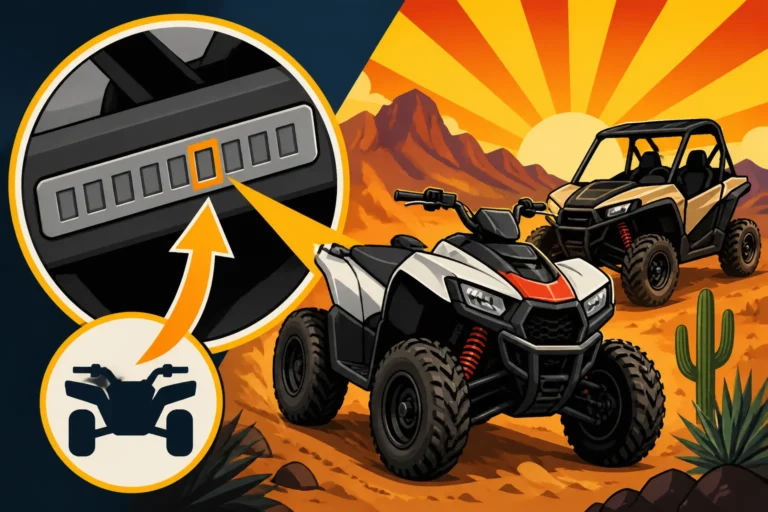
Another frequent issue is a discrepancy between the VIN on the title or bill of sale and the actual VIN on the machine. Sometimes, human error leads to a typo on the bill of sale, or a previous owner might have inadvertently listed the wrong VIN. This requires careful verification before you even start the titling process. If you notice a VIN discrepancy, you'll need to work with the seller to get a corrected bill of sale or other documentation. MVD has procedures for [Correcting a VIN on an Arizona Record], but it's always best to avoid the issue upfront.
To prevent these kinds of mishaps, take your time when inspecting the machine and its documents during the purchase. Verify the VIN on the title matches the machine. If you're using a generic bill of sale for a private transaction, make sure all fields are filled completely and legibly. Services like LawDepot offer customizable bill of sale templates that guide you through all the necessary information, reducing the chance of errors. A little diligence on the front end can save you a world of pain and potentially more fees later on.
Understanding Penalties for Late Titling
Arizona, like many states, has time limits for transferring a vehicle title after purchase. While the specific timeframe might vary, delaying the titling of your OHV beyond the allowed period can result in penalties. These penalties are typically in the form of late fees, which are added on top of your standard Arizona OHV title fee and any applicable sales tax. It's the state's way of encouraging timely and accurate record-keeping.
The reason for these late fees is twofold: it helps ensure the state's ownership records are current, which is important for law enforcement and for tracking sales tax revenue. If everyone waited indefinitely to title their machines, it would create chaos in the system. The penalties are designed to be a deterrent, prompting new owners to complete the necessary paperwork promptly.
So, if you just bought that Honda Pioneer last weekend, don't let the title paperwork sit on your kitchen counter for months. Check the current MVD guidelines for the specific timeframe within which you must transfer the title. Budget not only for the Arizona OHV title fee and sales tax but also for the time it will take to gather your documents and visit the MVD or third-party provider. Acting quickly after purchase is the simplest way to avoid an unnecessary late fee and ensure your new OHV adventure starts on the right foot.
| Scenario | Core Fee Type | Additional Likely Costs | Key Document(s) Needed |
|---|---|---|---|
| New OHV Purchase | Title Fee (new) | Sales Tax, Registration/Decal | MCO, Bill of Sale, ID |
| Used OHV Purchase | Title Fee (transfer) | Sales Tax, Registration/Decal | Previous Title, Bill of Sale, ID |
| Out-of-State Import | Title Fee (new AZ) | Use Tax, Registration/Decal | Out-of-State Title, Bill of Sale, ID |
| Replacement Title | Title Fee (duplicate) | (None directly related) | ID, Application for Replacement Title |
Disclaimer
This article is for general informational purposes only and does not constitute professional advice. Laws, prices and regulations vary by location and change over time. Consult a qualified professional for guidance on your specific situation.