What an Arizona Ranger Asks a Rider For
Riding the vast and breathtaking Arizona desert on your ATV or UTV offers an unparalleled sense of freedom, but that peace can quickly vanish the moment you see a ranger's vehicle pull up alongside you. For many riders, that sight sparks a surge of anxiety: Did I do something wrong? What are they looking for? Am I even supposed to have something on me right now? It's a completely normal reaction to feel a knot in your stomach, wondering if you have everything in order. This guide is here to untangle that worry, walking you through exactly what an Arizona Ranger is looking for and will ask for during a stop, helping you ride with confidence and stay legal out on those incredible trails.
What Triggers a Stop in the First Place?
It’s easy to assume that if a ranger stops you, it must be because you’ve done something wrong. And sometimes, yes, that’s exactly the case. But not every interaction begins with a violation. Rangers, whether from Arizona State Parks, the Game and Fish Department, or federal agencies like the Bureau of Land Management (BLM) and the Forest Service, have a wide range of duties, and sometimes a stop is purely preventative or routine. Understanding why they might approach you can help demystify the encounter.
Observed Violations on the Trail
Often, a ranger will initiate a stop because they've observed something that isn't quite right. This could be anything from a minor infraction to a serious safety concern or environmental damage. They are actively patrolling the vast network of trails and open lands that make Arizona a premier OHV destination. What catches their eye? Excessive speed, riding in areas clearly marked as closed or restricted, or operating a machine that appears to be missing essential safety equipment are all common reasons. Kicking up an unusually large dust plume from off-trail travel, or a machine roaring past noise limits, could also flag you down. They're not just looking for troublemakers; they're also ensuring that everyone is riding safely and responsibly, protecting both riders and the fragile desert ecosystem. Violations like riding in a sensitive riparian area or trespassing on private land are taken very seriously and can lead to significant penalties.
Routine Checks at Trailheads and Staging Areas
Not all stops are reactive. Sometimes, rangers conduct proactive checks, particularly at popular trailheads, staging areas, or major access points to public lands. Think of it like a quick roadside checkpoint, but in the desert. Their goal here isn't necessarily to catch someone in the act of violating a rule, but rather to ensure that riders are prepared and compliant before they even hit the main trails. They might be checking for current OHV decals, proper safety gear, or simply offering information about trail conditions or fire restrictions. These types of checks are especially common on busy weekends or during peak riding seasons, such as the cooler winter months. It’s a way for them to interact with the riding community, answer questions, and ensure everyone has the necessary permits and equipment for a safe and legal ride.
Responding to Calls or Reports
In some instances, a ranger's stop isn't random at all; they might be acting on a specific report or complaint. Perhaps another user of the public lands, like a hiker, equestrian, or even a local resident, reported an OHV violating rules—maybe riding in a noise-sensitive area, trespassing, or exhibiting dangerous behavior. These reports can be quite specific, leading rangers to look for a particular type of machine, color, or even a description of the rider. Similarly, if a ranger spots a machine that matches the description of one reported stolen, they will definitely initiate a stop. This type of encounter might feel more pointed, but remember, the ranger is simply doing their job to investigate a report. Staying calm and cooperative is crucial here, as it allows them to quickly ascertain the facts and, if you're not the party in question, let you continue your ride without undue delay.
The Documents and Gear a Ranger Expects to See
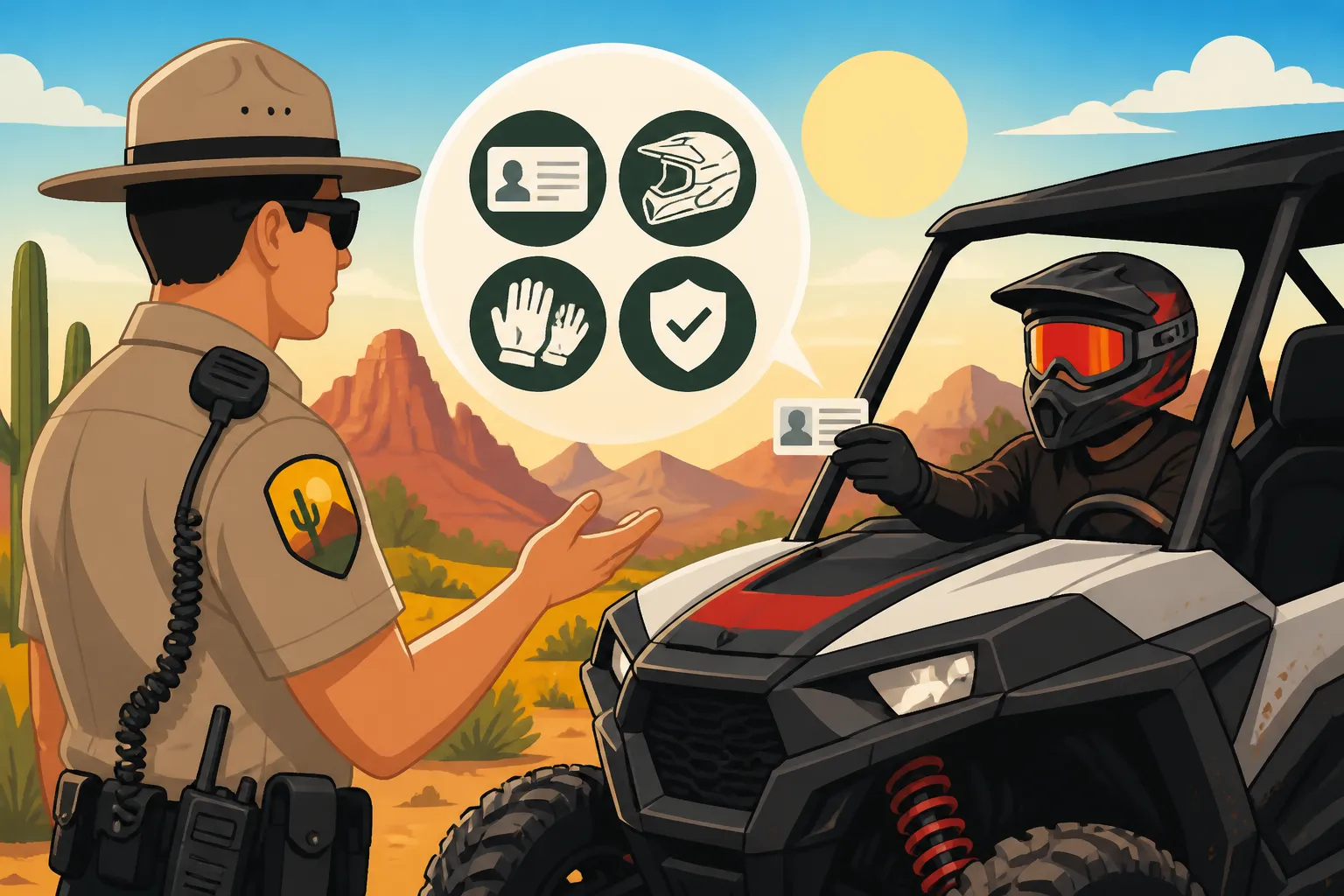
When a ranger approaches, the first thing on their mind is usually confirming that you're operating your machine legally and safely. This involves a few key pieces of documentation and ensuring your machine is properly equipped. Having these items ready and accessible will make the interaction much smoother and quicker.
Proof of Registration and Decal
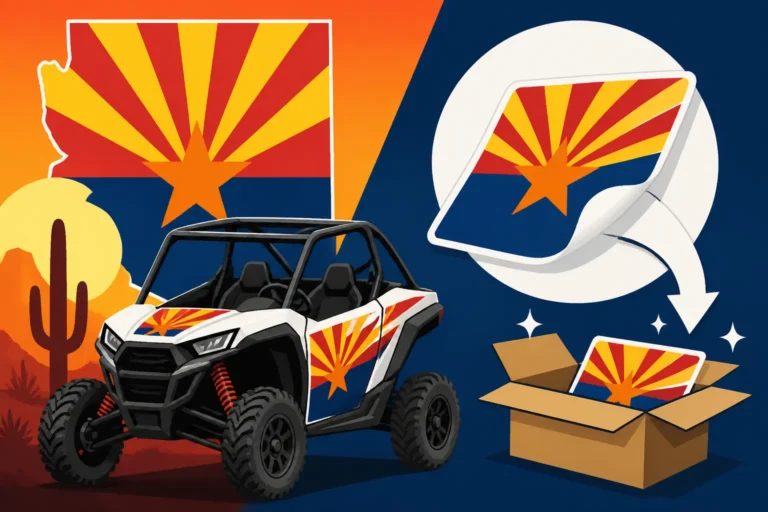
This is perhaps the most important item an Arizona Ranger will ask for. Every off-highway vehicle (OHV) operating on Arizona's public lands must display a current OHV decal. This decal isn't just a sticker; it's your proof that you've contributed to the Arizona OHV program, which funds trail maintenance, education, and enforcement efforts. The ranger will want to see that the decal is properly affixed to the upper-left corner of your license plate, as detailed in [Where the Arizona OHV Decal Goes on the Plate].
Even if your machine is street-legal and has a standard "MC" or "RV" plate, you generally still need the OHV decal for off-road use unless specific exemptions apply, such as agricultural use on private land. The ranger needs to verify that your decal is current and valid. If you don't have one, or if it's expired, you're looking at a citation. Remember, the decal helps ensure that riders are contributing to the very trails they enjoy, so it's a fundamental part of responsible riding in Arizona. Keep your decal paperwork or digital receipt handy as well, just in case there's any question about its validity or if the decal itself is damaged or missing.
Operator's License and Identification
Just like driving a car on public roads, operating an OHV on Arizona's public lands requires proper identification. If you are 18 years of age or older, a ranger will expect you to present a valid driver's license. This confirms your identity and that you are legally authorized to operate a motor vehicle. For younger riders, the rules are a bit different. [Arizona Age Rules for Young Riders] dictate specific requirements.
Operators aged 16 and 17 must possess a valid driver's license, and also complete Arizona's free mandatory OHV Decal Course. Those under 16 must generally be supervised by an adult at least 18 years old who also possesses a valid driver's license, and they must stay on designated OHV trails and roads. A ranger will likely ask for the supervising adult's identification as well. It’s not just about proving you can drive; it's about ensuring all operators are of appropriate age and have met any necessary training requirements to ride safely and legally. Always have your physical license on you; don't rely solely on a digital image, as not all agencies accept them as primary identification.
Proof of Ownership or Permission
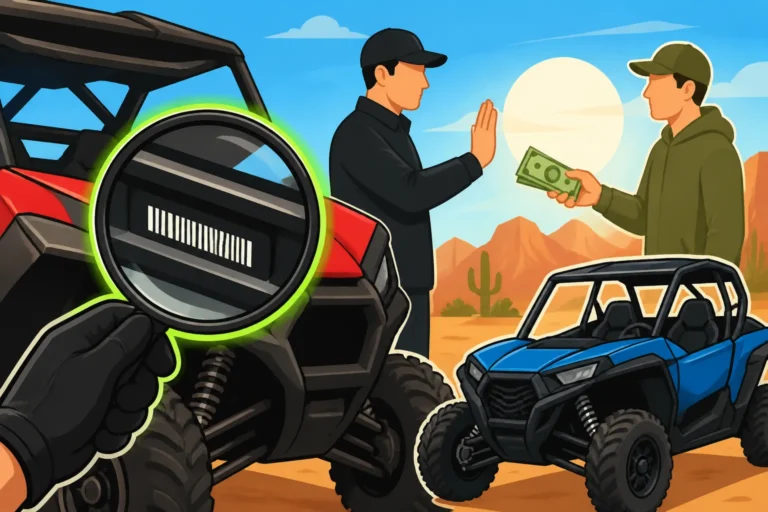
A ranger needs to confirm that you are the rightful owner of the OHV you're operating, or that you have explicit permission to use it. This is a critical step in combating vehicle theft and ensuring legal operation. While you might not carry your vehicle's certificate of title (which is generally a good idea to keep in a secure location, not on the machine itself), you should be able to provide proof of ownership. This typically means having a copy of the bill of sale or the registration document from the MVD.
If you're borrowing a machine from a friend or family member, a simple written note of permission from the owner can save a lot of hassle. This note should include the owner's name, contact information, the machine's VIN, and the dates you're authorized to ride it. For more formal borrowing arrangements, or if you're frequently lending out your machine, using a service like LawDepot to create a proper letter of authorization or a formal agreement can be incredibly useful, providing clear documentation for all parties, including law enforcement. This simple step can turn a potentially complicated stop into a quick verification.
Required Safety Gear and Equipment
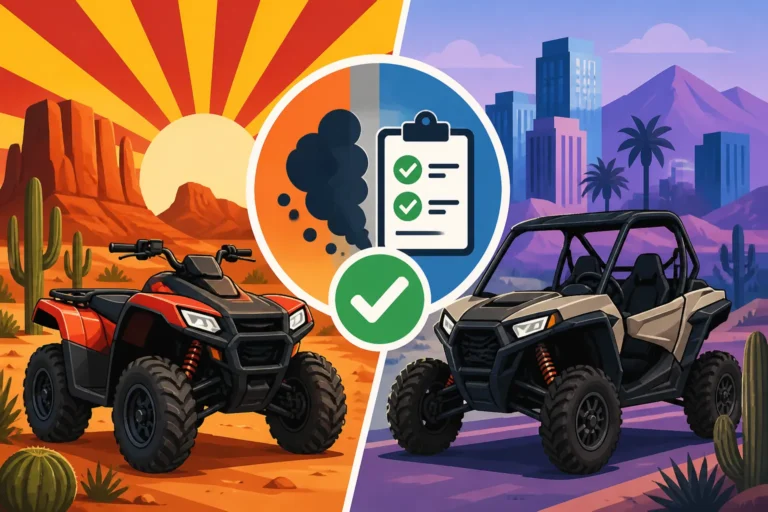
Beyond the paperwork, a ranger will also visually inspect your machine for essential safety equipment that's mandated by Arizona law. The most common item they check for is a USDA-approved spark arrestor on your exhaust system, which is crucial for preventing wildfires in the dry desert environment. If you don't have one, or if it's not in good working order, that's a direct violation. You can learn more about [Arizona's Spark Arrestor Requirement] in our comprehensive guide.
Other equipment they'll look for includes a properly functioning muffler to meet noise limits, and for riders under 18, a DOT-approved helmet. [Arizona Helmet Rules for Riders Under 18] are very clear on this. Eye protection is also highly recommended for all riders and is often a required component if riding on approved streets. If your machine is street-legal, they'll check for additional items like mirrors, headlights, taillights, a horn, and brake lights, as outlined in [What Arizona Requires on a Street-Legal Machine]. These equipment checks aren't arbitrary; they are in place to ensure rider safety, protect the environment, and minimize disturbances to other public land users and nearby communities.
Common Violations Rangers Look For
While having your documents in order is paramount, rangers are also on the lookout for specific actions or omissions that constitute violations. Being aware of these common infractions can help you avoid a ticket and ensure a smoother riding experience. Ignorance of the law is rarely an excuse, so understanding these points is key to responsible OHV operation.
Missing or Improperly Displayed Decal
This is perhaps one of the easiest tickets a rider can get and one of the most common reasons for a ranger stop. As mentioned, every OHV operating on Arizona public lands requires a current OHV decal. If your machine doesn't have one, or if it's expired, that's an immediate red flag. Even if you have the decal but it's not affixed in the correct location—the upper-left corner of the license plate—it can still be considered an improperly displayed decal and warrant a citation.
The ranger will quickly spot this. It's a clear-cut violation that doesn't require complex investigation. Many riders, especially those new to Arizona or visiting from out of state, sometimes overlook this requirement, mistakenly believing their out-of-state registration is sufficient, or that they only need it for certain types of land. However, the rule applies broadly across state and federal public lands in Arizona. The revenue from these decals is vital for maintaining the trails you enjoy, so compliance is strictly enforced. Understanding [Penalties for an Undecaled Machine in Arizona] can underscore the importance of this simple sticker.
Riding Off-Designated Trails or Closed Areas
One of the most significant concerns for land managers is the protection of natural resources and private property. Riding off-designated trails, cutting new tracks, or entering areas marked as closed (such as wilderness areas, wildlife preserves, or sensitive ecological zones) is a serious violation. These actions can damage fragile desert vegetation, disrupt wildlife habitats, cause erosion, and destroy archaeological sites. Rangers are extremely vigilant about this.
They use maps, GPS, and their knowledge of the terrain to identify unauthorized routes. Signs, fences, and natural barriers often mark these areas, and rangers expect riders to respect them. Ignorance of a boundary is generally not an acceptable defense, so it's critical to know where you are riding. Consulting [Reading an Arizona Motor Vehicle Use Map] before you head out is an essential practice for any responsible rider. These maps clearly show open trails, closed areas, and [Arizona Wilderness Boundaries and Machines]. Straying from designated routes not only earns you a hefty fine but also contributes to the negative perception of the OHV community.
Alcohol or Drug Impairment
Operating an OHV under the influence of alcohol or drugs is just as illegal and dangerous as driving a car while impaired, and rangers treat it with the same gravity. [Arizona Alcohol Limits for OHV Operators] are the same as for highway vehicles, meaning a Blood Alcohol Content (BAC) of 0.08% or higher is considered impaired. Beyond the legal limit, any level of impairment that affects your ability to safely operate the machine is a violation.
Rangers are trained to recognize the signs of impairment, such as slurred speech, unsteady gait, and erratic riding behavior. The consequences for an OHV DUI can be severe, including significant fines, loss of driving privileges, and even jail time. It's not worth the risk, not only for the legal ramifications but also for your safety and the safety of others on the trail. The desert can be an unforgiving environment, and operating an OHV requires full attention and quick reflexes. Always designate a sober operator, or simply save the celebratory drinks for after the ride, back at camp.
Unsafe Operation and Passenger Rules
Rangers are also keenly focused on rider safety and adherence to basic operational rules. This includes looking for reckless riding, excessive speed for conditions, or performing stunts in inappropriate areas. These behaviors not only endanger the rider but also pose a risk to other trail users and can cause undue wear and tear on the trails themselves. Furthermore, carrying more passengers than your machine is designed for, or allowing passengers to ride unsafely (e.g., standing up, not using seatbelts in UTVs), will draw a ranger's attention.
[Arizona Rules for a Child Passenger] are particularly strict, emphasizing proper restraint and age-appropriate machines. Rangers want to ensure that children are riding safely, with appropriate supervision and protective gear. Operating an OHV, especially a side-by-side, without the proper safety harnesses, roll cages, or other manufacturer-installed safety features can also be a point of concern. These rules are in place to minimize injuries and ensure everyone returns home safely after a day of riding.
How to Handle a Ranger Encounter Gracefully
Seeing a ranger can be nerve-wracking, but how you react to a stop can significantly influence the outcome of the interaction. Approaching the situation calmly, cooperatively, and respectfully will almost always lead to a more positive experience, even if you do end up with a citation. Remember, rangers are enforcing laws designed to keep everyone safe and preserve the riding areas we all enjoy.
Staying Calm and Cooperative
When a ranger signals for you to stop, pull over to a safe area as soon as possible, ensuring you're not blocking the trail or creating a hazard. Turn off your machine's engine and remove your helmet so you can clearly hear and communicate. Keep your hands visible, perhaps on the handlebars or steering wheel, to show that you're not reaching for anything. Avoid making sudden movements.
The ranger will typically approach your machine and explain the reason for the stop. Listen attentively to what they say. Maintain a polite and respectful tone throughout the conversation. Arguing or becoming defensive will rarely de-escalate the situation and can often make it worse. Even if you disagree with the reason for the stop, expressing your concerns respectfully and calmly is always the better approach. A cooperative attitude helps the ranger complete their duties efficiently and minimizes potential tension.
Presenting Your Documents
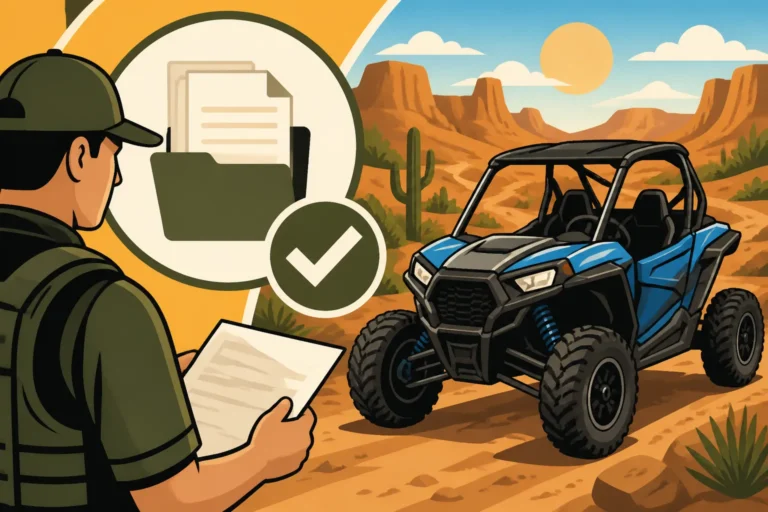
One of the best ways to prepare for a ranger stop is to have your required documents organized and easily accessible. A small, waterproof bag or case kept on your person (not buried under gear in the machine) is ideal. When the ranger asks for your driver's license, OHV registration, or proof of ownership, you can quickly retrieve them without fumbling around.
Having copies of important documents, such as your bill of sale or a letter of permission if you're borrowing the machine, is also incredibly helpful. While the ranger might accept a digital image on your phone for some items, having physical copies readily available demonstrates preparedness and professionalism. For essential legal documents that clarify ownership or permission, like a properly drafted bill of sale or a formal letter of authorization for a minor, using templates from services like LawDepot can ensure all necessary information is present and legally sound, preventing any ambiguity during a stop.
Knowing Your Rights (and the Ranger's Role)
It's important to remember that rangers, whether state or federal, are law enforcement officers with the authority to enforce state and federal laws on public lands. This includes issuing citations, conducting inspections of your machine for required equipment, and investigating potential violations. They can also ask for your identification and vehicle information.
You have the right to ask why you were stopped. You also have the right to remain silent if you believe your words could incriminate you, though generally, answering basic questions about your identity and vehicle is expected. While you don't have to consent to a search of your person or property without probable cause or a warrant, remember that your OHV is subject to inspection for safety equipment and proper registration as a condition of operating on public lands. Understanding these boundaries can help you navigate the interaction confidently and appropriately.
Addressing Citations and Fines
If, despite your best efforts, you receive a citation, accept it without arguing. Signing the ticket generally means you acknowledge receipt, not that you admit guilt. The ranger will explain the violation and the associated fine. Pay close attention to the instructions on the citation regarding payment, court dates, and options for appealing.
You typically have the right to contest the citation in court if you believe it was issued in error or unjustly. If you decide to appeal, gather all relevant documentation, photos, and any witness information that supports your case. For help in understanding your options or drafting formal correspondence for an appeal, resources like LawDepot can offer valuable guidance and templates for legal letters. Ignoring a citation will only lead to more severe penalties, including increased fines, license suspension, or even a warrant for your arrest. Address the issue promptly and follow the legal process, even if it's frustrating.
| Item a Ranger May Ask For | What to Provide | Why it's Important |
|---|---|---|
| Proof of ID | Valid Driver's License or State ID (for 18+ operators) | Confirms identity and legal age/authorization to operate OHV. |
| OHV Decal/Registration | Current Arizona OHV Decal (affixed to plate), registration paperwork | Mandatory for public land use, funds trail maintenance. |
| Proof of Ownership | Copy of Title or Bill of Sale, or formal permission letter | Verifies legal ownership, deters theft, confirms authority to operate. |
| Safety Equipment | USDA-approved Spark Arrestor, Helmet (for <18), Eye Protection | Prevents wildfires, protects riders, meets state safety laws. |
| For Street-Legal OHVs | Proof of Insurance, functional Mirrors, Horn, Lights | Required for legal operation on public roads and highways in Arizona. |
| Youth Rider Info | Supervising adult's ID, proof of youth's OHV course completion | Ensures compliance with [Arizona Age Rules for Young Riders] and supervision. |
Disclaimer
This article is for general informational purposes only and does not constitute professional advice. Laws, prices and regulations vary by location and change over time. Consult a qualified professional for guidance on your specific situation.