Cattle on Open Range Desert Roads
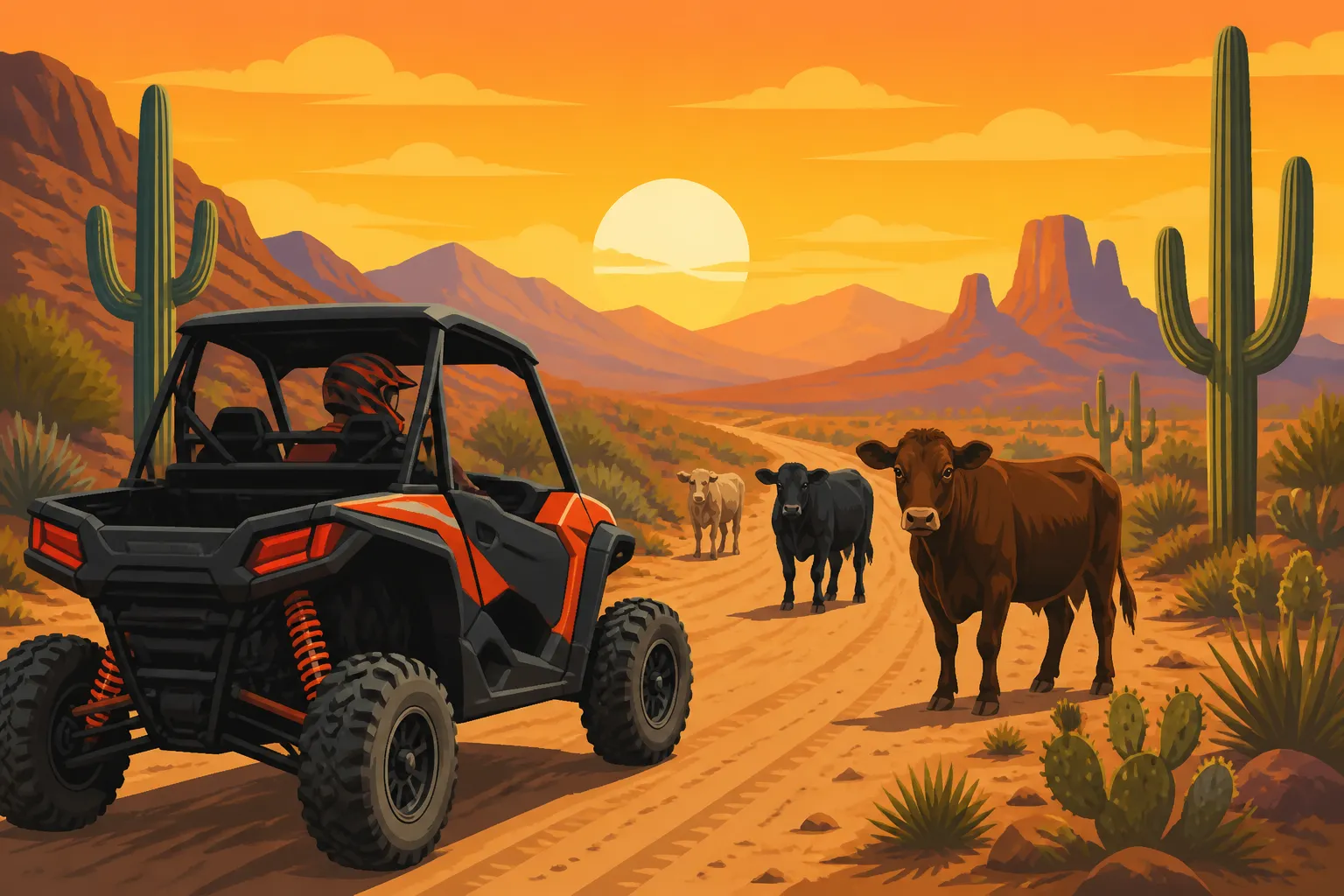
Riding your ATV or UTV across Arizona's vast and breathtaking desert landscapes offers an unparalleled sense of freedom and adventure. But along with the stunning views and exhilarating trails, you might encounter some truly unique challenges – and one of the most common, and potentially dangerous, is the unexpected presence of cattle on open range desert roads. It's a jolt to the system when you round a bend and suddenly find a herd of bovines blocking your path, or worse, casually strolling across the very track you're on. This guide is here to walk you through exactly what "open range" means for Arizona riders, how to navigate these encounters safely, and what responsibilities fall on your shoulders when you share the desert with its four-legged, free-roaming residents.
Understanding Arizona's Open Range Laws and Your Responsibilities
Arizona's open range laws are a unique part of the state's heritage, reflecting its long history of ranching and wide-open spaces. For ATV and UTV riders, understanding these laws isn't just about respecting tradition; it's about staying safe and avoiding potential legal and financial headaches.
The Concept of Open Range in Arizona
When you hear "open range" in Arizona, it literally means that livestock, particularly cattle, are legally permitted to roam freely without fences. Unlike many other states where landowners are generally required to fence in their animals, Arizona operates on a different principle in designated open range areas. This means that you, as a rider, can expect to find cattle, horses, or other livestock on or alongside unpaved roads, trails, and even some paved roads in rural or undeveloped areas. It's not just a quaint idea; it's the law, rooted deeply in the state's history of vast grazing lands.
This concept largely applies to the vast swathes of state trust land, Bureau of Land Management (BLM) land, and Forest Service land that make up much of Arizona's off-highway vehicle (OHV) playground. Ranchers often have grazing leases on these public and state lands, and their cattle aren't confined to specific pastures. Instead, they range across huge areas, often following natural water sources or foraging for the best feed. While you might occasionally see "Open Range" signs, don't rely on them as your only indicator. The absence of fences is usually the biggest clue, along with, of course, the actual presence of animals or their droppings on the road.
Who Has the Right-of-Way? (Hint: It's Not Always You)
This is perhaps the most critical piece of information for any rider on open range land: in Arizona, in open range areas, livestock generally have the right-of-way. Yes, you read that right. As a driver or operator of a motor vehicle, you are legally responsible for exercising due care to avoid colliding with any livestock on the roadway. This means if you hit a cow, the blame, and potentially the liability, could very well fall on you. It's a stark contrast to how we think about deer or other wildlife, where the assumption is often that the animal darted out unexpectedly.
The implications here are significant. If you're involved in a collision with livestock on open range, you could be held responsible for the damage to the animal, potential vet bills, or even the value of the animal if it's killed. Your own ATV or UTV could suffer catastrophic damage – we're talking bent frames, broken suspension components, shattered plastics, and more. Beyond the machine, your own safety is paramount, and a collision with an animal weighing hundreds, if not a thousand, pounds can lead to serious injuries. This is why a defensive riding mindset is absolutely essential, understanding that you are operating in their territory, and they aren't always looking out for you. Checking your [Arizona OHV insurance cost] and understanding your coverage for collision and liability is a smart move before you head out.
Recognizing Open Range Indicators
Knowing you're in open range country isn't always marked by a clear sign, so it’s important to be observant. The most obvious indicator, of course, is seeing cattle or other livestock freely roaming. But even before you spot an animal, there are clues. One of the most common is the presence of cattle guards. These are those metal grate structures built into the road that allow vehicles to pass but are designed to prevent livestock from crossing. If you see a cattle guard, you are almost certainly entering or exiting open range.
Another strong indicator is the general lack of fencing alongside the roads and trails. While some private property might have fences, many public and state lands will not. You'll also notice tell-tale signs like fresh cow patties on the trail, trampled vegetation, or even worn paths where cattle frequently travel to water sources or grazing areas. Always be extra vigilant when riding in areas known for ranching, especially on unpaved roads and dirt tracks that wind through wide-open desert. Remember, these animals aren't pets; they can be unpredictable, and their presence defines the rules of the road in these special parts of Arizona.
Safe Riding Strategies When Encountering Cattle
Encountering cattle on your ride doesn't have to be a stressful or dangerous situation if you approach it with the right mindset and strategies. It's all about awareness, patience, and respecting the animals and their environment.
Slow Down and Be Prepared to Stop
This is arguably the single most important piece of advice when riding in open range territory: drastically reduce your speed. Cattle are unpredictable. A seemingly docile animal grazing by the side of the road can suddenly decide to cross directly in front of you, often without warning. Young calves are especially prone to darting out impulsively, sometimes trying to rejoin their mothers. When you're flying along at speed, even on a dirt road, you simply won't have enough time to react.
Imagine cresting a small hill, the sun in your eyes, and suddenly a dark shape fills your view. Or picture rounding a dusty corner, your vision obscured by the dust of your riding buddies, only to find a stubborn bull taking up the entire trail. These aren't hypothetical scenarios; they are the reality of riding on open range. Your response time is paramount. Keeping your speed down allows you to see further ahead, gives you more time to brake, and ensures you maintain full control of your ATV or UTV. Modern machines from manufacturers like Polaris or Can-Am have excellent braking systems, but they can only do so much if you don't give them a chance to work. Be ready to come to a complete stop at any moment, especially in areas with limited visibility like blind curves, thick brush, or dusty sections.
Approaching and Passing Livestock
Once you've spotted cattle, your next move needs to be calm and deliberate. First and foremost, avoid any sudden movements or loud noises. Resist the urge to rev your engine, honk your horn repeatedly, or accelerate aggressively. These actions will only spook the animals, making them more likely to bolt in unpredictable directions – possibly directly into your path. Instead, slow down to a crawl, almost an idle. Give the animals as much space as you possibly can.
If the cattle are blocking the entire trail, be patient. Wait. They aren't in a hurry. You might have to wait several minutes for them to slowly move off the path. If there's ample room to pass safely on one side, choose the widest possible berth and creep by at a snail's pace. Maintain a steady, low engine note. Never try to "herd" them with your machine; this is dangerous, disrespectful, and could lead to serious consequences. Remember, you're a visitor in their grazing area. Sometimes, a quiet, gentle voice speaking calmly can help them realize you're there without startling them, but mostly, it’s about slow, predictable movements.
Night Riding and Reduced Visibility
Riding at night in open range country introduces a whole new level of challenge and risk. Cattle are incredibly difficult to see after dark, even with powerful aftermarket headlights. Their dark hides blend almost perfectly with the shadows and the desert terrain, making them practically invisible until you're right upon them. Even at dusk or dawn, when light levels are changing, your eyes struggle to adjust, and a large animal can appear out of nowhere.
If you must ride during these low-light conditions, extreme caution is non-negotiable. Reduce your speed even further than you would in daylight. Utilize any additional lighting you have, such as light bars from companies like SuperATV, to extend your field of vision as much as possible. Pay close attention to the shoulders of the road and any movement in the periphery. Watch for glints of eyes or reflections, though cattle don't always have reflective eyes like deer. Riding with a group can offer more sets of eyes, but each rider still needs to maintain their own vigilance. Remember, the same rules apply – slow down, be prepared to stop, and give them plenty of space. Night riding truly emphasizes the importance of defensive riding in open range.
Protecting Your Machine and Yourself
Colliding with livestock is not just an inconvenience; it can be a devastating event for both your machine and your physical well-being. Understanding the potential damage and what to do in the aftermath is crucial for any rider on Arizona's open range.
The Damage Cattle Can Inflict (and What Happens Next)
A collision with a large animal like a cow is not like hitting a small rock or a tree branch. These animals weigh hundreds, sometimes over a thousand, pounds. The impact forces are immense. We're talking about the potential for catastrophic damage to your ATV or UTV. Picture a bent frame, shattered A-arms, cracked engine casings, ripped-off wheels, and completely destroyed body panels. Your machine could be rendered inoperable instantly, leaving you stranded in a remote desert area.
Beyond the machine, the risk to yourself and your passengers is severe. Ejection from an ATV, or a sudden, violent stop in a UTV, can lead to broken bones, head injuries, internal trauma, and worse. Even at relatively low speeds, the sheer mass of the animal can cause significant injury. What happens next? You'll be dealing with immediate safety concerns, assessing injuries, and then facing the daunting task of recovery and repair. Getting your damaged machine off the trail, especially if it’s far from a main road, can be a major undertaking, possibly requiring a costly tow and extensive repair bills that can quickly overshadow the initial thrill of the ride. [Arizona OHV Crash Reporting] is something you should be familiar with in case of such an incident.
Insurance and Liability Considerations
Understanding your insurance coverage is absolutely vital when riding in open range territory. While your standard OHV insurance policy might cover damage to your machine in a collision, the nuances of liability when livestock are involved can be complex. In an open range state like Arizona, where livestock generally have the right-of-way, proving that you were not at fault or that the rancher was negligent can be incredibly difficult, if not impossible. You could potentially be liable for the value of the animal, veterinary care, or other associated costs for the rancher.
It’s paramount to review your specific insurance policy documents. Look for details on collision coverage, comprehensive coverage, and liability limits. Don't assume your auto policy extends to your OHV; it usually doesn't. Some riders take proactive steps to minimize machine damage by installing sturdy aftermarket protection, such as heavy-duty bumpers, brush guards, or full skid plates. Products from companies like SuperATV offer a range of robust options designed to absorb impacts and protect critical components, potentially mitigating some of the damage in a low-speed, unavoidable collision with an animal or other obstacle. However, even the toughest armor is no substitute for safe riding practices and avoiding impact altogether.
Reporting an Incident
Should the unthinkable happen and you are involved in a collision with livestock, your immediate priorities are safety and proper reporting. First, ensure everyone in your party is safe and assess for injuries. Administer first aid if needed. Once human safety is addressed, secure the scene as best you can to prevent further injury or damage. If the animal is injured or killed, and if you can do so safely, try to identify any branding or ear tags to determine ownership.
Next, you'll need to report the incident. If there are injuries or significant damage, or if the animal is gravely hurt or deceased, contact local law enforcement (sheriff's office) or the Arizona Game and Fish Department. They can help investigate, determine ownership if possible, and advise on next steps. It's also critical to notify your insurance provider as soon as reasonably possible. They will guide you through their claims process and advise on liability. Document everything: take photos of the scene, your damaged machine, and the animal (from a safe distance). Collect contact information from any witnesses. Proper reporting is not just a legal requirement but essential for navigating potential insurance claims and liability issues.
Coexisting Peacefully on Arizona's Open Range
Riding on Arizona's open range isn't just about navigating physical obstacles; it's about being a responsible recreational user sharing the land with a working industry. Thoughtful actions can go a long way in ensuring access for all and maintaining good relationships with ranchers and other land users.
Respecting Ranchers and Their Livelihoods
It's easy to forget, amidst the thrill of riding, that the Arizona desert is also a working landscape for many. Ranchers depend on these vast open lands to graze their livestock, and their livelihood is intrinsically tied to the health and safety of their herds. When you encounter cattle, remember that these aren't just wild animals; they are someone's property and their income. Disrupting them, chasing them, or causing them distress can have a very real negative impact on the rancher.
A key aspect of respecting ranchers is understanding the role of gates. If you come across a gate on an unpaved road or trail, observe its status. The golden rule is: "Leave gates as you find them." If a gate is open, leave it open. If it's closed, close it behind you. These gates are often strategically placed by ranchers to manage their herds, move them to different pastures, or keep them away from certain areas. Carelessly leaving a closed gate open, or vice-versa, can lead to cattle straying, getting lost, or wandering into dangerous areas. Your mindful actions reflect positively on the entire OHV community and help maintain access to these incredible riding areas for everyone. You might also encounter signage about [Arizona OHV Rules for Ranch and Farm Machines], which further highlights the working nature of the land.
Environmental Impact and Trail Etiquette
Beyond direct interactions with cattle, responsible riding on open range extends to your general trail etiquette and environmental impact. Staying on marked trails and avoiding creating new tracks is crucial, not just for the fragile desert ecosystem but also for preventing disturbance to grazing areas. While cattle themselves create paths, human-made deviations can impact vegetation that livestock rely on.
Avoid any actions that could be interpreted as harassing or disturbing the cattle. This includes not chasing them, not revving your engine excessively near them, and generally giving them a wide berth. Remember, loud noises and fast movements can stress these animals, which isn't fair to them or the ranchers. Practice "Leave No Trace" principles diligently: pack out everything you pack in, and leave the natural environment as undisturbed as possible. This includes being mindful of your OHV's noise levels, especially when riding near residential areas or established ranches, to avoid [Desert Community Noise Complaints].
Equipping Your Machine for Desert Encounters
While no piece of equipment can prevent every accident, equipping your machine thoughtfully can provide an extra layer of protection and readiness for unexpected encounters, including those with livestock. As mentioned earlier, robust aftermarket bumpers and brush guards are excellent investments. These components, readily available from brands like SuperATV, are designed to absorb impacts and protect the front and sides of your UTV or ATV, reducing the likelihood of critical damage to steering components, radiators, or suspension in a low-speed collision.
Beyond physical protection, ensure your machine has powerful, reliable lighting. Upgraded headlights and auxiliary light bars are invaluable for increasing visibility, especially during dawn, dusk, or night rides when cattle are almost invisible. A good horn, audible at 200 feet, is also a required safety feature for street-legal machines and can be useful to alert animals to your presence from a distance without startling them excessively. Finally, always carry a basic toolkit, tire repair kit, and sufficient water and emergency supplies. Being self-reliant in the remote desert, where cell service is often nonexistent, is your best defense against unexpected breakdowns or the aftermath of any unforeseen incident.
| Action Item | Do | Don't |
|---|---|---|
| Speed | Slow down significantly in open range areas. | Speed through blind curves or dusty sections. |
| Approach | Approach slowly, quietly, and predictably. | Rev your engine, honk aggressively, or make sudden movements. |
| Passing | Give animals wide berth; wait patiently if they block the trail. | Attempt to "herd" cattle or force your way through a group. |
| Gates | Leave gates exactly as you find them (open or closed). | Leave a closed gate open or an open gate closed. |
| Visibility | Use extra lighting at dawn/dusk/night; be extra vigilant. | Assume you can see animals clearly in low light. |
| Respect | Understand it's working land; be a courteous user. | Harass, chase, or distress livestock. |
| Safety Gear | Wear all appropriate riding safety gear (helmet, eye protection). | Ride without proper protection, assuming you won't encounter hazards. |
| Machine Protection | Consider robust aftermarket bumpers and skid plates. | Rely solely on stock plastics for impact protection. |
| Reporting Incident | Document everything, contact authorities and insurance if collision. | Leave the scene without reporting, or ignore injured animals. |
Disclaimer
This article is for general informational purposes only and does not constitute professional advice. Laws, prices and regulations vary by location and change over time. Consult a qualified professional for guidance on your specific situation.