Bringing a Utah Side-by-Side to Arizona
Moving to a new state can be an exciting adventure, but it also comes with a hefty dose of paperwork and regulatory hurdles, especially when you bring along your beloved side-by-side. The last thing any off-road enthusiast wants is to arrive in the vast, open desert of Arizona with a Utah-registered machine, only to find themselves running afoul of the local laws. This guide will walk you through the entire process of getting your Utah side-by-side legally recognized and ready to hit the trails here in the Grand Canyon State, helping you avoid common headaches and potential fines.
Understanding Arizona's OHV Registration Landscape for New Arrivals
When you make Arizona your new home, or even if you plan to spend a significant portion of the year here, the state expects you to play by its rules when it comes to your vehicles, including your off-highway vehicles (OHVs). It’s not enough to just keep your Utah registration current; Arizona has its own system designed to ensure all resident OHVs contribute to trail maintenance and safety initiatives.
Residency and the Arizona Registration Deadline
One of the first questions people have is, "How long do I have before I have to register my side-by-side in Arizona?" The Arizona Department of Transportation (ADOT), which oversees the Motor Vehicle Division (MVD), generally considers you a resident once you've established a physical presence and intent to remain. This could be by getting an Arizona driver's license, registering to vote, or enrolling children in school. Once you're officially an Arizona resident, you typically have a short window—usually 15 days—to register your out-of-state vehicles, including your side-by-side. Missing this deadline can lead to complications, so it's always best to get a jump on the process as soon as you settle in.
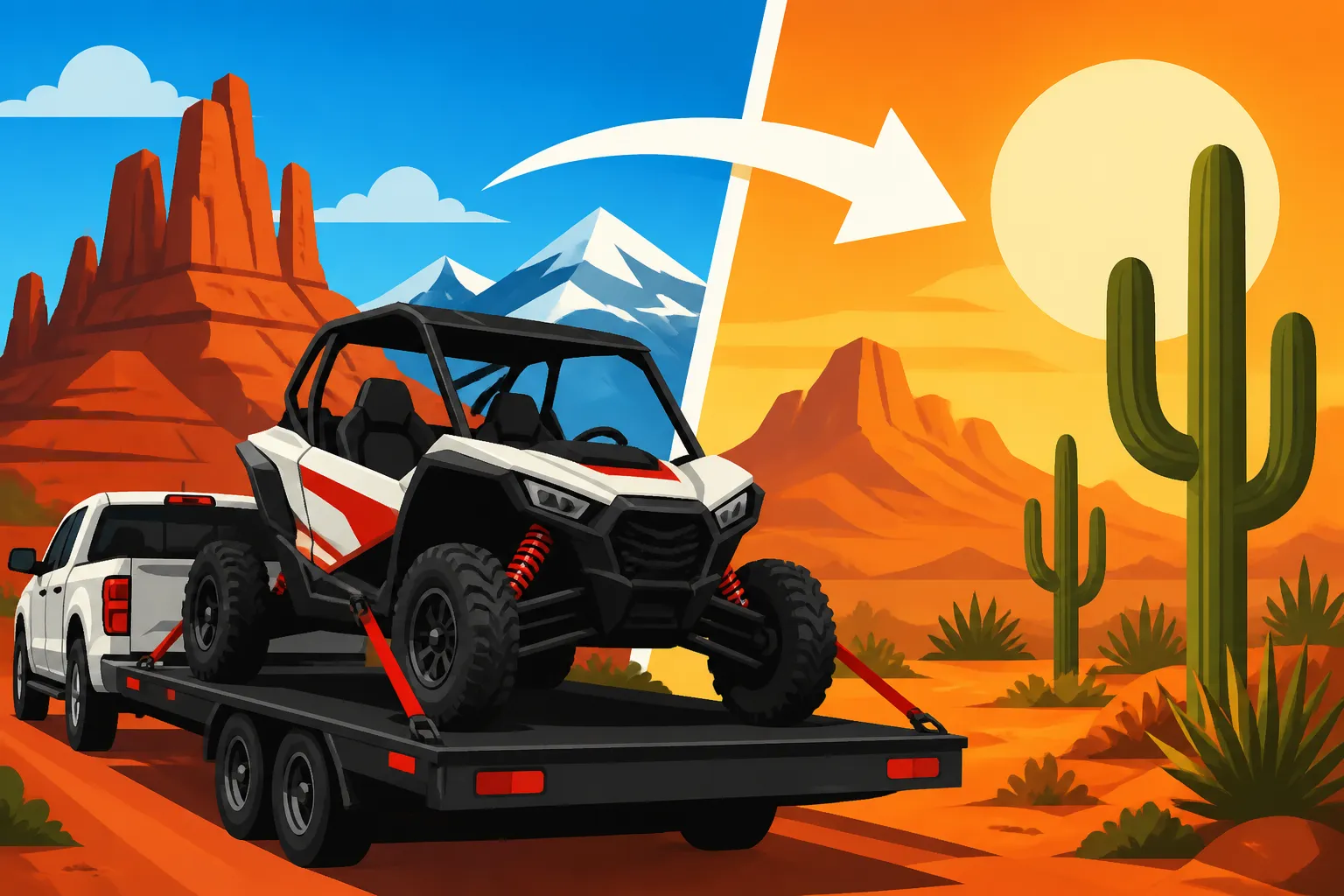
Imagine pulling up stakes from St. George or Moab, Utah, with your trusty Polaris RZR loaded on the trailer, and arriving at your new home in Prescott Valley. You're eager to explore the Bradshaw Mountains. While your Utah plates might still be current, Arizona's MVD expects you to transfer your vehicle registration and title over once you've officially moved. It's not just about the plate; it's about acknowledging your new residency and ensuring your machine is part of the Arizona system. This means getting an Arizona title and, crucially for OHVs, an Arizona OHV Decal. You can find more specific details on the timeline by checking out [Arizona Registration Deadline for New Residents].
Why Your Utah Registration Won't Cut It Long-Term
It’s tempting to think you can just keep renewing your Utah registration, especially if it's convenient or you spend part of your year back there. However, for bona fide Arizona residents, your Utah registration is essentially a temporary pass. Arizona requires all resident-owned OHVs to be titled and registered within the state. This isn't just bureaucratic red tape; it's a critical part of how Arizona funds and manages its vast network of trails.
The money collected from OHV registrations and decals goes directly into the Arizona State Parks OHV Recreation Fund. This fund is vital for maintaining and improving existing trails, developing new riding areas, promoting safety education, and enforcing OHV laws. So, when you get an Arizona decal, you're not just complying with the law; you're actively contributing to the preservation and enhancement of the very trails you'll be enjoying. While your Utah registration supports Utah's system, it doesn't contribute to Arizona's infrastructure, which is why the state has this residency requirement. Your Utah registration might offer legal passage in Utah, but it won't keep you compliant on Arizona's public lands if you're an Arizona resident.
The Arizona Titling Process for an Out-of-State OHV
Transferring your side-by-side's title from Utah to Arizona is a critical step, establishing your legal ownership in your new home state. This process is designed to be straightforward, but it requires careful attention to detail and the right documentation.
Essential Documents You'll Need to Transfer Your Title
To successfully title your Utah side-by-side in Arizona, you'll need to gather a few key documents. The most important is your existing Utah Certificate of Title. This document is the cornerstone of proving your ownership. If you recently purchased your side-by-side in Utah and haven't yet transferred the title into your name, or if the Utah title is missing, you'll need additional documentation. In such cases, a properly executed bill of sale from the previous owner is crucial. This helps establish the chain of ownership. Arizona MVD will also require a Vehicle Identification Number (VIN) inspection. This is a simple verification to ensure the VIN on your machine matches the one on your documents, preventing fraud and ensuring accuracy in state records. You can often get this done at an MVD office, by a certified third-party provider, or sometimes even by law enforcement officers.
Let's say you bought your Can-Am Defender from a private seller near Salt Lake City just before moving to Arizona. You have the Utah title, signed over to you, and a handwritten bill of sale. When you go to title it in Arizona, the MVD will want to see that Utah title. They'll also perform the VIN inspection to confirm the machine physically matches the paperwork. If your Utah title is in your name, great. If you bought it from a private party in Utah, make sure you have a solid bill of sale detailing the transaction. This is often an overlooked piece of paper, but it's essential for proving [Proof of Ownership for an Arizona Title]. For more on what this document should contain, look at [What an Arizona Bill of Sale Should Carry].
Navigating the MVD or a Third-Party Provider
Once you have all your documents in order, you have two primary avenues for processing your title and registration: the Arizona Motor Vehicle Division (MVD) offices or an authorized third-party MVD service provider. Both options will get the job done, but they offer different experiences.
Visiting a traditional MVD office often means longer wait times, especially if you go during peak hours. You'll typically take a number, wait your turn, and then be guided through the process by an MVD agent. While this can sometimes feel slow, you're getting direct service from the state agency. Alternatively, Arizona has a robust network of authorized third-party MVD providers. These private businesses are licensed by the state to perform many of the same services as a full MVD office, including titling and registration. Many people find these third-party providers more convenient, often with shorter wait times and more personalized service. They might charge a small additional service fee, but for many, the time saved and the ease of the transaction are well worth it. Whether you choose the MVD directly or a third-party, they will collect the necessary fees for the title transfer and any applicable registration costs. You can learn more about these options by checking out [Third-Party MVD Providers That Register OHVs] or specifically about the process at an MVD office through [Titling an ATV at an Arizona MVD Office]. Ultimately, you're working towards securing your [Arizona Certificate of Title for an Off-Highway Vehicle].
Getting Your Arizona OHV Decal and Plate
Once your Utah side-by-side has an Arizona title, the next crucial step is getting it registered and properly decaled. This is where your machine truly becomes an official Arizona off-highway vehicle, ready to explore hundreds of miles of designated trails.
The Mandatory Arizona OHV Decal
The Arizona OHV Decal is not just a sticker; it's your permit to ride on many of the state's incredible public lands, and it's mandatory for all OHVs operating in Arizona that are not otherwise street legal. This annual decal plays a vital role in the state's OHV program, as the funds generated directly support the maintenance, development, and improvement of Arizona's vast network of OHV trails and riding areas. Without a current decal, you risk being cited by law enforcement, and believe me, those citations can put a damper on any desert adventure.
When you register your side-by-side, you'll purchase this decal. It's a small sticker, but its impact is huge for the riding community. It needs to be conspicuously displayed on your license plate, specifically in the upper-left corner, so it's easily visible to rangers and other authorities. This isn't a suggestion; it's a firm rule that officers will check for. Knowing the purpose and placement helps you understand its importance. For a full rundown on what the decal covers and requires, read [Arizona's Annual OHV Decal Explained], and make sure you know [Where the Arizona OHV Decal Goes on the Plate] or [Decal Placement on the Upper-Left Corner].
Plate Types: MC, RV, or Off-Highway Only
When you register your side-by-side in Arizona, you’ll receive a license plate, and the type of plate depends on how you intend to use your machine and whether it meets street-legal requirements. For most OHVs that are strictly used off-road, you’ll likely receive an "RV" plate. This plate signifies that your machine is registered for recreational use and primarily intended for off-highway environments. It means you can travel on designated OHV routes and trails, but not on public streets or highways unless specifically allowed by local ordinance or to cross a road safely.
However, if you've decided to make your Utah side-by-side street legal here in Arizona – a popular option for many riders who want to connect trails or travel short distances on pavement – you'll need to ensure your machine meets specific equipment requirements (like turn signals, horn, mirrors, etc.) and you'll typically be issued an "MC" (motorcycle) plate. This allows you to legally operate your OHV on public roads where permissible, adding a layer of convenience to your riding adventures. Understanding the distinction between [MC Plates and Street-Legal Machines] and [RV Plates and Off-Highway Only Machines] is crucial for ensuring you're compliant with Arizona's diverse OHV laws, especially if you're considering modifying your machine for street use.
The OHV Decal Course and State Trust Land Permit
Beyond the physical decal, Arizona has a couple of other crucial requirements that new residents, especially those unfamiliar with Arizona's specific regulations, need to be aware of. First up is the Arizona OHV Decal Course. As of a recent rule change, anyone getting an OHV decal (with some exceptions for licensed drivers over 18 who have previously been licensed) needs to complete a free, mandatory online safety education course. This course covers everything from safe riding practices to environmental stewardship and is designed to ensure all riders understand their responsibilities on Arizona's public lands. It’s part of a broader effort to enhance safety and protect the natural environment.
Secondly, much of the public-access land in Arizona is State Trust Land. To ride on these lands, in addition to your OHV decal, you'll need an Arizona State Trust Land Recreational Permit. This permit is separate from your OHV decal and is also available online through the Arizona Game and Fish Department's "Portal Account" system. It grants you permission for various recreational activities, including OHV riding, on State Trust Land. Failing to have both your current OHV decal and a State Trust Land permit (when applicable) can lead to citations, so it’s essential to secure both before heading out. Understanding [Arizona's Free Mandatory OHV Decal Course] and [Arizona State Trust Land Recreational Permits] is key to a hassle-free experience.
Avoiding Pitfalls and Ensuring a Smooth Transition
Bringing an out-of-state OHV to Arizona can be straightforward if you know the potential stumbling blocks. Being proactive about these details will save you time, money, and stress down the road.
Sales Tax and Use Tax Considerations
One area that often catches new residents by surprise is taxes. If you bought your side-by-side in Utah and paid sales tax there, Arizona might still have a claim on what's called "use tax." Use tax is essentially a sales tax on items purchased out-of-state for use in Arizona. If the sales tax you paid in Utah was less than Arizona's current sales tax rate, you might owe the difference to Arizona when you register your machine. However, if you paid sales tax in Utah equal to or greater than Arizona's rate, you generally won't owe additional use tax. This is usually determined when you go to title and register your machine at the MVD or a third-party provider. They'll review your purchase documents and calculate any due amount.
It's a common misconception that if you bought something in another state, you're free and clear from Arizona's taxes. But Arizona wants to ensure a level playing field for its local businesses and capture revenue for goods brought into the state for use here. For example, if you purchased your side-by-side in Utah for $20,000 and paid 6% sales tax there, but Arizona's combined state and local sales tax rate applicable to vehicles is 8%, you might owe an additional 2% ($400) in use tax to Arizona. This is an important consideration for your budget, so be prepared for it. You can learn more about these specifics by looking into [Arizona Use Tax After an Out-of-State Buy].
Lien Management from Your Utah Purchase
If your Utah side-by-side is financed, dealing with the lienholder is a crucial step in transferring your title to Arizona. When you have a loan, the bank or credit union (the lienholder) typically holds the physical title or has their lien noted on an electronic title. To get an Arizona title, the lienholder will need to be notified of your move and asked to transfer the lien to Arizona's MVD system. This often involves them sending the Utah title directly to the Arizona MVD or, if it's an electronic title state, coordinating with Arizona to record their lien.
You'll need to contact your lender and inform them that you're moving your OHV to Arizona and need to transfer the title. They'll guide you through their specific process, which usually involves completing some paperwork and may require the Arizona MVD to send a request for the Utah title. It’s important to handle this proactively to avoid delays in receiving your Arizona title. Until the lien is properly recorded in Arizona, your title transfer can be held up. Always keep clear communication with your lender and make sure all necessary documentation is handled promptly. This process ensures that the lien is legally recognized in Arizona, protecting both you and your lender. Learn more about [Liens on an Arizona OHV Title].
Bill of Sale Best Practices (Even if Not Required by Utah)
While some states, including Utah, might not always require a highly detailed bill of sale for every type of vehicle transaction, Arizona often prefers one, especially when bringing an out-of-state OHV into its titling system. A comprehensive bill of sale serves as irrefutable proof of your purchase, detailing the buyer, seller, date of sale, purchase price, and a clear description of the side-by-side, including its VIN. Even if your Utah title is signed over, a clear bill of sale can prevent headaches down the line, particularly if there are any discrepancies or questions about the transaction.
If you purchased your machine from a private party in Utah, having a robust bill of sale can be your best friend. It formalizes the transaction and provides a clear record for tax purposes and MVD verification. You don't need to be a lawyer to create one; there are excellent online resources that provide templates for private vehicle sales. For instance, platforms like LawDepot offer easy-to-use, customizable bill of sale templates that can be filled out and printed, ensuring all the necessary legal details are included for a seamless Arizona transfer. Utilizing a reliable template, perhaps from LawDepot, ensures you capture all the vital information, making your Arizona titling process much smoother and preventing future misunderstandings. This document is a key piece of your ownership puzzle, so don't overlook it, even if you felt it wasn't strictly necessary in Utah. A detailed bill of sale is crucial for your [What an Arizona Bill of Sale Should Carry].
| Document Category | Required for Arizona Titling/Registration | Importance Level | Notes |
|---|---|---|---|
| Proof of Ownership | Utah Certificate of Title | High | Must be original. If missing, contact Utah DMV for a duplicate or explore bonded title options in AZ. |
| Bill of Sale (if recently purchased or title signed off) | High | Essential if title is not in your name or if further clarity on purchase details is needed. LawDepot can help create a robust one. | |
| Identification | Arizona Driver's License or ID Card | High | Establishes residency. If you don't have one yet, MVD may accept other proofs of residency. |
| Vehicle Verification | VIN Inspection | High | Performed at MVD, authorized third-party provider, or by law enforcement. Confirms VIN matches documents. |
| Financial Details | Proof of Sales Tax Paid (if recent purchase in Utah) | Medium | For Use Tax calculation; retain receipts. |
| Lien Release (if applicable from a previous loan) | High | If no lien exists. If financed, lender must transfer lien to AZ. | |
| OHV Specifics | Completion of Arizona's Free Mandatory OHV Decal Course | High | Required for all new decal applicants. Access via AZ Game & Fish Portal. |
| Arizona State Trust Land Recreational Permit (if riding on Trust Land) | Medium | Separate from decal, purchased via AZ Game & Fish Portal. Not required for all OHV use, but highly recommended for public land access. |
Disclaimer
This article is for general informational purposes only and does not constitute professional advice. Laws, prices and regulations vary by location and change over time. Consult a qualified professional for guidance on your specific situation.