Meeting a Seller in a Safe Place
Buying a used ATV or UTV can be incredibly exciting, especially when you envision hitting those incredible Arizona trails. But let's be real: when you're dealing with a private seller, there's always a nagging voice in the back of your head. You’re meeting a stranger, potentially with a good chunk of cash, to inspect and purchase a valuable machine. This guide is all about quieting that voice by empowering you with practical, realistic advice on how to safely navigate meeting a private seller, protecting both your personal well-being and your hard-earned money.
The Real Risks of Private Sales
The allure of a great deal from a private seller is undeniable. Often, you can find unique machines or negotiate a better price than at a dealership. However, this flexibility comes with inherent risks that are important to acknowledge head-on. It's not about being paranoid, but about being prepared and smart.
Personal Safety Concerns
One of the most immediate concerns when arranging a private sale is personal safety. You're planning to meet someone you don't know, and often, high-value items like an ATV or UTV mean significant cash might be changing hands. This scenario can, unfortunately, attract individuals with less-than-honorable intentions. Robbery or even more serious altercations are a real, albeit rare, possibility if you're not careful. It’s a situation where vulnerability can be exploited, especially if you show up alone or in an isolated location. The excitement of checking out a new rig can easily overshadow basic safety instincts, leaving you exposed.
Think about it: you're focused on inspecting the machine, listening to the engine, checking for leaks, and you might not be fully aware of your surroundings. A scammer knows this and might use your distraction to their advantage. It's not just about the money; it's about making sure you return home safe and sound. The vast majority of private sellers are honest folks, but it only takes one bad encounter to make you wish you had taken more precautions.
Machine-Related Scams and Frauds
Beyond personal safety, there are significant risks related to the machine itself. You could unknowingly become the victim of a fraud, ending up with a stolen ATV or UTV, or a machine with a problematic past. One common scam involves selling a stolen machine with doctored paperwork or a VIN (Vehicle Identification Number) that has been altered. Imagine buying what you think is a great deal, only to have it seized by law enforcement weeks later because it was reported stolen. This isn't just a financial loss; it can involve legal hassles and the stress of dealing with police investigations.
Another tricky situation is a machine with a "washed" title or one that has a lien against it that hasn't been disclosed. A seller might present you with a title that looks legitimate, but if it has been "washed" in another state or has an undisclosed financial encumbrance, you won't be able to transfer ownership in Arizona. This leaves you with a machine you can't legally register or sell, essentially turning your exciting purchase into a very expensive paperweight. Checking the VIN and the title thoroughly is absolutely critical, as highlighted in [Checking a Serial Number Before Handing Over Cash].
Financial Security
The financial side of a private transaction also carries its own set of risks. If you're paying in cash, you become a target for theft. Carrying hundreds or thousands of dollars in bills makes you vulnerable, both before and during the exchange. On the flip side, some sellers might pressure you into unsecured payment methods that offer no recourse if something goes wrong. Fraudulent checks, bounced bank transfers, or even promises to "send the title later" can leave you out of both your money and the machine.
Even if the machine itself is legitimate, you need to ensure the transaction is documented properly to protect your investment. Without a clear and comprehensive bill of sale, proving your ownership or disputing any issues that arise later can be incredibly difficult. This isn't just about avoiding outright scams; it's also about having legal standing if, for example, the seller misrepresented the machine's condition. You want every step of the payment and documentation process to be transparent and secure. [Arizona Sales Tax on a Machine Purchase] is also a factor many forget to properly account for in private sales.
Choosing the Right Meeting Spot
The location you choose for your private sale transaction can be one of your strongest defenses against potential issues. It's not just about convenience; it's about creating an environment that minimizes risk and maximizes transparency.
Public, Well-Lit Locations
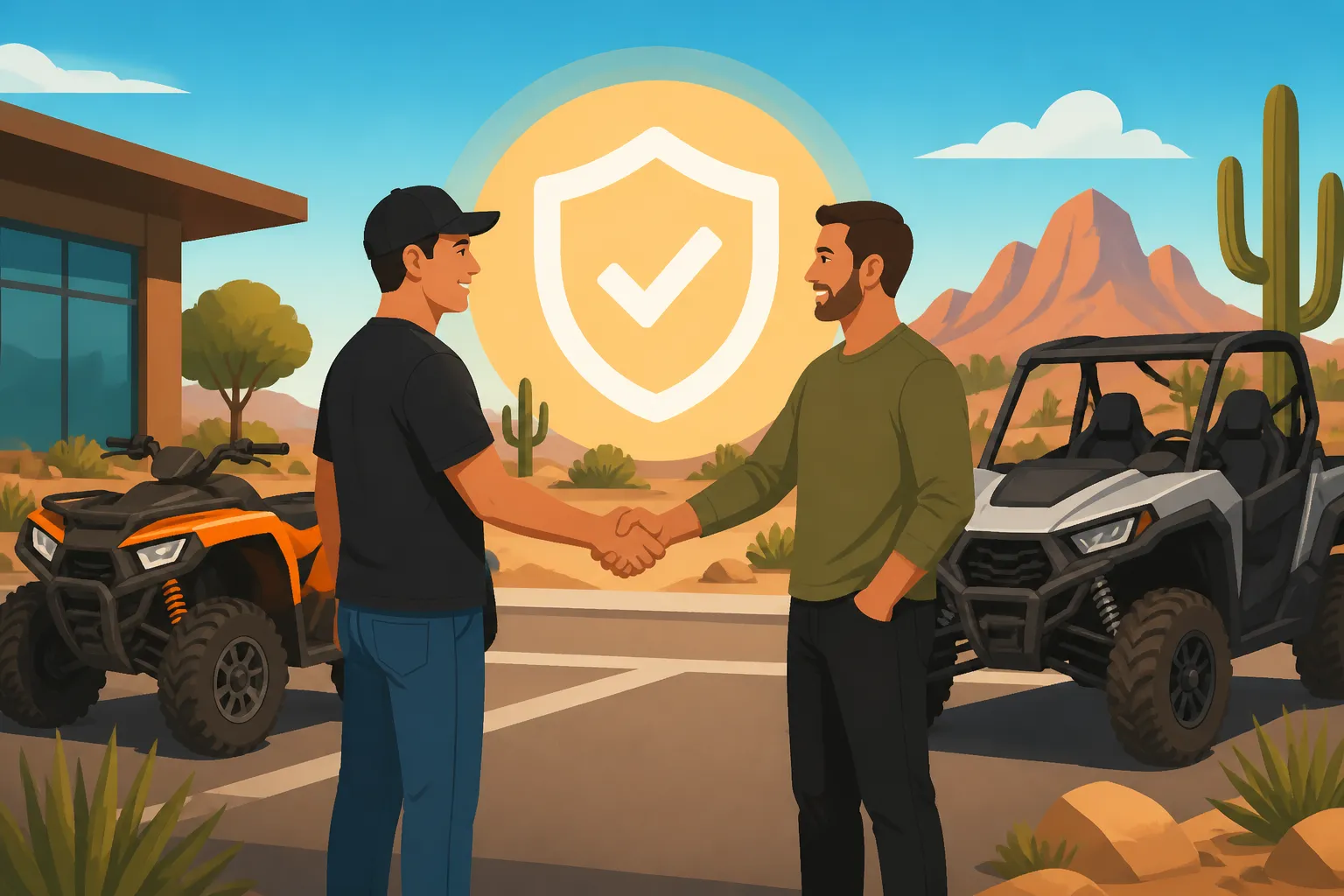
When you're arranging to meet a seller, always suggest a public, well-lit location, preferably during daylight hours. Think about places where there are plenty of people around, visible security cameras, and good lighting. Large retail parking lots, like those at a major grocery store, Walmart, or a busy mall, are often excellent choices. These spots usually have a constant flow of people, making them less appealing for anyone considering dishonest behavior. The presence of witnesses, even if they're just shoppers, adds a layer of safety.
Another fantastic option, often overlooked, is your local police station. Many police departments in Arizona actively encourage citizens to use their parking lots for private transactions. Some even designate specific "safe exchange zones" with surveillance. The mere fact that you're meeting at a police station is usually enough to deter any ill intentions. You can also consider the parking lot of an Arizona MVD office or a third-party MVD provider, which offers the added benefit of being a place where you'll eventually transfer the title. Discussing [Titling an ATV at an Arizona MVD Office] or [Using a Third-Party MVD Office for a Quad] might be part of the reason you're there anyway, so it makes sense to handle the initial viewing and transaction nearby.
"Safe Exchange Zones"
More and more communities across Arizona are establishing designated "Safe Exchange Zones." These are often located in police department parking lots, clearly marked, and under 24/7 video surveillance. They are designed specifically for internet-based transactions, offering a secure, monitored environment for buyers and sellers to meet. Before you agree to a location, do a quick online search for "safe exchange zone [your city in Arizona]" to see if your local police department offers such a service.
The beauty of a safe exchange zone is that it sends a clear message: this transaction is happening under watchful eyes. It automatically screens out individuals who aren't operating above board. If a seller is hesitant or refuses to meet at such a location, it should raise a significant red flag. It’s a small effort that provides a massive boost to your peace of mind. These zones are not just for ATV sales; they're perfect for any item where you're meeting a stranger to exchange goods and money.
What to Avoid
Just as important as knowing where to meet is knowing where not to meet. Avoid isolated spots at all costs. This includes remote parking lots, deserted roadsides, empty industrial parks, or anywhere that lacks natural surveillance. The vast open spaces of Arizona can be beautiful, but they can also be dangerously isolating for a transaction like this. While a seller might suggest a remote location because "that's where I keep the machine," you should politely but firmly insist on a safer, more public alternative. If they refuse, it's often a sign to walk away.
You should also generally avoid meeting at a seller's personal residence, especially if you're the buyer. While it might seem convenient to see the machine where it's stored, it gives a stranger access to your home address, and puts you in their territory where you might feel less comfortable or safe. The same goes for inviting a seller to your home. Keep the transaction public and neutral until the sale is complete and you've verified everything. Your goal is to keep personal information and addresses private until absolutely necessary.
Essential Safety Protocols for the Meet-Up
Even with the perfect meeting location, there are still crucial steps you need to take to ensure your safety and the security of your transaction. These protocols are about being proactive and having a backup plan.
Bring a Companion and Inform Others
Never, ever go alone to meet a private seller, especially when dealing with something as valuable as an ATV or UTV. Bring a friend, a family member, or anyone you trust. A companion serves multiple purposes: they are an extra set of eyes and ears, a witness to the transaction, and someone who can back you up if a situation feels uncomfortable. Their presence alone can be a deterrent to anyone considering foul play. Two heads are also better than one when inspecting a machine; your companion might spot something you missed while you're focused on the engine.
Before you even leave your house, inform another trusted person about your plans. Tell them where you're going, who you're meeting (if you have their name or contact info), the specific time, and when you expect to return. Share the seller's phone number or any identifying details you have. This way, if something goes awry and you don't check in, someone knows to look for you or contact authorities. A simple text message with the details can be a lifesaver.
Verifying the Seller and the Machine
Before you even agree to meet, do some preliminary verification. When you first contact the seller, ask for their full name and a phone number. A legitimate seller should have no problem providing this. You can also ask for a photo of the machine's VIN plate before you drive out. This allows you to run a quick VIN check online to see if the machine has been reported stolen or salvaged, which can save you a wasted trip. Sites offering vehicle history reports can use this VIN to give you peace of mind. This kind of due diligence is crucial for [Screening a Used Quad for a Theft Report] and ensuring you don't buy trouble.
Once you meet, visually verify the VIN on the machine against the one on the title and any photos you received. Look for signs of tampering, like scratched-out numbers or poorly re-stamped sections. A clean title is essential for [Proof of Ownership for an Arizona Title], so make sure the seller has the actual physical title in hand, not just a copy. If they don't, they can't transfer ownership to you. Ask to see their driver's license to verify their identity matches the name on the title. If the names don't match, be wary – this could indicate a straw purchase, a stolen machine, or someone trying to flip a machine they don't legally own. This is where a strong [What an Arizona Bill of Sale Should Carry] becomes your best friend, detailing all parties and the machine.
Transaction Preparedness
Being prepared for the actual transaction means having your payment method secure and knowing what paperwork is necessary. If you're using a cashier's check, ensure it’s made out for the exact amount and that you've confirmed with your bank how to verify its legitimacy with the seller's bank if needed. If using cash, bring only the exact amount and keep it concealed until the moment of exchange. Avoid flashing large amounts of money.
Bring a pre-prepared bill of sale, even if the seller says they have one. A generic one might not cover all the details you need. Having your own template ensures all essential information is included, such as the full names and addresses of both parties, the date, the price, the machine's make, model, year, and VIN, and a statement that the machine is sold "as-is" (unless otherwise agreed). You can find reliable templates online through resources like LawDepot, which can help you with [Writing an Arizona Private Sale Agreement]. Make sure there's space for both parties to sign and date it, and ensure you have pens and multiple copies so both you and the seller walk away with an original signed document. This is your legal record of the transaction.
Handling the Transaction Securely
Once you’ve inspected the machine and feel good about the deal, the actual exchange of money and paperwork needs to be handled with precision and care. This final stage is where many scams or misunderstandings occur, so staying vigilant is key.
Payment Methods and Best Practices
When it comes to paying for a used ATV or UTV, cash is common but also the riskiest. If you must use cash, verify the exact amount needed beforehand and try to conduct the exchange inside a bank if possible. This way, the bank teller can verify the authenticity of the bills and the money can be immediately deposited into the seller's account. This prevents any claims later that the money was counterfeit or that they didn't receive the full amount.
A far safer option is a cashier's check or a wire transfer directly from your bank. A cashier's check is issued by a bank and guaranteed, making it much more secure than a personal check. However, even cashier's checks can be forged, so it's always best to meet at the seller's bank (your bank if you're the seller) where the check can be verified on the spot before the title changes hands. For wire transfers, these are irreversible once sent, so ensure everything is in order and you have possession of the machine and signed title before initiating the transfer. For higher-value machines, involving an escrow service through a reputable dealer or legal firm can add another layer of security, though this is less common for typical ATV/UTV sales. Remember, [Arizona Sales Tax on a Machine Purchase] will still be due, so factor that into your financial planning.
Completing the Bill of Sale
A comprehensive bill of sale is not just a formality; it's your legal protection. Make sure it explicitly states the date of sale, the agreed-upon price, and a clear description of the machine, including its make, model, year, color, and most importantly, the Vehicle Identification Number (VIN). The VIN on the bill of sale must match the VIN on the machine and the VIN on the title exactly. Include both the buyer's and seller's full legal names, addresses, and driver's license numbers. LawDepot is an excellent online resource for crafting a legally sound bill of sale that covers all these specifics and can be customized for your Arizona transaction, ensuring you have a robust [Writing an Arizona Private Sale Agreement].
Ensure both you and the seller sign and date two copies of the bill of sale—one for each party to keep. A phrase like "sold as-is, where-is, with no warranty expressed or implied" is common in private sales and protects the seller from future claims about the machine's condition. As the buyer, it means you accept the machine in its current state, which underscores the importance of a thorough inspection before signing. If the machine has a lien, ensure you also get a lien release document from the lender, as discussed in [Liens on an Arizona OHV Title]. Without this, you cannot get a clean title.
Post-Meeting Steps
The transaction isn't truly complete until the title is successfully transferred into your name. As soon as possible after the sale, head to an Arizona MVD office or a certified third-party provider to transfer the title. Bring the signed title, the bill of sale, and your identification. Delaying this step can lead to complications, especially if there are issues with the seller or the machine that surface later. Many third-party MVD offices specialize in this and can make the process quick and painless, as described in [Registering Through Arizona MVD or a Third Party]. They'll help you with getting your [Arizona Certificate of Title for an Off-Highway Vehicle] and setting up your [Arizona's Annual OHV Decal Explained].
Also, don't forget about insurance. Even if it's not strictly required for off-highway use, having your new ATV or UTV insured immediately protects your investment from theft, damage, or liability. Contact your insurance provider right after the purchase to add the machine to your policy. [Insuring an ATV in Arizona] is a smart move that gives you peace of mind as you head out to enjoy the vast Arizona trails.
Here's a quick comparison of meeting locations:
| Feature | Safe Meeting Locations | Unsafe Meeting Locations |
|---|---|---|
| Visibility | High pedestrian and vehicle traffic, well-lit | Low traffic, poorly lit, remote |
| Surveillance | Often has CCTV (police stations, major retail) | Rarely any surveillance |
| Authority | Police presence (stations), security guards (retail) | No official presence |
| Privacy | Public, neutral ground; no exchange of personal address | Often involves personal residences, revealing addresses |
| Deterrence | Naturally deters individuals with ill intent | Offers opportunities for exploitation |
| Convenience | May require short drive, but worth the safety boost | Seemingly convenient, but high risk |
| Verification | Easy to get a second opinion, or have a witness present | Buyer/seller often alone, no witnesses |
Disclaimer
This article is for general informational purposes only and does not constitute professional advice. Laws, prices and regulations vary by location and change over time. Consult a qualified professional for guidance on your specific situation.