Registering an Imported Side-by-Side in Arizona
Bringing a side-by-side into Arizona from another country can feel like navigating a complex maze, full of paperwork puzzles and bureaucratic dead ends. You've got this exciting new machine, ready to tear up the desert trails, but suddenly you're faced with questions about customs, VIN verification, and whether your international bill of sale will even be accepted. This guide will walk you through the specific steps and common challenges of registering an imported side-by-side here in Arizona, helping you get that rig titled and decaled so you can hit the dirt.
Understanding the Initial Hurdles of Importing a Side-by-Side
Before your imported side-by-side can ever see an Arizona trail, you'll need to clear some significant hurdles related to its journey across international borders. This isn't just about driving it off the cargo ship; it's about ensuring it meets U.S. federal standards and that you have all the necessary documentation to prove its legal entry into the country. Skipping these initial steps can lead to major headaches down the road when you try to get it registered.
Customs and Federal Compliance for Imported Machines
When you import any vehicle, even an off-highway one like a side-by-side, it's subject to U.S. Customs and Border Protection (CBP) regulations. This means ensuring your machine complies with federal safety and environmental standards set by agencies like the Environmental Protection Agency (EPA) and the Department of Transportation (DOT), even if it's not strictly street-legal in Arizona. While some OHVs might be exempt from certain DOT regulations that apply to street vehicles, EPA emissions standards are often a factor. You'll want to retain all customs forms, especially the CBP Form 7501 (Entry Summary) and any bond documentation, as these are critical proof of legal importation.
These documents serve as your machine's passport into the U.S. Without them, the Arizona Motor Vehicle Division (MVD) will have no way to confirm that your side-by-side isn't contraband or wasn't brought in illegally. Imagine trying to get a passport for yourself without any birth certificate or proof of citizenship; it's a similar principle. Keep these papers safe and make multiple copies, because they are foundational to the entire titling and registration process here in Arizona. They prove the machine has met the federal gatekeeping requirements before Arizona even gets a say.
Depending on where your side-by-side originates, you might also be dealing with various Harmonized Tariff Schedule (HTS) or Harmonized System (HS) codes, which dictate duties and tariffs. While these are primarily for customs purposes, understanding them can help you track your machine's journey and confirm all fees were paid. The goal is to have a clean, transparent record of your side-by-side's entry into the U.S., as any ambiguities will inevitably slow down or halt your registration efforts in Arizona.
Verifying the Vehicle Identification Number VIN
Every legitimate vehicle has a VIN, and your imported side-by-side is no exception. However, international VIN formats can sometimes differ from the standard 17-character VIN common in North America, which can pose a challenge when you present your machine to the MVD. A non-standard or unfamiliar VIN might raise red flags, leading to extra scrutiny and potentially requiring additional verification steps. It's crucial that the VIN on your customs paperwork, bill of sale, and the machine itself all match precisely.
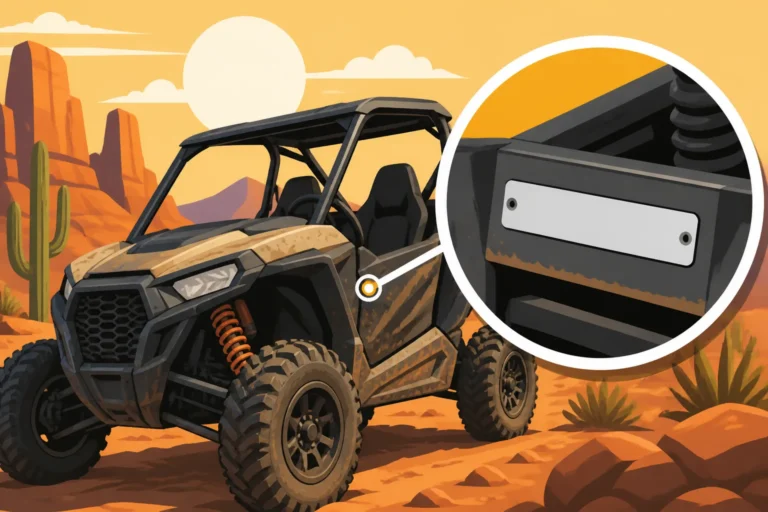
When you bring your side-by-side in for inspection, MVD personnel or a third-party MVD provider will meticulously check the VIN. If it's difficult to locate, obscured, or if there's any discrepancy, it can cause significant delays. For machines that have seen a lot of action or exposure to the elements, sometimes the VIN plate can be damaged or difficult to read. If you're having trouble finding it, you might find some useful tips in [Finding the VIN on a Desert-Worn Machine]. Should the VIN on your paperwork somehow not match the machine, or if there's an issue with the record, you may need to go through a process of correction. Learn more about how to handle this in [Correcting a VIN on an Arizona Record].
Sometimes, the MVD may even require a VIN inspection by a certified inspector or law enforcement to authenticate the number, especially if the machine is from a country with less standardized titling practices. This is to prevent theft and ensure the vehicle's identity is legitimate. Being proactive about having a clear, accessible VIN and all corresponding documentation will save you a lot of time and frustration. Without a clearly verifiable VIN, your machine is essentially untraceable, and Arizona won't issue a title or registration.
Getting Your Imported Machine Titled in Arizona
Once your side-by-side has successfully navigated the federal customs waters, the next major challenge is obtaining an Arizona Certificate of Title. This document is the cornerstone of legal ownership in Arizona, and it's absolutely essential before you can even think about getting an OHV decal and hitting the trails. This process can be more involved for imported machines due to the unique nature of their origin documents.
Required Documentation for an Imported Title Application
For an imported side-by-side, the list of required documents for an Arizona title application is a bit more extensive than for a domestic purchase. First and foremost, you'll need all the customs clearance paperwork we discussed earlier – particularly the CBP Form 7501, which proves the machine legally entered the U.S. Alongside this, you’ll need a valid bill of sale from the seller, detailing the transaction. This document must clearly identify the buyer and seller, the purchase price, and the full VIN of the side-by-side. If your bill of sale is in a foreign language, you may need to provide a certified translation. For more on what this crucial document should contain, check out [What an Arizona Bill of Sale Should Carry].
Proof of ownership is paramount. For an imported machine, this might include the original foreign title or registration, if one exists, along with the bill of sale and customs documents. If the ownership chain is unclear, or if you don't have a traditional foreign title, you might find yourself in a situation where you need to apply for a bonded title. This is a complex process where you post a bond to cover any potential claims against your ownership, essentially providing a financial guarantee that you are the rightful owner. It's a lifeline for those tricky situations, and you can learn more about it in [Bonded Title for a Quad in Arizona] or by exploring [Registering an Arizona Quad With No Ownership History].
Finally, don't forget the standard MVD requirements, such as a valid Arizona driver's license or identification card for the applicant, and any necessary MVD forms, like the title application. Be prepared to pay Arizona sales tax on the purchase price if you haven't already. If you purchased the machine outside Arizona and brought it in, you'll likely owe Arizona use tax, which functions similarly to sales tax. You can find more information on these tax obligations in [Arizona Sales Tax on a Machine Purchase] and [Use Tax on a Machine Brought Into Arizona]. Having all these documents organized and readily available will significantly smooth out the titling process.
Navigating Arizona MVD or Third-Party Titling
With your stack of paperwork in hand, your next step is to submit your title application. You have two main avenues in Arizona: visiting an Arizona MVD office or utilizing a third-party MVD authorized provider. Both can help you with titling your imported side-by-side, but their services and wait times can differ. MVD offices are the official state channels, while third-party providers often offer quicker service for a small convenience fee. For a deeper dive into the overall registration process, take a look at [Arizona MVD OHV Registration Explained].
When you head to either location, be prepared for a thorough review of your documents. The MVD or third-party agent will scrutinize your customs forms, bill of sale, and any foreign ownership papers to ensure everything is in order. They’ll verify the VIN against the physical machine, and if there are any inconsistencies or questions, they will guide you on the next steps, which might involve further investigation or a special inspection. This is where having all your ducks in a row truly pays off. For specific details on what documentation an Arizona MVD office typically requests, refer to [Documents an Arizona MVD Office Wants].
Many riders find third-party MVD providers to be a convenient option, often with shorter lines and more personalized assistance, which can be a real blessing when dealing with the complexities of an imported machine. You can explore how to title your ATV at an official MVD location by reading [Titling an ATV at an Arizona MVD Office], or understand the benefits of using an alternative service by checking out [Using a Third-Party MVD Office for a Quad]. In instances where you might need to create a new bill of sale (for example, if the original is lost or incomplete), or draft an affidavit of ownership due to unusual circumstances with an imported machine, online resources like LawDepot can be incredibly helpful for generating legally sound documents.
Registering and Decaling Your Imported Side-by-Side for Arizona Trails
Once your imported side-by-side proudly bears an Arizona Certificate of Title, you're on the home stretch. Now it’s time to get it properly registered and obtain that coveted Arizona OHV decal, which allows you legal access to thousands of miles of trails across the state. This phase also involves considering any specific requirements that might apply to your imported machine, especially concerning emissions and the type of plate it will receive.
Addressing Emissions Requirements for Imported OHVs
Arizona has specific emissions testing requirements, primarily for vehicles registered in the Phoenix and Tucson metropolitan areas. The crucial question for your imported side-by-side is whether these rules apply to it. Generally, off-highway vehicles (OHVs) are exempt from emissions testing unless they are being converted to be street-legal. If your plan is to keep your side-by-side strictly off-road, you likely won't need an emissions test. However, if you're making it street-legal to cruise from your home to the trailhead, then it will fall under the same emissions requirements as any other street-legal vehicle.
This distinction is vital for imported machines because their original emissions standards might differ significantly from U.S. EPA standards. If you do intend to make it street-legal, you'll need to ensure it can pass Arizona's stringent tests. Sometimes, modifications may be required to bring the vehicle into compliance, which can add unexpected costs and complexity. It's always a good idea to research the specific requirements based on your intended use. For detailed information on where and how emissions testing is conducted, refer to [Emissions Testing for OHVs in Phoenix and Tucson] or a broader overview in [Arizona Emissions Testing in the Two Metros]. Don't assume your imported machine is automatically compliant; verify this step carefully.
The emissions aspect is often overlooked until it becomes a barrier to full street-legal status. For an off-highway vehicle to gain a street-legal plate, it needs to be treated as a motor vehicle for highway use, which opens up a whole new set of inspections. If you’re unsure, contacting the Arizona Department of Environmental Quality (ADEQ) or an MVD representative familiar with imported vehicles is your best bet to avoid any surprises.
The Arizona OHV Decal and Plates
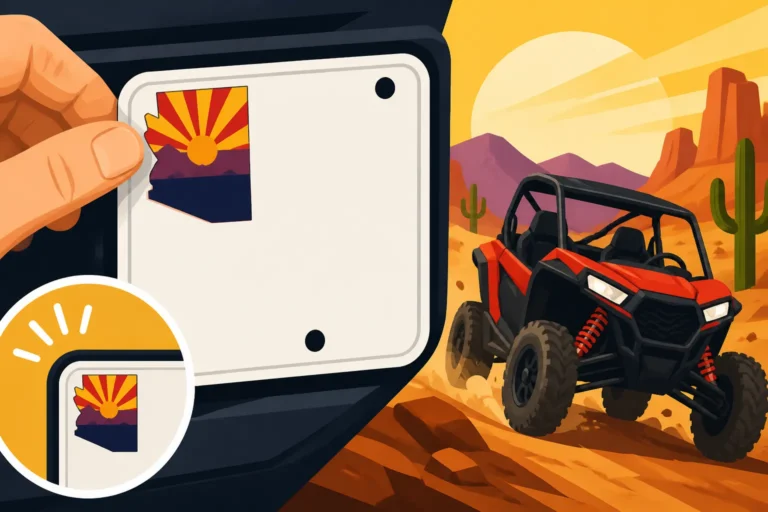
With your title secured, you can proceed to register your imported side-by-side and obtain your Arizona OHV decal. This decal is required for any OHV used on public land in Arizona. It's a small sticker, but it signifies that you've contributed to the state's OHV fund, which helps maintain and expand our incredible trail systems. The process typically involves submitting your title (or proof of application), paying the registration fees, and securing the decal. For a comprehensive overview of how this all works, check out [Registering an OHV in Arizona] and [Arizona's Annual OHV Decal Explained].
When registering, your side-by-side will generally receive an "RV" plate, designating it as an off-highway vehicle. If, however, you've gone through the full process of making it street-legal, including all the necessary modifications and inspections, you might be eligible for an "MC" (motorcycle) plate, allowing it to be driven on public roads. The type of plate you get depends entirely on whether your imported machine meets all the street-legal requirements, not just federal customs but also Arizona's specific equipment standards for mirrors, horns, lights, and so on.
Remember, the decal is essential. Riding an undecaled machine on designated OHV trails in Arizona can lead to fines and other penalties. It’s not just a sticker; it’s your ticket to legal trail access. Ensure it's correctly placed on your plate as instructed, and be ready to renew it annually. Even if your side-by-side is technically still on a temporary registration or you're awaiting a permanent plate, make sure you have the decal or proof of purchase for it before you head out.
Overcoming Common Pitfalls with Imported Machines
Registering an imported side-by-side is definitely a journey with its own unique twists and turns. It's not uncommon to encounter unexpected hurdles that can slow down the process. Being aware of these potential pitfalls and knowing how to address them can save you a lot of time, frustration, and even money.
Dealing with Unique VIN Formats or Missing Documentation
One of the most frequent challenges with imported machines is dealing with VINs that don't conform to the standard 17-character North American format. Foreign manufacturers sometimes use shorter or different sequencing for their identification numbers, which can confuse MVD computer systems or personnel unfamiliar with international standards. If your VIN is causing issues, you might need to provide additional manufacturer documentation or a notarized statement explaining the VIN format. In some cases, a physical inspection by a law enforcement officer might be required to verify the VIN's authenticity and ensure it matches all available records.
Another common pitfall is missing or incomplete documentation from the point of sale in the originating country. Perhaps the seller didn't provide a formal title, or the bill of sale is handwritten and lacks crucial details. This is where creative solutions become necessary. If you're missing a key document like a clear bill of sale, you might need to draft one retrospectively with the seller, or prepare an affidavit of ownership. Online legal document services like LawDepot can be invaluable here, offering templates for custom bills of sale or affidavits that can help substantiate your claim of ownership to the MVD. Having these professionally drafted documents, especially if notarized, can significantly strengthen your application.
Don't be afraid to ask for help. If you're encountering persistent issues with your VIN or documents, consider consulting a third-party MVD provider or even an attorney specializing in vehicle titles. They often have experience with unusual cases and can guide you through the specific requirements or help you prepare the necessary affidavits. The goal is to provide the MVD with an undeniable chain of ownership and a clear, verifiable identity for your side-by-side.
Avoiding Costly Mistakes and Delays
The biggest mistake you can make with an imported side-by-side is assuming the process will be identical to registering a domestically purchased machine. This often leads to incomplete paperwork, multiple trips to the MVD, and frustrating delays. One of the most common oversights is not having all the customs documentation ready. Without that proof of legal entry into the U.S., the MVD simply cannot proceed with titling. Always make sure your CBP Form 7501 and any other import declarations are meticulously organized and legible.
Another costly mistake is failing to address potential tax liabilities. You might have paid taxes in the country of origin, but Arizona will still expect its share, either as sales tax (if purchased in Arizona from an importer) or use tax (if brought in from outside the state). Neglecting these taxes can result in penalties and interest. Be transparent about the purchase price and be prepared to pay the necessary Arizona taxes.
Finally, don't rush the process or cut corners. While it might be tempting to hit the trails as soon as your machine arrives, ensure every single piece of paperwork is correctly filed, and you have both a valid Arizona title and an OHV decal. Riding an unregistered or undecaled machine on public land can lead to citations, fines, and even impoundment, which can quickly negate any perceived savings or time you tried to gain by skipping steps. Being patient, thorough, and proactive will ensure a smooth transition from international import to Arizona trail beast.
Document Comparison: Standard vs. Imported OHV Titling
To help clarify the additional steps for an imported side-by-side, here's a quick comparison of the typical documents you'll need for a standard Arizona OHV title versus one that's been imported from another country.
| Document Type | Standard Arizona OHV | Imported OHV (from another country) |
|---|---|---|
| Proof of Ownership | Previous Arizona title, MCO, or out-of-state title | Foreign title/registration (if applicable), Bill of Sale, and Customs Entry Summary (CBP Form 7501) |
| Bill of Sale | Required for private party sales | Required, potentially with certified translation if in foreign language. LawDepot can help draft. |
| VIN Verification | Typically done by MVD or authorized agent | Required, potentially with extra scrutiny due to international formats or needing law enforcement inspection |
| Emissions Test | Only if becoming street-legal in metro areas | Only if becoming street-legal in metro areas; ensure compliance with U.S. EPA standards for street use |
| Photo ID | Required for applicant | Required for applicant |
| Application Form | Required (Title and Registration Application) | Required (Title and Registration Application) |
| Sales/Use Tax | Applicable to purchase price | Applicable to purchase price (Arizona use tax often applies) |
| OHV Decal | Purchased after titling/registration | Purchased after titling/registration |
Disclaimer
This article is for general informational purposes only and does not constitute professional advice. Laws, prices and regulations vary by location and change over time. Consult a qualified professional for guidance on your specific situation.