Where a Child Under 12 May Legally Ride
A child under 12 may be able to ride an ATV or UTV off-road in Arizona, but that does not mean every trail or connecting road is open to them. The key is to separate private property, public-land trails and public roads, then check the rules for the exact route and machine before setting out.
The short answer: roads and trails are different
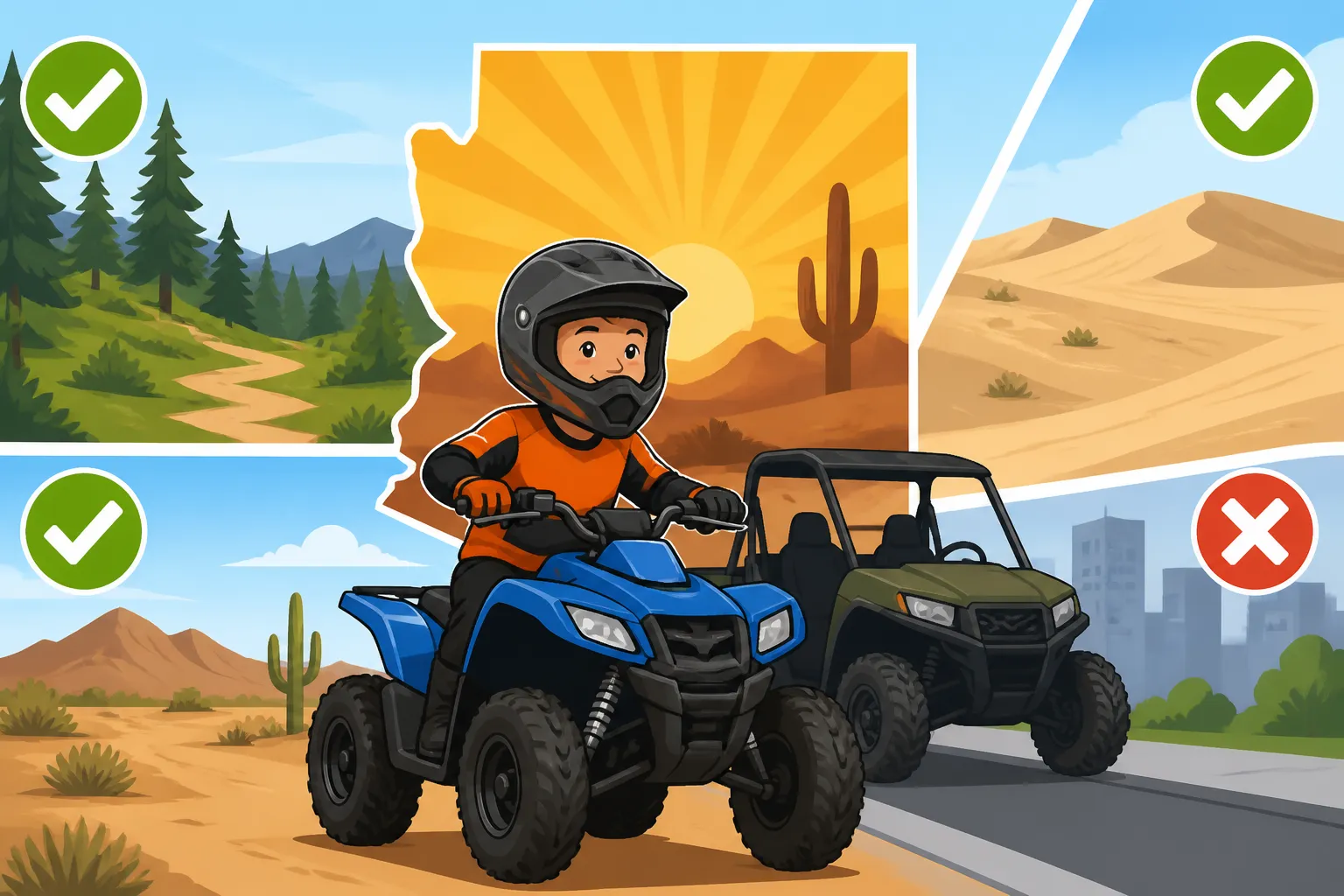
Arizona’s age restriction on operating an OHV on a public road is a critical boundary for children under 12. Don’t let a child in this age group drive along a public street or road, even for a short link between trails. Road rules can apply on city streets, county roads and other public road sections, not just busy highways. For route-specific access, see Which Arizona Roads Allow OHVs.
That road restriction does not automatically answer whether a child may operate an OHV on every off-road trail. Trail access depends on where the route is, who manages the land, the type of machine and any supervision, education, permit or equipment rules. A route shown as a trail on a map may also connect to a road or cross land with separate restrictions.
| Where the child would ride | What to check first |
|---|---|
| Private property | The owner’s permission, any local rules and whether the machine is suitable for the child |
| Public-land trail | The land manager’s rules, route status, supervision and any operator education requirements |
| State Trust Land | Whether the activity is allowed and what recreational permit coverage is required |
| Public road or street | Do not have a child under 12 operate the machine there |
| Road crossing or trail connector | Check the crossing and route rules; an adult may need to operate the machine across the road section |
The safest planning rule is simple: choose a route that stays off public roads while the child is driving, and confirm that the land manager allows a child of that age to operate there. If a route includes a road section, don’t treat it as an off-road trail for the whole trip.
A child riding as a passenger is a different question from a child driving. The machine must be designed to carry a passenger, and the passenger must have an appropriate seat and required restraints or protective equipment. A child’s age does not make an unsafe or unapproved passenger setup acceptable.
For the age rules in more detail, read Arizona Rules for Operators Under 12. The broader rules for teenagers are covered in Arizona Rules for Operators Under 18.
Where a child under 12 may ride
Private property
Private property is often the clearest option for a young rider, provided the owner or person in control of the land gives permission. That permission does not remove the need to use a suitable machine, follow safety requirements or obey any local restrictions. Keep the riding area away from public roads, open gates, other vehicles and places where the child could enter a neighboring property by mistake.
Permission also matters on land that feels private but is not yours. A ranch, leased parcel, resort property or friend’s acreage may have conditions on where and when machines can be used. Ask about boundaries and access roads before unloading. Arizona Rules on Private Land explains why permission and the status of the ground matter.
Public-land trails
A child may be able to ride on an off-road route on public land, but don’t assume that all public trails have the same age rules. Different agencies and land managers can set conditions for their property. They may also close routes or limit vehicle types, and the rules can vary between a trail, a road and a staging area.
Before riding, identify the land manager for the exact route and check its current map or notice. Confirm that the route is open to the machine, that a young operator is allowed, and whether an adult must supervise. The child should remain under close adult oversight even when the route itself is open to OHVs.
An OHV decal or other required permit does not, by itself, establish that a particular child may operate on a route. It also does not override a road restriction or a land manager’s rules. For State Trust Land, check the permit rules separately through Arizona State Trust Land Recreational Permits.
Public roads and road connectors
A public route can include stretches that look like ordinary trail riding but are legally treated as roads. That can happen where a trail joins a county road, runs along a road or uses a designated road section. Under-12 children should not operate on those public-road sections.
Plan the route before the ride rather than relying on a child to stop at every boundary. If a trail crosses a road, confirm that the crossing is permitted and how it must be made. If the route requires driving along a road, choose a different route or have an eligible adult operate the machine through that section, if the rules allow it.
Do not assume that a road is private because it is unpaved, has little traffic or looks like a two-track. The land manager or local authority can tell you how the road is classified and whether OHVs may use it.
Permits, education and equipment to check
Check the machine’s decal and land access
Arizona’s OHV decal requirements apply to the machine and the places where it is used, not simply to the child’s age. Check that the machine has the decal or registration appropriate for the planned use. A decal is not a substitute for permission to use private property, a Trust Land permit or any site-specific requirement.
For out-of-state visitors, rentals and borrowed machines, confirm that the machine’s paperwork covers the planned ride. Don’t assume that a permit or decal tied to one machine transfers to another, or that a visitor’s home-state registration settles every Arizona requirement. Arizona Rules for Visiting Riders provides broader information for visitors.
Verify education requirements
Arizona has OHV education requirements that may affect operators, including younger riders. The course and decal rules can depend on the rider, machine and use, so check the current state instructions before the trip rather than relying on a friend’s past experience. A completed course is not permission to ride wherever you choose; route restrictions and age limits still apply.
Start with Arizona Education Rules for Under-18 Riders and Safe and Ethical Riding in Arizona: the Course. If you are unsure whether the child or the machine needs a particular credential, ask the relevant agency before riding.
Match protective gear to the child
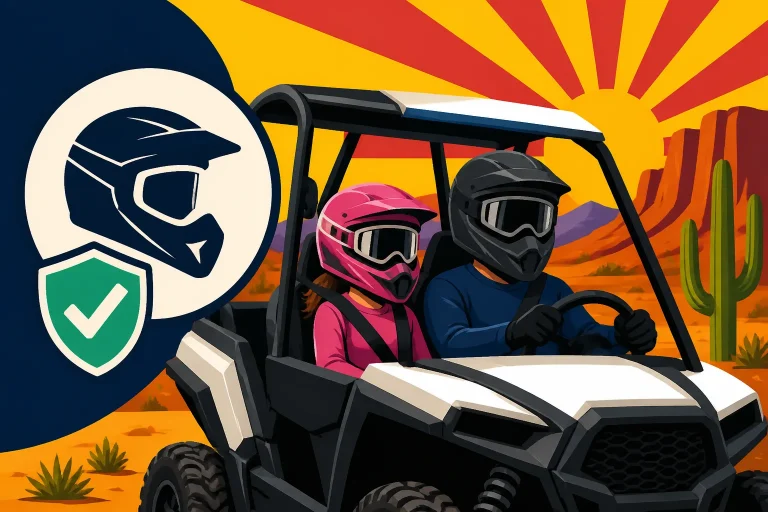
A helmet should fit the child’s head correctly and be appropriate for the type of riding. Loose, oversized or poorly fastened headgear can shift in a fall. Eye protection, sturdy clothing, gloves and boots also help protect against dust, stones, branches and hot or abrasive surfaces. Check the requirements for the land and route, including Arizona Helmet Requirements on State Land.
If you shop for youth riding gear through Amazon or another retailer, check the helmet’s certification, sizing guidance and return policy before relying on it. A youth label alone does not prove that a helmet fits the child or meets the standard required for the ride.
The machine itself matters just as much as the gear. Choose a model the child can control, with reachable controls and power appropriate to the child’s skill and size. A child who cannot comfortably reach the controls or stop the machine should not operate it, even on a permitted trail.
A practical check before the ride
Use this sequence to avoid the common mistake of treating a route as one continuous off-road area:
- Set the child’s role. Decide whether the child will drive or ride as a passenger. Passenger rules do not authorize the child to operate the machine.
- Identify the land. Establish whether the route crosses private property, public land, State Trust Land or more than one type of property.
- Trace the complete route. Look for roads, road crossings, connectors, gates and staging areas. Confirm the status of each section with the relevant land manager.
- Check age and supervision rules. Ask whether a child under 12 may operate the machine on that specific route and whether an adult must accompany or supervise them.
- Confirm paperwork and education. Check machine decal or registration requirements, any land permit and any applicable safety course.
- Inspect the machine and gear. Make sure the machine fits the rider and that the child can operate the controls safely. Use properly fitting protective equipment.
- Choose a backup plan. If a route is closed, turns out to include a public road or is beyond the child’s ability, have a different route or a safe place to stop.
If an official map is unclear, contact the land manager before leaving home. A trail app, map listing or sign at a staging area can be useful, but it may not answer every question about age limits, road status or permit coverage.
The main takeaway is that a child under 12 should not operate an OHV on a public road in Arizona, while off-road access depends on the property and route rules. Private property with permission may be an option; public-land riding needs a route-specific check. Arizona Rules for Operators Under 12 is a useful starting point, but confirm the current requirements with the agency responsible for the land you plan to visit.
Disclaimer
This article is for general informational purposes only and does not constitute professional advice. Laws, prices and regulations vary by location and change over time. Consult a qualified professional for guidance on your specific situation.