Why Machine Weight Matters in Arizona
Many of us might not think twice about the weight of our ATVs or UTVs, seeing it as just another specification on the manufacturer's sheet. But here in Arizona, that number can be a surprisingly critical factor, directly impacting everything from what kind of decal you need to whether you can legally make your machine street-legal. This guide will unpack why your off-highway vehicle's weight is far more important than you might realize, helping you navigate Arizona's unique OHV rules and ensure you're riding legally and safely.
The Core of It: Decals, Plates, and Legal Classification
It might sound overly bureaucratic, but the weight of your machine is one of the first things Arizona's Motor Vehicle Division (MVD) considers when you go to register it. This isn't just about arbitrary numbers; it's about how the state classifies your vehicle, which then dictates the permits and plates you'll need. Ignoring this crucial detail can lead to fines, headaches, and a frustrating day at the MVD.
Weighing In: The 1,800 Pound Threshold
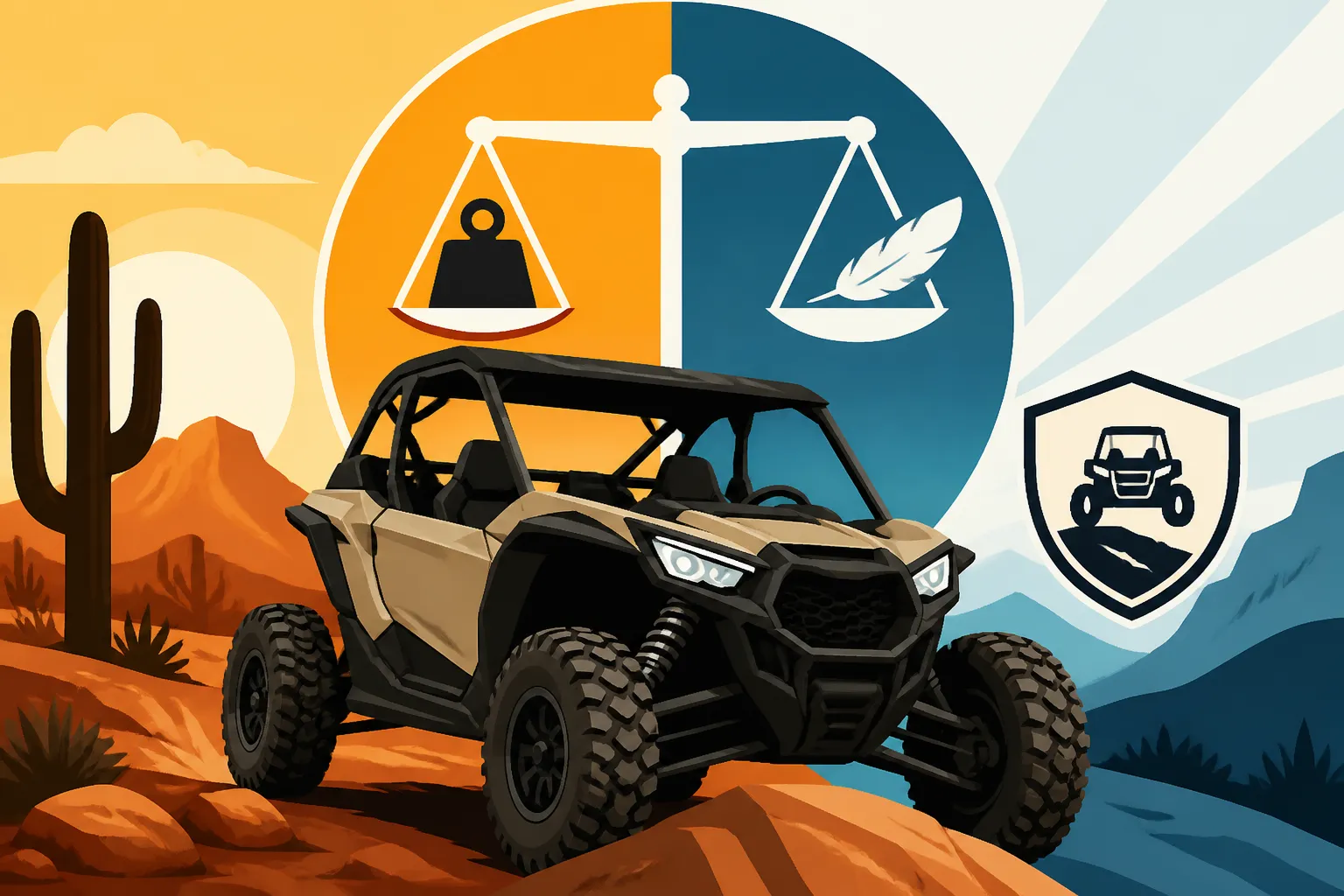
This is perhaps the most significant weight-related rule Arizona OHV owners need to understand. Many machines, particularly smaller ATVs and some lighter UTVs, fall under this critical 1,800-pound curb weight limit. If your machine weighs 1,800 pounds or less, it generally requires an Arizona Off-Highway Vehicle (OHV) Decal if you plan to ride it off-highway on public lands. This decal helps fund essential trail maintenance, signage, and enforcement efforts across the state, making your riding experience better for everyone.
However, once your machine crosses that 1,800-pound threshold, things change. Many larger, heavy-duty UTVs, particularly those designed for multiple passengers, extensive cargo, or specialized work, will weigh more than 1,800 pounds. These heavier machines are not required to display the OHV decal. Instead, they typically fall under a different registration category. This distinction often catches new owners by surprise, especially if they've only owned smaller machines in the past. It’s not just a minor detail; it’s a fundamental difference in how your machine is recognized by the state for off-highway use. You can read more about what the decal covers in [What the OHV Decal Buys an Arizona Rider].
RV Versus MC Plates: Weight's Role in Street-Legal Conversion
When you decide to make your ATV or UTV street-legal in Arizona, the machine's weight plays another pivotal role, influencing the type of license plate it receives. For machines weighing 1,800 pounds or less, if they meet all the street-legal equipment requirements (headlights, taillights, horn, mirrors, etc.), they are typically issued an "MC" (Motorcycle) plate. This classification acknowledges their lighter, more agile nature, similar to traditional motorcycles.
On the other hand, if your street-legal UTV weighs more than 1,800 pounds, it will generally be issued an "RV" (Recreational Vehicle) plate. This designation is commonly associated with larger, multi-purpose vehicles, including motorhomes and some utility vehicles. The distinction isn't just cosmetic; it can sometimes affect how the vehicle is viewed by law enforcement in certain situations or in specific ordinances, although for most practical purposes of street-legal OHV riding, both MC and RV plates signify compliance with road-going requirements. Understanding this difference is crucial if you’re planning to ride from trailhead to town. We have a dedicated article on [RV Plates and Off-Highway Only Machines] and [MC Plates and Street-Legal Machines] that dives deeper into this.
Here’s a quick overview of how weight impacts your machine’s classification:
| Feature | Machines 1,800 lbs or Less | Machines Over 1,800 lbs |
|---|---|---|
| OHV Decal Requirement | Yes, for public land use | No |
| Street-Legal Plate Type | MC (Motorcycle) Plate | RV (Recreational Vehicle) Plate |
| Primary Classification | Lighter OHV / Motorcycle-like | Heavier OHV / Recreational Vehicle-like |
Beyond the Decal: Safety, Performance, and Practical Considerations
While registration and decals are the direct administrative impacts of weight, the physics of your machine's mass extends far into practical riding scenarios. It affects everything from how your machine handles on a trail to what you need to consider when transporting it.
Trail Access and Environmental Impact
The sheer weight of an OHV can influence where you're allowed to ride. Some trails or sensitive areas, particularly those managed by the Forest Service or BLM, might have restrictions on vehicle weight or width to prevent excessive damage to the trail surface, protect delicate ecosystems, or simply because the trail wasn't engineered for heavier loads. A lighter, more nimble ATV might find access to single-track or narrower trails that a heavy, wide side-by-side cannot. Always check local regulations and Motor Vehicle Use Maps (MVUMs) before heading out, as these often specify vehicle types or restrictions, which can indirectly relate to weight and size. Heavier machines generally exert more pressure on the ground, leading to deeper ruts and potentially faster erosion, especially after rain, which is why land managers pay close attention to this.
Towing, Hauling, and Trailer Needs
Your machine's weight is a huge factor in how you get it to the trailhead. A heavier UTV will naturally require a more substantial trailer and a tow vehicle with adequate towing capacity. Exceeding your tow vehicle's limits or using an undersized trailer isn't just risky; it's incredibly dangerous and illegal. You’ll need to consider:
- Trailer Capacity: Ensure your trailer's Gross Vehicle Weight Rating (GVWR) can comfortably handle your machine's weight plus any gear.
- Tow Vehicle Capacity: Your truck or SUV must be rated to tow the combined weight of your loaded trailer.
- Hitch Rating: The hitch itself has a weight rating that must not be exceeded.
- Braking: Heavier loads demand more from your tow vehicle's brakes, and often require trailers with their own braking systems.
Trying to squeeze a heavy UTV onto a small, single-axle ATV trailer designed for a much lighter quad is a recipe for disaster. It can lead to sway, loss of control, and even catastrophic failure of the trailer or hitch. It's a prime example of where ignoring weight can put you and others in serious jeopardy. We have more tips on [Tying a Machine Down for the Highway].
The Nuances: Title, Tax, and Other Paperwork Implications
Beyond the direct impact on decals and plate types, the weight of your machine can subtly influence other administrative processes, especially when buying or selling, or if you've made significant modifications.
Proving Your Machine's Weight
Sometimes, especially with older machines, custom builds, or models imported from out of state, proving the exact curb weight can become a hurdle at the MVD. Generally, the manufacturer's specifications are the authoritative source. This information can usually be found in the owner's manual, on a VIN plate, or through official manufacturer websites. However, if that information isn't readily available, or if your machine has undergone significant modifications (like adding a heavy winch, roll cage, or extensive accessories), you might need to take additional steps.
For official purposes, the MVD may require a certified weight slip from a public scale. This is a common practice for vehicles where classification is ambiguous. When buying or selling, especially in a private party sale, it’s always a good idea to ensure the weight information is clearly documented. A well-crafted bill of sale, perhaps using a template from a service like LawDepot, can explicitly state the machine’s weight and any modifications that might affect it, protecting both buyer and seller. If you’re ever asked to prove your machine’s weight, having this documentation ready will save you a lot of time and potential back-and-forth with the MVD. Our guide [What an Arizona Bill of Sale Should Carry] offers excellent advice on this.
Modifications and Their Impact on Weight
It’s easy to get caught up in aftermarket upgrades – new bumpers, rock sliders, winches, sound systems, full enclosures, even entire engine swaps. Each of these additions, while enhancing your machine, also adds weight. A side-by-side that started life at 1,700 pounds might easily push past the 1,800-pound mark after a few popular modifications.
What does this mean for you? If your machine was originally under 1,800 pounds and required an OHV decal, but your modifications push it over that limit, you might find yourself no longer needing the decal. Conversely, if you started with a machine just over 1,800 pounds, and stripped it down significantly, you might theoretically fall into the decal-required category. While the MVD doesn't typically re-weigh machines after modifications unless there's a specific reason for re-classification (like making it street legal), it's something to be aware of. When dealing with the official paperwork, ensure you're accurate about your machine's current state. If you’re performing substantial modifications that alter its classification or value, documenting these changes is always a smart move. Resources like LawDepot can help you draft affidavits or statements of fact to support your claims should questions arise during a title transfer or registration update.
Ultimately, understanding your machine's weight isn't just about adhering to a single rule; it's about being informed and prepared for various scenarios in Arizona's diverse OHV landscape.
Disclaimer
This article is for general informational purposes only and does not constitute professional advice. Laws, prices and regulations vary by location and change over time. Consult a qualified professional for guidance on your specific situation.