Decal Placement on the Upper-Left Corner
It's easy to feel like you're navigating a bureaucratic maze when it comes to registering your off-highway vehicle (OHV) in Arizona. One common hang-up that can lead to unnecessary frustration and even fines is simply knowing where to stick that all-important OHV decal. This guide will cut through the confusion and walk you through the precise requirements for decal placement, ensuring your machine is properly marked and ready for the trails.
Understanding the Arizona OHV Decal: More Than Just a Sticker
For many, the OHV decal might seem like just another piece of paper to deal with, a small sticker that gets lost in the shuffle of ownership. But in Arizona, this little adhesive rectangle carries a lot of weight. It’s a vital component of legal OHV operation, signaling to land managers and law enforcement that you’ve met your basic obligations to ride on public and state land.
What Exactly Is This Decal For?
First off, let's clear up what this decal actually does. The Arizona OHV Decal isn't just for show; it's your ticket to the incredible network of trails and open lands across our beautiful state. When you purchase this decal, you're not just getting a sticker; you're contributing directly to the future of off-highway riding. A significant portion of the funds collected from decal sales goes into the Arizona State Parks OHV Recreation Fund. This fund is crucial because it helps maintain and improve existing OHV trails, develop new riding areas, and support educational programs that promote safe and responsible riding. Think of it as your direct investment in keeping our trails pristine and accessible for everyone. It's truly what makes the [What the OHV Decal Buys an Arizona Rider] so valuable.
Beyond funding, the decal is a visual confirmation that your machine is properly registered with the state for off-highway use. It’s part of a broader system that ensures vehicles are accounted for, which can be important in cases of theft or accident. Without that decal, you're essentially riding without the necessary credentials, no matter how shiny your new side-by-side might be. It really ties into the larger picture of [Arizona's Annual OHV Decal Explained].
Who Needs to Display the Arizona OHV Decal?
This is where things can sometimes get a little fuzzy for riders, leading to honest mistakes. Generally speaking, if you plan to operate your OHV on any public lands or state trust lands in Arizona, you need an OHV decal. This includes a vast majority of the places we love to ride, from the sprawling Sonoran Desert trails near Phoenix to the pine forests up north. This requirement applies to almost all types of OHVs, including ATVs, UTVs (side-by-sides), dirt bikes, and even sand rails, provided they meet the weight criteria of being under 1,800 pounds and designed for off-highway travel.
However, there are a few important nuances. For instance, if your OHV is truly only used on private property and never touches a public road or trail, then you might not need the decal. But be absolutely sure of your property lines and your riding habits, because crossing onto public land, even accidentally, without that decal can land you in trouble. Additionally, machines that are fully street-legal and display a regular license plate might have different requirements. It’s a distinct system, and typically, if you have an MC or RV plate, your registration covers the decal requirement. For riding on [Arizona State Trust Land Recreational Permits] are also a must, in addition to the decal.
The Upper-Left Corner Rule: Precision in Placement
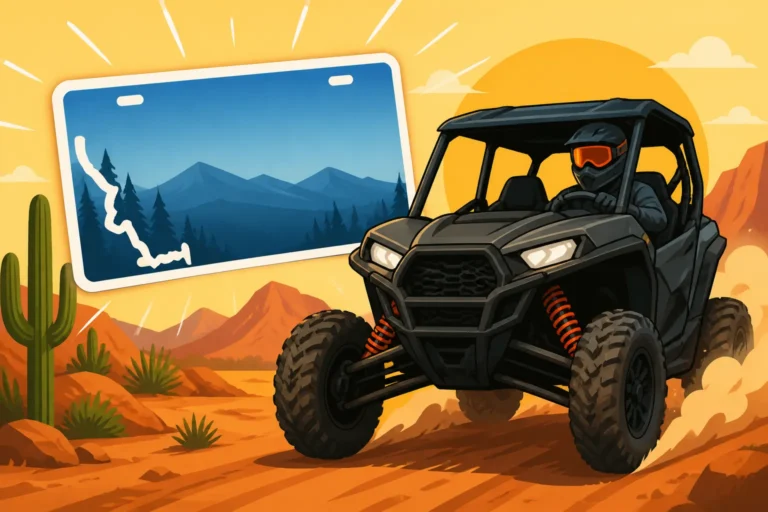
So, you’ve got your decal in hand, ready to hit the trails. But before you peel and stick, you need to know exactly where it goes. Arizona isn’t vague on this point: the OHV decal must be affixed to the upper-left corner of your Arizona license plate. This isn’t just a suggestion; it’s a specific regulation designed for clear, consistent visibility for law enforcement and land managers.
Why the Upper-Left Corner is Mandated
You might wonder why such a specific placement is necessary. Isn't "somewhere on the plate" good enough? The answer is a firm no, and for good reason. Imagine a law enforcement officer, park ranger, or land manager trying to quickly verify an OHV's compliance during a patrol or at a busy trailhead. If decals were placed randomly—on the bumper, the fender, or hidden behind a tire—it would make their job incredibly difficult and time-consuming. The upper-left corner rule creates a universal standard. When every OHV displays its decal in the same, predictable spot, it allows for swift and accurate visual inspection, helping to keep everyone safe and ensuring that those who haven't met the requirements are easily identified. It simplifies enforcement and minimizes delays for compliant riders.
This standardization also helps prevent tampering or obstruction. By mandating a specific, exposed location, it reduces the likelihood of riders intentionally or unintentionally obscuring the decal. It’s all about clear communication between the rider and the authorities responsible for managing our recreational areas.
Step-by-Step Guide to Perfect Decal Application
Applying your OHV decal correctly is simple, but rushing it can lead to peeling, fading, or improper placement that can cause issues down the line. Here’s how to do it right:
- Clean the Plate Thoroughly: This is arguably the most crucial step. Your license plate, especially if it’s been out on the trails, can accumulate dirt, dust, mud, and grime. Use a good automotive cleaner or rubbing alcohol and a clean cloth to meticulously clean the upper-left corner where the decal will go. Even a tiny speck of dust or residue can prevent the decal from adhering properly, leading to air bubbles or premature peeling. Make sure the surface is completely dry before moving on.
- Ensure a Warm, Dry Surface: Decals adhere best to surfaces that are not too cold or damp. If you’re applying it in chilly weather, try to bring the plate into a garage or warm area first. A cold plate can make the adhesive less effective.
- Carefully Peel the Backing: Once the area is clean and dry, peel off the backing of the decal slowly. Try to avoid touching the adhesive side with your fingers, as oils from your skin can compromise the stickiness.
- Align and Apply: Position the decal precisely in the upper-left corner of your Arizona license plate. Take your time to ensure it’s straight and not overlapping the plate's edges or any numbers/letters. Once you’re happy with the alignment, press it down firmly, starting from one edge and smoothing it out across the decal to push out any air bubbles. You can use a credit card or a squeegee wrapped in a soft cloth to gently work out bubbles, pushing them towards the edges.
- Allow Time to Cure: After application, resist the urge to immediately touch or peel at the edges. Give the adhesive some time to bond with the plate, especially in warm, dry conditions. This "curing" time will help ensure maximum adhesion and longevity.
A properly applied decal will be flat, smooth, and securely stuck to the plate, clearly visible and free from major air bubbles.
Common Misconceptions and Mistakes
Even with clear instructions, riders sometimes make simple errors that can lead to problems. One common misconception is that the decal can go anywhere on the machine, as long as it's visible. I've seen riders stick them on their fenders, their dashboards, or even on the frame. While their intention might be good, this is incorrect. The rule is very clear: upper-left corner of the license plate. Another mistake is not cleaning the plate sufficiently, leading to a decal that starts to peel and fray around the edges after just a few rides. This not only looks messy but also compromises its readability.
Some riders also forget about the annual renewal, mistakenly believing the decal is a one-and-done item. Just like your vehicle registration, the OHV decal needs to be [Renewing an Arizona OHV Decal Each Year]. The date on the decal indicates its expiration, and riding with an expired decal is just as problematic as not having one at all. Make sure you understand the nuances of [When an Arizona OHV Decal Expires] to avoid any surprises.
Maintaining Your Decal's Integrity and Visibility
Once your decal is perfectly placed, your job isn't quite over. The Arizona desert, with its intense sun, dust, and varying temperatures, can be surprisingly tough on these little stickers. Maintaining its integrity means ensuring it remains visible and legible throughout its validity period.
Protecting Your Decal from Arizona's Harsh Sun
Arizona's relentless sun is famous for its ability to fade anything left exposed for too long, and your OHV decal is no exception. Over time, UV radiation can bleach out the colors, making the numbers and letters hard to read. Dust and sand, kicked up during rides, can also abrade the surface. While the decals are designed to be durable, a little preventative care goes a long way.
When cleaning your machine, be gentle around the decal. Avoid using harsh chemical cleaners or abrasive brushes directly on it, as these can strip the protective layers or scratch the surface, accelerating fading. When washing, a gentle spray and soft cloth are usually sufficient. If you store your OHV outdoors, consider using a cover, especially one that drapes over the rear to protect the license plate from direct sun exposure. Even a few hours of shade can extend the life and legibility of your decal. Think of it as sunscreen for your sticker – a little protection now saves you hassle later.
What to Do When Your Decal Fades or Peels
Despite your best efforts, sometimes a decal will start to show its age. You might notice the colors looking dull, the numbers becoming faint, or the edges beginning to curl. This isn't just an aesthetic issue; if your decal becomes illegible, it could be treated as if you don't have one at all.
If your decal is fading or peeling to the point where its details are hard to discern, it's time to get a replacement. Don't wait until you get pulled over. The process for getting a new decal is typically straightforward. You'll likely need to go through the Arizona Game and Fish Department (AZGFD) or their online portal. They understand that decals wear out, and they have a system in place to ensure you can get a fresh one without too much fuss. Remember, the goal is always clear, undisputed compliance. Getting a new one proactively is far better than explaining a tattered, unreadable one to a ranger. For specifics, look into [Ordering a Replacement Decal].
The Impact of Incorrect or Missing Decal Placement
Let's talk about the downside of getting this wrong. It’s not just about aesthetics or minor inconvenience; incorrect or missing decal placement can have real, tangible consequences that will quickly dampen any fun you were hoping to have on the trails.
Legal Repercussions and Potential Fines
The most immediate and impactful consequence of an improperly placed or missing OHV decal is a citation and a fine. Arizona law is quite clear on the requirement. If a law enforcement officer, park ranger, or other authorized official spots your OHV without a current, properly affixed decal, they are well within their rights to issue you a ticket. These aren't usually small, "slap on the wrist" fines; they can add up quickly, sometimes costing hundreds of dollars. That's money that could have gone towards fuel, gear, or even another decal for a different machine.
Beyond the initial fine, there's the added hassle of dealing with the court system, potentially taking time off work, and possibly even having your riding privileges scrutinized. It's a completely avoidable situation that can cast a shadow over your entire riding experience. Understanding the specifics of [Arizona Penalties for an Undecaled Machine] is crucial for any rider. It's a simple sticker, but the consequences of neglecting it are anything but.
Impeding Enforcement and Creating Unnecessary Hassles
Think about it from the perspective of the people managing our public lands. Their job is to ensure everyone is riding safely and legally, preserving the environment, and enforcing regulations. When your decal isn't where it's supposed to be, it makes their job harder. It might lead to them stopping you for a closer inspection, even if you do have a valid decal tucked away in your wallet or on another part of the machine. This creates delays for you, for them, and potentially for other riders on the trail.
These roadside stops, while sometimes necessary, are not how most riders want to spend their time out in the desert. Ensuring your decal is correctly placed is a sign of respect for the rules and for the people who enforce them. It allows for quick visual verification and keeps the flow of legitimate riders moving smoothly, fostering a better environment for everyone enjoying Arizona's incredible OHV opportunities. It’s a small detail that contributes to a much larger system of compliance and order on our trails.
Beyond the Decal: Connecting to Broader OHV Requirements
The OHV decal, while important, is just one piece of the puzzle when it comes to legal OHV operation in Arizona. It's intrinsically linked to other aspects of your machine's legal status, from initial registration to annual renewals and even proof of ownership. Understanding these connections helps you maintain overall compliance and enjoy worry-free riding.
Decal Placement and Your Machine's Registration Status
It's vital to remember that the OHV decal is a direct extension of your machine's registration for off-highway use. You can't get the decal without first registering your OHV with the state. This means completing the necessary paperwork through the Arizona Motor Vehicle Division (MVD) or a third-party provider. The decal serves as the visible proof of that underlying registration. Without a valid registration, the decal itself is meaningless, even if it's perfectly affixed to your plate.
This link is also why it's so important to keep your registration information up to date. If you move, change your mailing address, or sell your machine, ensuring those details are updated with the MVD affects not only where your renewal notices go but also the validity of your decal. It's all part of the overarching requirement to have your machine properly recognized and accounted for by the state. For comprehensive details on getting your machine officially recognized, check out [Registering an OHV in Arizona].
Importance of Proper Titling and Proof of Ownership
Before you can even think about an OHV decal or registration, you absolutely must establish clear [Proof of Ownership for an Arizona Title]. This is the bedrock of legal ownership and subsequent registration. Whether you bought your ATV or UTV new from a dealer, used from a private seller, or inherited it, having a proper Certificate of Title in your name is non-negotiable. The title proves that you are the rightful owner, protecting you from potential theft issues and ensuring a smooth transfer of ownership when you eventually sell the machine.
The titling process also involves fees, often referred to as the [Arizona OHV Title Fee], which are part of the initial costs of bringing a machine into legal operation. If you ever need to create a bill of sale or other ownership documentation, resources like LawDepot can be helpful for generating standardized legal forms. Ensuring all your ownership documents are in order is a foundational step that precedes the registration and decal process. A clean title ensures that when you apply for your OHV decal, there are no unexpected roadblocks concerning the machine's history or legal provenance.
Connecting Decal to Annual Renewals
Just like the tags on your car's license plate, your OHV decal has an expiration date. It's not a one-time purchase that lasts the lifetime of your machine. You'll need to renew it annually, typically through the Arizona Game and Fish Department's online portal. Renewal is a quick and relatively painless process, but it's one that many riders forget, especially if they only use their OHV seasonally.
The renewal notice usually comes by mail or email, but it's ultimately your responsibility to track the expiration date. A great practice is to make a note of it on your calendar or set a reminder on your phone. Riding with an expired decal, even if it's just a few days past its due date, can still lead to a citation. So, once you've perfected your decal placement, make sure you're also staying on top of [Renewing an Arizona OHV Decal Each Year] to keep your adventures legal and worry-free. This simple annual task is key to uninterrupted access to Arizona's amazing trails.
Here’s a quick overview of decal do’s and don’ts:
| Action | Do | Don't |
|---|---|---|
| Placement | Affix squarely in the upper-left corner of the license plate. | Stick it anywhere else on the machine (fender, bumper, frame, etc.). |
| Surface Prep | Clean and dry the plate thoroughly with cleaner or alcohol. | Apply to a dirty, dusty, or wet surface. |
| Application | Smooth out air bubbles carefully from one side to the other. | Rush the application, leaving large air bubbles or wrinkles. |
| Maintenance | Clean gently; consider a cover for outdoor storage. | Use harsh chemicals or abrasive scrubs directly on the decal. |
| Legibility | Replace immediately if faded, peeling, or unreadable. | Wait until you get a citation for an illegible decal. |
| Renewal | Renew annually through AZGFD, track expiration date. | Forget to renew, riding with an expired decal. |
Disclaimer
This article is for general informational purposes only and does not constitute professional advice. Laws, prices and regulations vary by location and change over time. Consult a qualified professional for guidance on your specific situation.