Machines Under 1,800 Pounds
Navigating the world of off-highway vehicle (OHV) registration in Arizona can feel like trying to find your way through a dust storm without a map, especially when you're trying to figure out how state regulations apply to your specific machine. Many riders assume all ATVs and UTVs are treated the same, but the Arizona Motor Vehicle Division (MVD) actually has a critical weight threshold that dictates part of your registration process and ultimately, what kind of license plate your pride and joy will carry. This guide will shine a light on the often-overlooked 1,800-pound rule, helping you understand how it impacts titling and registration for lighter machines, and what you need to do to get your quad or side-by-side legally ready for Arizona's incredible trails.
Why Machine Weight Matters for Arizona OHV Registration
It might seem like a minor detail, but the curb weight of your off-highway vehicle is a really big deal to the Arizona MVD. This isn't just about how much your machine weighs on a trailer; it's about a specific legal threshold that determines a lot about its official classification. Getting this wrong can lead to headaches down the line, from incorrect paperwork to confusion when you try to sell it or when a ranger checks your registration on the trail.
Understanding the 1,800-Pound Threshold
In Arizona, the magic number for OHV weight is 1,800 pounds. This isn't an arbitrary figure; it's the dividing line the MVD uses to classify certain types of vehicles, particularly when it comes to the kind of license plate you'll receive. If your ATV, UTV, or sand rail weighs under 1,800 pounds, it generally falls into a category that would typically get an "MC" (motorcycle) license plate if you were to make it street legal. If your machine weighs over 1,800 pounds, it's typically designated to receive an "RV" (recreational vehicle) plate when street-legal.
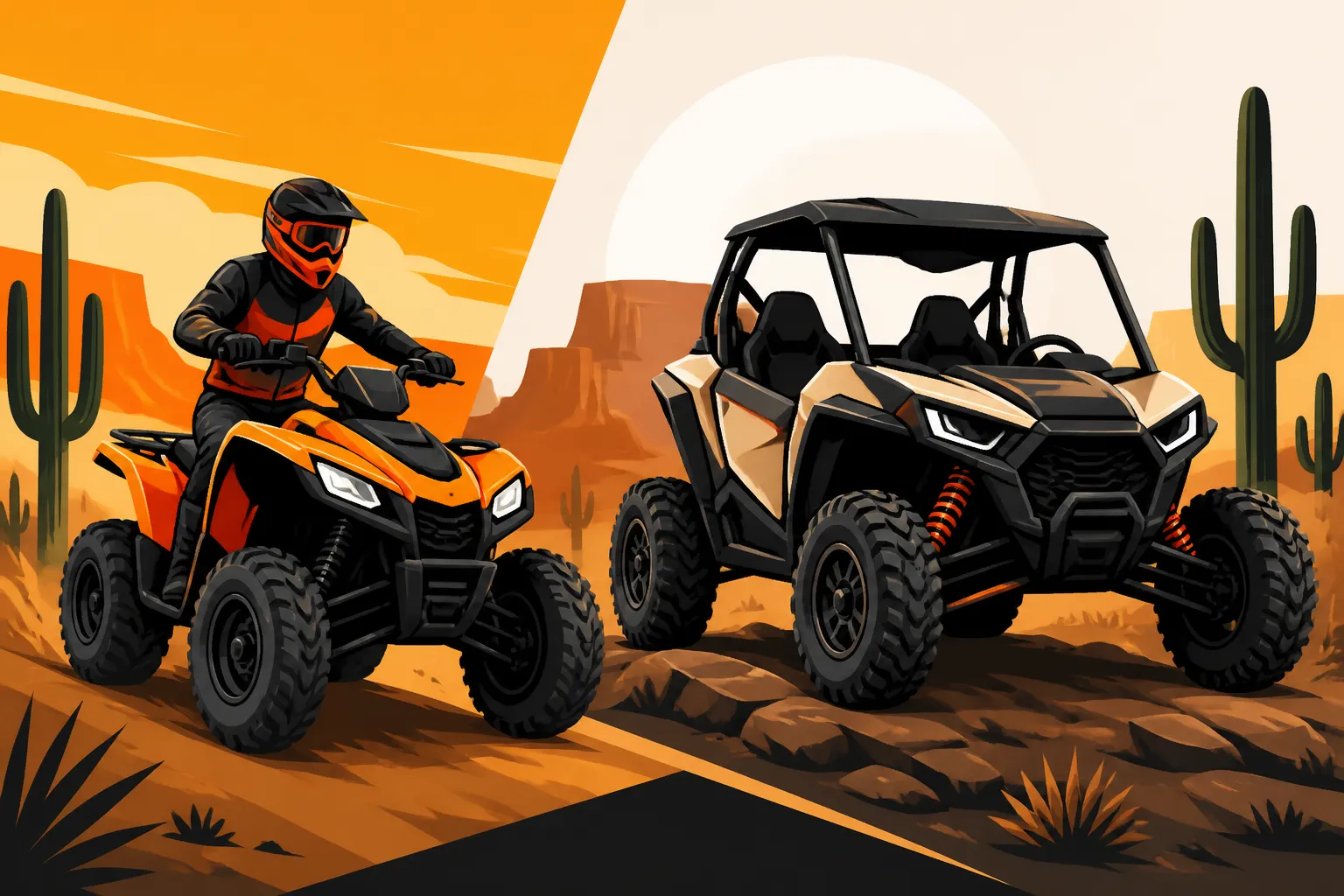
Now, for purely off-highway use, you might think the plate type doesn't matter since you're only getting an OHV decal. However, the underlying classification sticks with your vehicle's record and can subtly influence other aspects of its registration and titling process. It’s also a common point of confusion for riders, especially those who own smaller, sportier side-by-sides that might weigh just under or just over that mark. For example, many single-rider ATVs and smaller two-seat UTVs easily come in under this weight, while larger four-seater side-by-sides often exceed it. Knowing your machine's curb weight right from the start sets you on the correct path with your paperwork, saving you time and potential re-filing later on. Understanding [Why Arizona Plates Read MC or RV] can further clarify these distinctions.
The Arizona MVD's Definition of an Off-Highway Vehicle
The Arizona MVD defines an off-highway vehicle (OHV) quite broadly, but the weight often factors into its specific sub-classification. An OHV is generally a motor vehicle operated off paved public highways and designed primarily for recreational travel over unimproved terrain. This covers a huge range of machines, from dirt bikes to full-size sand rails. The definition focuses on the vehicle's intent and design for off-road use, but for registration purposes, the weight helps categorize it more precisely within the MVD's system.
For machines under 1,800 pounds, the MVD still recognizes them as OHVs. The crucial thing to remember is that whether your machine is a lightweight sport quad or a heavier utility side-by-side, if you plan to operate it on public lands, it still needs to be titled and registered, and it absolutely must display the annual OHV decal. The weight threshold doesn't exempt you from these requirements; it simply places your machine into a different internal classification regarding its potential "street-legal" plate type, should you choose to pursue that down the line. It's a fundamental part of the [Arizona MVD OHV Registration Explained]. Always check your manufacturer's specifications for the exact curb weight of your machine to ensure you're providing accurate information during the titling and registration process.
Titling Your Under-1,800-Pound Machine in Arizona
Titling your OHV correctly in Arizona is the foundation of legal ownership. Without a clear title, you can run into major problems down the road, whether you're trying to sell it, insure it, or even just prove it's yours if it ever goes missing. For machines under 1,800 pounds, the process is largely similar to heavier OHVs, but understanding the specific documents and steps involved is key to a smooth experience.
Essential Documents for Proof of Ownership
When you head to the MVD or a third-party office to title your under-1,800-pound machine, you absolutely must have the right paperwork to prove you own it. The most critical document is the manufacturer's certificate of origin (MCO) if it’s a brand-new machine, or a properly assigned title if you bought it used. The MCO is essentially the birth certificate for your OHV, showing it has never been titled before. If you're buying used, the previous owner's Arizona Certificate of Title, with their signature in the seller's section and yours as the buyer, is paramount. If it's an out-of-state machine, ensure the title is properly released and transferable in Arizona.
Beyond the MCO or title, a bill of sale is incredibly important, especially for private party transactions. A well-drafted bill of sale, including details like the sale date, purchase price, buyer and seller names and addresses, and the vehicle identification number (VIN), serves as a strong secondary proof of purchase. It helps establish a clear chain of ownership, which is something the MVD always looks for. For those who need to create a robust bill of sale, services like LawDepot can be invaluable for generating professional, legally sound documents tailored to your specific transaction. For more on this, you might find [What an Arizona Bill of Sale Should Carry] useful. Don't underestimate the power of thorough documentation; it's your best defense against future ownership disputes.
The Arizona Certificate of Title Process
Getting your Arizona Certificate of Title for an off-highway vehicle under 1,800 pounds involves a few key steps. First, you'll need to complete an Arizona Title and Registration Application (Form 96-0236). This form asks for all the essential information about you and your machine, including that all-important VIN. You'll then present this application along with your proof of ownership (MCO or properly assigned title) and your bill of sale, if applicable, to an MVD office or an authorized third-party provider. The [Arizona OHV Title Fee] will also need to be paid at this time.
Many riders find using a third-party MVD office more convenient, as they often have shorter wait times and can process your paperwork efficiently. These offices are licensed by the state to handle most MVD transactions, including titling and registration. Whether you choose to go directly to the MVD or use a third-party service, ensure all your documents are accurate and complete to avoid delays. The VIN on your documents must exactly match the VIN stamped on your machine. This is a crucial detail that can trip up the process if there's any discrepancy. For a deeper dive into the overall titling process, consider reviewing [Getting an Arizona Certificate of Title for a Quad] or [Arizona Certificate of Title for an Off-Highway Vehicle]. Once the MVD processes your application, you’ll receive your new Arizona title in the mail, officially establishing your ownership.
Registering Your Lightweight OHV and Obtaining the Decal
Once your under-1,800-pound OHV is properly titled, the next step is to get it registered and obtain that all-important annual OHV decal. This decal is your permission slip to ride on hundreds of thousands of miles of public land in Arizona, and it’s a requirement for almost all off-highway riding. For machines under this weight threshold, the process ensures you're ready to hit the trails legally and responsibly.
The Arizona OHV Decal: Your Ticket to the Trails
The Arizona OHV decal is an annual requirement for nearly all OHVs operating on public land in the state. This little sticker, prominently displayed on your license plate, signifies that you've paid the necessary fees and are contributing to the state's OHV recreation fund. This fund, in turn, helps maintain and improve trails, provide educational programs, and support search and rescue efforts. It doesn't matter if your machine is a tiny dirt bike or a massive desert buggy; if it's going off-road on public land, it needs this decal.
For your under-1,800-pound machine, the process to get the decal is straightforward. You apply for it through the MVD, typically at the same time you register your vehicle. There’s an annual fee associated with the decal, which goes directly into supporting OHV recreation. Without this decal, you risk being ticketed by law enforcement, and believe me, those fines can quickly outweigh the cost of the decal itself. It's a small price to pay for access to Arizona's vast and beautiful backcountry. Everything you need to know about [Arizona's Annual OHV Decal Explained] will clarify its importance and how it benefits riders.
Navigating the Registration Process for Off-Highway Only Use
When you register your under-1,800-pound OHV solely for off-highway use, you’re not making it street legal. This means you won’t be getting a standard license plate to drive on paved roads. Instead, your registration will be for off-highway use, and you'll receive a specific OHV license plate (usually a smaller, designated plate) onto which you'll affix your annual decal. The weight of your machine, while recorded, primarily influences what type of street-legal plate would be issued if you chose that route, but for off-highway only, the immediate effect is simpler: you just need the OHV plate and decal.
The registration process typically involves submitting your titled paperwork, paying the registration fees, and then paying for the annual OHV decal. This can often be done simultaneously with the titling process, either at an MVD office or a [Third-Party MVD Providers That Register OHVs] location. They will ensure all your information, including the machine's weight and VIN, is correctly entered into the state system. Once completed, you'll receive your registration and the decal, which you then securely place on the upper-left corner of your OHV plate. This completes the loop, making your lightweight machine fully legal for Arizona's expansive trail system. Remember, the focus here is off-highway access, and the decal is your primary identifier for compliance.
What Happens If Your Machine is Near the Weight Threshold?
It’s not uncommon for some OHVs, especially newer side-by-sides, to sit right on the fence of that 1,800-pound threshold. This can create a bit of a gray area or at least some confusion when it comes to official classification. Knowing your exact weight and being prepared can save you a lot of hassle.
Verifying Your Machine's Exact Weight
If your machine is close to the 1,800-pound mark, it’s absolutely critical to verify its exact curb weight. "Curb weight" typically refers to the weight of the vehicle with all standard equipment, fluids, and a full tank of fuel, but without passengers or cargo. You can usually find this information in your owner's manual, on the manufacturer's website, or sometimes on a sticker somewhere on the machine itself (often near the VIN). Do not just guess or rely on hearsay!
Why is this so important? Because sometimes, even minor modifications like a winch, a heavy-duty bumper, or aftermarket tires can push a machine that was originally just under the 1,800-pound limit over it. Conversely, a stripped-down machine might fall under the limit when a stock version wouldn’t. If you're genuinely unsure or if modifications have been made, consider taking your vehicle to a certified weigh station to get an accurate reading. This due diligence ensures that when you interact with the MVD, you’re providing correct information, which prevents potential issues with your registration or title classification later on. This precision is tied into [Weight Limits That Decide What Your Decal Covers].
Common Mistakes and How to Avoid Them
One of the most common mistakes riders make when dealing with the 1,800-pound threshold is simply not knowing their machine's actual weight, or assuming it falls into a certain category without checking. This can lead to your machine being incorrectly classified in the MVD system. For example, if your 1,750-pound side-by-side is mistakenly listed as 1,850 pounds, it might be classified in a way that would trigger an "RV" plate if you ever decided to make it street legal, rather than an "MC" plate, which is less common for an OHV. While this distinction might not impact your off-highway decal directly, it creates a discrepancy in your vehicle's official record.
Another mistake is not updating weight information after significant modifications. If you add heavy accessories, the curb weight changes, and while you might not need to re-register the weight immediately, being aware of it can help for future transactions or if you ever consider street-legal conversion. To avoid these issues, always provide accurate, verified information to the MVD. When purchasing a used machine, especially from a private seller, ensure the weight declared matches manufacturer specifications and the previous title. If you're drawing up a private sale agreement, LawDepot can assist you in creating a comprehensive document that includes all pertinent vehicle details, including VIN and weight, to ensure clarity for both buyer and seller. This level of detail protects you and ensures your registration aligns perfectly with your machine.
Disclaimer
This article is for general informational purposes only and does not constitute professional advice. Laws, prices and regulations vary by location and change over time. Consult a qualified professional for guidance on your specific situation.