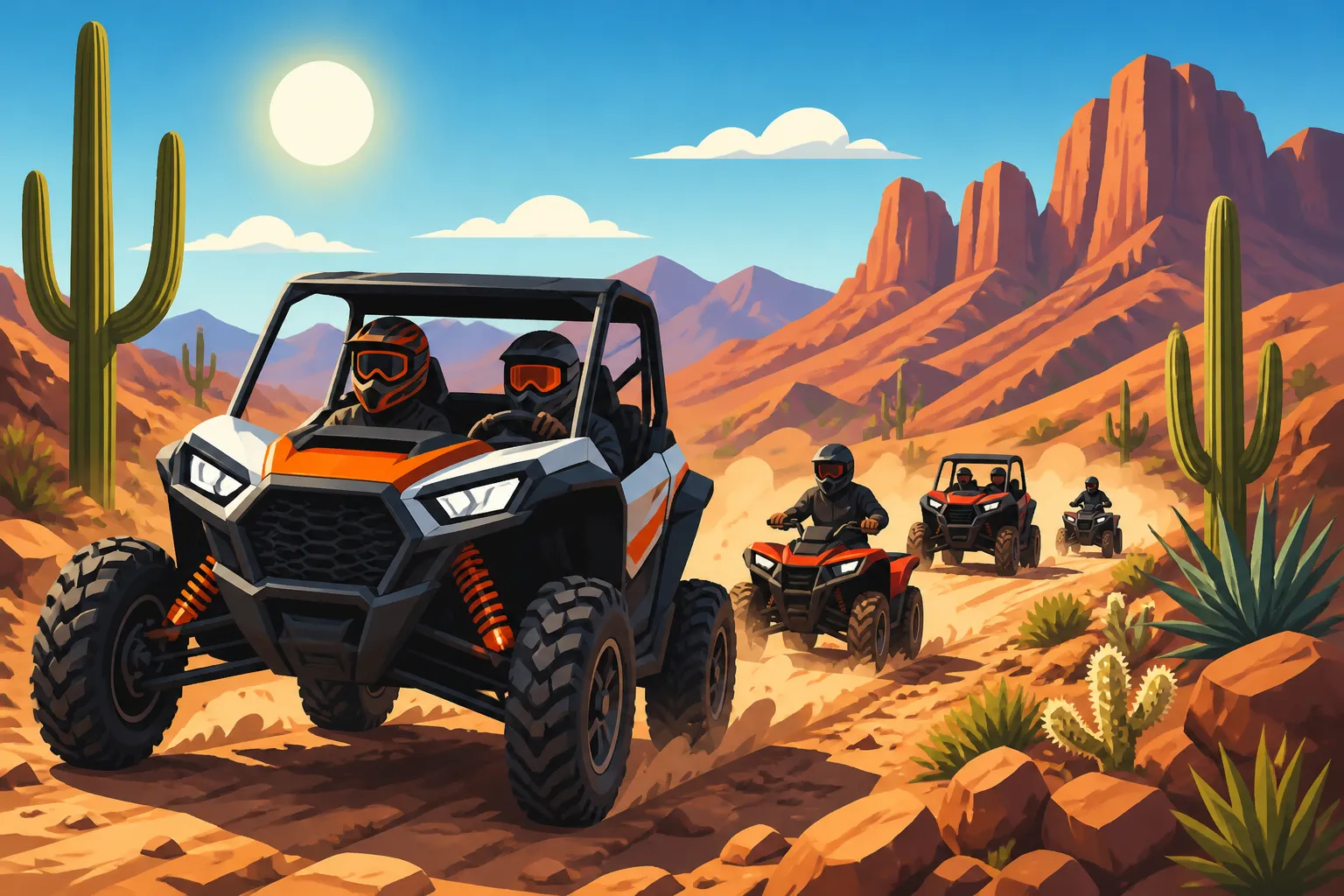
Busy Arizona Trails on a Winter Weekend
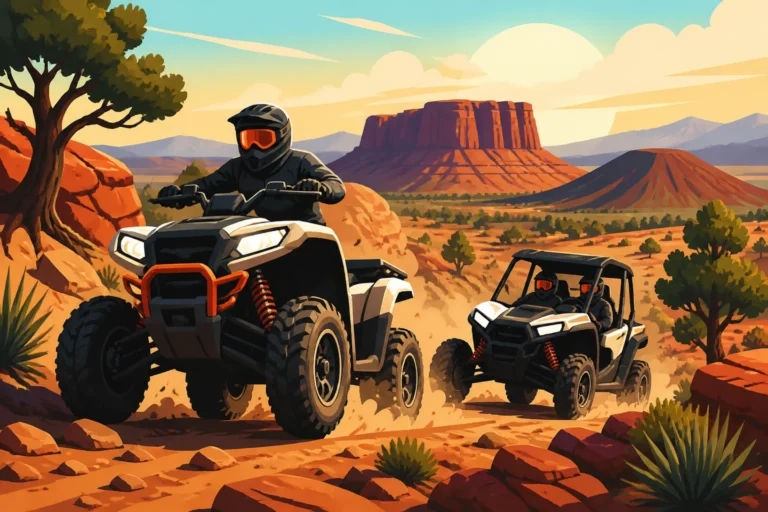
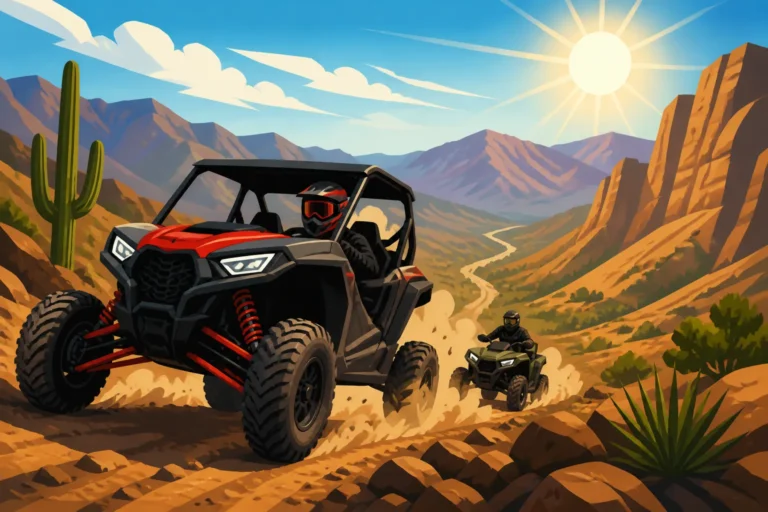
A winter weekend can turn a beautiful Arizona ride into a slow procession of dust, trailers, and crowded trailheads. Popular areas near Sedona, Phoenix, and Lake Havasu attract plenty of riders when the weather is comfortable, so a little planning makes a real difference. This guide explains where crowds tend to build, how to choose a ride, and how to avoid the most frustrating bottlenecks.
Why Arizona trails get crowded on winter weekends
Comfortable weather brings riders to the desert
Winter is a favorite riding season in much of Arizona. Cooler daytime temperatures make longer outings more comfortable, and visitors often plan trips around school breaks, holiday weekends, or a stay in a nearby town. That means the busiest places can feel very different on a Saturday than they do on a quiet weekday.
Crowds are especially noticeable at trailheads with limited parking, at popular viewpoints, and on routes that funnel riders through a narrow wash or rocky section. Even a capable driver may end up waiting while another group works through an obstacle. If you are riding with children or a mixed-experience group, that stop-and-go pace can be tiring before the ride has properly begun.
Popular scenery concentrates traffic
The best-known destinations naturally draw a lot of attention. Sedona’s red-rock routes, Phoenix-area riding grounds, the Cinder Hills near Flagstaff, and the Lake Havasu and Parker Strip area each offer a distinctive landscape. They also attract riders who may be unfamiliar with one another’s machines, trail etiquette, or local route rules.
A well-known destination is not automatically a poor choice. It may be the right place for your group, especially if you have planned around its busier periods and confirmed that your machine fits the routes you intend to ride. For a broader look at how popular destinations compare, start with Where to Ride an OHV in Arizona and Arizona’s 40,000 Miles of OHV Trail.
Where crowds tend to build
Sedona and the red-rock routes
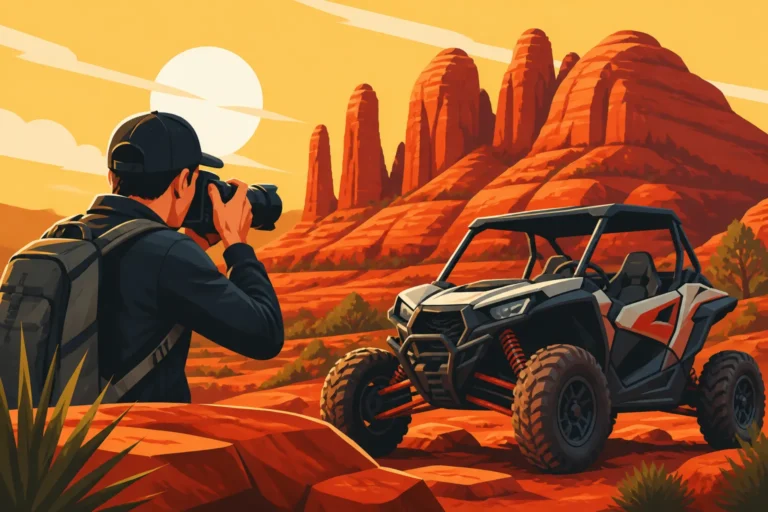
Sedona is a major draw for riders who want red-rock scenery and recognizable destinations such as Broken Arrow, Chicken Point, and the surrounding trail network. On a winter weekend, expect more activity around popular staging areas and well-known viewpoints. A short route can take longer than expected if several groups arrive at a narrow section around the same time.
Before choosing a specific route, check current access information, permitted vehicle types, and any route-specific restrictions. Some trails are not appropriate for every machine, and a route shown on a general map may not be open to the kind of vehicle you are bringing. If you are considering a guided or rented ride, ask the operator which routes are available for your machine and experience level. These guides can help you compare options: Riding Arizona’s Sedona Red Rock Trails and Sedona Trails Open to Side-by-Sides.
Phoenix-area riding and the Cinder Hills
For riders based in the Valley, areas such as Table Mesa and Bulldog Canyon can be tempting weekend choices because they are within reach of the Phoenix metro area. Their proximity can make them convenient, but it can also mean that parking, access gates, and popular route sections are busy at peak times. Conditions may vary after weather, so avoid assuming that a route will be easy simply because you have ridden it before.
Farther north, Cinder Hills offers a different kind of outing, with volcanic terrain near Flagstaff. It can attract both local riders and visitors building a trip around the area. The surface and terrain call for appropriate tires, vehicle clearance, and sound judgment; crowding is only one part of the planning. For route-specific preparation, see Table Mesa North of Phoenix, Bulldog Canyon Permit and Gate Codes, and Cinder Hills OHV Area.
Lake Havasu and Parker Strip destinations
Around Lake Havasu and the Parker Strip, riders may encounter a mix of established riding areas, sandy routes, and busy staging locations. A sunny weekend can bring groups arriving in trucks and trailers, families sharing machines, and visitors who have not ridden the area before. If the main staging area is full, do not improvise by parking in a way that blocks a road, gate, or another trailer’s exit.
Choosing a less familiar route can be rewarding, but only after checking that it is open and suitable for your vehicle. A route that looks manageable on a screen may have deep sand, sharp rock, or a tight turn that is awkward for a wide side-by-side. Use local route information and land-manager notices rather than relying on a single map source. Lake Havasu and the Parker Strip and Standard Wash OHV Area Access offer useful starting points for trip planning.
| Riding area | What may feel busy | Planning consideration |
|---|---|---|
| Sedona red-rock routes | Popular trailheads, viewpoints, and narrow sections | Confirm route access and vehicle suitability before unloading |
| Table Mesa and Bulldog Canyon | Access points, gates, and frequently used routes | Check access requirements and recent conditions |
| Cinder Hills | Staging areas and familiar routes near popular destinations | Prepare for terrain and verify the route fits your machine |
| Lake Havasu and Parker Strip | Trailer parking and busy staging locations | Arrive with a parking plan and identify an alternative route |
How to plan around weekend crowds
Choose your day and start time deliberately
If your schedule is flexible, riding on a weekday is often the simplest way to avoid the biggest weekend rush. If Saturday is your only option, arrive early enough to unload and organize without rushing. Late arrivals can mean circling a full staging area, squeezing into an unsuitable space, or starting the ride while the group is already frustrated.
An early departure is useful only if your group is prepared. Fuel up before you reach the trailhead, pack water and snacks where they are easy to reach, and agree on a meeting point in case someone gets separated. Check local access and weather information before leaving home, not after you have driven a long distance. A route can be crowded, muddy, sandy, or closed for reasons that are not obvious from the highway.
Pick a backup instead of forcing the plan
A second-choice area helps when your first destination is packed, access is restricted, or conditions do not suit your group. The backup should be a real plan, not just another name saved on a phone: confirm its route rules, staging location, vehicle suitability, and whether you have the right permissions for the land you will cross.
Digital maps, including onX Offroad, can help you compare route options and keep track of where you are. Treat any mapping app as a planning aid rather than proof that a road is open or legal for your machine. Check the relevant land manager’s current information and use a map that helps you distinguish routes, property boundaries, and restricted areas. For guidance on preparation, see Planning an Arizona Riding Trip and Reading an Arizona Motor Vehicle Use Map.
Give yourself room in the schedule
A crowded ride often runs slower than the route’s length suggests. Groups stop to let others pass, regroup after a technical section, or wait for a trailer to clear a tight staging area. Build in time for those pauses, especially if you are meeting friends for lunch or returning a rental machine by a specific time.
Keep the day flexible enough to turn around if conditions change. If the group is tired, visibility is poor, or a route becomes more difficult than expected, a shorter ride is a sensible choice—not a failed outing. In the desert, getting back comfortably matters more than ticking off every waypoint.
Ride safely and share busy routes
Keep the group organized and predictable
Before setting out, agree on who leads, who rides at the back, and where the group will regroup. On a busy route, this reduces the chance of riders stopping suddenly in a blind spot or taking a different fork without telling anyone. Leave enough space to see the machine ahead through dust, and slow down when visibility drops.
If a faster group approaches, find a safe, visible place to let them pass rather than accelerating to keep pace. When you meet other riders on a narrow section, communicate clearly and avoid blocking the route while sorting out who goes first. Patience matters most where there is limited room to pull over.
Match the route to your vehicle and experience
A machine that is comfortable on a broad desert road may feel cumbersome on a tight, rocky trail. Before the ride, compare the route’s width, surface, elevation changes, and obstacles with your machine’s dimensions and the least experienced driver in your group. A passenger, a loaded cargo bed, or a trailer can also change how a vehicle handles.
Do not follow another group simply because they seem confident. They may be on a different route, riding a narrower machine, or heading toward a section that is not appropriate for your group. If you are uncertain, pause somewhere safe and check your map and access information. For route difficulty and family planning, Arizona Trail Difficulty Ratings and Family-Friendly Arizona OHV Trails can help you think through what is manageable.
Protect the trailhead and surrounding land
Crowded staging areas can become chaotic when vehicles park across access lanes or unload into the path of other trailers. Park only where allowed, leave space for other drivers to maneuver, and keep children away from moving vehicles. Pack out trash and avoid widening a route by driving around mud, rocks, or a stopped machine.
Respect gates, signs, private property, and land boundaries even when another rider appears to pass through. A popular weekend is not permission to create a new track or use a closed route. Before you go, review Arizona Trailhead Parking and Staging and Arizona Trails on State Trust Land so your parking and route choices fit the area’s rules.
A practical weekend checklist
Before leaving home
A few checks can prevent a long, disappointing drive. Confirm that your chosen area is open, identify any access or permit requirements, and check whether your vehicle is allowed on your intended routes. Look at weather and road conditions for the destination itself; conditions near Phoenix can differ from those around Flagstaff or the high country.
Prepare a backup plan and share it with everyone in the group. Save maps for offline use if your route may pass through a cell dead zone, and carry enough water for the people riding—not just the vehicle. Pack basic recovery and repair gear suited to your machine and the terrain. Water Planning for an Arizona Trail Day and Cell Service in the Arizona Backcountry cover two details that are easy to underestimate.
At the trailhead
Pause before unloading. Check that you are in a legal staging area, that your trailer is not blocking anyone, and that the group has the right equipment for the route. Review the plan together, including the turnaround point and what to do if someone becomes separated.
Take a moment to notice how busy the area is. If the trailhead is already congested or the first section is backed up, consider waiting, choosing your backup, or shortening the ride. A calm adjustment at the start is often better than spending the day frustrated in a line of machines.
When the ride is over
Allow time to load safely, secure the machine, and check that no gear or rubbish has been left behind. If you found a route crowded or unsuitable, make a note of what you would change next time: an earlier arrival, a weekday, a different staging area, or a less popular destination. If a trail was closed or conditions were hazardous, share that information through an appropriate local or land-management channel rather than encouraging others to push through.
The goal is not to find a famous trail with no other riders. On a winter weekend, that may be unrealistic at the best-known destinations. The better goal is to choose a route that suits your group, arrive prepared, and leave enough flexibility to enjoy the ride even when the parking lot is full.
Disclaimer
This article is for general informational purposes only and does not constitute professional advice. Laws, prices and regulations vary by location and change over time. Consult a qualified professional for guidance on your specific situation.