Bulldog Canyon Permit and Gate Codes
Bulldog Canyon’s locked gates can turn a simple Arizona ride into a frustrating trip if you arrive without the right permit or access instructions. This guide explains how to prepare, where to verify the current rules, how to handle gate codes responsibly, and what to plan for once you’re on the trail near Apache Junction.
How the Bulldog Canyon permit and gate codes work
Get the permit before you leave home
Bulldog Canyon is in the Tonto National Forest, east of the Phoenix area. Access is controlled at locked gates, and riders generally need an authorized permit with the information required to enter. Don’t assume that an Arizona OHV decal, a vehicle registration, or a permit for another recreation area will open the gates.
Start with the official Tonto National Forest information for Bulldog Canyon and follow its directions for getting a permit. Permit availability, conditions, and application steps can change, so rely on the current instructions rather than an old screenshot, a social media post, or a code passed along by another rider. If the official process uses an online reservation or permit system, complete it before driving out.
Read the permit from top to bottom once you have it. Pay attention to the authorized date or period, the number and type of vehicles allowed, any requirements to carry or display the permit, and the instructions for the gate. If anything is unclear, resolve it before you’re standing at a locked entrance with a trailer behind you and spotty service.
Treat the gate code as part of your authorization
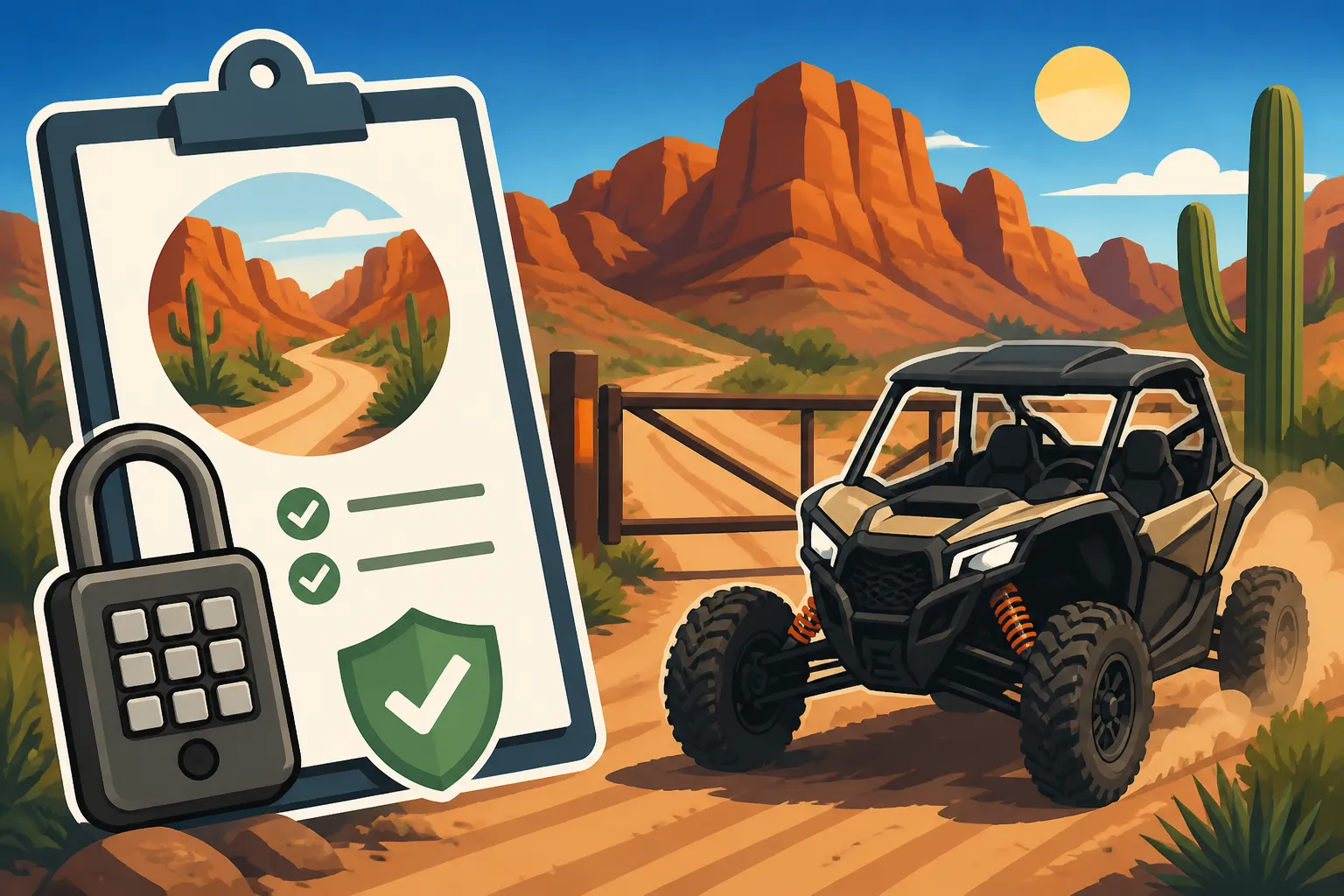
The access code is not a substitute for a permit. It is a way to open a controlled entrance when you have permission to use the area. Keep the code with the permit information, and use it only in accordance with the directions you received. Avoid posting it publicly or sharing it with people who are not covered by your authorization.
At the gate, stop and check the instructions before operating the lock. Enter the code carefully, open the gate only as directed, and make sure it is secured again after your group passes through. If another vehicle is close behind you, don’t assume its occupants have permission simply because they arrived together. Each rider should understand the applicable permit rules.
If the code doesn’t work, don’t force the lock, climb around the gate, or follow another vehicle through. Recheck the date and instructions on your permit, confirm that you’re at the correct entrance, and use the official contact information if you need help. A gate that won’t open is a reason to pause and troubleshoot, not a reason to create a new route around it.
Know which entrance and routes you’re using
Bulldog Canyon has more than one access point, and a code or instruction for one entrance may not apply to another. Confirm your intended gate before leaving paved roads. It’s easy to mix up access points when several people are sharing directions, especially if someone has saved an old pin or is navigating from a ride report.
Use official area information and a current map to plan your route. [Bulldog Canyon's Sandy Washes] offers more context about the riding environment, but a trail description should not replace official access instructions. If you use onX Offroad to organize a route, compare the map with land-manager information and verify that the route you plan to ride is open and appropriate for your machine.
A practical pre-trip check looks like this:
- Confirm the area is open and review any current restrictions.
- Obtain the Bulldog Canyon permit through the official process.
- Check the permitted date, vehicle conditions, and gate instructions.
- Save the permit and code where you can access them without cell service.
- Confirm your chosen entrance and planned route on a reliable map.
- Make sure everyone in your group understands the rules before reaching the gate.
Preparing your machine and group for Bulldog Canyon
Check vehicle requirements and paperwork
Before the ride, confirm that your ATV or UTV is eligible under the current area rules. Don’t rely on a vehicle’s appearance or a seller’s description to decide whether it qualifies. Check its identification, registration, and any OHV requirements that apply to your situation. Arizona’s decal rules may depend on the machine and how it is used, so review [Arizona OHV Decal Rules for a Machine Never Ridden Off-Road] and the applicable state guidance rather than assuming the forest permit covers everything.
If you’re visiting from another state, look into the requirements for out-of-state machines as well. [Arizona's Non-Resident OHV Decal] is a useful starting point for understanding that separate issue. A forest access permit and state OHV requirements serve different purposes; being prepared for one does not automatically satisfy the other.
Carry the documents or digital records specified by the permit instructions. Save them offline if possible. A phone may have little or no reception at the trailhead, and a document that only opens after a fresh login can be hard to retrieve at exactly the wrong moment. If your group has multiple machines, make sure the paperwork and authorization cover the actual vehicles going through the gate.
Plan around terrain, weather, and daylight
Bulldog Canyon is desert country, not a groomed amusement-park loop. Conditions can vary from sandy washes to rocky or uneven sections, and the right route depends on your experience, machine, and the day’s conditions. Choose a route your least experienced driver can handle, and don’t let a confident rider talk the group into terrain that exceeds the ability of the vehicles or passengers.
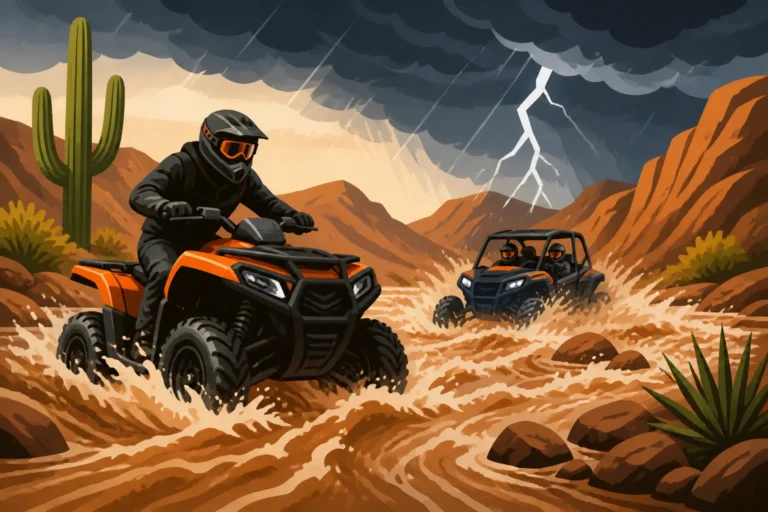
Rain can change a wash or trail quickly. Review [Riding Bulldog Canyon After Rain] before heading out, and check for closures or weather-related warnings from the land manager. If rain is possible upstream, a dry wash can become hazardous even when the sky above your staging point looks clear. Avoid entering flowing water or a wash where conditions are uncertain.
Heat and daylight deserve the same attention as trail difficulty. Carry more drinking water than you expect to need, take breaks in shade where possible, and set a turnaround time that leaves room for a slow return. [Water Planning for an Arizona Trail Day] can help you think through a desert-day supply, while [Arizona Fire Restrictions by Stage] is useful for checking seasonal fire rules. For mechanical and fire prevention, review [Arizona's Spark Arrestor Requirement] and make sure your machine is in sound condition.
Bring navigation and a backup plan
Download maps or save route information before leaving dependable service. Don’t assume you’ll be able to load a trail map, retrieve your permit, or contact a riding partner once you’re near the access gate. onX Offroad can help riders keep a route available for navigation, but it should be one part of your plan—not a replacement for official maps, current closures, or paying attention to posted signs.
Tell someone who is not riding with you where you’re going and when you expect to be back. Share the trailhead or gate you plan to use, your general route, and what they should do if you miss your check-in. [Cell Service in the Arizona Backcountry] is worth reading if you’re counting on a phone for navigation or emergencies.
Pack basic recovery and repair items suited to your vehicle and group. A tire repair kit, tools, a first-aid kit, and an appropriate recovery plan can make a small problem manageable. Don’t attempt a recovery that puts people in the path of a moving machine or uses gear beyond its intended capacity. If the group can’t safely deal with a problem, stop, reassess, and seek assistance.
At the gate and on the trail
Use the gate carefully
Before opening the gate, confirm you’re at the entrance named in your instructions. Check that the area is open and that no sign or closure notice changes the plan. Keep the group together so vehicles don’t block the access road while someone searches for a permit or enters the code.
Follow the gate procedure exactly. Some access instructions may require riders to close and secure the gate behind them; others may give specific directions about how to operate it. The instructions attached to your authorization and posted at the entrance take priority. Never leave a gate open for convenience, and don’t assume it is fine to leave it unsecured because another rider is expected shortly.
If the entrance is blocked, the lock is damaged, or the posted instructions conflict with your permit, don’t improvise. Take a photo of the sign or problem if it is safe and appropriate, then contact the responsible land manager using official contact details. Do not bypass the gate or create a new access track.
Stay on routes that are open to motorized travel
A visible tire track is not proof that a route is open. Use official maps and signs to identify designated routes, and respect closures and boundaries. [Reading an Arizona Motor Vehicle Use Map] can help explain how to interpret motorized route information. If a route is unclear, stop and check rather than riding farther in and hoping the trail leads somewhere permissible.
Be especially attentive where land ownership or management changes. A route may pass near areas with different rules, and a permit for Bulldog Canyon does not automatically authorize travel on adjoining land. For example, [Arizona State Trust Land Recreational Permits] explains a separate permit system that may apply to State Trust Land. Don’t assume that a forest permit covers land managed by a different agency.
Stay on established routes and avoid widening turns or driving around obstacles in a way that damages vegetation or soil. Give other users room, keep speeds appropriate for visibility, and slow down near trail junctions and dusty sections. In a group, leave enough space to see and react without losing the rider behind you.
Make a plan for the return
Set a turnaround time before you start, especially if the group includes new riders or children. A short mechanical delay, a wrong turn, or a slow section can add more time than expected. Check fuel range with a margin for detours and rough terrain, and don’t count on finding fuel near the trail.
Before leaving the area, confirm that all vehicles and riders are accounted for. Follow the gate instructions on the way out as carefully as you did on the way in. If the permit or site rules require a specific check-out process, complete it. Leaving a gate unsecured or a vehicle behind can create problems for land managers and other visitors.
If the ride takes longer than planned, don’t rush through technical terrain just to make a target time. Stop somewhere safe, reassess your route, and contact your designated person if you have service. If you’re considering a different entrance or exit, confirm that it is authorized rather than assuming that any nearby gate is available to you.
Quick permit and ride-planning checklist
| Before the trip | At the gate | During the ride |
|---|---|---|
| Check official Bulldog Canyon access information | Confirm you are at the correct entrance | Stay on routes open to motorized travel |
| Obtain and read the permit | Keep the permit and code accessible | Follow signs and closure notices |
| Confirm dates and vehicle conditions | Follow the gate instructions exactly | Adjust for heat, rain, dust, and visibility |
| Save documents and maps offline | Do not bypass a locked gate | Keep the group together and communicate |
| Check machine readiness and required paperwork | Secure the gate as directed | Turn around before daylight or supplies run short |
The best way to avoid a gate-code headache is to treat the permit, code, map, and vehicle requirements as one preparation task. Verify each item through official instructions, have a backup for poor cell service, and be ready to change plans if access conditions or weather make the ride unsafe. That small amount of planning can save a long drive from Apache Junction from ending at a gate you can’t legally or safely open.
Disclaimer
This article is for general informational purposes only and does not constitute professional advice. Laws, prices and regulations vary by location and change over time. Consult a qualified professional for guidance on your specific situation.