Riding a Machine Into Sedona
Sedona. Just the name conjures images of vibrant red rock formations, towering against a clear blue sky, a spiritual haven for many. For off-highway vehicle (OHV) enthusiasts, the idea of rolling directly from a rugged trail into the heart of this iconic Arizona town, perhaps for a well-deserved meal or to pick up some supplies, is incredibly appealing. However, bridging that gap between dusty desert trail and paved city street comes with a very specific set of rules and requirements that can trip up even experienced riders. This guide will walk you through everything you need to know about making your OHV street-legal, understanding Sedona’s unique road access, and ensuring your ride into town is as smooth and legal as your trail adventures.
The Allure and Nuances of Riding Your OHV into Sedona
Sedona is a world-renowned destination, famous for its breathtaking natural beauty and vibrant arts scene. For those of us who love exploring Arizona's vast backcountry on a quad or side-by-side, it's tempting to think about how convenient it would be to access the town's amenities directly from the dirt. The dream of riding your UTV, covered in a fine layer of red dust, right up to a cafe for a coffee or a restaurant for dinner, often fuels the desire to make your machine street-legal.
Why Sedona Calls to OHV Riders
Imagine finishing an epic ride on a trail like Broken Arrow, navigating through the challenging terrain and soaking in those incredible vistas. Your machine is dirty, your helmet is probably a bit dusty, and you're ready for a break. Instead of loading your OHV back onto a trailer and driving into town in your truck, wouldn't it be fantastic to simply motor into Sedona, park up, and grab a bite? This convenience is a huge draw. Plus, there's a certain cool factor to cruising Sedona's scenic roads in a street-legal side-by-side, experiencing the red rock scenery from a completely different perspective than a typical car. Many of Sedona's most iconic trails, while starting deep in the desert, often require crossing or using paved county or forest service roads to access them. Being street-legal can simplify these transitions immensely, letting you link up trails more freely.
The Street-Legal Reality Check for City Access
While the dream is exhilarating, the reality involves a fair bit of preparation. Sedona, like any incorporated city, has local ordinances that govern vehicle operation within its limits, even for street-legal OHVs. On top of that, Arizona has specific state-level requirements that transform an off-highway machine into something you can legally drive on public roads. Simply having an OHV decal and riding on designated trails isn't enough; you're entering a different legal landscape. Many riders make the mistake of assuming that because their machine is registered as an OHV, it’s automatically allowed on any road. That’s often not the case. Your machine must meet all the requirements for a street-legal vehicle in Arizona, and then you need to be aware of any specific city rules. [Arizona Rules for a Golf Cart in a Community] might give you some insight into how different vehicle types are treated.
Common Misconceptions About Sedona OHV Rules
One of the biggest misconceptions is that all roads in Sedona are open to OHVs if they're street-legal. This simply isn't true. While Arizona state law allows street-legal OHVs on many public roads, cities and counties retain the right to restrict access on certain streets. You can’t just assume every street in Sedona is fair game. Another common misunderstanding is about the "OHV decal" itself. While essential for off-road use, the decal does not grant you street-legal status. It's for trail access. You still need a proper license plate, insurance, and all the safety equipment required for any street-legal vehicle. Without these, even if you’re only trying to cross a short paved section, you could face penalties for illegal road riding. People often forget that even if you're "just crossing" a road to get to another trail, you must still be compliant.
Essential Steps to Make Your Machine Street-Legal for Sedona's Roads
Making your ATV or UTV street-legal isn't just about adding a blinker; it's a comprehensive process that ensures your machine is safe and legally recognized for road use. This involves outfitting your vehicle with specific components and going through the proper registration channels.
Arizona's State-Level Street-Legal Requirements
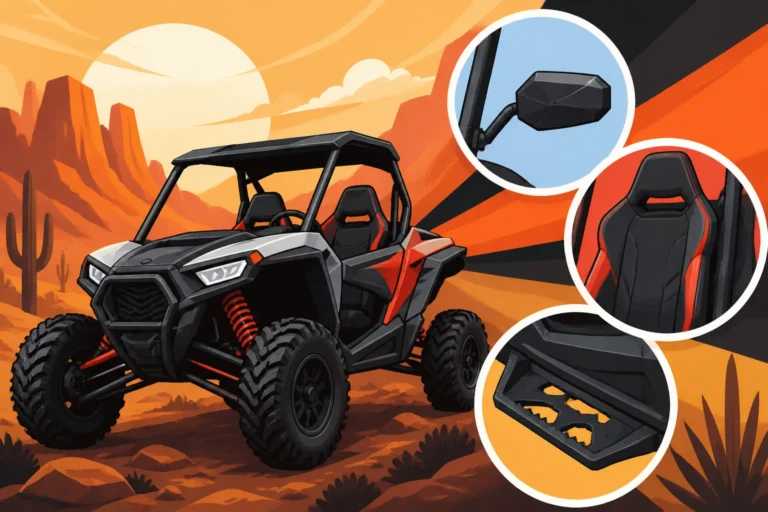
Before you even think about Sedona, your OHV needs to meet Arizona's minimum requirements to be considered street-legal. This is the foundation upon which all other local rules are built. At a high level, these requirements are similar to what any car or truck needs. You’ll need working headlights (both high and low beam), taillights that are visible from 500 feet, brake lights, and turn signals. A rearview mirror (or two, depending on your setup) is essential, as is a horn audible from 200 feet. Your exhaust system must have a muffler and a USDA-approved spark arrestor, and it must meet noise limits. For safety, you’ll also need seatbelts and a roll cage if your machine is a UTV. Don't forget proper [Arizona Insurance Minimums for Road Riding] – typically 25/50/15 bodily injury and property damage coverage – and a valid driver's license. [What Arizona Requires on a Street-Legal Machine] goes into more detail, but these are the big ones.
A quick rundown of general street-legal requirements in Arizona:
| Component | Requirement |
|---|---|
| Headlights | At least one, but usually two for OHVs, with high/low beam. Visible from 500 feet. |
| Taillights & Brake Lights | Visible from 500 feet. Rear reflectors also needed. |
| Turn Signals | Front and rear, amber or red, clearly visible. |
| Mirrors | At least one rearview mirror, providing a clear view of the highway 200 feet to the rear. Two are better. |
| Horn | Audible from 200 feet. |
| Muffler & Spark Arrestor | Muffler to reduce noise, USDA-approved spark arrestor always required. |
| Seatbelts/Restraints | Required for all occupants in UTVs. |
| Roll Cage | Required for UTVs. |
| Windshield | Not explicitly required for all OHVs, but highly recommended for protection. |
| License Plate Light | Illuminates the rear license plate with white light, visible from 50 feet. |
| Additional | Valid driver's license, liability insurance, proper registration, and a street-legal plate. |
Equipping Your OHV for Pavement: Key Components
Outfitting your machine for the street means selecting and installing quality components. For things like mirrors, turn signals, and sometimes even a full windshield for protection from road debris, companies like SuperATV offer a wide range of aftermarket accessories designed specifically for OHVs. You might need to add a lighting kit if your factory lights aren't up to snuff, or replace your stock horn with something more robust. It's not just about having the parts, but ensuring they meet the legal standards. For example, some states specify mirror size or signal flash rate. While Arizona is generally less restrictive than some, you still want functional, visible equipment. Many riders find that a full windshield not only helps with street legality but also significantly improves comfort on pavement, especially at higher speeds. When installing these components, ensure they're securely mounted and wired correctly to avoid issues down the road – literally. This is where [Making a UTV Street Legal in Arizona] can be incredibly helpful.
The Registration and Titling Process for Street Use
Once your machine is equipped, you’ll need to officially register it for street use and get a proper license plate. This is distinct from your OHV decal. You’ll need to apply for an Arizona Certificate of Title for your OHV if you don't already have one, and then apply for a street-legal registration. This usually involves proving you have all the necessary equipment, along with proof of ownership, a valid ID, and insurance. The Arizona Motor Vehicle Division (MVD) will issue an "MC" (motorcycle) plate if your machine is certified for street use. This is crucial: the MC plate is your indicator that your vehicle can operate on public roads, not the green OHV decal. If you're wondering about specifics, [Getting an MC Plate for a Side-by-Side] offers detailed guidance on this process. It's a bit of paperwork, but absolutely essential to avoid issues. Remember that while you’ll get an MC plate for street use, you still typically need your annual OHV decal if you plan to hit the trails, as the plate doesn't replace the off-road access requirement.
Navigating Sedona: Where You Can Ride and What to Expect
With your OHV street-legal and properly plated, you're ready to explore Sedona. But even then, you can't just drive anywhere. Understanding the local rules is paramount to a stress-free visit.
Identifying OHV-Friendly Roads Within Sedona
Sedona, like many picturesque towns that attract outdoor enthusiasts, has a mix of open and restricted roads for OHVs. Generally, if an OHV meets all the state-level street-legal requirements, it can operate on most state and county roads, and many city streets. However, cities retain the right to prohibit OHVs from specific streets or areas, especially those with heavy pedestrian traffic or where noise might be a concern. It's not uncommon for main thoroughfares or residential areas to have restrictions. Before you roll into town, it's wise to check the City of Sedona's official website or contact their municipal offices for the latest ordinances regarding OHV access. There's no single statewide list that overrides local control. What's open in one town might be closed in another. [Finding an Arizona City's OHV Ordinance] is a good first step to avoid any unpleasant surprises. Often, you'll find that roads leading out of town to trailheads are permitted, but cruising the busiest tourist sections might be frowned upon or explicitly prohibited.
Parking and Staging Your Machine in Town
Once you're legally driving your OHV on Sedona’s streets, parking becomes your next consideration. Just like with any vehicle, you must obey all parking signs and regulations. Parking a side-by-side can be a bit trickier than a car, especially in busy areas with tight spaces. Look for designated public parking lots or street parking spots that can accommodate your machine without obstructing traffic or pedestrians. Many OHV riders find it easiest to park at trailheads just outside of town, then either shuttle in or limit their street-legal riding within Sedona to essential trips, like fueling up or grabbing a quick meal. If you're connecting from a trail, try to find a place on the outskirts of town to consolidate your group before heading into the main drag. For more on this, check out [Parking a Side-by-Side at a Trailhead]. Remember, even if you’re parking your SuperATV-equipped rig just for a quick stop, you still need to secure it properly.
Local Ordinances and Community Etiquette
Sedona is a community that values its peace and natural beauty. When riding your street-legal OHV through town, it's incredibly important to be a good ambassador for the OHV community. This means driving responsibly, obeying speed limits (which are usually lower in town), and being mindful of noise. Aggressive driving or revving loud engines can quickly create animosity towards OHV riders. Be courteous to pedestrians, cyclists, and other drivers. If your machine is particularly noisy, consider quieter exhaust options, especially if you plan on extended periods of street driving. Remember that residents live here, and their quality of life can be impacted by how visitors operate their vehicles. Adhering to local rules and displaying common courtesy will help keep Sedona's roads open and welcoming to OHV enthusiasts. Think about the image you project, and make it a positive one for all of us who enjoy powersports.
Practical Considerations for a Smooth Sedona OHV Experience
Beyond the legalities, a successful ride into Sedona requires practical planning and a mindful approach to ensure a fun and respectful experience for everyone.
Planning Your Route: Connecting Trail to Town
Successfully riding your machine into Sedona means thinking about the entire journey – from trail to pavement and back again. Before you even leave home, map out your intended route. Identify which trails you'll be riding and how they connect to paved roads that lead into Sedona. Use resources like the [Arizona Motor Vehicle Use Map] or apps like onX Offroad to distinguish between Forest Service roads, BLM routes, and city streets. Confirm that the paved sections you plan to use are open to OHVs. For example, some trails like Broken Arrow might require a short stretch on paved roads to link up with main Sedona arteries. Knowing exactly which roads you'll traverse helps you anticipate traffic, speed limits, and potential restrictions. If you're coming from one of the more remote parts of [Arizona's 40,000 Miles of OHV Trail], you might have a longer paved section. Plan for fuel stops and breaks accordingly.
Staying Safe and Prepared on Sedona's Paved Roads
Driving an OHV on pavement is different from driving it on dirt. Your machine handles differently, especially at higher speeds, and you're sharing the road with much larger, heavier vehicles. Always wear appropriate safety gear, including helmets if required by age or local ordinance, even for short paved stretches. [Arizona Helmet Rules for Riders Under 18] are strict, but it's a good idea for adults to wear them too. Maintain safe following distances, use your turn signals, and be aware of blind spots, as OHVs can be less visible to other drivers. Check your tire pressure before hitting the pavement; many off-road tires perform better on dirt with lower pressure, but for road use, you'll want to inflate them to the manufacturer's recommended pressure for street driving to improve handling and reduce wear. Sun protection, hydration, and a basic tool kit are always good ideas, regardless of where you're riding in Arizona.
Respecting the Environment and Local Residents
Sedona's natural environment is precious and integral to its charm. When riding into and through town, continue to practice "Tread Lightly!" principles. Stay on designated roads and trails, avoid disturbing wildlife or vegetation, and pack out everything you pack in. Even on pavement, don't litter. For those of us passionate about the outdoors, it's crucial that we demonstrate our commitment to preserving these places. Furthermore, remember that Sedona is home to many residents who appreciate its tranquility. Excessive noise, dust, or reckless driving can create negative impressions. By being considerate, quiet, and respectful of property and people, you contribute to a positive relationship between the OHV community and the local population, helping ensure that access to places like Sedona remains open for future generations of riders.
Disclaimer
This article is for general informational purposes only and does not constitute professional advice. Laws, prices and regulations vary by location and change over time. Consult a qualified professional for guidance on your specific situation.