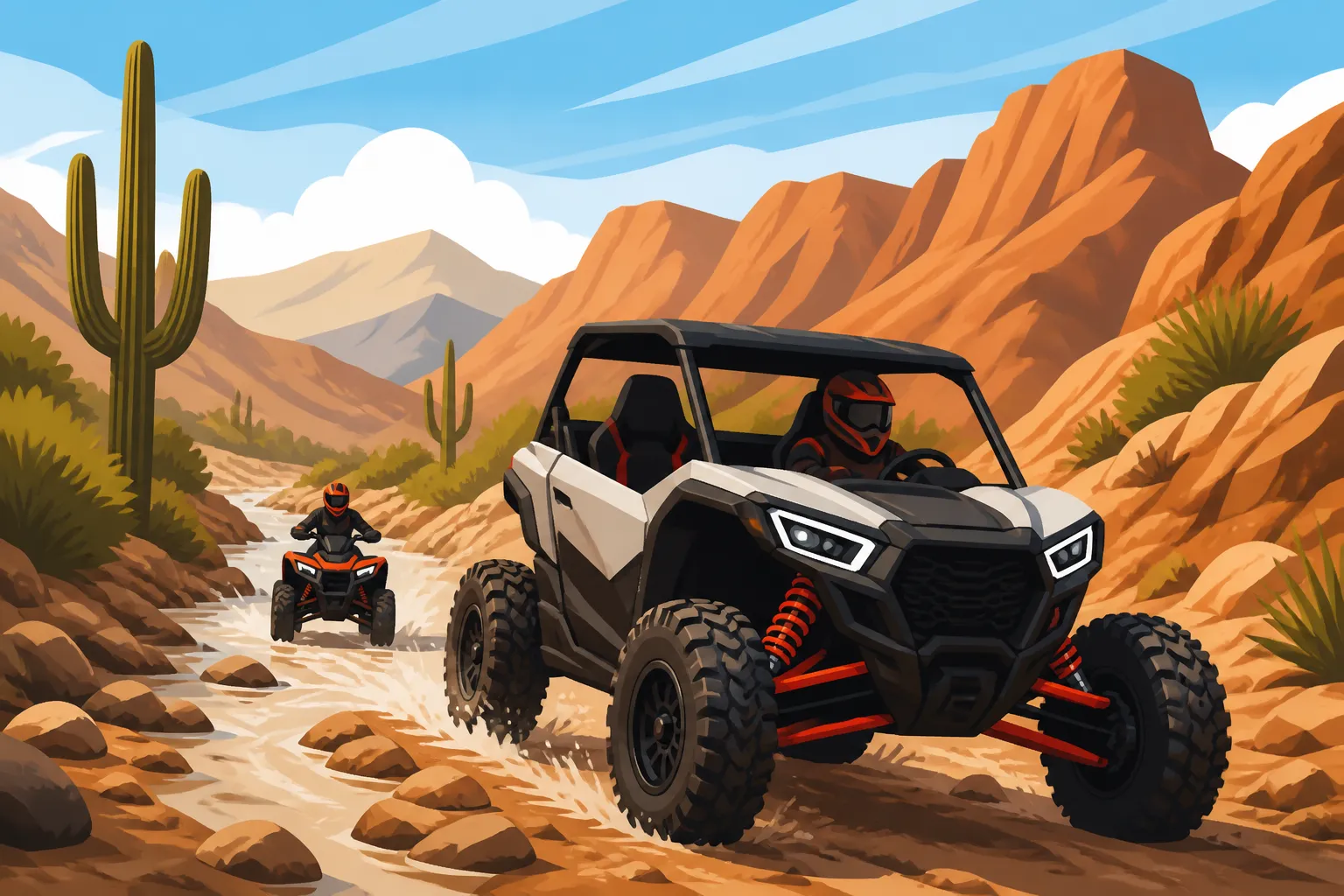
Riding a Wash Instead of the Road
We've all been there: you're out on the Arizona trails, the sun is high, and you see a wide, sandy wash running parallel to a dusty, corrugated county road. The thought crosses your mind – wouldn't it be more fun, and maybe even a little quicker, to cut through the wash instead of bumping along the road? This guide will dive deep into the tempting but often tricky world of wash riding in Arizona, helping you understand the allure, the risks, and the rules of the desert's natural roadways.
The Allure and Risks of Desert Washes for Arizona Riders
The desert wash holds a special kind of magic for off-highway vehicle (OHV) riders. It's often seen as the path less traveled, the natural highway carved by countless monsoons, offering a different kind of challenge and beauty than a graded dirt road. But beneath that sandy, winding charm, there are very real dangers and responsibilities that every Arizona rider needs to understand before veering off the established path.
Why Washes Seem Like a Good Idea
For many, riding a wash feels more authentic, more "off-road" than following a designated trail or dirt road. Washes can offer a smoother, sandier surface than a rocky, rutted trail, especially after recent rain has settled the dust. They often present a winding, dynamic route that feels more adventurous, allowing you to pick your own line and navigate natural obstacles. Imagine the feeling of flowing through a wide-open sandy bottom, the desert flora whizzing by, the canyon walls rising around you. It’s an exhilarating experience that a straight, maintained road simply can't replicate.
Beyond the thrill, washes can sometimes appear to be a shortcut, connecting different trail systems or skirting around private property that borders a main road. They might seem like a natural bypass when a road is particularly rough or crowded, offering a sense of solitude away from other vehicles. The temptation to drop into a wash and let your machine stretch its legs on the soft ground is powerful, especially for those with high-performance side-by-sides or ATVs specifically built for sand.
The Hidden Dangers Beneath the Surface
While the appeal is clear, washes are inherently unpredictable and far more dangerous than they appear. The biggest, most obvious threat comes from flash floods. Arizona's monsoon season is legendary for its sudden, violent downpours, and a wash that looks bone dry can become a raging torrent in minutes, even if the rain is happening miles upstream. [Monsoon Flooding Across an Arizona Road] is a serious concern, but a wash concentrates that water, turning a minor inconvenience into a life-threatening situation. The water can carry large debris like boulders and tree trunks, creating a destructive wall of water and mud. [Driving Through a Flooded Wash] is almost always a catastrophic mistake, and Arizona even has a "Stupid Motorist Law" that holds drivers liable for rescue costs if they enter a flooded area.
Beyond water, the seemingly smooth sand can hide treacherous conditions. Deep, soft pockets of sand can bog down even the most capable machine, leaving you stranded. Eroded banks can collapse unexpectedly, and sharp rocks or hidden debris are often obscured by loose sand, leading to unexpected flats or damage. [Flat Tires From Sharp Desert Rock] are a common headache, but in a remote wash, a flat can become a much larger problem. Undercut banks, steep drop-offs, and unexpected changes in terrain are all par for the course in an unmaintained wash.
Furthermore, washes can funnel dust, especially if you're riding in a group. While [Dust Behind You on a Desert Road] is manageable, in a narrow wash, dust can hang in the air, severely reducing visibility for everyone. This can lead to collisions or missed obstacles. Always be aware of your surroundings, and never assume a wash is a clear path.
Legality and Land Ownership: Where You Can and Can't Ride a Wash
Navigating Arizona's vast desert landscapes means understanding who owns the land you're on. While many washes traverse public lands, many also cut through private property, state trust land, or even enter protected areas. Ignorance of land ownership is no excuse, and straying into the wrong wash can lead to hefty fines, vehicle impoundment, or worse.
Public vs. Private Washes and Trespass Laws
Arizona's OHV laws are clear: you must respect private property. Washes often serve as natural boundaries or cut directly through private holdings, even if there are no fences or obvious markers. This is where riders get into trouble. Just because a wash appears open and accessible from public land doesn't mean it stays public for its entire length. A wash that starts on Bureau of Land Management (BLM) land might quickly enter private ranchland, a tribal reservation, or even a residential community.
Before you drop into any wash, you absolutely need to know who owns the land. Using a detailed mapping application like onX Offroad, which overlays property boundaries, is crucial. Without such tools, you're essentially riding blind. [Arizona Trespass Rules Along Desert Roads] apply equally, if not more strictly, to washes, as landowners are increasingly frustrated by unauthorized OHV use and the associated damage. Trespassing can result in civil penalties, criminal charges, and leave a permanent mark on your record.
Another often overlooked aspect is that washes can sometimes run through areas designated as archaeological sites, sensitive wildlife habitats, or riparian zones crucial for desert ecosystems. These areas are typically closed to motorized traffic, regardless of general land ownership. Always look for signage, and when in doubt, choose a clearly marked trail.
Understanding Rights-of-Way and Easements
Sometimes, a wash might have an established right-of-way or easement that permits public access, even if the surrounding land is private. These are usually for utility access, flood control, or established public access routes. However, these are exceptions, not the rule, and they are typically clearly marked. Never assume a wash has an implied easement. If there's no official signage indicating public access through private land, treat it as private.
Washes can also intersect with or run alongside other critical infrastructure, such as utility corridors, pipelines, or [Arizona Rules on Canal Banks]. Riding too close to or on these facilities can be dangerous and is often illegal, leading to damage to infrastructure and potential fines. Always maintain a respectful distance from any marked utilities or canals, even if they appear to be within a wash. The safest bet is to stick to designated OHV trails and roads where access is clearly established and permitted. If you're unsure about a wash's legal status, it's always best to err on the side of caution and find an alternative route.
Essential Gear and Preparedness for Wash Riding
Riding washes demands a higher level of preparedness than cruising a graded road. The terrain is less predictable, recovery can be more challenging, and help might be further away. Having the right machine, equipped with the right gear, and knowing how to use it, can make all the difference between an epic adventure and a costly rescue.
Machines Built for the Sand and Obstacles
While most modern ATVs and UTVs are capable off-road, some are better suited for the unique challenges of washes. Machines with higher ground clearance are less likely to get hung up on hidden rocks or deep ruts. Larger, more aggressive tires designed for loose terrain will provide better traction in sand and over soft obstacles. A robust skid plate and rock sliders, perhaps from a brand like SuperATV, are practically essential to protect your undercarriage from unexpected impacts with submerged debris or washouts.
Upgraded suspension components can also make a significant difference, absorbing the constant bumps and whoops found in many washes, providing a smoother ride and better control. Winches are not optional; they are a necessity. If you get stuck in deep sand, or need to pull a buddy out, a winch is your lifeline. Make sure it's properly installed, regularly maintained, and that you know how to operate it safely with appropriate recovery gear like tree savers and shackles. Remember, [Recovery Gear for Deep Sand] is specific and vital for these environments.
Safety Equipment Beyond the Basics
Beyond the machine itself, your personal safety equipment needs to be up to par. Helmets, goggles, gloves, and sturdy riding boots are always required, but in the wash environment, extra protection can be wise. Long sleeves and pants, even in hot weather, help protect against scrapes from brush and harsh sun exposure.
Crucially, because washes can be remote and cell service notoriously spotty, a satellite communication device or [Carrying a Satellite Messenger in the Arizona Desert] is highly recommended. This allows you to send emergency messages or check in with loved ones even when off-grid. A well-stocked first-aid kit, a tool kit capable of basic repairs, and plenty of water are non-negotiable. Seriously, know [How Much Water a Desert Ride Needs]; it's usually more than you think. A full-size spare tire, tire repair kit, and air compressor are also vital, as getting a flat in a remote wash is a common scenario.
Consider a dust mask or bandana, especially if riding in a group, to mitigate the constant dust ingestion. A small shovel can be invaluable for digging out tires, and a tow strap for quick recoveries.
| Feature | Washes (Pros) | Washes (Cons) | Roads (Pros) | Roads (Cons) |
|---|---|---|---|---|
| Terrain | Soft sand, winding paths, natural obstacles | Unpredictable, deep sand, hidden rocks, erosion | Graded, predictable, maintained | Corrugated, dusty, monotonous |
| Adventure | High sense of exploration and challenge | High risk of getting stuck, flash floods | Low risk, straightforward | Less exciting, routine |
| Legality | Often unclear, high risk of trespassing | Requires precise land knowledge, permits | Clearly defined routes, public access is known | Fewer options for off-roading |
| Safety | High risk of isolation, no cell service, hidden hazards | Requires extensive preparation and gear | Easier access for assistance, more visible | Shared with other vehicles, less "wild" |
| Environmental | High potential for damage to riparian zones | Can disturb wildlife, cause erosion | Lower impact if staying on designated routes | Still contributes to dust and wear |
| Required Gear | Winch, recovery gear, comms, heavy duty tires | Higher investment in protection (e.g., SuperATV skid plates) | Basic safety gear, fewer specialized items needed | Less need for extensive recovery equipment |
Environmental Impact and Responsible Wash Riding
As OHV enthusiasts, we share the responsibility of protecting the very landscapes we love to explore. Washes, with their sensitive ecosystems and role in desert hydrology, are particularly vulnerable to irresponsible riding practices. Riding them demands an elevated awareness of your environmental footprint.
Avoiding Erosion and Protecting Desert Habitats
Washes are natural drainage channels, and their stability is crucial for the overall health of the desert. When OHVs ride repeatedly in washes, especially on the banks or outside the main flow channel, they can accelerate erosion, destabilize the soil, and destroy nascent plant life attempting to establish itself. This erosion can worsen flash flooding impacts and alter the natural course of water, affecting vegetation and wildlife downstream.
Riparian zones – the areas immediately surrounding a wash that have more moisture and support unique plant and animal life – are particularly fragile. These "green strips" are vital for many desert species, providing food, water, and shelter. Riding through or on these sensitive banks can crush vegetation, pollute water sources, and disrupt wildlife. Always stick to the main, established flow of the wash and avoid riding up on the banks where vegetation is attempting to grow. Be extra vigilant during spring when new growth is emerging or after a rain when the soil is soft and more susceptible to damage. Remember, [Arizona OHV Rules That Changed Recently] often emphasize environmental protection, so staying informed is key.
Leave No Trace Principles in Arizona Washes
Adhering to Leave No Trace principles is paramount when riding in washes. This means packing out everything you pack in, including trash, spent fuel containers, and any broken machine parts. Avoid leaving behind any trace of your presence. If your machine breaks down, make every effort to recover it completely rather than abandoning it in the wash.
Minimizing your impact also means avoiding driving over fragile biological soil crusts, which are critical for preventing erosion and providing nutrients in the desert. These crusts appear as dark, bumpy, or mossy soil and are incredibly slow to recover once disturbed. Stay on established routes within the wash whenever possible.
Finally, be mindful of noise. Washes can amplify sound, and excessive noise can disturb wildlife and nearby residents. Ride responsibly and be a good neighbor, especially if your wash route passes close to residential areas or quiet recreational spots. By being proactive and responsible, we can help ensure that washes remain accessible and healthy for future generations of riders and for the desert ecosystem itself. Remember to always have your [Penalties for an Undecaled Machine in Arizona] in place, as proper registration helps fund trail maintenance and conservation efforts.
Disclaimer
This article is for general informational purposes only and does not constitute professional advice. Laws, prices and regulations vary by location and change over time. Consult a qualified professional for guidance on your specific situation.