Arizona Helmet Rules for a Passenger Under 18
A child riding as a passenger needs more than a helmet that looks sturdy. In Arizona, the rules depend on where the ATV or UTV is being used, and safe fit matters as much as having head protection on board. Here’s how to think through the under-18 requirement, choose and fit a helmet, and check that the passenger is properly seated.
When an Arizona passenger under 18 needs a helmet
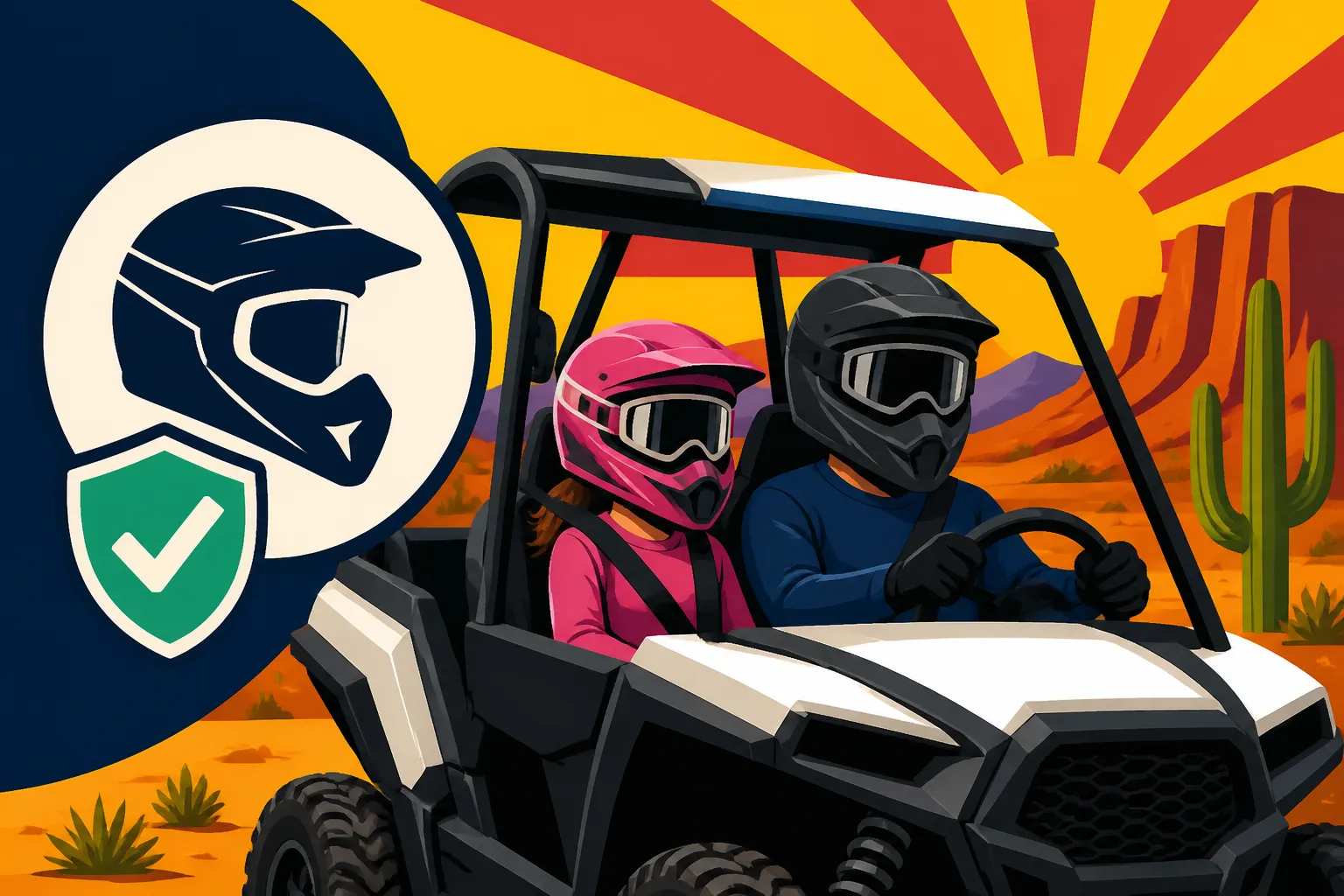
Arizona requires riders under 18 to wear protective headgear when riding an off-highway vehicle on public or state land. That includes a passenger, not just the person driving. The practical rule is straightforward: if someone under 18 is riding on an ATV or UTV in those places, plan for them to wear a helmet.
The kind of land matters. An OHV route on public land and a route on Arizona State Trust Land are not the same thing as a private, deeded property. The state-land rule does not automatically answer what applies on every private parcel, and a landowner may set their own safety conditions. If a ride crosses between land types, do not assume the least restrictive rule governs the whole trip. Check the land manager’s rules for the route and make sure the young passenger has a helmet available throughout the ride.
A street-legal machine adds another layer. A vehicle’s registration and where it is being driven can affect which road rules apply. If the machine is being used on a public road, confirm the requirements for that vehicle and road use rather than relying only on the off-highway helmet rule. Arizona Helmet Requirements on State Land explains the state-land context, while Arizona Helmet Law for Riders Over 18 covers how adult rules can differ.
| Riding situation | What to plan for if the passenger is under 18 | What to check |
|---|---|---|
| OHV use on public or state land | Wear a protective helmet | Land status, route rules, and helmet requirements |
| Street-legal machine on a public road | Wear a helmet and confirm road-use requirements | Vehicle classification and applicable road rules |
| Private, deeded property | Use a helmet as a safety measure; requirements may differ | Property rules and any other applicable requirements |
| A route that crosses different land | Keep the helmet on for the entire ride | Rules for each land type along the route |
The age threshold concerns the passenger’s age, not whether the passenger is the driver’s child or whether the ride is short. A quick trip between staging areas can still involve public land or a public road. Make the helmet part of the normal gear-up routine instead of deciding at the trail entrance.
Do not treat an OHV decal, permit, or street-legal plate as a substitute for a helmet. Those items address other requirements. A decal does not mean a young passenger can ride without protective headgear, and a helmet does not make an otherwise prohibited route legal. For related permit questions, see Arizona Decal Rules at a State Park and Arizona Rules for Visiting Riders.
Choosing and fitting a helmet for a young passenger
A helmet only helps if it is the right type, fits the rider, and stays fastened. Start with the helmet’s safety certification and intended use. A properly certified motorcycle or OHV helmet is a more dependable choice than a novelty helmet, bicycle helmet, or loosely described “youth helmet.” Check the helmet itself for the certification label rather than relying only on a product title or seller description.
Amazon can be one place to compare options, but a listing is not proof that a helmet is certified or that it will fit the child. Check the actual helmet, its label, the manufacturer’s sizing instructions, and the return policy before relying on an online purchase. If the fit is uncertain, a shop that can help with sizing may be a better option than guessing.
A good fit is snug and even. The helmet should not rock freely from side to side or slide around when the child moves their head. It should sit level, with the front positioned as the manufacturer intends, and the chin strap should fasten securely. A helmet that is too large can shift during a bump or a fall; one that is painfully tight may not be worn correctly or consistently.
Use these checks before riding:
- Check the label and condition. Confirm that the helmet is intended for motorized riding and has the appropriate safety certification. Avoid a helmet with cracks, damaged straps, missing parts, or a history of a significant impact.
- Measure and follow the maker’s sizing guide. Head measurements are a useful starting point, but sizing varies by model and shape.
- Try it on with the child’s usual riding hair and head covering. Anything worn beneath the helmet can affect fit. Do not add thick padding that changes how the helmet sits.
- Fasten the chin strap. A helmet left unfastened can come off when it is needed most. Follow the manufacturer’s instructions for strap adjustment.
- Recheck after the child moves. Have them look up, down, and side to side. The helmet should remain stable without causing pain or blocking their view.
- Replace it when its condition calls for replacement. Follow the manufacturer’s guidance after an impact, and do not keep using a helmet with damaged components or a compromised shell.
Children grow, so a helmet that fitted last season may no longer fit. Check before each riding season and after a growth spurt. A passenger should not borrow an adult’s oversized helmet simply because it is available. If there is no correctly fitting helmet, postpone that passenger’s ride.
Helmet choice is only one part of eye and face protection. Dust, grit, wind, and branches can make a ride uncomfortable or unsafe, especially on open machines. A windshield does not necessarily protect every passenger from debris. Check applicable eye-protection requirements and consider goggles that fit with the helmet. Eye Protection for a Passenger discusses this separately.
Check the seat and passenger setup too
A helmet cannot make an unsuitable passenger position safe. Before putting a child on an ATV, confirm that the machine is designed to carry a passenger and has a designated passenger seat. A passenger should not sit on a cargo rack, fender, or another improvised spot. Follow the machine manufacturer’s limits and instructions, including any age, size, or passenger restrictions.
On an ATV, a passenger needs a stable position and a way to hold on without interfering with the driver’s control. Footrests matter: a child whose feet cannot reach the intended rests may struggle to stay positioned when the machine moves over uneven ground. If the child cannot sit securely and use the passenger supports as intended, do not carry them as a passenger on that machine. Arizona Rules for a Child Passenger covers the broader passenger-safety questions.
A side-by-side has a different setup, but it still needs a proper seat and restraint. Have the passenger sit in the designated seat and use the seat belt as directed. Keep doors, nets, or other occupant restraints in place when the vehicle is equipped with them. Do not allow a child to ride in the cargo area or with a belt positioned incorrectly. See Belts and Nets in a Side-by-Side for more on restraints.
Before starting, check that the passenger can sit back in the seat, keep hands and feet inside the vehicle, and follow directions. Explain how to hold on, when to keep still, and what to do if the driver stops. A child who is frightened, tired, or unable to follow instructions may not be ready for the ride, even if the vehicle has a passenger seat.
The driver should also consider the route and conditions. A narrow, rocky trail, deep sand, steep slope, heavy traffic at a staging area, or a long ride in hot weather can be a poor setting for a young passenger. Choose a manageable route, take breaks, and avoid treating a passenger’s helmet as a reason to attempt terrain beyond the driver’s or machine’s limits. For age-specific requirements that may affect who can operate a machine, see [Arizona Age Rules for Young Riders].
A practical pre-ride check
Build the helmet check into a short routine before every ride. It helps avoid the common problem of having the right gear in the trailer but discovering that it is the wrong size, damaged, or missing a working strap.
- Confirm where the ride will take place. Identify whether the route is on public land, state land, private property, or a public road. Check for changes in land access and route rules before departure.
- Confirm the passenger is allowed on that machine. Check the manufacturer’s instructions and applicable passenger rules. Make sure the machine has an intended passenger position.
- Fit and fasten the helmet. Check the safety label, condition, fit, and chin strap. Do not let a child ride with a loose or unfastened helmet.
- Check the rest of the protective setup. Consider eye protection, suitable clothing, and the machine’s seat belt, footrests, or other occupant restraints.
- Explain the ride. Make sure the passenger knows how to sit, where to hold on, and how to signal discomfort or ask for a stop.
- Reassess when conditions change. A new route, a change in land status, or a move from off-highway riding to a public road can change which rules apply.
If you are unsure whether a route is public or state land, or whether a machine’s registration changes the rules on a particular road, confirm with the relevant land manager or official agency before riding. Do not rely on a map label, a seller’s assurance, or another rider’s recollection when the distinction affects a child’s safety or legal requirements.
The safest simple approach is to have every passenger under 18 wear a correctly fitting, properly fastened helmet on an Arizona ride, and to confirm the rules for the exact land and vehicle involved. That approach avoids last-minute uncertainty and protects the passenger even where requirements differ.
Disclaimer
This article is for general informational purposes only and does not constitute professional advice. Laws, prices and regulations vary by location and change over time. Consult a qualified professional for guidance on your specific situation.