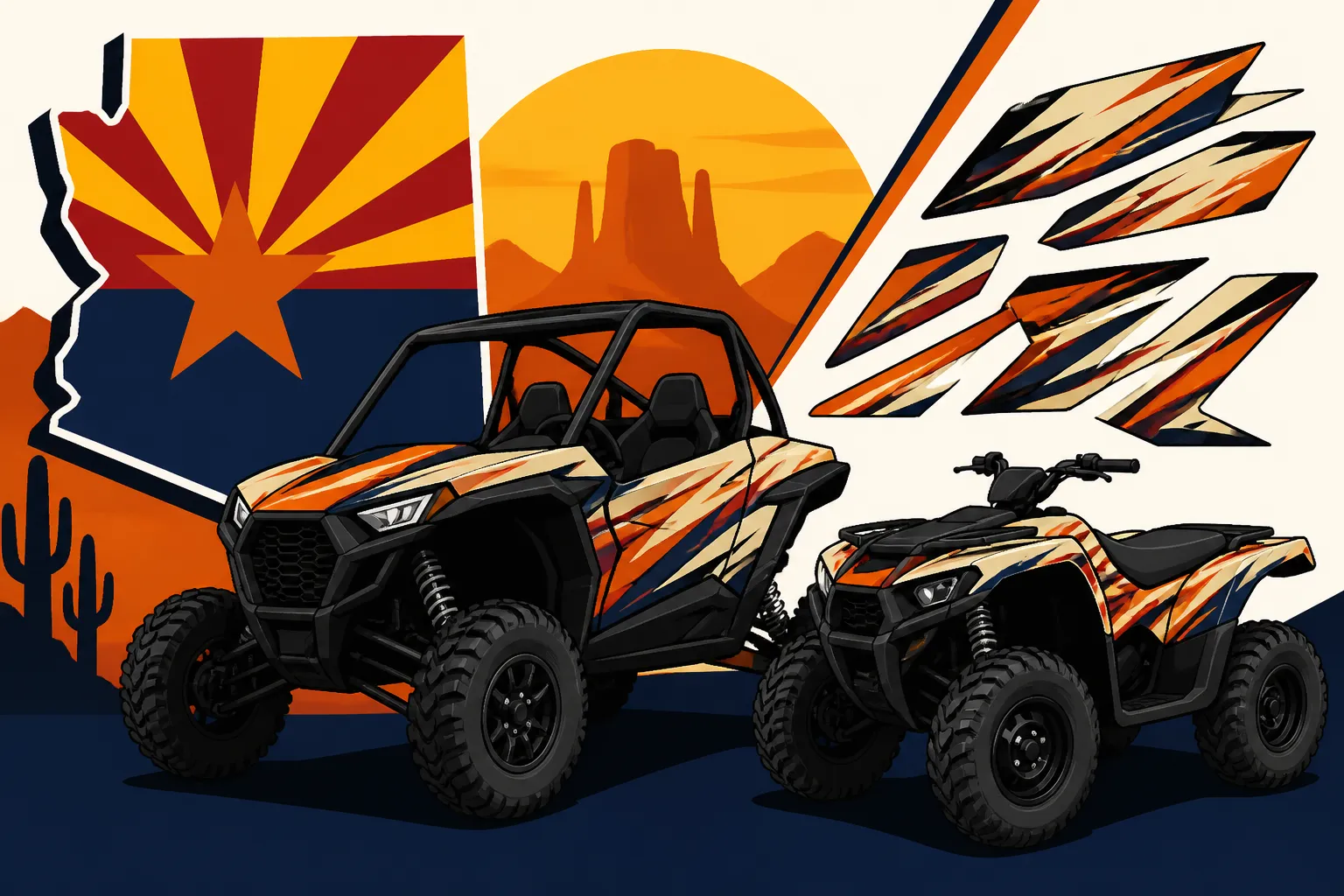
Decals for a Second Machine
Owning a second ATV or UTV raises a practical question before an Arizona ride: can one decal cover both machines? In general, plan on a separate, eligible decal for each machine that needs one. The right decal depends on the machine’s registration and your residency, so check both before loading up.
Does each ATV or UTV need its own Arizona decal?
Usually, yes. Treat an Arizona OHV decal as applying to the machine it was issued for, not as a pass that follows its owner. If you bring two qualifying machines, having a decal for one does not generally make the other one covered—even if you ride them on separate days or only take one out at a time.
That distinction matters for a household with several machines, a group bringing its own vehicles, or a visitor who has one street-registered machine and one off-highway-only machine. Count the machines that may be operated, then check which ones require a decal and which type applies to each.
| Situation | Practical approach |
|---|---|
| Two qualifying off-highway machines | Check decal requirements for each machine separately |
| One machine has a decal and one does not | Do not assume the first decal covers both |
| A machine has street-legal registration | Check whether that registration meets the applicable decal requirement |
| A machine is borrowed or rented | Confirm its decal status; do not assume the rider’s own decal applies |
| A machine will stay on a trailer | Check the rules for its intended use, not just whether it is being hauled |
The details can differ between Arizona residents and visitors. Arizona residents may encounter OHV requirements through the vehicle registration process, while nonresidents may need a visitor decal for an eligible machine. The distinctions are laid out in Resident Decals Versus Visitor Decals in Arizona and Arizona’s Non-Resident OHV Decal.
A decal also does not grant permission to ride everywhere. It addresses a vehicle requirement; land access, route restrictions, and any separate permit rules still matter. For example, riding on Arizona State Trust Land may involve a separate recreational permit. A machine can be properly decaled and still be somewhere it is not allowed to go.
Why one decal should not be moved between machines
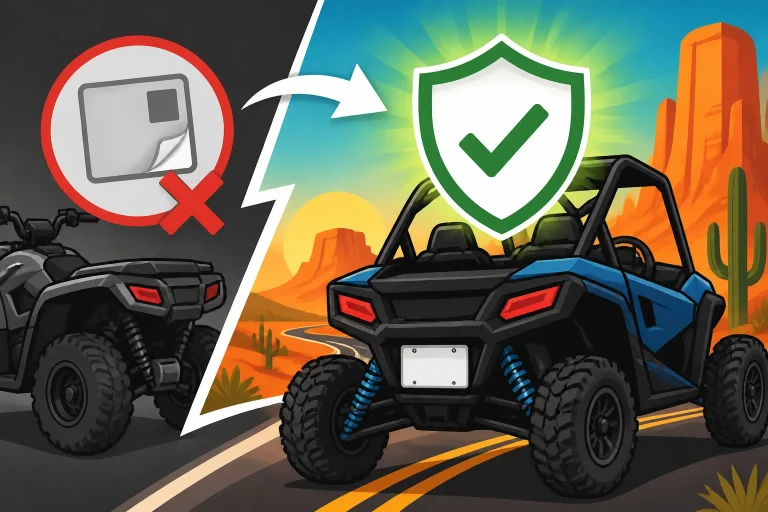
A decal is not a transferable household pass. Moving it from one ATV to another can leave the machine it was issued for without its required identification, while the receiving machine may not be properly covered either. A copied or improvised sticker is not a substitute for the required decal.
If you have more than one machine, match each decal and its paperwork to the correct vehicle. Keep a simple record of which machine has which decal, using the vehicle’s identifying details and the decal or registration information available to you. That is especially useful when several similar-looking machines are stored together.
Do not assume that matching brands, identical models, or common ownership changes the rule. A pair of side-by-sides used by the same family may still need to be handled as two separate vehicles. The same is true when one person owns both machines.
Check the machine’s status, not just its owner’s status
Before deciding which decal to obtain, identify how each machine is registered and how it will be used. A machine that is street-legal may be treated differently from one registered for off-highway use only. The plate type and registration status can matter, and a plate from another state does not automatically answer every Arizona question.
If a machine has street-legal registration, review Street-Legal Registration Instead of a Decal before assuming it needs the same decal as an off-highway-only machine. Conversely, do not assume that a plate or registration in your home state settles the issue. Verify that the registration actually qualifies for the relevant Arizona exception.
Weight, vehicle classification, and the kind of land or route where you plan to ride may also affect the analysis. If one of your machines is unusually heavy, modified, or registered in a category you do not recognize, check the rules for that specific vehicle rather than copying the answer for your other ATV or UTV.
How to sort out decals for a two-machine trip
A quick check before travel can prevent the common mistake of arriving with paperwork for one machine and assuming it covers the other. Work through the machines individually, even if they belong to the same household.
- Make a list of every machine you may operate. Include ATVs, side-by-sides, and any other off-highway vehicle you plan to take. If a friend may bring an additional machine, include it in the count.
- Record each machine’s registration status. Note whether it is registered in Arizona or another state, and whether it is registered for street use or off-highway use. Do not rely on a memory of what the seller said.
- Check who the machine belongs to and who will ride it. Residency can affect which decal route applies. A visitor’s machine and an Arizona resident’s machine may not follow the same process.
- Confirm the requirement for each machine. Use the current official instructions for the relevant decal or registration type. If the answer depends on a plate, vehicle class, or exemption, confirm that detail rather than guessing.
- Obtain the correct decal for every machine that needs one. For visitor requirements, see Where to Buy an Arizona OHV Decal. If you are buying for more than one vehicle, Buying Decals for a Group Trip may help you organize the process.
- Put each decal on the machine it belongs with. Follow the placement instructions supplied for that decal and keep any supporting paperwork with the correct vehicle.
- Check access and operator requirements separately. A decal does not replace a land permit or make a closed route open. Review any applicable operator education rules and land-access requirements before departure.
This process is worth doing even if the second machine is only a backup. A backup ATV that stays on the trailer for the entire trip may not be used, but if someone decides to unload and ride it, the decal and access questions become immediate. Resolve them before the trip rather than at a staging area.
When the two machines have different paperwork
It is common for machines in one household to have different statuses. One may be registered in Arizona and the other in a neighboring state. One may be street-legal while the other is off-highway-only. One may be owned by an Arizona resident, while a visitor brings the second.
Do not choose the decal based on the household’s general situation. Work through each vehicle’s documents and use the category that actually applies to that machine. If registration has recently changed, or ownership paperwork is incomplete, contact the appropriate official agency before relying on an old decal or prior registration.
For a nonresident vehicle, start with Arizona’s Non-Resident OHV Decal and verify the current eligibility and application instructions. For an Arizona-registered OHV, check the applicable registration and decal requirements through the state’s motor vehicle process. The steps are not necessarily interchangeable, so buying a visitor decal for an Arizona-registered machine—or assuming an Arizona registration covers an out-of-state machine—could be the wrong approach.
Be alert to date-sensitive details. Application methods, decal terms, education requirements, and other procedures can change. Check current official instructions before purchasing, particularly if you are planning a trip well in advance or returning after a long break. Arizona’s Free Mandatory OHV Decal Course is also relevant if an operator’s education obligations may apply to your ride.
Common second-machine mistakes and how to avoid them
The biggest mistake is treating the decal as something attached to the rider rather than to the vehicle. A rider who has a compliant first machine does not automatically bring the second one into compliance. The next most common mistake is assuming that a borrowed machine is covered because its owner, the person driving it, or another vehicle in the group has a decal.
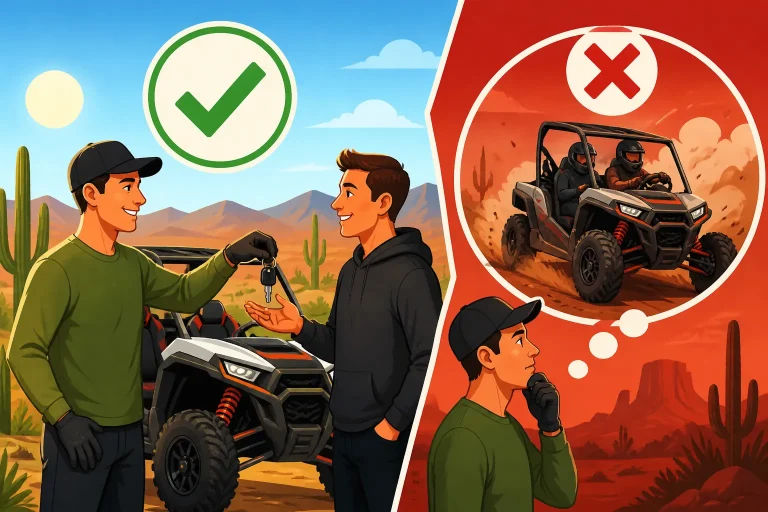
If you are borrowing a machine, ask the owner which registration and decal apply to it, and request enough information to verify the answer. The owner should not remove a decal from another vehicle and attach it to the borrowed one. See Decals for a Borrowed Machine for that situation. If the machine is rented, confirm directly with the rental company which decal or registration arrangement applies; the renter’s own decal is not a substitute for checking the rental vehicle. Arizona Decal Rules for a Rented Machine covers that separate case.
Other avoidable errors include:
- Buying one decal for two machines. Treat the vehicles separately and verify a decal requirement for each.
- Assuming the same rule applies to every vehicle in a group. Registration status, residency, and vehicle type can differ.
- Relying on a plate without checking its status. Confirm whether the registration qualifies for a decal alternative.
- Moving a decal when switching machines. Keep it with the vehicle it was issued for and follow the official placement instructions.
- Confusing a decal with a land permit. A decal does not itself authorize access to every property or route.
- Waiting until arrival to resolve a paperwork question. Verify the documents before the machines are loaded, when there is time to contact the relevant agency.
When you are uncertain whether a particular vehicle qualifies for an exemption, avoid trying to solve it by comparing it with a friend’s machine. Similar-looking vehicles may have different registrations or uses. Check the vehicle record and current official requirements, and retain the answer or documentation with the machine.
A short pre-trip checklist
Before you leave, confirm that:
- Every machine you might ride has been evaluated separately.
- Each required decal or qualifying registration is in place.
- The decal is attached according to its instructions and has not been moved from another vehicle.
- Any separate land-access permits are current and cover the planned activity.
- Operators have checked current education, age, and safety requirements that apply to them.
- The route is open to that type of machine and the group has the right maps or access information.
If you cannot verify a machine’s status, do not assume the other machine’s decal solves the problem. Pause and check before riding. That simple step helps keep the paperwork clear for both vehicles and avoids confusing a vehicle decal with a rider credential or permission to use a particular piece of land.
Disclaimer
This article is for general informational purposes only and does not constitute professional advice. Laws, prices and regulations vary by location and change over time. Consult a qualified professional for guidance on your specific situation.