Packing Out Game by Machine
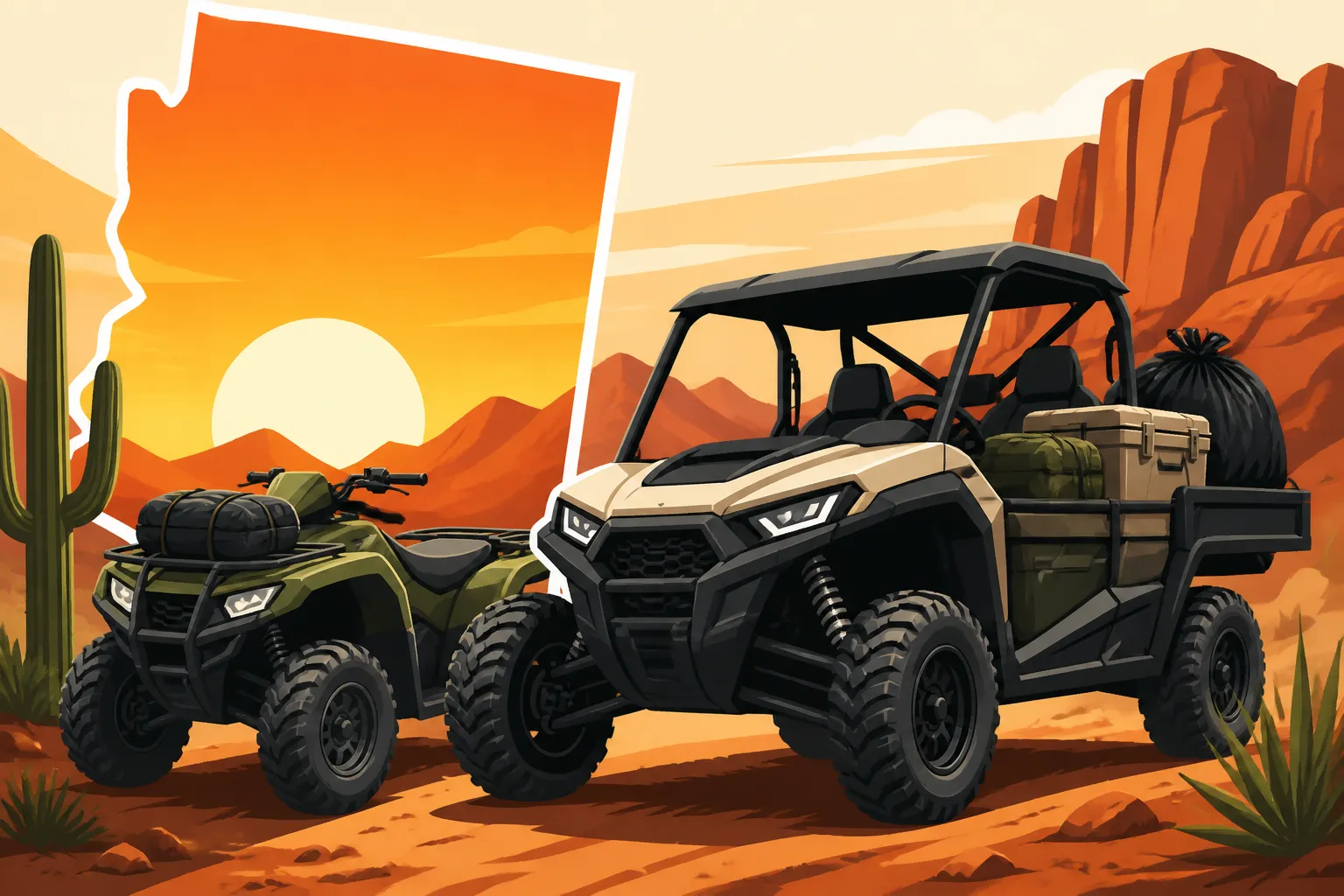
Packing out game by ATV or UTV can save a long carry, but a machine does not make every route or staging spot legal. In Arizona, the practical questions are whether you can reach the area, whether your machine is permitted there, and how to keep the harvest identifiable and in good condition. Plan all three before the hunt.
Check the hunt rules and access before riding
A hunting license and permission to use a road or trail are separate things. Your license may authorize a hunt under its conditions, but it does not automatically grant access across private, tribal, or state trust land. Likewise, a legal OHV route does not mean you may hunt wherever it leads.
Before leaving, check the current hunt information from the Arizona Game and Fish Department, including the requirements for your species and hunt area. Confirm what must accompany the harvested animal, how it must be tagged or otherwise identified, and whether there are reporting or inspection steps. Requirements can differ by species and hunt, so do not rely on a rule you remember from a previous season. Arizona Rules During Hunting Season can help you sort out the broader rules that may affect a ride during a hunt.
Then verify the land and route. Identify the managing agency, confirm that motorized travel is allowed on the route, and check for seasonal closures or other restrictions. A line on a general map is not enough to establish that a route is open. Arizona Rules on BLM Roads and [Arizona Rules on Tribal Land] cover access issues that are easy to overlook when a hunt crosses different jurisdictions.
State trust land needs its own check. A hunting license does not take the place of the relevant land-use authorization, and a permit does not necessarily open every route or activity. Review Does a Hunting License Cover Arizona Trust Land? and Arizona State Trust Land Recreational Permits before planning a staging area or travel route there. For private land, get permission from the landowner in advance; do not assume a gate, two-track, or existing track is open to the public.
Make a route plan that accounts for the loaded return trip, not just the ride in. A route that seems manageable on an empty machine may be unsafe or unsuitable with a passenger, gear, and an animal secured to the vehicle. Where possible, identify a legal route from the recovery location to a road or staging area without improvising shortcuts.
Prepare the machine and transport setup
First make sure the machine is legal for the land and route you intend to use. Arizona OHV requirements may apply even when the purpose of the trip is hunting. Review What Arizona Riders Need Before They Ride and confirm whether your particular machine needs the appropriate registration or decal for the places you will ride. A hunting purpose is not a general exemption from motorized access rules.
Pack for the return trip before the hunt starts. Useful supplies may include game bags, clean gloves, a sharp knife and basic field-dressing tools, straps or tie-downs, water, and a tarp or other barrier between the load and the machine. Carry enough drinking water for people as well as any water needed for cleaning equipment. A small first-aid kit, navigation tools, and a way to communicate are sensible additions, especially when the recovery site is far from a road or cell service.
A spark arrestor is also an important machine check when riding in areas where fire rules apply. Confirm the current restrictions and the condition of your equipment before heading out; a machine that has not been maintained can create a problem well beyond the hunt. See Arizona’s Spark Arrestor Requirement for related riding requirements.
| Plan for | Check before the hunt | Why it matters |
|---|---|---|
| Harvest rules | Tagging, identification, reporting, and any hunt-specific instructions | The animal may need to remain identifiable during transport |
| Land access | Ownership, permission, permits, and current closures | A valid hunt does not authorize travel across every parcel |
| Route | Open roads or trails and any vehicle limits | The shortest map route may not be a legal motorized route |
| Machine | Registration or decal requirements, condition, and fire equipment | Hunting does not automatically exempt a machine from riding rules |
| Load | Securement points, capacity, and room for the animal | An unstable load can affect steering, braking, and control |
| Meat care | Game bags, shade, ventilation, and a plan to reach cooling | Warm, enclosed transport can speed spoilage |
Think through the machine’s load limits and handling before deciding how to carry the animal. Avoid placing weight where it can block the driver’s view, interfere with controls, or shift during braking or on uneven ground. Follow the machine manufacturer’s capacity guidance, and do not assume that adding a rack makes the vehicle suitable for an oversized load. If the animal will not fit securely, make more than one trip or arrange another legal means of transport.
Tie-downs should hold the load in place without crushing the meat or creating loose straps that could catch on wheels, suspension, or trail debris. Recheck them after the first short section of travel. Do not carry a passenger in a position where the load or straps restrict safe seating, handholds, or movement.
Game bags are helpful for keeping meat cleaner and separating it from dirt, fuel, grease, and machine parts. If you are shopping for bags or other supplies through retailers such as Amazon, compare dimensions and material to the animal and transport method rather than choosing only by a product’s general label. A bag that is too small or poorly suited to the task can be less useful than a simple, well-planned setup.
Keep the harvest identifiable and protect the meat
Follow the current instructions for the species and hunt throughout field dressing, packing, and transport. Where the rules require a tag or other identifying information to remain attached to a specific part of the animal, keep it attached as directed. Do not remove, cover, or separate required identification just because the animal is being split into manageable loads. If you are unsure how identification applies to a particular cut or transport arrangement, check with Arizona Game and Fish before the hunt.
Keep the meat as clean as practical. Use clean hands and tools, keep the meat off the ground when possible, and place it in clean game bags rather than directly against a dusty rack or dirty cargo surface. Separate it from fuel cans, lubricants, dirty recovery gear, and items that could contaminate it. If the load includes hide, head, or other parts, arrange them so they do not leak onto meat or interfere with securement.
Heat is a central concern in Arizona. Plan the route and timing so the animal can be field dressed and moved to cooling promptly. Shade helps during stops, but it is not a substitute for cooling, and a closed cargo area can trap heat. Avoid leaving meat in a parked machine while you handle other tasks. If the recovery will take longer than expected, reassess the plan rather than assuming the load will remain safe until you get back to camp.
A practical sequence is:
- Confirm the hunt-specific tagging and transport instructions before the hunt.
- Prepare clean bags, tools, straps, and a way to protect the load from the machine.
- Field dress and divide the animal as allowed and as needed for safe handling.
- Keep required identification with the appropriate part or parts.
- Secure the load low and stable, away from controls and moving components.
- Recheck the load after moving a short distance, then proceed slowly on the legal route.
- Get the meat to appropriate cooling as soon as conditions allow.
If the recovery location is steep, loose, or far from the legal route, do not create a new track to make the carry easier. A loaded machine is harder to maneuver, and riding off route may damage land or put you in a dangerous position. Make a conservative plan, use repeated trips if needed, and consider whether a hand carry or another lawful recovery method is safer.
Avoid common access and transport mistakes
One frequent mistake is treating a hunt map, a public-land boundary, and an OHV travel map as if they answer the same question. They do not. A hunting area can include parcels with different owners or restrictions, and a visible road may be closed to motorized use. Verify the route with the applicable land manager, and check notices close to departure in case access has changed.
Another mistake is assuming that permission to hunt includes permission to drive. Ask landowners or managers about the exact route, staging location, and recovery plan. Permission to enter one parcel does not necessarily extend to the neighbor’s land or to a nearby trail. For public land, stay on routes designated for motorized travel and follow signs even when a side track looks established.
It is also easy to overload a small ATV or UTV because the animal appears manageable when stationary. A high or off-center load can affect balance, while a load that shifts can make steering and stopping unpredictable. If you cannot secure it without blocking the driver or exceeding the machine’s limits, do not carry it that way. Splitting the load into legal, stable trips is usually a better option than risking a rollover or losing control.
Finally, keep the hunting paperwork and riding plan distinct. Carry what the hunt requires, and separately meet the requirements for the machine and the land. The exact documents and rules depend on the hunt, machine, and jurisdiction. Before departure, review Arizona Rules During Hunting Season, check your access permissions, and confirm current instructions with the relevant land manager and Arizona Game and Fish Department.
Disclaimer
This article is for general informational purposes only and does not constitute professional advice. Laws, prices and regulations vary by location and change over time. Consult a qualified professional for guidance on your specific situation.