Paperwork for a Machine Bought at Auction
There's nothing quite like the thrill of finding what seems like a killer deal on an ATV or UTV at an auction here in Arizona. You're swept up in the excitement, the competitive bidding, and the dream of hitting the desert trails with your new-to-you machine. But then, reality hits: what about the paperwork? Auctions can be a bit of a wild west when it comes to getting all your ducks in a row for registration, leaving many riders scratching their heads and wondering how to make their auction find legal for Arizona’s incredible riding opportunities. This guide is here to walk you through the often-confusing process of navigating the paperwork required to register and title an off-highway vehicle (OHV) purchased at auction in our beautiful state.
What to Expect When Buying an OHV at Auction
Buying an OHV at an auction can feel like hitting the jackpot. The potential for a great price is a huge draw, and you might find machines that aren't readily available through traditional dealerships. However, it's not always sunshine and saguaros. One of the biggest differences between buying from a private seller or a dealer and an auction house is the level of documentation you receive, or sometimes, don't receive.
When you're at an auction, especially a public or government surplus auction, the focus is often on moving machines quickly. This means they might not always have every piece of historical paperwork that an individual seller might keep track of. You might get a basic bill of sale, perhaps a copy of the auction manifest, and that’s it. For some, this can be a huge headache, leading to delays and frustration when trying to get your machine ready for the trails. The Arizona Motor Vehicle Division (MVD) and authorized third-party providers need specific documents to process your title and registration, and what an auction provides often doesn't line up perfectly.
It’s crucial to understand that while an auction might transfer ownership, it doesn't automatically mean you have the necessary "chain of title" that Arizona requires. Sometimes, the machines are seized, abandoned, or come from estates where the previous owner’s documents are lost or never existed in a format that MVD easily accepts. This isn't to say auctions are bad, but they do require a more proactive approach from the buyer when it comes to paperwork. You'll need to be diligent and prepared to do some legwork.
Essential Documents for Arizona OHV Registration
When it comes to getting your auction-acquired ATV or UTV legally recognized in Arizona, you’re primarily looking at three core components: proof of ownership (usually a title), a bill of sale, and VIN verification. Without these, you're going to hit a roadblock faster than a flat tire in the desert.
The All-Important Certificate of Title
In Arizona, a certificate of title is the primary legal document establishing ownership of a vehicle, including most OHVs. This small piece of paper is a big deal. For your auction purchase, the ideal scenario is that the auction house provides you with a clear, properly assigned Arizona title from the previous owner. This title should be signed over to you by the seller (the auction house acting on behalf of the original owner, or the entity that owned it prior to auction), and it should be free of any liens.
However, as we've already touched upon, this is often where the auction scenario gets tricky. You might receive a title that's been signed incorrectly, or worse, no title at all. If you receive a title that is in the name of the previous owner, make sure it is signed correctly and dated, showing the transfer to you. If the auction house provides a document stating they are the seller, ensure that the title has been properly transferred to them before being transferred to you, or that they have the legal authority to transfer it directly. This can get complicated, so always double-check. The MVD wants to see a clean, continuous line of ownership. Missing links in this chain can prevent you from securing [Arizona Certificate of Title for an Off-Highway Vehicle].
The Bill of Sale and Its Critical Details
Even with a title, an MVD office will want to see a comprehensive bill of sale. For an auction purchase, the auction house will typically provide a bill of sale. It's usually a standard form generated by their system, detailing the sale price, the date, and the machine's identifying information. It's vital that this document includes certain specifics to be acceptable in Arizona.
Your bill of sale needs to clearly state:
- Buyer's Information: Your full legal name and address.
- Seller's Information: The full legal name and address of the auction house or the entity legally selling the machine.
- Vehicle Description: The year, make, model, and crucially, the Vehicle Identification Number (VIN) of the OHV.
- Purchase Price: The exact amount you paid. This is essential for calculating Arizona sales tax or use tax.
- Date of Sale: When the transaction occurred.
- Signatures: Signatures of both the buyer and the authorized representative of the seller.
If the bill of sale from the auction is sparse on details, you might need to create a supplemental one. This is where resources like LawDepot can be helpful, allowing you to generate a standardized bill of sale template to fill in any missing details from the auction's version, assuming you have all the necessary information. It’s a good idea to bring both the auction’s bill of sale and any supplemental one you create to the MVD. Having a comprehensive [What an Arizona Bill of Sale Should Carry] can save you a lot of hassle.
VIN Verification: Proving It's the Right Machine
Before you can title or register your auction-bought OHV, you'll need to complete a VIN verification. This step confirms that the VIN on the machine matches the paperwork you're presenting and helps ensure the vehicle isn't stolen or fraudulently represented.
For OHVs, VIN verification can typically be performed by:
- MVD or Authorized Third-Party Office: These locations have staff trained to verify VINs.
- Law Enforcement Officer: A police officer or sheriff's deputy can also perform a VIN verification. This might be a good option if you’re struggling to transport your non-registered OHV.
- Licensed Level I or Level II Inspector: These are individuals authorized by the MVD to perform comprehensive vehicle inspections.
The process usually involves an authorized individual physically inspecting the VIN plate or stamping on your OHV and comparing it to your documents. They'll fill out an MVD form (usually Form 40-0909, Vehicle Identification Number and Odometer Verification) confirming the match. Sometimes, finding the VIN on older or heavily used machines can be a challenge. Be prepared to show the inspector exactly where it’s located, often on the frame, engine block, or a dedicated VIN plate. Learning about [Finding the VIN on a Desert-Worn Machine] can be incredibly useful here.
Navigating Missing Paperwork and Special Scenarios
It's common for OHVs purchased at auction to come with incomplete paperwork. Don't panic, but do be prepared for some extra steps. Arizona has provisions for these situations, but they require patience and diligence.
No Title? Consider a Bonded Title
This is perhaps the most common challenge when buying an OHV at auction. If the auction house cannot provide a proper title, or if the title they provide is incomplete or clearly invalid, you'll likely need to pursue a bonded title. A bonded title is essentially a workaround for situations where you cannot obtain a regular title for your vehicle, but you have proof of ownership and possession.
The process for a bonded title in Arizona typically involves:
- Contacting MVD: First, you’ll inform the MVD that you do not have a title and intend to apply for a bonded title. They will guide you on specific forms and requirements.
- Affidavit of Ownership: You'll need to complete an affidavit detailing how you acquired the machine (i.e., through the auction) and why you cannot get a standard title. This is where your auction receipts and bill of sale are crucial.
- VIN Verification: As mentioned earlier, this is a non-negotiable step.
- Surety Bond: You will need to obtain a surety bond equal to one and a half times the vehicle’s value. This bond protects previous owners or lienholders from potential financial loss if they come forward to claim the vehicle. The bond is usually valid for a certain period, after which you can apply for a standard title.
- MVD Review: The MVD will review your application and, if approved, issue a bonded title.
Securing a [Bonded Title for a Quad in Arizona] can be a lifesaver for auction finds. It's a more involved process and will incur additional costs for the bond, but it provides a legal path to ownership and registration. Without a title, you simply can't legally register your OHV for use on Arizona's public lands.
Addressing Liens on the Title
Sometimes, an auction machine might come with a title that shows an active lien. This means the previous owner had a loan against the machine that was never paid off, and the lender still has a legal claim to it. While auctions should clear any liens before selling, mistakes happen.
If a lien appears on the title, you will need to obtain a lien release from the lienholder. This is a document, usually on the lender's letterhead, stating that the loan has been satisfied and the lien is released. Without this, the MVD will not transfer the title into your name. If the auction house sold you a machine with an active lien, you have a serious issue and should contact them immediately to resolve it. They should have provided a clear title. Don't assume the lien will magically disappear; it needs to be formally addressed.
Titling an OHV with No Ownership History
This is another challenging scenario that sometimes arises from auction purchases, particularly for very old machines or those with a murky past. If your auction machine truly has no discernible ownership history (no prior title, no valid previous registration in any state), the bonded title process is usually your best bet.
The MVD essentially needs to be convinced that you are the rightful owner and that no other party has a legitimate claim. This often involves more extensive background checks by the MVD. Documenting every single detail of your purchase from the auction house, including how they came into possession of the machine, can be incredibly helpful. You might be asked to provide an affidavit of how you obtained possession and why there's no paper trail. It’s a tedious but necessary process for [Titling an Arizona Quad With No Ownership History].
Final Steps: Registering and Titling Your Auction Find
Once you’ve gathered all your documents and addressed any missing paperwork issues, it’s time for the final push: getting your OHV titled and registered. This is where all your hard work pays off, allowing you to hit the scenic trails around places like Sedona or the Hualapai Mountains legally.
Visiting the MVD or a Third-Party Provider
With your properly assigned title (or approved bonded title application), complete bill of sale, and VIN verification form in hand, you’ll head to an Arizona MVD office or one of the many authorized third-party providers. These third-party offices often offer quicker service and more flexible hours, making them a popular choice for busy riders.
When you arrive, you’ll need to:
- Complete an Application for Title and Registration: This form (often Form 96-0236) will ask for all your personal information and details about the OHV.
- Submit Required Documents: Hand over your title, bill of sale, VIN verification form, and any other supporting documents (like a lien release or bonded title paperwork).
- Pay Fees and Taxes: You’ll be responsible for the title fee, registration fee, and any applicable Arizona sales tax or use tax based on the purchase price on your bill of sale. If you paid sales tax at the auction, ensure that's documented on your bill of sale, or you might have to pay it again or provide proof of payment.
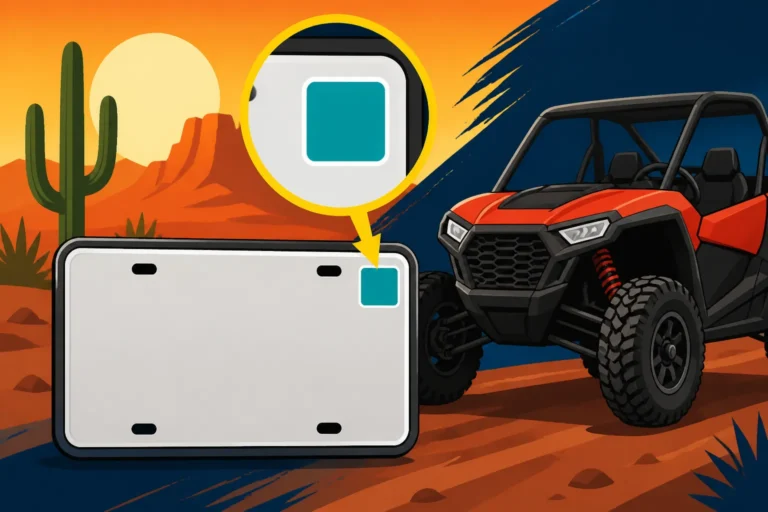
- Receive Your Plate and Decal: Once everything is processed, you'll receive your Arizona OHV license plate (which will likely be an RV plate for off-highway-only machines) and the crucial annual OHV decal. This decal must be affixed to the upper left corner of your license plate.
Remember, the goal is to get your OHV registered in Arizona, which means getting that plate and annual decal. Without it, you’re not allowed to operate on public lands, and you could face penalties. [Registering an OHV in Arizona] means you're contributing to the state's OHV trails and safety programs.
Understanding the Arizona OHV Decal
The Arizona OHV Decal is your ticket to riding on millions of acres of public land in the state. This decal is mandatory for most OHVs operating off-highway, regardless of whether they are street legal. The funds generated from decal sales go directly into the Arizona OHV Recreation Fund, which supports trail maintenance, signage, law enforcement, and education programs. So, while it's an extra cost, it's also a direct investment in the trails we all love to ride.
It's important to understand what the decal means for you. It signifies that your machine is recognized by the state for off-highway use. You'll need to renew it annually, and ensuring it's visible on your plate is crucial. For a comprehensive overview, look into [Arizona MVD OHV Registration Explained].
What to Carry When You Ride
Once your auction machine is properly titled and registered, you're almost ready to hit the trails. Just make sure you carry proof of your current registration and OHV decal with you whenever you ride on public lands. While you typically don't need to carry your physical title, having a copy of your registration (which includes the decal number) is a good practice. Most riders keep these documents in a waterproof bag on their machine or on their person.
Going through the auction process can be a little daunting, especially if it's your first time navigating the paperwork. But with a clear understanding of Arizona's requirements for titles, bills of sale, VIN verification, and the bonded title process, you can turn that auction deal into a legitimate trail machine. Happy riding!
Disclaimer
This article is for general informational purposes only and does not constitute professional advice. Laws, prices and regulations vary by location and change over time. Consult a qualified professional for guidance on your specific situation.