Keeping a Quad at a Second Home
It's a dream for many off-road enthusiasts: having a second home in sunny Arizona, ready to escape the colder months or just enjoy the desert whenever the mood strikes. And what's better than having your trusty quad or side-by-side already waiting for you in the garage? While the idea of hitting those trails the moment you arrive is incredibly appealing, there are some important things to sort out with Arizona's specific rules and regulations to ensure your machine is legal, safe, and ready for adventure. This guide will walk you through the ins and outs of keeping an off-highway vehicle (OHV) at your Arizona second home, covering everything from registration to storage, so you can focus on the fun.
Navigating Arizona's OHV Decal and Registration for Your Second Home Machine
One of the biggest questions second homeowners have is how Arizona's OHV decal and registration system applies to them. It can feel like a maze, especially if your primary residence is in another state. But don't worry, we'll break it down.
The Arizona Decal Requirement: No Matter Where You Sleep
First things first: if your quad or side-by-side is going to be ridden on public lands in Arizona, it needs an Arizona OHV Decal. Period. This isn't tied to your residency status, whether you're here for two weeks or six months a year. It's tied to the machine itself and its use on designated trails, open areas, or even just crossing state land. Think of it like a pass that says your machine is contributing to the trails you love.
This decal funds critical initiatives, from trail maintenance to law enforcement, ensuring our incredible desert playgrounds stay open and safe. Without it, you could face penalties for an [Undecaled Machine in Arizona]. Many riders are also now required to take the [Arizona's Free Mandatory OHV Decal Course] to learn about safe and ethical riding practices, which is a great resource whether you're a new or seasoned desert rider. This course helps keep everyone informed and our trails pristine.
Resident vs. Non-Resident Decals for Arizona Second Homeowners
This is where it can get a little tricky, but it's important to understand the distinction. Arizona offers both resident and non-resident OHV decals.
- Arizona Resident Decal: If your primary home is in Arizona and you have an Arizona driver's license and vehicle registration, you'd get a resident decal.
- Arizona Non-Resident Decal: If your primary home is in another state and you're just keeping your OHV at your Arizona second home for seasonal use or vacations, you'll need the non-resident decal.
Many "snowbirds" or seasonal residents fall into the non-resident category. The decal itself serves the same purpose, allowing you to ride legally on Arizona public lands. The main difference lies in how you apply for it and the information you provide about your primary residence. It's crucial to correctly identify your status. We have a whole article dedicated to [What a Snowbird Needs to Ride in Arizona], which might be really helpful for those of you who split your time between states. Regardless of which decal you need, the application often starts with setting up an [Arizona Game and Fish Portal Account] online, which is your gateway to managing all things OHV in the state.
Keeping Your Registration Current When You're Not There
Managing your OHV's registration and decal from afar can feel like a hassle, but with modern online tools, it's actually pretty straightforward. Most renewals for your Arizona OHV Decal can be handled online. You can typically [Renewing an Arizona Decal Online] through your Arizona Game and Fish Portal account, paying the fee and having the new decal mailed directly to your Arizona second home address.
It’s a good practice to set up reminders in your calendar for renewal dates, perhaps linked to when you typically arrive for your annual stay, so you don't miss them. You don't want to get to your desert oasis, ready for a ride, only to realize your decal expired last month. Consider leaving a copy of your current registration and proof of insurance in a secure, accessible spot within your Arizona home, or keep digital copies on your phone, so they're readily available when you visit.
Titling Your Off-Highway Vehicle in Arizona for a Second Home
Beyond the annual decal, the core proof of ownership for your quad or side-by-side is its Certificate of Title. Even if your primary residence is elsewhere, there are compelling reasons to consider titling your machine in Arizona, especially if it's permanently housed at your second home.
Why an Arizona Title Matters, Even for a Part-Time Resident
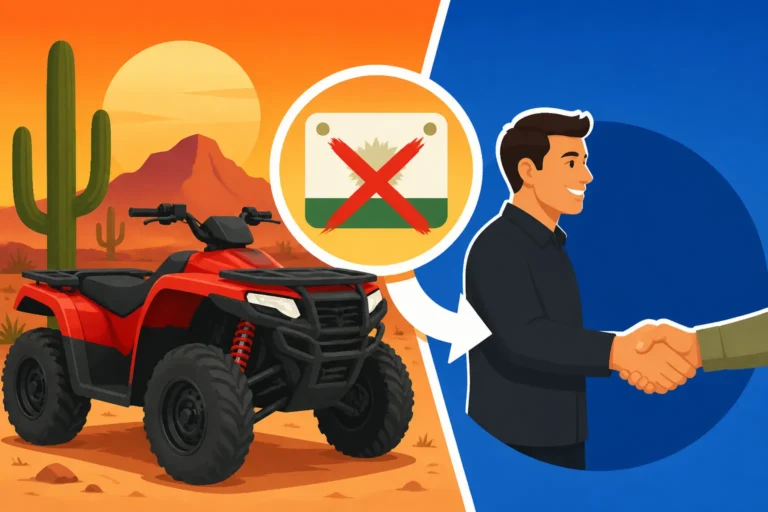
Having an [Arizona Certificate of Title for an Off-Highway Vehicle] offers several advantages and simplifies things down the road. Firstly, it's the strongest proof of ownership recognized by the state. Should your machine ever be stolen, having an Arizona title on record can greatly assist law enforcement in its recovery. It also simplifies things if you decide to sell the machine in Arizona in the future. Trying to sell a vehicle with an out-of-state title to an Arizona buyer can sometimes add extra steps and questions.
If you've recently moved to Arizona, even to a second home, and brought your machine with you, you'll likely need to transfer its title to Arizona. This is similar to [Registering an Out-of-State Machine in Arizona] for new full-time residents, ensuring all your paperwork is consistent with your current arrangement. This smooths out any potential issues with law enforcement or insurance.
Documents You'll Need for Arizona Titling
When you're ready to title your OHV in Arizona, you'll need to gather a few essential documents. The most critical is [Proof of Ownership for an Arizona Title]. This usually means the manufacturer’s statement of origin (MSO) if it’s a brand-new machine, or the properly assigned title from the previous owner if you bought it used. If you purchased it privately, a comprehensive [What an Arizona Bill of Sale Should Carry] is also vital. This bill of sale should clearly identify the machine, the buyer, the seller, the date, and the purchase price.
Always make sure the Vehicle Identification Number (VIN) on your paperwork matches the VIN on your machine exactly. It's surprisingly easy to overlook a transposed digit, and that can cause major headaches at the MVD. If your machine has seen a lot of desert miles, you might need to know [Finding the VIN on a Desert-Worn Machine], as it can sometimes be obscured by dirt or wear. If you bought a used machine while visiting Arizona, understanding [Buying a Used Side-by-Side in Arizona: The Paperwork] will prepare you for the titling process.
The Process: MVD or Third-Party for Titling
Once you have your documents in order, you have a couple of options for getting your OHV titled in Arizona.
- Arizona Motor Vehicle Division (MVD) Office: You can go directly to an [Titling an ATV at an Arizona MVD Office]. This is the official state route, and you'll typically interact directly with MVD staff. While it might sometimes involve longer wait times, it's often the most direct path.
- Authorized Third-Party Providers: Many people, especially those who might be juggling visits to their second home, find it easier to use [Using a Third-Party MVD Office for a Quad]. These are private businesses authorized by the state to perform many MVD services, including titling and registration. They often have shorter wait times and more convenient hours, which can be a huge benefit if you're only in town for a short period. They handle all the same paperwork and submit it to the MVD on your behalf.
Regardless of your chosen method, be prepared to pay the applicable Arizona sales tax (if it wasn't already paid at a dealership) and the titling fee. It's always a good idea to call ahead or check their websites for current requirements and operating hours.
Insuring and Storing Your Quad at Your Arizona Second Home
Having your OHV at your second home means you'll want to ensure it's protected, both financially and physically. This involves proper insurance coverage and smart storage solutions.
Protecting Your Investment: Arizona OHV Insurance Considerations
Just like your primary home vehicles, your OHV needs appropriate insurance. While Arizona doesn't mandate liability insurance for off-highway vehicles that are not street legal and are used exclusively off-road, it's a wise investment. You certainly don't want to face the financial burden of an accident without coverage. We delve into this more in [Insuring an ATV in Arizona].
If you've got a homeowner's policy on your Arizona second home, you might wonder if it extends to your OHV. Generally, the answer is no, or at least not comprehensively. Your standard homeowner's insurance typically offers very limited, if any, coverage for recreational vehicles like ATVs and UTVs, especially when they are being operated. While it might offer some minimal coverage for theft while stored, it's rarely enough. It's critical to ask your insurance provider directly: [Does a Homeowners Policy Reach Your Quad?] to fully understand your coverage. For real peace of mind, a dedicated OHV insurance policy is highly recommended. This policy can cover theft, damage, liability, and even recovery in the event of an accident or breakdown far out on a trail.
Safe and Secure Storage Options
Arizona's intense summer heat and the general elements can be tough on any vehicle. Proper storage is key to maintaining your OHV's condition, even if it sits for months between your visits.
Considerations for Storing Your Machine at Your Arizona Second Home:
| Aspect | Description |
|---|---|
| Location | Garage/Carport: Ideal for protection from sun and dust. A fully enclosed garage offers the best security and protection from the elements. |
| Sun Protection | OHV Cover: If stored outdoors, a durable, UV-resistant OHV cover is a must to prevent sun damage to plastics, seats, and tires. |
| Tire Care | Inflate & Elevate: Inflate tires to the recommended pressure to prevent flat spots. Consider using jack stands to get tires off the ground if storing for many months, especially during [Storing a Machine Through an Arizona Summer]. |
| Battery Maintenance | Battery Tender: Connect a trickle charger or battery tender to keep the battery charged and prevent sulfation, especially important in extreme temperatures. |
| Fuel Stability | Fuel Stabilizer: Add fuel stabilizer to a full tank of gas to prevent fuel degradation and keep the fuel system clean. Run the engine briefly after adding to circulate it. |
| Critter Prevention | Exhaust/Intake Covers: Use steel wool or mesh to cover exhaust pipes and air intake vents to prevent rodents or insects from nesting. |
| Security | Locks & Alarms: Even in a secure garage, add extra security like a disc lock for wheels, a heavy-duty chain, or consider a GPS tracker. If using an outdoor storage facility, ensure it has good surveillance and access control. |
| Cleaning | Thorough Wash: Before long-term storage, give your OHV a thorough cleaning. Remove all mud, dirt, and dust. This prevents corrosion and helps spot any issues before they become bigger problems. |
| Fluid Checks | Top Off Fluids: Ensure all fluid levels (oil, coolant, brake fluid) are at appropriate levels. Consider an oil change before long-term storage if it's due soon. |
Beyond your own property, you might consider local storage facilities, especially if your second home lacks secure space. These often provide climate-controlled or at least enclosed units that offer good protection.
Lending Your Machine: Agreements and Liability
It's common for friends or family to ask to use your quad while you're away or even when you're visiting. While it's tempting to say yes, it's crucial to understand the implications. When you lend your machine, you're potentially lending your liability.
- Insurance Coverage: Check your OHV insurance policy carefully to understand who is covered when operating your machine. Some policies may extend coverage to others, but often with specific stipulations.
- Responsibility: Even if your insurance covers them, you, as the owner, could still be held responsible for damages or injuries if the rider is deemed negligent.
- Written Agreements: To protect yourself, especially if you're lending it for an extended period, consider a written loan agreement. This document can outline who is responsible for damage, insurance deductibles, and adherence to safety rules. Tools like LawDepot can help you generate a basic, legally sound loan agreement or a waiver for use, clearly setting expectations for both parties. This isn't about distrust; it's about clear communication and protecting everyone involved.
Common Pitfalls and Smart Strategies for Second Home OHV Owners
Managing an OHV from a distance, even for part of the year, presents unique challenges. Being proactive and informed can save you a lot of grief.
Don't Get Caught Undecaled or Uninsured
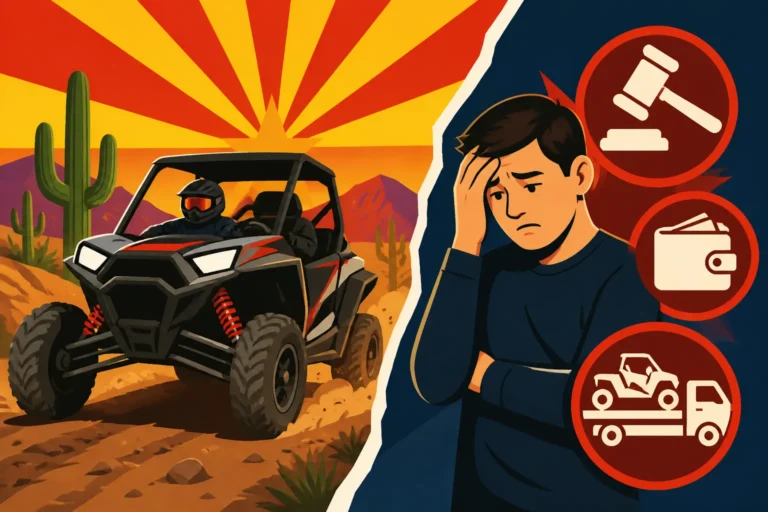
This is perhaps the biggest and most easily avoidable pitfall. The thrill of hitting the trail often outweighs the thought of checking paperwork, but getting caught riding without a current Arizona OHV Decal or, if street legal, without proper insurance, can lead to significant fines. [Penalties for an Undecaled Machine in Arizona] are real and can quickly dampen your vacation spirit.
Always make sure your decal is current before you even load up the machine. If you're a snowbird, consider renewing your decal just before you leave your primary residence, so the new one is waiting for you at your Arizona address when you arrive, or arrange for it to be mailed in time for your visit. Similarly, confirm your insurance coverage is active and adequate. Keep proof of both the decal and insurance on the machine itself (in a waterproof pouch) or readily accessible on your phone when you ride.
Planning Ahead for Your Riding Trips
Even when you're not physically in Arizona, you can still be a smart OHV owner by planning ahead.
- Stay Informed: Keep an eye on Arizona Game and Fish Department updates, especially regarding fire restrictions. [Checking Arizona Trail Status Before You Drive] is crucial, as public lands can close without much notice due to extreme fire danger. These closures are not just recommendations; riding in a closed area can lead to heavy fines.
- Local Contacts: Build a relationship with a local powersports shop or a trusted friend in Arizona who can keep an eye on your machine, or even help with basic maintenance checks before you arrive. This can be invaluable for peace of mind.
- Emergency Gear: Always ensure your emergency kit, first aid supplies, and recovery gear are stocked and ready to go in your OHV. You never know when you'll need them, and the desert can be unforgiving.
When to Seek Professional Help
While this guide covers a lot, some situations are complex enough to warrant professional advice.
- MVD and Titling Issues: If you're encountering unusual titling problems, such as a missing previous owner's signature or questions about a bonded title, contacting the Arizona MVD directly or consulting with a third-party MVD provider for specific guidance is wise. They deal with these unique scenarios every day.
- Legal Documents: For comprehensive loan agreements if you're frequently lending your machine, or for any official document related to selling or transferring ownership, consider using a service like LawDepot. They provide customizable legal templates that can help you create robust agreements tailored to your specific needs, giving you a formal document without the cost of a full legal consultation.
- Insurance Changes: If your usage patterns change significantly, or if you acquire a new machine, always consult with your insurance agent to ensure your coverage remains adequate.
By being prepared, understanding the requirements, and utilizing available resources, keeping your quad or side-by-side at your Arizona second home will be a seamless experience, allowing you to maximize your enjoyment of the incredible desert trails.
Disclaimer
This article is for general informational purposes only and does not constitute professional advice. Laws, prices and regulations vary by location and change over time. Consult a qualified professional for guidance on your specific situation.