Arizona’s 500 Foot Headlight Rule
Trying to make your beloved side-by-side or ATV fully street-legal in Arizona can feel like navigating a maze of regulations, especially when it comes to lighting. One rule that often leaves riders scratching their heads is the 500-foot headlight requirement. This guide is here to clear up the confusion, explaining exactly what this rule entails, why it’s so important for your safety and compliance, and how to properly equip your machine so you can ride confidently on Arizona's roads.
Understanding Arizona's Headlight Requirements for Street-Legal OHVs
So, you’ve decided to make your off-highway vehicle (OHV) street legal in Arizona. Maybe you want to zip from the trailhead to a gas station without trailering, or perhaps you're planning a trip where a short stretch of paved road connects two amazing dirt sections. It's a fantastic goal, offering a whole new level of convenience and adventure. But along with that convenience comes a set of legal obligations, and headlights are right at the top of the list.
The Legal Mandate for Street Conversion
Arizona isn't like some states where almost anything goes on dirt. If you want to ride your OHV on public roads and highways, you have to meet specific requirements that essentially turn your off-road beast into a road-worthy vehicle. This isn't just about sticking a license plate on the back; it involves a whole suite of safety equipment designed to integrate your machine safely into regular traffic. The state wants to ensure that whether you're driving a car, a motorcycle, or a side-by-side, everyone on the road can see each other and operate predictably. This means equipping your machine with proper lights, mirrors, turn signals, and more. It can feel like a lot to take on, especially when you just want to hit the trails, but trust me, understanding these rules now will save you a headache (and a hefty fine) down the road. It’s all part of the process of [Making a UTV Street Legal in Arizona].
What "Street Legal" Truly Means for Headlights
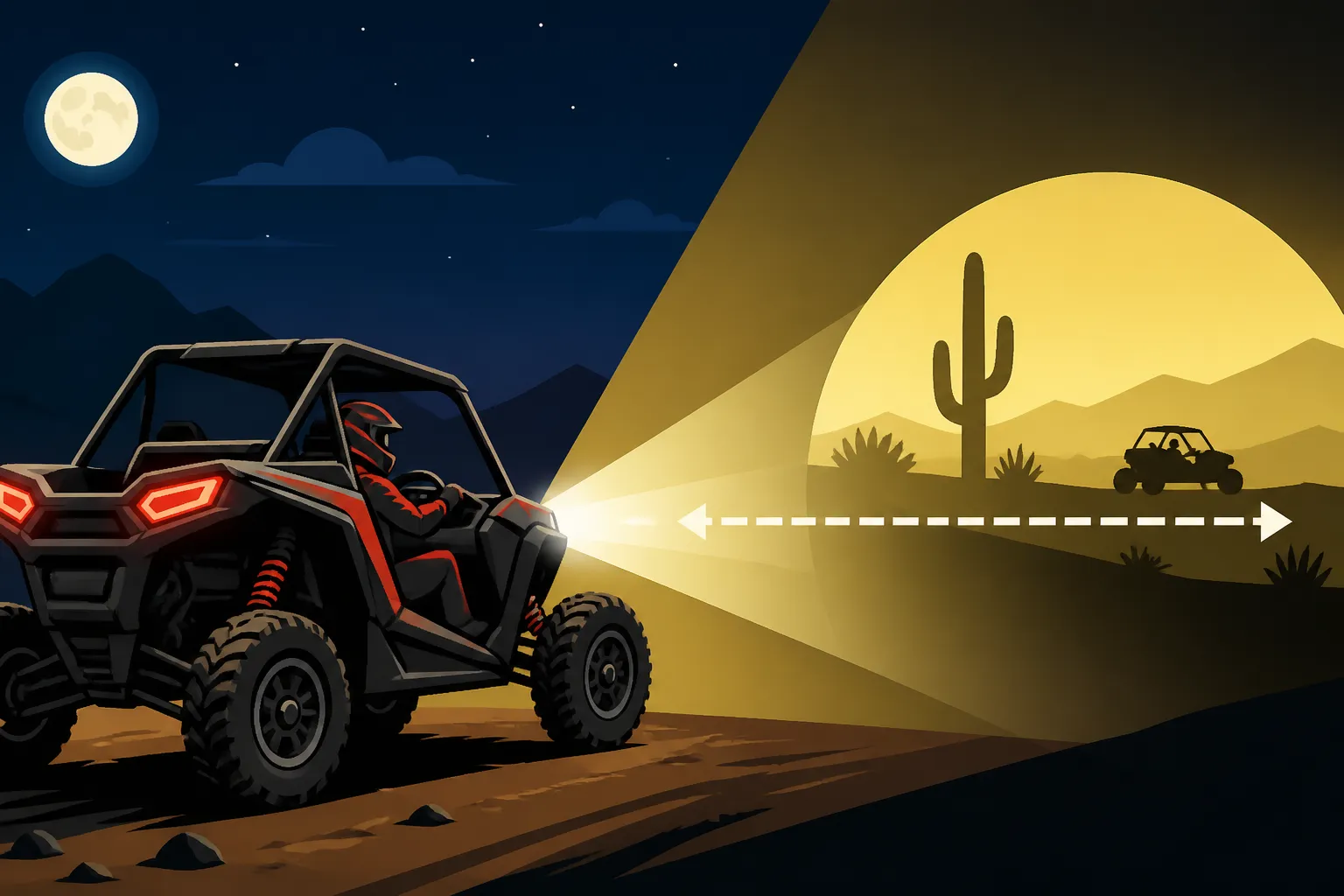
When we talk about headlights for street-legal OHVs in Arizona, we're not just talking about having any light. The law is quite specific. Your headlights must be capable of illuminating persons and vehicles at a distance of at least 500 feet ahead of your machine. This isn't just a suggestion; it's a critical safety standard. Think about it: when you're driving at night, you need enough lead time to see obstacles, road signs, or even other vehicles well in advance to react safely. Your OHV's stock lights, while often bright enough for slow-speed trail riding, might not cast a beam far enough down a dark road to meet this 500-foot mandate. This is where many riders realize their factory setup just won't cut it. It’s not about how cool your light bar looks; it's about whether that light bar, or your headlights, actually projects a useful beam for half a thousand feet.
Why the 500-Foot Rule Matters for Your Safety and Compliance
This 500-foot headlight rule isn't just some arbitrary number dreamed up by bureaucrats. It's a fundamental safety standard rooted in basic physics and the realities of driving. When you consider the speeds at which vehicles travel on paved roads, even rural ones, that 500-foot illumination distance becomes absolutely vital.
Ensuring Visibility for Yourself
Imagine you're cruising down a dark, unlit county road near Wickenburg after a late afternoon ride. There's no street lighting, and the only illumination comes from your machine. If your headlights only reach, say, 100 or 200 feet, by the time you spot an unexpected obstacle—a deer, a pothole, a slow-moving farm vehicle without proper lighting—you might not have enough time or distance to react safely. At 35 miles per hour, your machine travels about 51 feet per second. That means with a 100-foot beam, you have less than two seconds to identify the hazard, process the information, and take evasive action. With a 500-foot beam, you've got nearly ten seconds. That extra time can be the difference between a near miss and a serious accident. It’s about giving your eyes and brain the buffer they need to keep you safe. [Arizona Headlight Rules for Night Riding] are designed with this in mind.
Being Seen by Others
While seeing ahead is crucial, being seen by others is equally important, especially for OHVs. Side-by-sides, in particular, can be wider than many people expect, and their low profile can sometimes make them harder to spot, especially at night or in adverse weather. The 500-foot rule for headlights also implies that your lights themselves should be clearly visible to others from a significant distance. When another driver sees your headlights from a quarter-mile away, they have ample time to recognize your presence, judge your speed, and adjust their own driving. This is particularly true if you're pulling out onto a paved road from a dirt trail, or crossing a highway. Strong, compliant headlights aren't just for illuminating the path; they're your primary indicator to other motorists that you're on the road. Without them, you become a much higher risk, both to yourself and to anyone else sharing the pavement.
The Specifics of Your Headlight Setup: Beaming Bright and Clear
Meeting the 500-foot rule isn't just about buying the biggest, brightest light bar you can find. It’s about the quality and focus of the light, as well as its proper installation. There's a science to good lighting, and it extends beyond simple lumens.
Brightness and Beam Pattern
When we talk about brightness, we often think of lumens. While lumens are a measure of total light output, a high lumen count doesn't automatically mean a 500-foot compliant beam. What truly matters is the beam pattern and how effectively that light is focused. You need a headlight assembly that directs light forward in a broad, yet concentrated, pattern, not just a scattered flood. Many aftermarket OHV lights are designed as floodlights or spot lights for off-road use, which are great for illuminating a wide area immediately in front of you or for seeing far into the distance on an open trail. However, for street use, you need a distinct "low beam" that projects light downward and forward to illuminate the road without blinding oncoming traffic, and a "high beam" that extends that illumination to the full 500-foot requirement when no other vehicles are present.
Some OEM lights on UTVs are not designed with a defined cut-off for street use, which means they can be perceived as blinding by other drivers, even if you think you're on "low beam." This is a common pitfall for riders trying to get street legal. Brands like SuperATV offer specific street-legal headlight kits designed with proper beam patterns and cut-offs to meet these regulatory standards, giving you both the reach and the courtesy needed on public roads. You'll likely need to upgrade from your factory setup to something that explicitly meets DOT (Department of Transportation) standards for street use, which usually includes separate low and high beam functions.
Mounting and Alignment Considerations
Even the best headlights won't do you any good if they're not mounted and aimed correctly. First, your headlights need to be securely fastened to your OHV. Rattling or loose lights aren't just distracting; they can cause your beam pattern to shift, making it ineffective or even dangerous. They should be mounted symmetrically on the front of the vehicle, typically at a height comparable to other small vehicles on the road.
More critically, they need to be properly aimed. An improperly aimed headlight, even a bright one, can either illuminate the treetops or the ground directly in front of your bumper, failing to achieve that crucial 500-foot projection. Worse, lights aimed too high will blind oncoming drivers, leading to dangerous situations and potential citations. Most street-legal headlight kits come with instructions for proper aiming, often involving a wall and a specific distance. It’s a simple process, but it’s absolutely vital. If you’re unsure, a reputable mechanic or off-road shop that specializes in street-legal conversions can help you get it just right. Just like with cars, you want your lights to hit the road where they're most effective, without interfering with other drivers' vision.
Beyond the Headlights: Other Essential Lighting for Arizona Roads
While the 500-foot headlight rule is a big one, making your OHV street legal involves a whole symphony of other lights and reflective elements. Think of it this way: your machine needs to communicate its presence and intentions clearly from every angle, day or night.
Taillights and Brake Lights
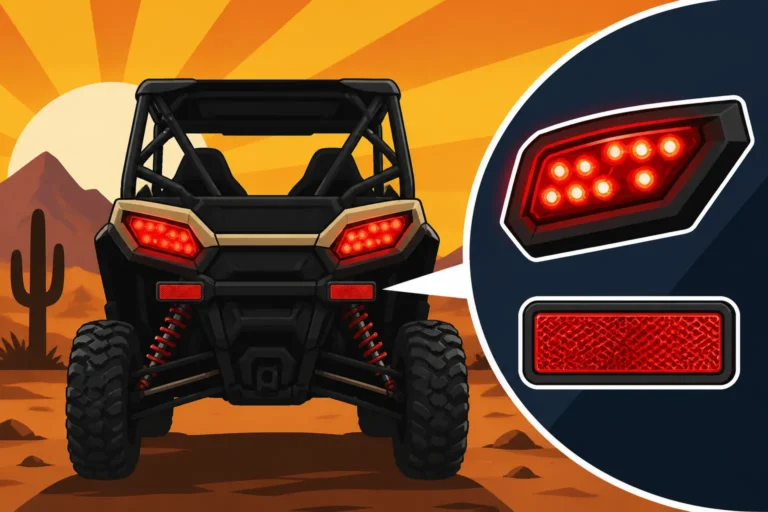
Just as important as seeing what's ahead is ensuring that drivers behind you know you're there. This is where your taillights and brake lights come in. Arizona law requires your OHV to have at least one red taillight mounted on the rear, which must be visible from 500 feet to the rear. This isn't just for night riding; it's a safety measure for low-light conditions, fog, or heavy dust.
Your brake lights are even more critical. These red lights, which must activate automatically when you apply the brakes, signal to drivers behind you that you are slowing down or stopping. They, too, must be visible from a certain distance to allow following vehicles adequate time to react. Many stock OHVs have a single taillight that also serves as a brake light, but for street legal conversion, you might find that having two distinct taillights and bright brake lights provides better visibility and compliance. Aftermarket solutions often bundle these with turn signals for a comprehensive upgrade. You can find detailed requirements in [Taillights and Rear Reflectors Arizona Requires].
Turn Signals and Reflectors
Imagine trying to navigate a four-way stop in your UTV without turn signals. It would be a chaotic guessing game for everyone! Arizona requires street-legal OHVs to have functional turn signals, both front and rear. These signals, typically amber in color, indicate your intention to turn or change lanes. They must be bright enough to be clearly visible in daylight and at night. Having dedicated, bright, and easily accessible turn signal switches is a must.
Beyond active lighting, passive reflectors also play a crucial role in your OHV's visibility. These reflective devices, usually red on the rear and amber on the sides, bounce light from other vehicles' headlights back to the source, making your machine more visible even if your own lights fail or if you're parked on the roadside. While they might seem like small details, these reflective elements are often checked during inspections for street legality.
License Plate Illumination
This is one of those small details that many riders overlook, but it's an absolute requirement for street-legal vehicles. Your rear license plate needs to be illuminated by a white light whenever your headlights are on. This ensures that law enforcement and other drivers can read your plate number at night. Many aftermarket taillight assemblies for OHVs integrate a small LED light specifically for this purpose. If your current setup doesn't have one, it's an easy add-on, often a small, low-profile LED strip that mounts above or beside your plate. Don't let something as simple as a dark license plate hold up your street-legal ambitions or get you pulled over! For more on this, check out [License Plate Lights on an Arizona Machine].
Equipping Your OHV for the Road: Practical Tips and Gear
Getting your OHV ready for the road is a journey that involves more than just lights. It's about upgrading components, ensuring proper installation, and making sure everything works in harmony to meet Arizona's strict standards. This can feel daunting, but breaking it down into manageable steps makes it much easier.
Inspecting Your Current Lighting
Before you buy anything new, take a good, honest look at your current setup. Start your OHV and turn on all the lights. Walk around the machine, front, back, and sides, and have a friend help you test the brake lights and turn signals (if you have them).
- Headlights: Do they seem bright? More importantly, when you shine them on a wall from a distance, do they create a focused beam, or is it a wide, diffuse glow? Can you switch between a low beam and a high beam? Many stock UTV headlights are excellent for trails but lack the defined beam pattern and throw required for street use, especially the 500-foot illumination.
- Taillights/Brake Lights: Are they red and clearly visible from 500 feet away? Do your brake lights come on reliably and brightly when you press the pedal?
- Turn Signals: Do you have them? Are they amber, and do they flash clearly? Are they integrated into your existing lights or separate units?
- Reflectors: Does your machine have red reflectors on the rear and amber on the sides?
- Plate Light: Is there a white light illuminating your license plate when your headlights are on?
This initial inspection will give you a clear picture of what you already have and what absolutely needs an upgrade to meet street-legal standards.
Upgrading for Compliance
Once you know what you need, it's time to shop for compliant components. This is where quality really matters, not just for durability but for meeting those strict legal requirements.
- Headlights: Look for DOT-compliant headlight kits specifically designed for street-legal OHV conversions. These will have the correct low-beam cut-off to prevent blinding oncoming drivers and a high beam capable of the 500-foot throw. Some riders opt for complete replacement headlight assemblies that look factory but perform to street standards. For example, many SuperATV kits are popular for their robust construction and compliance features.
- Turn Signal Kits: If your OHV doesn't have factory turn signals, you'll need a universal or model-specific kit. These typically include front and rear amber lights, a flasher relay, a wiring harness, and a switch that mounts conveniently on your dash or steering column.
- Brake Light Switch: Some OHVs have a hydraulic brake switch that activates the brake lights when pressure builds in the brake lines. Others might use a mechanical switch. Ensure yours is functioning correctly or install an aftermarket one if needed.
- Horn: While not a light, a horn is a mandatory item for street legality. It must be audible from 200 feet away. [The Horn Arizona Wants Audible at 200 Feet] gives more details.
- Mirrors: You’ll need a rearview mirror (or two side mirrors) to see behind you. [Mirrors, Seats and Footrests on an Arizona Build] covers this and other comfort/safety items.
When choosing aftermarket parts, always prioritize reputable brands and products explicitly marketed as "street legal" or "DOT compliant" for off-road vehicles. Cheap, non-compliant lights might seem like a bargain, but they won't pass inspection and could lead to tickets.
DIY vs. Professional Installation
This is a decision many riders face.
- DIY Installation: If you're mechanically inclined, comfortable with basic wiring, and enjoy working on your machine, installing a street-legal kit yourself can save you money and give you a deeper understanding of your OHV. Most kits come with detailed instructions, and there are countless online tutorials. However, ensure you have the right tools, plenty of time, and the patience to meticulously follow instructions, especially with wiring. Proper grounding and connections are crucial for reliable lighting.
- Professional Installation: If wiring makes your head spin, or you simply don't have the time or confidence, professional installation by an experienced off-road shop or powersports dealer is a great option. They have the expertise to ensure everything is installed correctly, wired safely, and most importantly, compliant with Arizona law. They can also help with the crucial step of aiming your headlights properly. While it costs more upfront, the peace of mind knowing your machine is legally and safely equipped can be well worth it.
Ultimately, whether you go DIY or pro, the goal is the same: a fully functional, compliant lighting system that keeps you safe and legal on Arizona’s diverse roads.
Here's a quick comparison of typical OHV lighting vs. street-legal requirements:
| Component | Standard OHV Functionality (Often Stock) | Arizona Street-Legal Requirement | Key Differences for 500-Foot Rule |
|---|---|---|---|
| Headlights | Basic illumination, often flood/spot | Visible 500 ft, illuminates 500 ft ahead, defined low/high beam | Focus on distance, beam pattern, DOT compliance |
| Taillights | Single red light, often combined w/ brake | Red, visible from 500 ft to rear | Visibility range, consistent brightness |
| Brake Lights | Combined with taillight, activates on brake | Red, distinct, activates on brake, visible | Reliability, brightness, clear activation |
| Turn Signals | Hand signals (off-road only) | Amber front/rear, clearly visible, flashing | Dedicated signals, front and rear, reliable |
| Reflectors | Often minimal or none | Red rear, amber sides | Specific placement, material quality |
| Plate Light | None | White, illuminates license plate at night | Essential for identification at night |
Common Misconceptions and What to Avoid
Making your OHV street legal and understanding the rules, especially around lighting, can lead to a few common misunderstandings. Dispelling these myths upfront can save you trouble, time, and money.
"Daytime Riding Doesn't Need Headlights"
This is a big one, and a dangerous misconception, especially in Arizona. While it might seem logical that you don't need headlights during the bright desert day, Arizona law for street-legal vehicles (and that includes your street-legal OHV) states that headlights must be on at all times, day or night, when operating on a public roadway. This isn't just an OHV rule; it's a general requirement for motorcycles and, by extension, other vehicles with similar profiles on the road.
The reason is simple: visibility. Even in broad daylight, a bright headlight makes your machine significantly more noticeable to other drivers. This is especially true for OHVs, which can be smaller and less imposing than traditional cars or trucks. Think of a scenario where you're cresting a hill on a winding road near Payson or emerging from a shadowed canyon onto a sunny highway. Your headlights cut through visual clutter and help others perceive you sooner. Ignoring this rule isn't just an invitation for a ticket; it's a compromise on your safety and the safety of everyone else on the road. So, get into the habit: if you're on pavement, your headlights are on.
"My Stock Lights Are Good Enough"
Many riders look at their factory-installed OHV lights and think, "These are pretty bright! Surely they'll meet the 500-foot rule." Unfortunately, that's often not the case. As we discussed earlier, stock OHV lights are typically designed for off-road use, where the primary need is to illuminate a wide, immediate area for navigating trails at lower speeds. They might be bright in terms of raw lumens, but they often lack the focused beam pattern, defined low-beam cut-off, and the sheer throw required for street-legal compliance.
Street-legal headlights, by contrast, are engineered to project a beam that illuminates the road far ahead (that 500-foot mark!) while also having a sharp cut-off to prevent blinding oncoming traffic. Trying to pass inspection or simply riding on public roads with non-compliant stock lights is a gamble. You might get away with it for a while, but an officer who knows the law will quickly spot the difference. Beyond the legal aspect, the safety difference is immense. You'll simply be able to see further and more clearly on a paved road, and other drivers will appreciate not being momentarily blinded by your ill-suited off-road lights. Investing in proper, DOT-compliant headlights is not just about meeting a rule; it's about upgrading your safety and peace of mind.
Final Preparations and Staying Compliant
You've put in the work, researched the rules, and likely upgraded your machine's lighting. Now, it's time for the final checks and understanding how to maintain your street-legal status in Arizona.
The Inspection Process
Once you believe your OHV meets all the street-legal requirements, including the 500-foot headlight rule, you'll need to go through an inspection process. This usually happens at an Arizona MVD office or a certified third-party provider. The inspector will check all your required equipment:
- Headlights: They'll verify both low and high beams, checking their functionality, aim, and ability to illuminate a sufficient distance.
- Taillights and Brake Lights: They'll ensure they're visible and functioning correctly.
- Turn Signals: Front and rear, amber, and clearly visible.
- Horn: Audible from 200 feet.
- Mirrors: Properly installed for rear visibility.
- License Plate Light: Illuminating the plate.
- Reflectors: Correctly placed.
- Tires, Brakes, and Seatbelts/Restraints: These aren't lighting-related but are critical safety components also checked.
Passing this inspection is your official green light to hit the pavement. It's validation that your hard work has paid off.
Ongoing Maintenance and Awareness
Getting street-legal isn't a one-and-done deal. You need to maintain your equipment to stay compliant and safe.
- Regular Checks: Before every road ride, do a quick walk-around. Test your lights, horn, and signals. Bulbs can burn out, wiring can come loose, and lenses can get caked with mud. A few minutes of checks can prevent a ticket or an accident.
- Cleanliness: Keep your headlight lenses clean. Dirt, mud, and dust severely reduce light output and beam effectiveness. A dirty headlight can turn a 500-foot beam into a 100-foot beam very quickly.
- Know the Law: Laws and regulations can change, so it's a good idea to periodically review the Arizona MVD's OHV guidelines. Stay informed about any updates, especially concerning safety equipment.
- Ride Responsibly: Even with all the right equipment, operating your OHV on public roads requires a different mindset than trail riding. Be mindful of traffic laws, speed limits, and other motorists.
By adhering to the 500-foot headlight rule and all other street-legal requirements, you're not just avoiding fines; you're actively contributing to safer roads for yourself and everyone else in Arizona. Enjoy those paved connectors and the expanded adventures your street-legal OHV unlocks!
Disclaimer
This article is for general informational purposes only and does not constitute professional advice. Laws, prices and regulations vary by location and change over time. Consult a qualified professional for guidance on your specific situation.