Arizona Trespass Law for Riders
There's nothing quite like the thrill of exploring Arizona's vast and wild backcountry on your ATV or UTV. The red rocks, the open desert, the endless blue skies – it’s a rider’s paradise. But let's be honest, that feeling of freedom can quickly turn to anxiety when you start to wonder if the trail you’re on is actually, well, legal. We've all been there: a fantastic two-track leads you deeper into what looks like public land, only for you to suddenly see a faded "No Trespassing" sign or a barbed-wire fence that seemingly appeared out of nowhere. It's a genuine concern, and the thought of facing fines or losing riding privileges for an honest mistake is enough to make anyone hesitant. This guide is here to untangle the complexities of Arizona's trespass laws, helping you ride confidently and responsibly.
Understanding Arizona's Trespass Laws for OHVs
Riding off-highway vehicles in Arizona offers unparalleled access to some truly breathtaking landscapes, but with that privilege comes the critical responsibility of knowing where you can and cannot ride. Arizona's trespass laws are designed to protect private property and ensure responsible land use, and they apply just as much to us riders as they do to anyone else.
The Basic Definition of Trespass
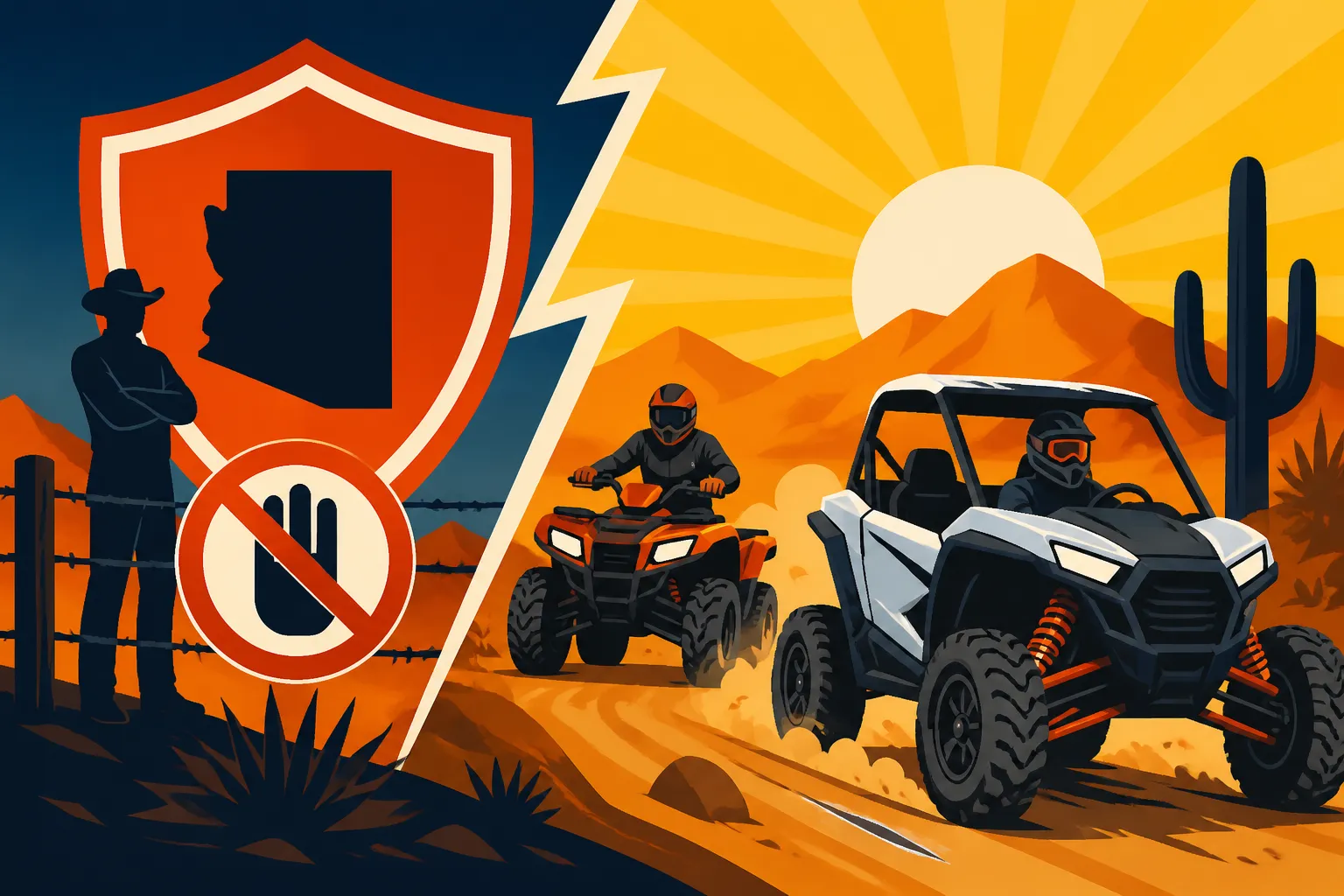
At its core, trespass means entering or remaining on someone else's property without permission. For OHV riders, this isn't always as simple as it sounds. In the sprawling Arizona desert, property lines can be invisible, signs can be long gone, and fences might be down or non-existent. However, the law generally assumes that if property is fenced, clearly marked with "No Trespassing" signs, or if a reasonable person would know it's private (like a private driveway leading to a residence), you should stay off.
The tricky part often comes down to intent. Accidental trespass, where you genuinely didn't know you were on private land, might still incur a citation or a verbal warning, but intentional trespass—riding past clear signs, cutting fences, or knowingly entering restricted areas—carries much stiffer penalties. Rangers and deputies understand that getting turned around in the desert can happen, but they also expect riders to carry appropriate maps and navigation tools to prevent such occurrences. [Fines for Riding Arizona Without a Decal] While a missing decal is one thing, intentional trespass can escalate quickly.
Types of Land in Arizona and How They Affect Access
Arizona's landscape is a patchwork of different land designations, each with its own set of rules for OHV access. Misunderstanding these distinctions is one of the quickest ways to accidentally trespass.
-
Private Land: This is the most straightforward: you absolutely need explicit permission from the landowner to ride here. Without it, you are trespassing, plain and simple. Private land might include active ranches, residential properties, mining claims, or even large undeveloped parcels. Never assume open desert means public access; it could easily be someone's private acreage, even if it looks entirely wild.
-
State Trust Land: This is a big one for Arizona riders. Approximately 9.2 million acres across the state are managed by the Arizona State Land Department. This land isn't truly "public" in the same way BLM or Forest Service land is. It's held in trust to generate revenue for public institutions, primarily K-12 education. To legally access State Trust Land for recreational purposes, including OHV riding, you must purchase a Recreational Permit from the Arizona State Land Department. Without this permit, you are trespassing, even if there are no fences or signs. [Arizona State Trust Land Recreational Permits] You can often obtain these permits through the [Arizona Game and Fish Portal Account] or directly from the [Arizona State Land Department Offices].
-
BLM (Bureau of Land Management) and Forest Service Land: These federal lands are generally open for OHV use on designated routes. The key phrase here is "designated routes." You can't just go anywhere. Always consult a Motor Vehicle Use Map (MVUM) for Forest Service land or BLM travel management plans to identify legal trails and roads. These maps will clearly mark what's open to motorized vehicles and what's restricted or closed. Riding off a designated route on federal land is not only illegal but can also lead to significant resource damage and citations.
-
Tribal Land: Arizona is home to numerous Native American tribes, and their lands are sovereign nations with their own laws and rules. Generally, OHV access to tribal lands is highly restricted or completely prohibited without specific permission or permits issued by the tribal government. Never assume you can ride on tribal land; always check with the specific tribe's authorities first. [Arizona Rules on Tribal Land] Riding on tribal land without permission is a serious offense, often met with stringent enforcement.
Common Scenarios Leading to Unintended Trespass
Even the most well-meaning rider can inadvertently stray onto private property. The Arizona desert is vast and can be disorienting, and sometimes, the line between legal and illegal isn't immediately obvious.
Unmarked Boundaries and Faded Signs
One of the biggest frustrations for Arizona OHV riders is the sheer difficulty in identifying property lines in the desert. You might be following a well-worn path that suddenly crosses onto private land without any warning. Fences can be ancient and collapsed, or simply non-existent, especially in remote areas. Signs, if they ever existed, might have faded from the relentless Arizona sun or been vandalized. Imagine following a trail for miles, confident you're on public access, only to find a gate across your path with a weathered "Private Property" sign barely clinging to a post. It's a common and unsettling experience.
This lack of clear demarcation means riders must be extra diligent. Relying solely on visual cues can be misleading. A two-track that looks like public access could very well be a ranch road or part of a mining claim. This is where advanced navigation tools really shine. Many riders rely on apps like [onX Offroad for Arizona Trails] that overlay property boundaries directly onto topographical maps, allowing you to see exactly whose land you're on in real-time. Equipment from companies like SuperATV, which manufactures robust dash mounts and integrated display systems for UTVs, can make it easier to keep these digital maps visible and accessible while riding, reducing the chances of an accidental boundary crossing.
Following Washboard Roads and Old Two-Tracks
The allure of an old, untraveled road or a faint two-track disappearing into the mesquite can be powerful. It speaks to the explorer in all of us. However, many of these seemingly inviting routes are actually private access roads, historical ranch paths, or former mining routes that were never intended for public recreational use. What starts as a public county road might transition into a private easement without a single sign to tell you.
Consider a scenario where you're out near Wickenburg, enjoying a scenic washboard road. You come to a fork, and one path looks less traveled, more adventurous. You take it, winding through hills and washes, thinking you've found a hidden gem. After a few miles, you crest a hill to find a remote cabin or a working cattle pen. You've unknowingly entered private property. It's easy to get sucked into exploration, but without verification, these hidden paths are risky. Always assume that if you're venturing off a clearly marked and well-known public trail or road, you need to confirm the land status before proceeding.
Riding Adjacent to Desert Homes and Communities
As Arizona's population grows, the urban fringe pushes further into the desert, bringing residential areas closer to traditional riding grounds. It’s important to remember that even if you're on a public trail, riding too close to private homes or communities can lead to problems. This isn't just about trespass; it’s also about noise and privacy. [Desert Community Noise Complaints] Many rural residents have moved to the desert for peace and quiet, and loud OHVs can be a major source of contention.
You might be riding a county road that runs right alongside a new housing development. While you’re technically on public property, cutting corners through someone's undeveloped backyard, even if it's not fenced, is a form of trespass. Similarly, riding through washes that abut private residences can be problematic. Even if the wash itself is technically public, veering up onto the bank or disturbing the peace and quiet of adjacent homeowners can provoke calls to law enforcement. It's always best to give private residences a wide berth and to be especially mindful of noise levels when riding near occupied areas.
What to Do If You Suspect You've Trespassed (or Are About To)
Despite your best efforts, there might come a moment when you realize you've strayed onto private land, or you're unsure if you're about to. How you react in these situations can make a big difference in the outcome.
Immediate Actions When Lost or Uncertain
The moment you have that nagging feeling that you might be trespassing, or if you encounter any signage or fencing that suggests private property, your immediate action should be to stop. Don't push forward hoping it will become clearer; it usually won't. Pull over safely, dismount, and consult your maps and GPS device. Your navigation app should be able to pinpoint your exact location relative to property lines.
If you confirm you are on private land, or if you can't confirm you're on public land, turn around immediately. Retrace your steps carefully and find the last known point where you were definitely on legal ground. Do not try to find a "shortcut" across unknown property, as this could lead to deeper trouble or even getting stuck. Getting lost in the vastness of the Arizona desert can be daunting, but making rash decisions to avoid backtracking often exacerbates the problem. Remember, getting out safely and legally is the top priority.
Interacting with Landowners or Law Enforcement
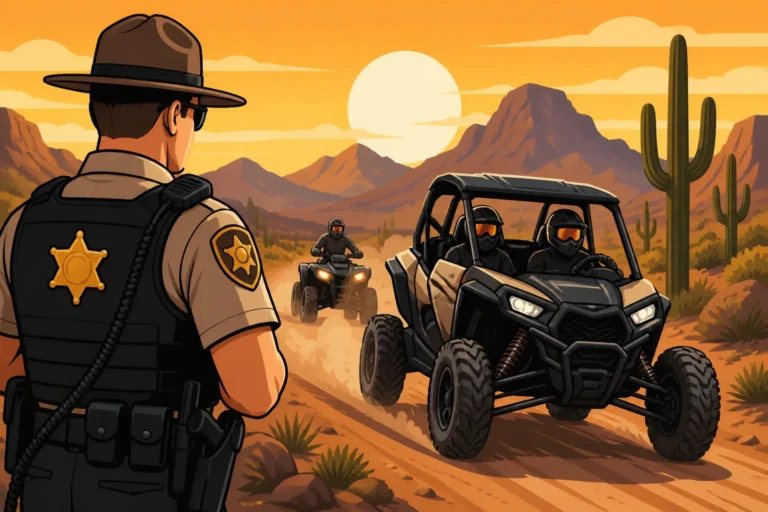
It's an uncomfortable scenario, but it's possible you might encounter a landowner or law enforcement officer while on private property. Your demeanor in this situation is crucial. The best approach is to be polite, apologetic, and fully cooperative. Do not argue, become defensive, or try to run. Explain that you were lost or made an honest mistake, if that's the truth.
Be prepared to provide your identification, vehicle registration, and proof of your [Arizona's Annual OHV Decal Explained]. An officer will likely ask for these documents. Understand that even if it was an accident, you may still face a citation, especially if there were clear "No Trespassing" signs or previous issues in the area. Trespass penalties can range from warnings to significant fines and even impoundment of your vehicle, depending on the severity and whether it's a repeat offense. If you have equipped your machine with quality, legal accessories like appropriate mirrors, headlights, and a functional horn (all available from SuperATV), it helps demonstrate to an officer that you are a responsible rider, even if you made a navigation error. This can sometimes influence the outcome of an interaction. [Arizona Enforcement and Checkpoints in Arizona] often occur in popular riding areas, so always be prepared.
Preventing Trespass: Tools and Best Practices
The best defense against trespassing is prevention. With a bit of planning and the right tools, you can significantly reduce your risk of straying onto restricted land and ensure your rides are stress-free and legal.
Mapping and Navigation Tools
In Arizona, a physical map combined with a digital navigation system is your best friend. Relying on memory or outdated information can quickly lead you astray.
- Motor Vehicle Use Maps (MVUMs): These are issued by the Forest Service and are crucial for understanding which roads and trails are open to motorized vehicles on national forest lands. They are updated regularly, so always get the latest version.
- BLM Travel Management Plans: Similar to MVUMs, these designate routes on Bureau of Land Management lands.
- GPS Devices and Apps: Modern GPS devices and smartphone apps are invaluable. Apps like onX Offroad, Gaia GPS, or even Google Earth with overlaid property boundaries can show your exact location in real-time, display public vs. private land, and even highlight State Trust Land boundaries. Many riders download their routes beforehand, especially in areas with spotty cell service. [Checking Arizona Trail Status Before You Drive] often includes reviewing these maps.
- Physical Maps: Always carry paper maps as a backup. Batteries die, and devices can get damaged. A good topographical map can be a lifesaver when technology fails.
Remember, getting bogged down on a designated trail is one thing; getting stuck on private land is a whole different headache. Having reliable recovery gear, like a sturdy winch or heavy-duty recovery straps from SuperATV, is always a smart move. This ensures that if you do encounter a challenge on a legal trail, you can often self-recover, preventing the need to stray onto unknown, potentially private property in search of assistance.
Seeking Permission and Understanding Permits
Proactive steps can save you a lot of trouble. If you plan to ride an area where land ownership is ambiguous, do your homework beforehand.
- State Trust Land Permit: As mentioned, if you plan to ride on State Trust Land, you must have a recreational permit. These are inexpensive and easy to obtain online. This permit does not grant you access to all State Trust Land, only to utilize it for dispersed recreation where motorized use is allowed. Always consult maps for current restrictions. [Arizona State Trust Land Recreational Permits]
- Identifying Landowners: If you suspect a specific parcel is private but looks tempting, you can often use county assessor websites (usually found through the county's official website) to search property records by parcel number or even by mapping tools to identify the landowner. Contacting them directly to ask for permission is the only legal way to ride on private ground.
- Leased Land: Sometimes, state or federal land is leased to private individuals (e.g., for ranching). While the land itself is public, the lessee often has rights that might restrict public access in certain areas or during specific times. Always be respectful of these arrangements and look for signs. [Arizona Permit Rules on Leased Ground]
Respecting Signs, Fences, and Natural Barriers
This might seem obvious, but it bears repeating: "No Trespassing" signs and closed gates are there for a reason and carry legal weight. Disregarding them is not only illegal but also harms the reputation of all OHV riders.
- Signs: Take "No Trespassing," "Private Property," or "Keep Out" signs seriously, regardless of how remote or inviting the trail beyond them appears.
- Fences and Gates: A closed gate, even if unlocked, means the path is not intended for public access. Never open a closed gate unless it’s clear signage indicates it's a public easement (and always close it behind you!). Never cut or damage fences.
- Natural Barriers: Sometimes a thick stand of trees, a deep ravine, or other natural features act as property markers. If an area feels like it's clearly not meant for vehicle traffic, it's often a good indicator to turn back.
Being a responsible rider means respecting the land, whether it's public or private. By adhering to these practices, you protect yourself, preserve access for other riders, and contribute positively to the OHV community's image.
| Land Type | Access Requirements for OHVs | Common Challenges |
|---|---|---|
| Private Land | Explicit permission from landowner, typically in writing. | Unmarked boundaries, faded signs, temptation of old roads. |
| State Trust Land | Arizona State Land Department Recreational Permit required. | Vast areas without clear fencing/signs, permit often overlooked. |
| BLM / Forest Service | Ride only on designated routes (check MVUMs/travel plans). | Lack of detailed maps in remote areas, temptation to create new trails. |
| Tribal Land | Strict restrictions; usually no public access without specific tribal permits. | Often borders public lands, unawareness of tribal sovereignty. |
Disclaimer
This article is for general informational purposes only and does not constitute professional advice. Laws, prices and regulations vary by location and change over time. Consult a qualified professional for guidance on your specific situation.