Arizona Stage Two Fire Restrictions
Arizona Stage Two fire restrictions can turn a planned ATV or UTV ride into a frustrating guessing game: a trail may remain open while campfires, smoking, or certain equipment are restricted nearby. This guide explains how Stage Two rules affect Arizona rides, what to check before leaving home, and how to avoid confusing fire restrictions with trail closures.
What Arizona Stage Two Fire Restrictions Mean for Riders
Stage Two is about reducing ignition risk
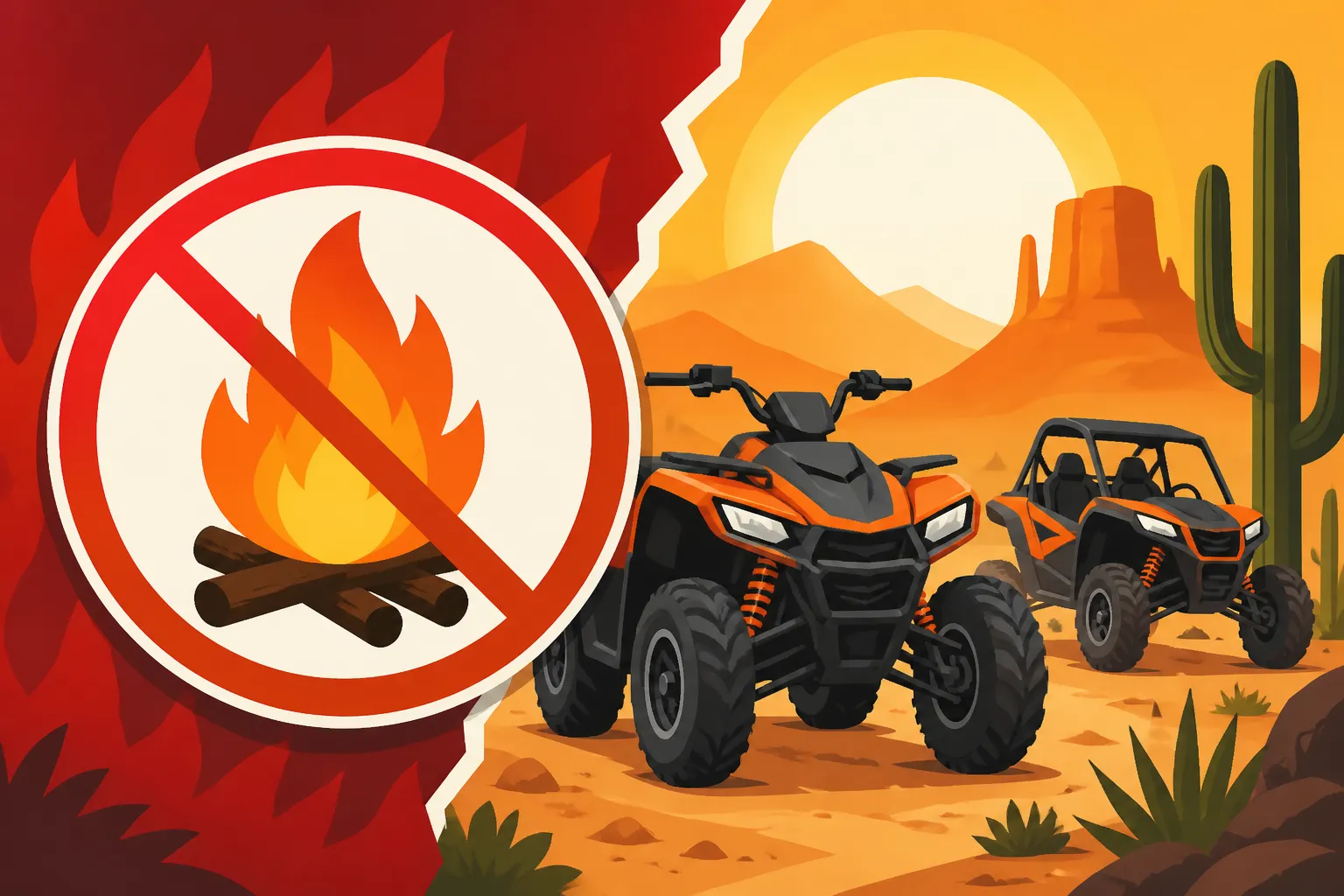
Stage Two restrictions are measures intended to lower the chance of a human-caused wildfire during high-risk conditions. In practice, they often place tighter limits on open flames and activities that could create sparks or heat. The exact rules are not identical everywhere: the land manager issuing an order determines what is restricted, where the rules apply, and when they take effect.
That distinction matters on an Arizona ride. A restriction on one forest or recreation area does not automatically mean every trail in the region is closed. For example, rules on parts of the Coconino National Forest may not match those on the Tonto or Prescott National Forest, or on nearby Bureau of Land Management land. Even within a broad region, an order may name particular roads, recreation sites, or zones.
For a rider, the safest approach is to treat “Stage Two” as a signal to read the actual order—not as a complete description of every rule. Start with Arizona Fire Restrictions by Stage to understand the general framework, then check the issuing agency’s current notice for the specific place and date of your trip.
Restrictions can apply even when trails remain open
A common source of confusion is assuming that fire restrictions and motorized-access closures are the same thing. They are not. An area might remain open to riding while prohibiting activities such as building a campfire or using certain flame-producing equipment. Conversely, an area can be closed to motorized travel under a separate order even if a fire restriction is not in effect.
The wording of the local order determines what riders may do. It may address campfires, charcoal, smoking, welding, operating equipment, or other activities with potential to start a fire. Some restrictions may include exceptions for designated developed sites or specific equipment; others may not. Don’t rely on what was allowed on your last trip, or assume a neighboring campground has the same rules.
If you are camping near a trailhead, check both the riding-area status and the rules for the place where you plan to camp. A trail can be open while a particular campground, staging area, or road has separate limits. Full Closures on Arizona Public Land explains why a closure can apply independently of a fire-stage notice.
Stage Two rules differ from Stage One
Stage One restrictions are generally less restrictive than Stage Two, but the specific difference depends on the order. A Stage One notice may limit certain fire-related activities while leaving some uses permitted under stated conditions. Stage Two can add stronger prohibitions, including restrictions on open flames or other ignition sources. The details matter more than the label.
Riders sometimes see a Stage One notice from a previous season and assume the same allowance still applies after restrictions increase. That can lead to a preventable citation—or, more importantly, an ignition in dry grass or brush. Compare the current order with Arizona Stage One Fire Restrictions, and follow the rules listed for the stage currently in effect rather than relying on a general summary.
| Riding situation | What to verify under Stage Two |
|---|---|
| Riding a public trail | Whether the route is open to motorized use and whether the order limits access |
| Stopping at a trailhead | Whether the staging area is open and what activities are prohibited |
| Camping overnight | Whether campfires, charcoal, or other flame use is allowed at that specific site |
| Using a machine or tools | Whether the order restricts equipment or activities that could create sparks |
| Traveling across different land | Which agency manages each section and which order applies |
How to Check Restrictions Before an Arizona Ride
Identify who manages the land
Arizona riding routes can pass through a patchwork of jurisdictions. A route may involve National Forest land, BLM land, state trust land, county roads, or private property. Each section can have its own access rules and fire notices. This is one reason a trail map alone is not enough to establish that a route is open or that a particular activity is allowed.
Before heading out, identify the land manager for your trail, staging area, and overnight stop. If the ride crosses more than one jurisdiction, check each one. A forest order may cover a route on National Forest land, while a separate BLM notice applies to nearby land. State trust land has its own access and permit considerations; Arizona Trails on State Trust Land is useful when your planned route may cross those parcels.
If you are using forest roads, review the rules for the specific forest rather than assuming all public roads are treated alike. Arizona Rules on Forest Service Roads and Arizona Rules on BLM Roads can help clarify the difference between those land types. Pay particular attention to named roads, seasonal closures, and restrictions that cover a defined area rather than an entire forest or district.
Read the actual order, not just a map label
A map or trail app can help you see where a route goes, but it may not show every current restriction. Read the agency notice itself and look for the effective dates, geographic boundaries, prohibited activities, exceptions, and any separate closure language. If the order includes a map, check whether your staging location and route fall inside the restricted area.
Apps such as onX Offroad can help you plan a route and understand the land-management boundaries you may cross. Use that information as a planning aid, then confirm the rules through the agency responsible for that land. If a route follows a boundary or crosses between agencies, verify each portion rather than assuming one order governs the whole trip.
Also check the notice close to departure. Fire restrictions can change when conditions shift, and a screenshot saved weeks earlier may no longer reflect the current order. Where Arizona Closure Notices Are Posted and Checking Arizona Trail Status Before You Drive are useful starting points for building a reliable pre-trip check.
Separate fire restrictions from trail and vehicle requirements
A Stage Two notice does not replace the ordinary requirements for riding. You may still need to confirm that the trail is open to your type of vehicle, that your machine meets applicable requirements, and that you have any required decal or permit. An open trail does not mean every vehicle or activity is allowed there.
Pay attention to spark-arrestor requirements, especially when riding dry, brushy terrain. Follow the rules for the land you are visiting and make sure your machine’s equipment is in proper condition. Arizona’s Spark Arrestor Requirement explains the broader requirement, while Why a Spark Arrestor Runs Whenever the Engine Does provides helpful context for why the device matters during a ride.
Do not interpret a fire restriction as permission to ignore an unrelated restriction, either. A route may have a seasonal closure, a wilderness boundary, or a vehicle-width limitation in addition to a fire order. Check the details for your machine and route before assuming that a line shown as a road is open for ATV or UTV travel.
Riding and Camping Responsibly Under Stage Two Restrictions
Plan your stops with the order in mind
A long desert ride often includes more than driving from one trail to another. Riders may stop for lunch, meet friends at a staging area, or camp overnight. Under Stage Two, plan these breaks around the restrictions. If an order prohibits open flames, do not assume that a small cooking fire or a portable flame device is acceptable. Check the order for the exact language and any stated exceptions.
Choose a place to stop where you can remain without blocking access or disturbing other visitors. Keep your machine on routes and in staging areas where motorized use is allowed, and avoid parking in dry vegetation. Even when vehicle travel is permitted, careless parking or an improperly maintained machine can create avoidable risk in dry conditions.
If the order is unclear about a specific activity, don’t guess. Contact the responsible land manager or choose a plan that avoids the uncertain activity. That might mean eating food that does not need to be cooked, using a permitted developed facility, or ending the ride before an overnight stop that does not fit the rules.
Reduce the chance of sparks and fire
Use a well-maintained machine and pay attention to unusual mechanical problems during the ride. A dragging component, damaged exhaust, or other defect can turn a routine trip into a safety concern. If something seems wrong, stop in a safe location, move away from dry vegetation when possible, and assess the issue before continuing.
Stay on designated routes. Cutting across dry grass, brush, or unmarked ground can damage vegetation and may bring a hot machine into contact with combustible material. Avoid parking over dry plants, and be especially careful when stopping after a sustained climb or hard use. Follow any order-specific rules about equipment, tools, or activities that may produce heat or sparks.
Spark-arrestor requirements are not a substitute for checking the fire order. A compliant machine may still be subject to other restrictions, and a fire-stage notice may impose limits beyond the ordinary equipment rules. If you need to review your machine’s obligations, see Arizona’s Spark Arrestor Requirement and confirm the current order for the route you intend to ride.
Have a backup plan for changing conditions
Arizona fire conditions can vary sharply by elevation and location. A route near Flagstaff may have different conditions and restrictions from a lower desert ride near Phoenix or Tucson. Weather, wind, vegetation, and recent conditions can all affect where restrictions are imposed. Build flexibility into your plans, particularly when you are traveling a long distance to reach a trailhead.
Before you leave, choose an alternate riding area or be prepared to postpone. Check access notices again before loading the trailer, and check them once more if you make a significant detour. If the planned route is closed, do not ride around a gate or use an unofficial track to get into the area. Closures protect people, property, and landscapes, and bypassing them can create additional danger.
A navigation app can help you understand the layout of an alternate area, but it cannot replace an official closure notice. Use onX Offroad to help compare routes and identify land boundaries, then confirm access and restrictions with the managing agency. That small extra step can save a long drive to a closed staging area—and prevent a good riding day from turning into a risky one.
Common Mistakes to Avoid
Assuming an open trail means every activity is allowed
Trail access and fire-related activities are separate questions. You may be able to ride while being prohibited from making a fire, using certain equipment, or carrying out another restricted activity. Read the order for the specific area, including any exceptions, before making plans for a picnic or camp.
The reverse mistake is just as common: assuming Stage Two automatically closes every route in a region. Some routes may remain open, while others are closed by a separate order. Confirm the status of each road, trail, and staging area instead of relying on a broad statement about the county or forest.
Relying on old information or hearsay
A friend’s report from last weekend, an old social media post, or a saved map note may be useful background, but none is a substitute for current agency information. Restrictions can change, and the details may differ between nearby jurisdictions. Verify the actual notice before traveling.
It is also easy to confuse a fire restriction with a permit, decal, or land-access rule. Those requirements address different issues. Confirm each one separately, especially if your route crosses multiple land types or includes camping.
Treating a device or app as official permission
A route shown in a navigation app is not necessarily open, legal for your machine, or exempt from a current order. Apps can help with route planning, but the managing agency’s notice controls access and permitted activities. If a map and an official closure notice appear to conflict, follow the agency notice and contact the land manager for clarification.
When conditions change, be willing to adjust the trip. A different route, an earlier return, or a rescheduled ride is better than pushing into a restricted area or taking a chance with fire safety.
Disclaimer
This article is for general informational purposes only and does not constitute professional advice. Laws, prices and regulations vary by location and change over time. Consult a qualified professional for guidance on your specific situation.