Winching Out of a Sandy Wash
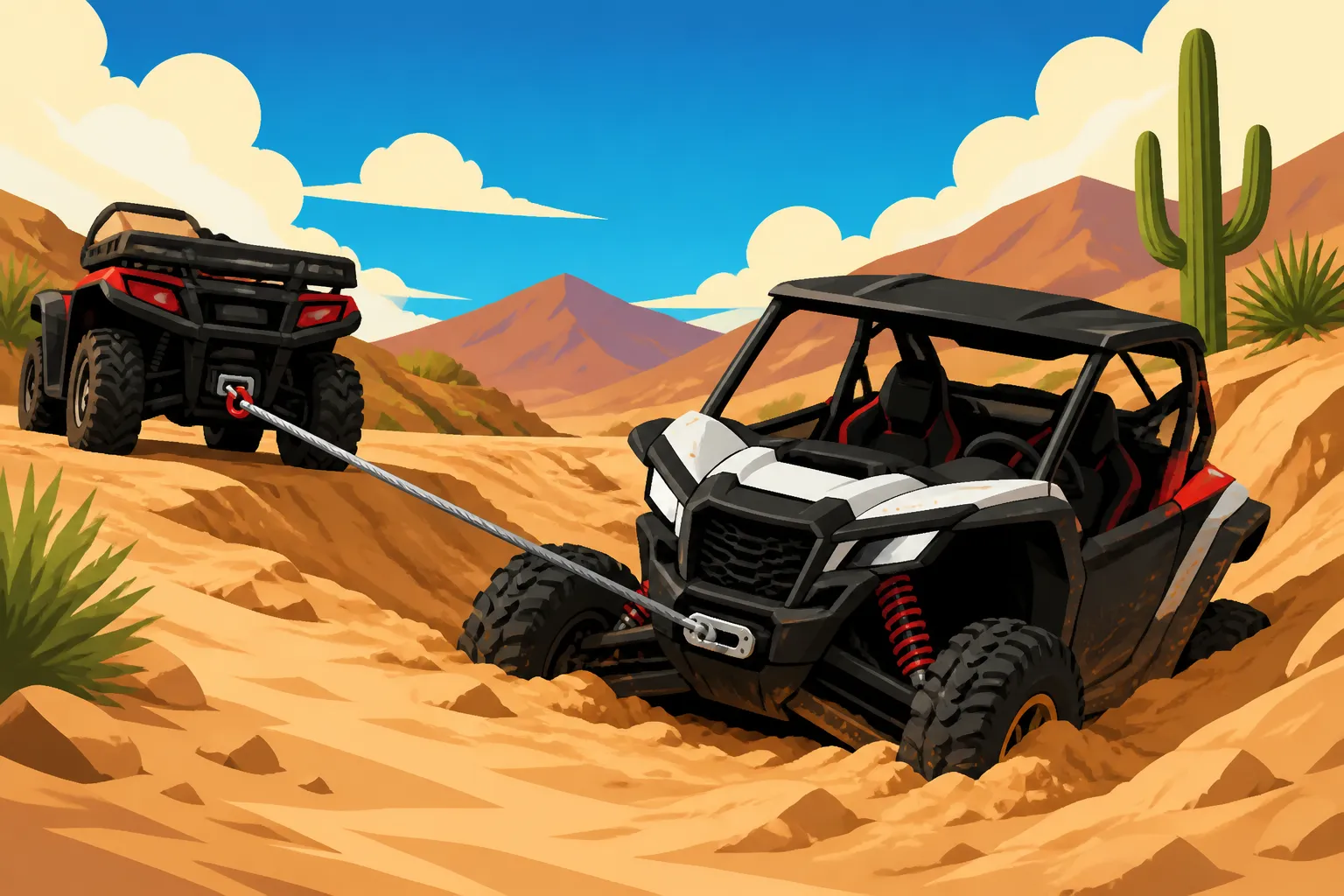
A UTV can sink surprisingly fast in a sandy Arizona wash, especially after a turn, a stop on a soft bank, or a rain that leaves the surface loose and uneven. Spinning harder often digs the tires deeper and heats the engine. This guide walks through safer ways to assess the situation, set up a winch, and recover without putting people or equipment in danger.
Before You Winch, Make the Scene Safe
Stop spinning and check the machine
As soon as the tires start digging, ease off the throttle. Repeated wheelspin can bury the machine to its frame, pack sand around the tires, and make the recovery harder. It can also put extra heat and strain on the drivetrain. If the vehicle is still moving, steer gently toward firmer ground rather than making abrupt turns.
Put the transmission in park or neutral as appropriate for your machine, set the brake, and shut off the engine if you need to inspect underneath or around the wheels. Keep everyone clear of the machine’s path and the winch line. A stuck vehicle can shift suddenly when tension comes on, and people should never stand in front of, behind, or over a loaded line.
Look for what is actually holding the machine. The tires may be buried, the skid plate may be resting on the sand, or the chassis may be hung up on a buried rock or bank. Check for damage, leaking fluids, and a hot engine before planning the pull. If the machine is tilted or unstable, do not start winching until you have a plan to prevent it from sliding or rolling.
Choose a recovery direction and a sound anchor
A short pull toward the nearest firm, open ground is usually easier to control than a long pull across the wash. Look for a route that avoids steep banks, sharp rocks, vegetation, and other vehicles. If the wash is actively flowing, water is rising, or a storm is nearby, prioritize getting people to safe ground. Do not enter a flooded wash to recover a machine.
Your anchor matters as much as your winch. Use a sturdy tree with a tree-saver strap, an approved ground anchor, or another suitable recovery point. Do not attach a winch line to a tow ball, bumper accessory, suspension part, or an unverified part of another vehicle. If you are unsure whether an anchor or recovery point can handle the load, stop and find a safer option.
Arizona’s desert washes can look firm while hiding soft pockets, loose edges, and buried obstacles. A route that seemed manageable on the way in may be much harder to travel after a vehicle has dug in. Before heading out, check a map and consider whether the route matches your machine and experience. Arizona Trail Difficulty Ratings can help frame that decision, while Reading an Arizona Motor Vehicle Use Map is useful for understanding where motorized travel is allowed.
Set Up the Winch for a Controlled Pull
Prepare the line, anchor, and recovery zone
Wear gloves when handling a winch line, and follow the winch manufacturer’s instructions for your specific equipment. Inspect the line for cuts, kinks, broken strands, abrasion, or other damage. Check the hook, fairlead, mounting points, and remote control before putting the line under tension. If anything looks compromised, do not rely on it for a recovery.
Attach the line to a proper recovery point on the stuck machine. If you are using a tree, wrap it with a tree-saver strap rather than placing the cable or synthetic line directly around the trunk. Connect the winch line to the strap with suitable recovery hardware, and make sure the connection is seated correctly. Keep fingers away from pinch points while removing slack.
Clear people from the recovery zone. Nobody should step over a tensioned line or stand near the anchor, the winch, or the line’s path. Use a line damper if your equipment instructions call for one, and keep observers well back. A loaded line can store substantial energy; if a component fails, it may move violently. Do not use a winch to pull people, and do not treat a strap or line as a safe place to stand.
Winch slowly and keep the machine aligned
Take up slack carefully, then pause to make sure the line is seated and the anchor is holding. Operate the winch in short, controlled pulls. The driver should keep the wheels pointed along the intended path and use only light throttle if the machine’s manual and the recovery setup allow it. Too much throttle can make the tires spin and pull the vehicle sideways.
Watch the line, anchor, and machine throughout the recovery. If the anchor shifts, the line rubs against a sharp edge, the vehicle begins to tilt, or the winch sounds strained, stop. Release tension only as instructed by the equipment maker, then reassess the setup. Do not try to correct a bad angle by standing beside a loaded line or reaching near the winch.
Once the machine begins moving, continue slowly until it reaches firm ground. Avoid sudden acceleration that can make it lurch or slide. When the vehicle is free, keep clear while the line is unloaded and disconnected. Take time to inspect the winch and recovery gear before packing it away; sand can work into moving parts and connections.
| Situation | Safer approach | Avoid |
|---|---|---|
| Tires are spinning in loose sand | Stop, assess how deeply the machine is stuck, and clear loose sand if safe | Continuing to spin and digging the chassis in |
| A suitable anchor is nearby | Use an approved anchor and proper strap or recovery hardware | Attaching to a tow ball or unknown vehicle part |
| The vehicle is tilted or hung up | Stabilize the situation and consider another recovery plan | Pulling hard from an angle that could worsen the tilt |
| No safe anchor is available | Use a suitable recovery aid or wait for qualified help | Improvising with trees, bumpers, or unsecured equipment |
| Water or weather conditions are changing | Move people to safety and reassess whether recovery is safe | Entering a flooded or rapidly changing wash |
When a Winch Is Not the Best First Move
Try simple, low-risk steps before applying tension
If the machine is not resting on its frame and the tires have room to move, clearing sand from in front of and behind the tires may be enough. Use a shovel to make a gradual path rather than a steep ramp. If the tires are buried deeply, carefully clear sand from around the chassis and under the skid plate where it is safe to do so. Never crawl beneath an unstable machine.
A traction aid can help when the tires are only lightly stuck and you can place the aid securely. Follow the product instructions, keep hands and feet clear of the tires, and use very gentle throttle. A second vehicle may be able to assist only if both machines have appropriate recovery points and the people involved understand the equipment. A tow strap is not interchangeable with a winch line, and a shock-loading pull can cause equipment failure or injury.
For deep sand, recovery boards, a shovel, and a properly rated winch may be more useful than simply carrying a long strap. Recovery Gear for Deep Sand covers the kinds of equipment that can make a difference when a machine is bogged down. If the situation is beyond your gear or experience, it is safer to call for help than to keep escalating the force.
Know when to stop and ask for help
A winch may not be enough if the machine is buried to the frame, balanced on a steep bank, pinned against an obstacle, or positioned where a pull could roll it. The same is true if the only available anchor is questionable, the line is damaged, or the winch is overheating. Stop rather than trying a more powerful pull with an unsafe setup.
Take particular care if the stuck machine is near water, a road, a cliff edge, or a place where other riders may arrive at speed. Use a spotter only if that person can stand well outside the recovery zone and communicate clearly with the operator. If visibility is poor, pause until the scene can be managed safely. A recovery that takes longer is preferable to one that creates a second emergency.
If a machine cannot be recovered safely on site, Towing Off a Desert Trail may help you think through the next step. Keep track of your location and describe landmarks clearly when requesting assistance. In remote areas, a phone may not have service, so plan before riding; Cell Dead Zones in the Arizona Backcountry explains why a backup communication plan matters.
Reduce the Chance of Getting Stuck Again
Read the sand and manage momentum
Sand changes quickly. A wash may have a firm-looking crust over loose material, while a shaded bend or the inside of a curve can be much softer than the straight section before it. Scan ahead for deep tire tracks, abrupt drop-offs, soft banks, and places where water has recently moved sediment. If the surface looks uncertain, stop on firmer ground and inspect the route on foot rather than charging into it.
Maintain steady, controlled momentum where the trail allows it, but do not use speed to compensate for poor visibility or a questionable line. Avoid sudden turns and unnecessary stops in the softest section. If you do need to stop, choose a flatter, firmer spot whenever possible. The goal is to keep the machine moving predictably, not to rush through terrain.
A route plan helps avoid surprise obstacles and dead ends. Tools such as onX Offroad can help riders review a route and stay oriented, but a digital map does not replace signs, land-use rules, or current on-the-ground judgment. Download or save the information you need before leaving service, and use Where to Ride an OHV in Arizona as a starting point for planning an appropriate riding area.
Pack for heat, distance, and an unplanned stop
A stuck machine can turn a short ride into a long wait, especially in Arizona heat. Carry water for the whole group, not just the driver, and bring more than you expect to need if the route is remote or the ride may take longer than planned. How Much Water a Desert Ride Needs is a useful companion when preparing for a day out.
Bring recovery equipment that matches the machine and the terrain: suitable gloves, a shovel, recovery boards if appropriate, a winch with a properly mounted recovery point, and hardware designed for the intended load. Learn how to use each item before the ride. A winch remote, tree-saver strap, or anchor is not much help if it is buried in a cargo box or unfamiliar to everyone in the group.
Before setting out, tell someone where you plan to ride and when you expect to return. Check access and route conditions, and do not assume that a track shown on a map is open or passable. Keep the machine’s manual and recovery instructions available, and inspect gear after each demanding pull. A little preparation makes a sandy-wash recovery less chaotic and helps you recognize when the safest choice is to stop.
Disclaimer
This article is for general informational purposes only and does not constitute professional advice. Laws, prices and regulations vary by location and change over time. Consult a qualified professional for guidance on your specific situation.