Best Months for Arizona Desert Riding
Arizona desert riding can feel perfect at sunrise and punishing by lunchtime, and a cool week in Phoenix does not guarantee comfortable conditions near Yuma or Lake Havasu. The best months depend on elevation, heat, rain, and the kind of terrain you want to ride. This guide explains when to plan a trip, what each season brings, and how to check conditions before towing out.
The best months for Arizona desert riding
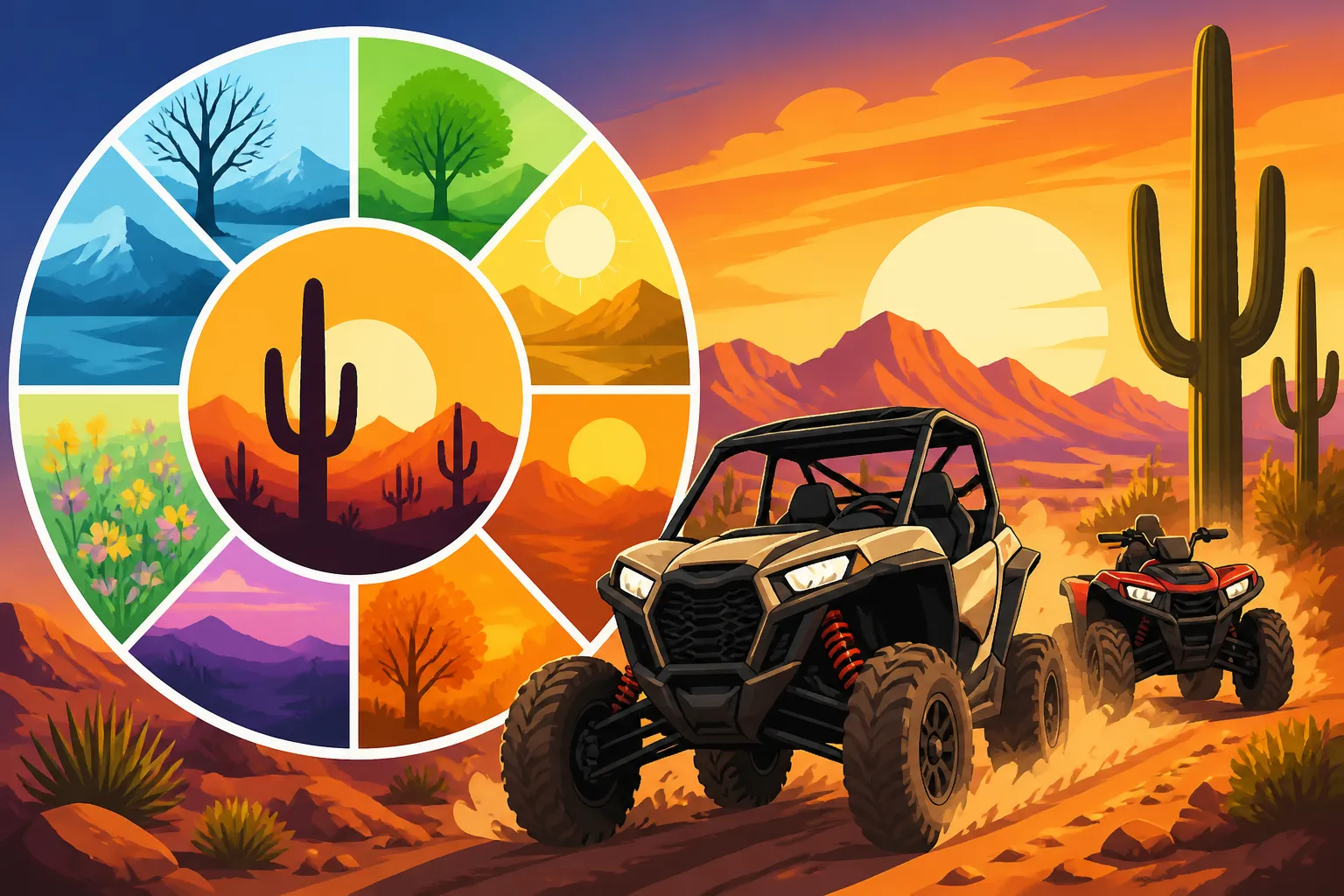
For many low-desert areas, the most comfortable riding window falls between late fall and early spring. Days are often milder than in summer, making it easier to spend several hours on exposed trails without dealing with extreme heat. That general window is a starting point, not a promise: cold mornings, wind, rain, and changing trail conditions can still affect a particular ride.
November through March for low-desert trails
November through March is often the most appealing stretch for riding around the Sonoran Desert, the Phoenix area, Tucson, and lower-elevation routes near Lake Havasu City. The midday temperatures are typically more manageable than in summer, and cooler weather can make longer rides more enjoyable. Riders can explore rocky routes, sandy washes, and open desert without planning every stop around shade and heat.
Winter has its own trade-offs. Morning temperatures can be chilly, especially before the sun reaches the trail. A ride that feels comfortable in a T-shirt at noon may start with cold hands, particularly if you are riding an open machine with wind exposure. Bring layers you can remove as the day warms, and do not assume a sunny forecast means every part of the day will feel warm.
Winter weekends can also bring more people to popular riding areas. Trailhead parking may fill sooner, and well-known routes can feel busy during holiday periods or peak travel weekends. If you prefer quieter trails, consider a weekday ride, start early, or look at a less heavily visited area. Busy Arizona Trails on a Winter Weekend offers more context for planning around crowded days.
March and April for longer days and warmer afternoons
March and April can be a sweet spot for riders who want longer daylight and pleasant mornings but still hope to avoid the worst desert heat. These months are useful for planning a full day outside, especially if your route includes exposed ground and limited shade. The catch is that spring warmth builds quickly, so a comfortable morning should not be treated as a guarantee that the afternoon will be equally easy.
Watch the forecast for the specific location rather than relying on a general “Arizona weather” outlook. Phoenix, Tucson, Yuma, and a higher trail near Prescott can have noticeably different conditions on the same day. Elevation, wind, cloud cover, and recent weather all affect what you will experience on the trail. A forecast for town may not reflect the conditions at a remote staging area.
If your schedule is flexible, think about the ride you want rather than choosing a month in isolation. A short morning outing near a lower-elevation town may work well in warmer spring weather, while a long, exposed loop calls for more conservative timing and water planning. Arizona’s Best Riding Months and When Arizona Low Desert Riding Is Best are useful companion reads for comparing the seasonal trade-offs.
| Period | What it can be like in the low desert | Planning approach |
|---|---|---|
| November through February | Cooler days and cold starts are common seasonal possibilities | Dress in removable layers and check the morning forecast |
| March through April | Longer days, with afternoons gradually becoming warmer | Start early and plan water, shade breaks, and a turnaround time |
| May through June | Heat can become a major concern, especially on exposed routes | Consider a short early ride or choose a higher-elevation destination |
| July through September | Monsoon storms and intense heat may both affect plans | Check forecasts and alerts, avoid flood-prone washes during storms |
| October | Conditions may begin easing, but heat can linger | Check local conditions rather than assuming fall has arrived everywhere |
How elevation changes the riding season
Arizona is not one uniform desert riding environment. A low route near Phoenix can be hot while a higher-elevation ride north or east feels much cooler. That difference is why summer riding may be uncomfortable in one area and workable in another, though higher terrain comes with its own weather and access considerations.
Low desert versus high country
Low-desert areas around Phoenix, Tucson, and Yuma generally heat up earlier and stay hot later than higher places. In late spring and summer, exposed routes can become difficult to enjoy, particularly when there is little shade and the ride takes longer than expected. A mechanical issue, wrong turn, or slow section can extend the time you are outside when the day is already hot.
Higher-elevation destinations may offer cooler conditions, but they are not automatically risk-free or suitable for every machine. Routes can include steep grades, rocky ground, changing weather, or narrower trails. Check that the route matches your vehicle, experience, and group, and confirm that the trail or road is open for the kind of machine you are bringing.
If summer is your only opportunity to ride, consider following elevation rather than simply driving to the nearest trail. Areas around Flagstaff, the Mogollon Rim, or the Prescott region may offer a different summer experience from the lower desert, but weather can change quickly at higher elevations. Riding Arizona High Country in Summer covers the added planning that comes with choosing those destinations.
Shoulder seasons can vary from one region to another
The first cool days of fall do not arrive everywhere at once, and the start of warm weather can feel different from one elevation to the next. A rider staying in Sedona might have a different experience from someone launching near Phoenix, even if both trips happen in the same week. Treat seasonal guidance as a way to narrow your options, then verify the forecast for the exact area.
This is especially important when planning a trip around a specific trail system. Check the route’s access information, land-management rules, and any seasonal notices before loading the trailer. Conditions can change after storms, fires, maintenance work, or other closures. Checking Arizona Trail Status Before You Drive can help you build this step into your trip planning.
Maps can also help you see how a route fits into the surrounding terrain. I use onX Offroad as one way to review routes and nearby features before a ride, especially when comparing a low-desert option with a higher-elevation alternative. It is still wise to confirm access and current conditions through the relevant land manager; a map alone should not be treated as proof that a route is open or appropriate for your machine.
Summer heat and monsoon weather
Summer planning in Arizona means paying attention to two separate challenges: heat and storms. A clear morning does not eliminate the risk of afternoon heat, and a storm in the distance can create dangerous water conditions downstream. The right decision may be to change the route, shorten the ride, move to higher ground, or postpone the trip.
May and June require a conservative heat plan
May and June can bring very hot conditions to lower elevations. Riding early may reduce the time spent in the hottest part of the day, but an early start is not a substitute for carrying enough water, checking the forecast, and knowing when to turn around. Plan for a slower pace than you expect, because difficult terrain or a minor repair can keep the group out longer than planned.
Before leaving, make sure each rider has water within reach and that your group has a practical plan if someone begins to feel unwell. Agree on stopping points and a turnaround time before you start. Keep an eye on one another rather than assuming that a rider who has gone quiet is simply tired. Heat can affect judgment and coordination, which makes it harder for someone to recognize when they need help.
Route choice matters, too. A short ride with a clear return route is easier to manage than a long loop with few options to shorten it. If you are not comfortable with the expected conditions, there is no shame in picking another day. Dawn Rides Before the Heat Builds and Water Planning for an Arizona Trail Day offer practical ideas for reducing heat exposure and preparing for time away from your vehicle.
Monsoon season calls for extra attention to washes
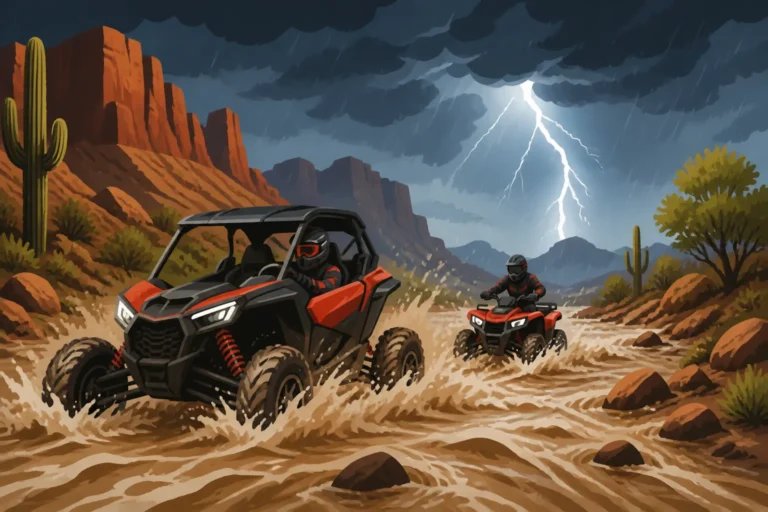
During the summer monsoon period, storms can develop quickly, and heavy rain may fall far from where you are riding. Water can move through a wash or canyon even when the sky above your group looks clear. Avoid entering a flooded wash, and do not assume a route is safe just because the ground was dry earlier in the day.
Check weather information before you leave and keep monitoring conditions during the ride. If storms are forecast nearby, reconsider routes that depend on low crossings, narrow canyons, or washes as the only way in and out. If thunder, heavy rain, or rapidly rising water becomes a concern, move away from drainage areas and follow the safest available route back without taking unnecessary risks.
Rain can also change the trail surface after a storm. Loose ground may become slick, rutted, or difficult to read, while water can expose rocks and debris. Do not assume a little rain has made every route better or easier. Arizona Monsoon Season and Flash Flooding explains why storm planning matters even when rain is falling somewhere else.
How to choose a month and prepare for the ride
A good month is only part of a good trip plan. Match your timing to the route, the group, and the kind of day you want. Then check conditions close to departure and leave room to change plans if the weather or access information does not look right.
Match the season to your group and route
Start by asking how long you intend to ride, how exposed the route is, and whether everyone in the group is comfortable with the terrain. A family outing on an easy route has different needs from a full-day trip on rocky ground. Newer riders may have a better experience in a cooler season on a familiar, manageable trail, rather than trying to squeeze a long ride into a hot afternoon.
Think through the practical details before choosing a destination. Where will you stage? Is there a reliable way to return if someone has a problem? Does the route include sections that are difficult to bypass? If you are traveling with a group, agree in advance on the pace and stopping plan so riders are not pressured to continue when they need a break.
For route research, onX Offroad can help you review mapped options and get a sense of nearby terrain. I like to compare the planned route with the day’s conditions and the group’s experience instead of treating any single map as a complete ride plan. Verify access rules and closures with the appropriate land manager, and carry a navigation backup that does not depend on cell service.
Use a pre-ride weather and access checklist
Before you hitch up, check the forecast for the riding area and look for road, trail, fire, or land-access notices that could affect the trip. Recheck conditions on the day of the ride, particularly during monsoon season or when temperatures are near your group’s comfort limit. If a route is closed or conditions look unsafe, choose another destination rather than trying to work around a closure.
A practical checklist can be simple:
- Check the forecast for the trail area, not just your home or hotel.
- Confirm the route is open and that your machine is allowed.
- Review the route length, elevation, and terrain before committing.
- Pack water, protective gear, and supplies appropriate to the weather.
- Tell someone where you plan to ride and when you expect to return.
- Set a turnaround time and be willing to shorten or cancel the outing.
If you are deciding between two locations, compare more than temperature. Consider elevation, storm exposure, trail difficulty, distance from services, and how easily your group can turn back. That approach helps make the most of the comfortable riding months while keeping a hot, stormy, or unexpectedly difficult day from becoming a bad one.
Disclaimer
This article is for general informational purposes only and does not constitute professional advice. Laws, prices and regulations vary by location and change over time. Consult a qualified professional for guidance on your specific situation.