Copper Basin Dunes Riding
Copper Basin Dunes draws ATV and UTV riders to the sandy desert near Parker, but a fun day can turn stressful when you arrive unsure where to stage, which routes suit your machine, or how quickly heat and soft sand can wear you down. This guide covers trip planning, terrain, gear, navigation, and practical safety checks for riding the area.
Planning a Copper Basin Dunes Ride
Where the riding area fits into a Parker trip
Copper Basin Dunes is associated with the Parker area in western Arizona, within reach of Lake Havasu City and the Colorado River recreation corridor. Riders often include it in a weekend built around desert riding, camping, and time near the water. For broader area context, see [Lake Havasu and the Parker Strip](Lake Havasu and the Parker Strip).
Treat the dunes as a destination that needs its own plan, rather than assuming every activity nearby is part of one continuous riding area. Nearby roads, river access points, private property, and public lands can have different rules. Before unloading, confirm that your chosen staging spot and intended route are open to your vehicle and that you are on land where riding is allowed.
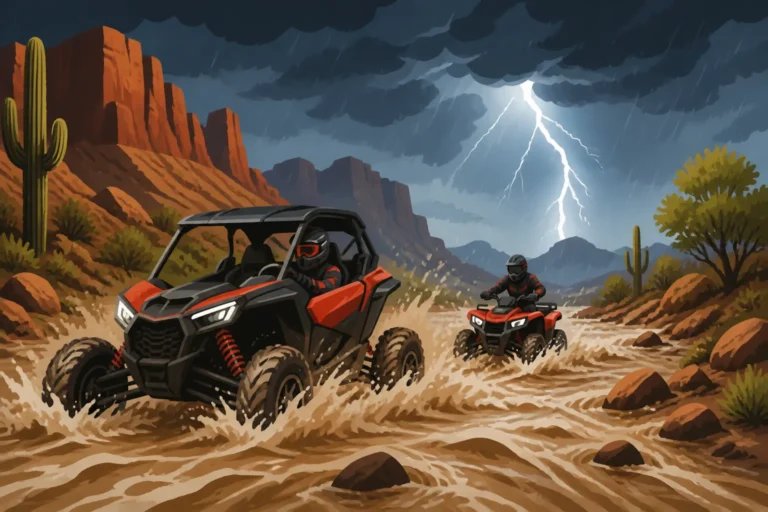
Access details and conditions can change. Check official land-manager notices and posted signs before you head out, especially if you are visiting during a holiday weekend, a fire restriction period, or after heavy rain. A pin on a phone map is useful, but it does not establish permission to ride or tell you whether a route is currently open.
Choose a ride that matches your machine and experience
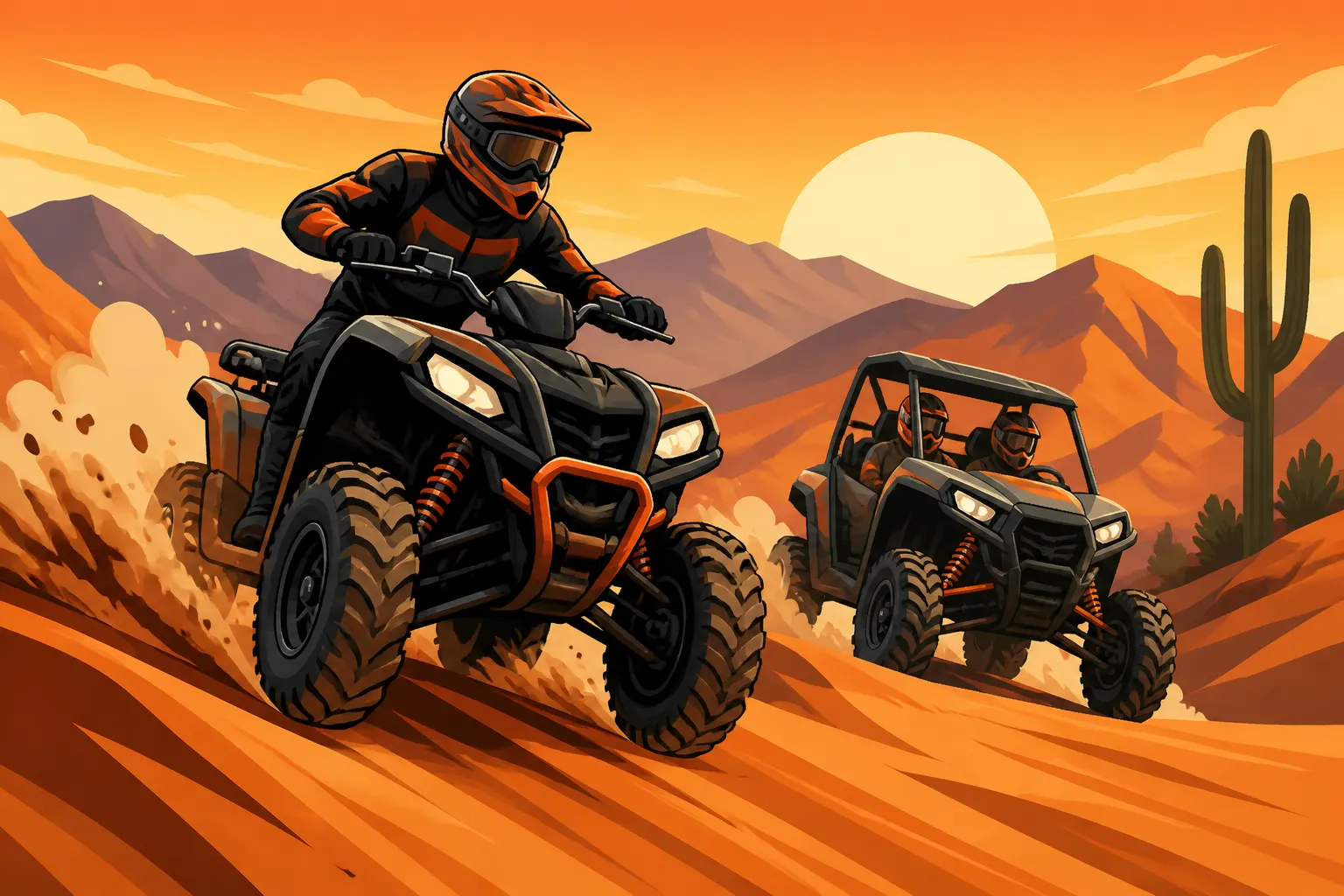
Dunes can look inviting from a distance and still demand more experience than a rider expects. Soft sand takes steady momentum, thoughtful throttle control, and room to maneuver. A route that feels manageable in a light ATV may be tiring or awkward in a wide, heavy UTV, particularly if it includes tight turns, uneven ground, or a steep face.
Before you go, decide what kind of ride you want: a short introduction to the sandy terrain, a longer loop, or a more challenging outing. Then check that the route and available space suit your vehicle’s size and your group’s abilities. If anyone in the party is new to sand, make the first run a low-pressure practice ride rather than following faster riders into unfamiliar terrain.
For a useful comparison of common sand conditions and the equipment they call for, start with [Sand Dunes and Paddle Tires in Arizona](Sand Dunes and Paddle Tires in Arizona). Tire choice is only one part of preparation: riding style, vehicle setup, visibility, and the condition of the sand all affect how a machine behaves.
Check access and conditions before leaving
A reliable pre-trip check helps avoid driving to a closed access point or arriving without a workable plan. Look for current notices from the relevant land manager, check weather and road conditions, and review any local requirements for vehicle registration, decals, permits, or safety equipment. Keep in mind that a riding credential or decal does not automatically grant access to every parcel of land.
A mapping tool can help you plan, but use it as a reference rather than a substitute for signs and official information. With onX Offroad, you can review available route and land information before you leave and save the map details you expect to need. Check the app’s coverage and settings ahead of time, and still carry a backup navigation method.
If you are unfamiliar with local staging arrangements, review [Arizona Trailhead Parking and Staging](Arizona Trailhead Parking and Staging) before loading up. Staging etiquette matters: park so trailers do not block access, keep vehicles out of vegetation, and leave room for other riders to load or unload safely.
Understanding the Sand and Choosing a Route
What soft sand asks of a rider
Sand changes how an ATV or UTV moves. The tires may sink or push sideways instead of tracking like they do on firm dirt. A sudden stop on a soft incline can make restarting difficult, while an abrupt steering correction can unsettle the vehicle. For a new sand rider, smooth inputs are generally more helpful than sharp braking, turning, or throttle changes.
Give yourself room to change direction and avoid following another vehicle so closely that its dust or roost blocks your view. If you cannot clearly see the terrain ahead, ease off and wait for the dust to clear. Keep an eye out for other riders approaching from a different line, particularly near rises where neither person may see the other until late.
A dune’s shape can hide what is beyond its crest. Do not assume the far side is clear or that a slope is suitable just because another rider has climbed it. Choose lines with good visibility, leave space between vehicles, and avoid attempting an unfamiliar climb simply because the group is moving quickly.
Select a route by conditions, not reputation
A route’s reputation does not tell you whether it is right for your group today. Consider the least experienced rider, the widest vehicle, the amount of daylight available, and the condition of the terrain. If the surface is unusually soft or the wind is carrying dust, a shorter, easier ride may be the better choice.
A simple route comparison can help you set expectations:
| Ride choice | Better suited to | Main planning concern |
|---|---|---|
| Short practice ride | First-time sand riders and mixed-experience groups | Stay in a familiar area and leave room to stop |
| Moderate outing | Riders comfortable steering and managing speed in sand | Agree on regrouping points and keep the group together |
| Longer exploratory ride | Experienced riders with suitable vehicles and navigation skills | Confirm route access, fuel, daylight, and a return plan |
Use [Arizona Trail Difficulty Ratings](Arizona Trail Difficulty Ratings) as a reminder to compare route demands with rider ability, but do not assume a rating captures every day’s conditions. Sand can shift, tracks can become hard to follow, and a route that seems easy for one vehicle may be uncomfortable for another.
Plan for route-finding and group communication
Do not rely on memory or on the rider in front to know the way back. Before starting, identify your intended route, a turnaround point, and a time when the group will head back regardless of how far it has travelled. Share the plan with someone who is not riding with you, particularly if your group expects to be out for much of the day.
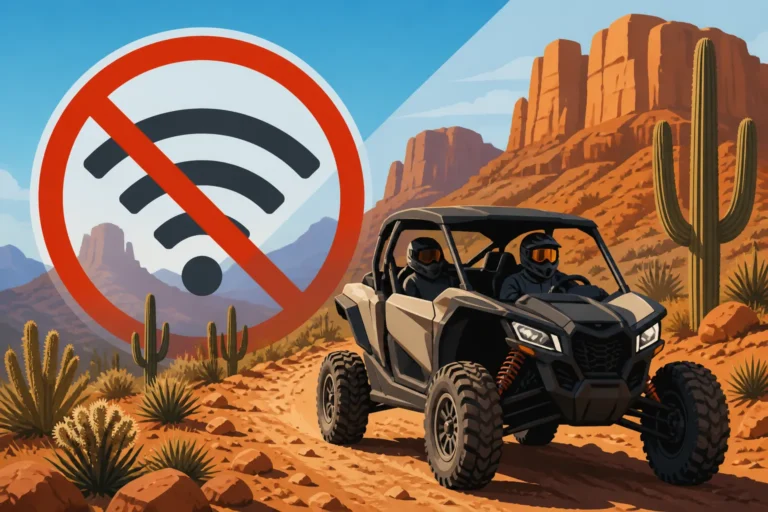
Cell service can be inconsistent in remote areas. Download or otherwise prepare the map information you will need before leaving reliable coverage, and bring a charged phone or GPS device. onX Offroad can be one way to review route information in advance, but make sure every rider knows the basic plan instead of depending on one person’s screen.
Keep the group at a manageable pace and agree on what to do if riders become separated. A useful arrangement is to stop at clear, agreed-upon places and wait for the last rider rather than allowing the group to stretch out. For more preparation ideas, read [Checking Arizona Trail Status Before You Drive](Checking Arizona Trail Status Before You Drive).
Gear, Heat, and Safety on the Dunes
Prepare for heat, dust, and a longer day than expected
Desert conditions can make a short ride feel demanding. Start with more water than you think you will need, and keep it accessible rather than buried under gear. Plan shade and rest stops where possible. If a rider becomes unusually weak, dizzy, confused, nauseated, or stops sweating despite the heat, end the ride and get help rather than trying to push through.
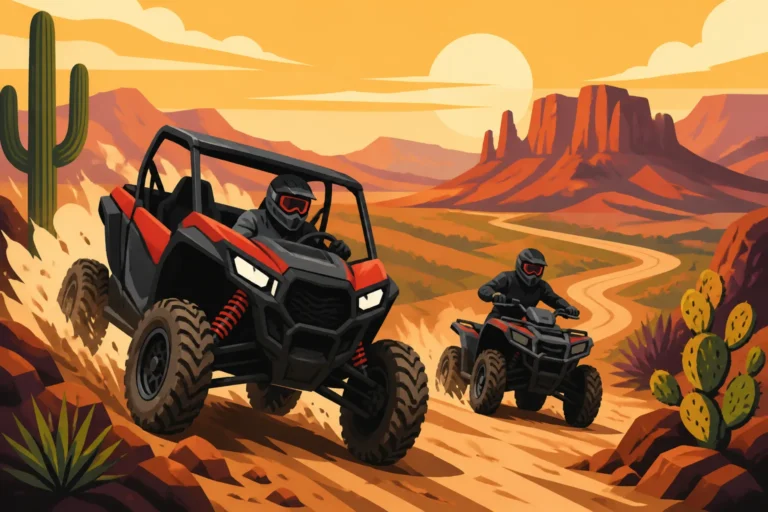
Wear a properly fitted helmet and suitable eye protection. Dust can irritate eyes and make it difficult to see the route, so goggles are especially useful when another vehicle is ahead. Long sleeves, gloves, sturdy footwear, and sun protection can make a noticeable difference over several hours in exposed terrain.
Bring basic first-aid supplies and enough food for the outing. Tell someone your route and expected return time, and avoid turning a minor delay into an emergency by leaving without a realistic reserve of water, fuel, and daylight. [Water Planning for an Arizona Trail Day](Water Planning for an Arizona Trail Day) offers a useful checklist for thinking through desert hydration.
Check the machine before unloading
A quick inspection can catch problems before they leave you stranded in the sand. Check tires for visible damage and appropriate condition, confirm that controls and brakes work, and look for loose parts or leaks. Make sure your fuel level is suitable for the planned ride, with a reserve for route changes or delays.
For a UTV, check seat belts, doors or nets, and passenger seating before moving. Each rider should use the safety equipment provided for their seat. Do not carry more passengers than the vehicle is designed for, and do not let a passenger ride in a cargo area.
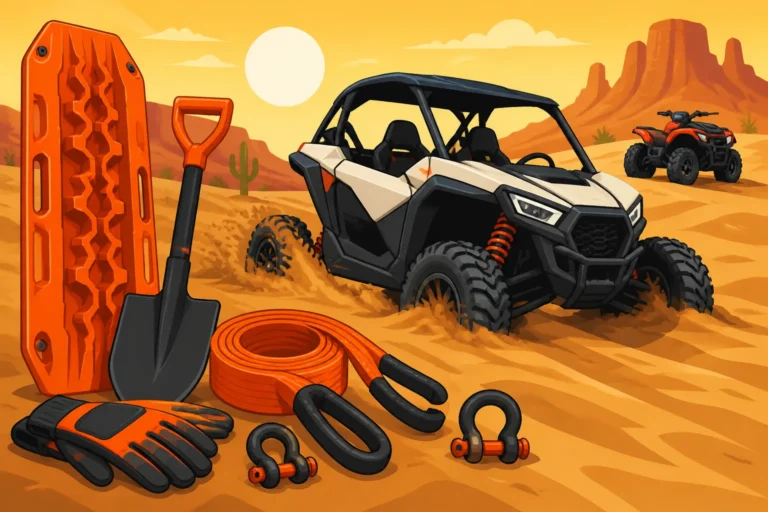
Carry a basic recovery plan, too. That might include suitable recovery equipment for your vehicle, a way to communicate, and the knowledge to use the equipment safely. Avoid standing in the path of a tensioned strap or cable, and do not attempt a recovery that exceeds your equipment or experience. If a machine is stuck in soft sand, repeated hard acceleration can dig it in further and make the situation worse.
Ride with visibility and space
Dust and terrain features can hide other vehicles. Slow down where sightlines are poor, approach crests cautiously, and avoid stopping in a place where approaching riders may not see you. When the group pauses, choose a visible, safe location well away from active riding lines.
Agree on hand signals or another simple way to communicate when engines and helmets make conversation difficult. Before each section, make sure everyone knows where the group is going and what to do if they cannot see the rider ahead. Keep a safe gap, especially when following a vehicle that is kicking up sand.
If you are riding with children or inexperienced passengers, choose a conservative route and take breaks before anyone is exhausted. A relaxed ride with room to learn is usually more enjoyable than trying to keep up with a faster group. For nearby riding options that may help with trip planning, consider [Crossroads OHV Area Near Parker](Crossroads OHV Area Near Parker), while checking access and conditions separately for each location.
A Practical Trip Plan for Copper Basin Dunes
Before you leave home
Start with the basics: confirm access, review the forecast, check local land rules, and make sure the machine is ready. Use [Camping Beside Arizona OHV Trails](Camping Beside Arizona OHV Trails) if you are planning to stay overnight, and verify whether your intended campsite is actually open and appropriate for your setup.
A useful packing list includes helmets, eye protection, water, sun protection, food, first aid supplies, navigation, communication devices, and any vehicle-specific recovery gear. Bring the paperwork or permits required for your machine and intended riding area. If a group is travelling together, check that each vehicle has enough fuel and that all drivers understand the planned route.
Save the location of your staging area and identify a backup option in case your first choice is crowded or unavailable. Share the itinerary with someone who can raise the alarm if your group does not return as planned. This step may feel excessive for a day ride, but it is reassuring if plans change or a vehicle has trouble.
At the staging area
Before unloading, read posted signs and confirm that the location is suitable for parking and staging. Keep trailers and tow vehicles positioned so other people can maneuver. Secure loose gear, do a final machine check, and make sure passengers are properly equipped before the first vehicle moves.
Take a few minutes to review the route with everyone, including the turnaround time, regrouping points, and what to do if someone gets separated. If conditions look worse than expected, shorten the plan. A flexible itinerary is a strength, not a failed trip.
On the ride and on the way out
Ride within your skill level, leave generous space, and pause when visibility drops. Reassess the group’s energy, water, and daylight as the outing continues. If anyone is tired, overheated, or uncomfortable, turn back early rather than treating the original plan as a commitment.
Before leaving, make sure all gear and trash are packed out and that your vehicle is safe to tow. If you used an app such as onX Offroad for navigation, compare your actual route with your original plan afterward; noting confusing junctions or useful landmarks can make a future ride easier to prepare. The goal is not to cover the most ground. It is to finish with the group, machines, and surrounding land in good shape.
Disclaimer
This article is for general informational purposes only and does not constitute professional advice. Laws, prices and regulations vary by location and change over time. Consult a qualified professional for guidance on your specific situation.